
FOXBORO
In Stock OK
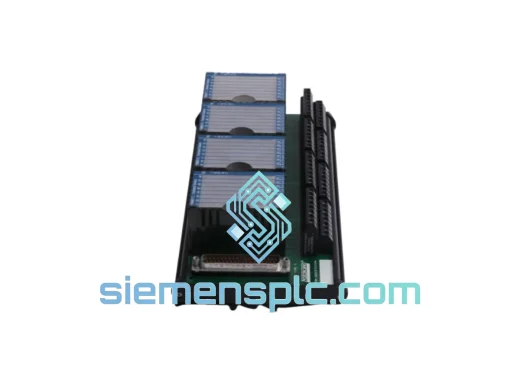
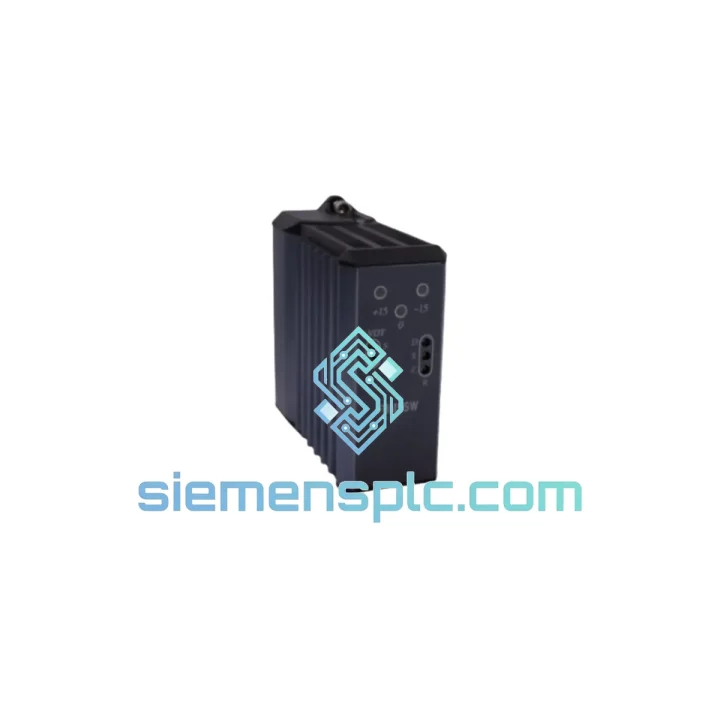
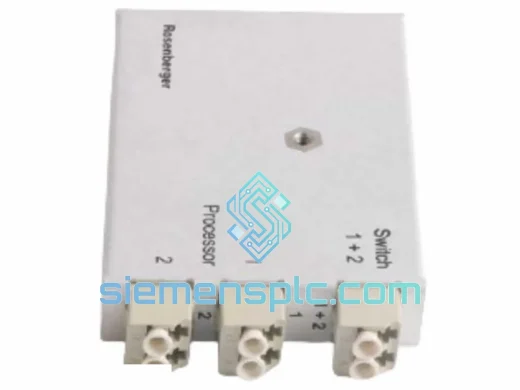
FOXBORO FBMSSW DCS Fieldbus Module – I/A Series
Request verified availability, condition, replacement risk review, packing options and courier lead time for FBMSSW.
BrandFOXBORO
Part NumberFBMSSW
ConditionAvailability Check
Lead TimeRFQ Confirmation
DocumentsDatasheet / photos by RFQ
ShippingExport packing available
Auto-filled RFQ
FBMSSW
Click Request Quote and the part number is inserted into the inquiry form automatically.
- Reply by email: [email protected]
- WhatsApp / Tel: +86 18359268345
- Mon-Sat 9:00-18:00 GMT+8
Procurement Data
Key Product Information
Core fields for model confirmation and RFQ routing. Detailed product narrative remains below.
- Brand
- FOXBORO
- Primary Part Number
- FBMSSW
- Product Type
- DCS Fieldbus Module
- Series / Family
- I/A Series
- Manufacturer
- FOXBORO (Invensys / Schneider Electric)
- Country of Origin
- FR
- Catalog Category
- DCS & Safety Modules
- Operating Temp.
- 0°C to +60°C (control room / DCS cabinet)
- Warranty
- 12 months from date of shipment
Model confirmed for inquiry
FBMSSW
Send quantity, destination and urgency. The RFQ form keeps this part number attached.
Request Quote
Product Overview
FOXBORO FBMSSW Fieldbus Module: Signal Conditioning and I/O Arbitration in the I/A Series Control Architecture
The FOXBORO FBMSSW is a software-configurable fieldbus module within the Foxboro I/A Series Distributed Control System (DCS) — a platform engineered by Invensys and now maintained under Schneider Electric’s process automation division. In the I/A Series architecture, fieldbus modules (FBMs) serve as the physical and logical boundary between the process field and the control processor. The FBMSSW specifically handles signal conditioning, I/O scanning, and data marshalling across the Nodebus backplane, ensuring that process variables reach the CP (Control Processor) with deterministic latency and without data corruption from field-side electrical noise.
Unlike generic I/O cards, the FBMSSW operates with embedded firmware that manages its own scan cycle independently of the CP. This distributed intelligence model means that even during CP communication interruptions, the module continues to execute its last valid output state — a critical safety behavior in continuous process industries such as refining, power generation, and chemical manufacturing. The module slots into the I/A Series baseplate and communicates via the 100 Mbps Nodebus, which uses a deterministic token-passing protocol to guarantee scan-cycle consistency across all FBMs in the rack.
Real-time Stock & RFQ: [email protected] | WhatsApp: +86 18359268345
Technical Parameters
| Parameter | Specification |
|---|---|
| Manufacturer | FOXBORO (Invensys / Schneider Electric) |
| Part Number | FBMSSW |
| Series | I/A Series (Intelligent Automation Series) |
| Module Classification | Software-Configurable Fieldbus Module (FBM) |
| Backplane Interface | Nodebus (100 Mbps, token-passing protocol) |
| Mounting | I/A Series FBM baseplate (rack-mounted) |
| Power Supply | Supplied via baseplate (24 VDC bus) |
| Operating Temperature | 0°C to +60°C (control room / DCS cabinet) |
| Relative Humidity | 5% to 95% non-condensing |
| EMC Compliance | Designed to IEC 61000 series industrial EMC standards |
| Configuration Interface | Foxboro Control Configurator (software-defined I/O mapping) |
| Firmware | Embedded, field-upgradeable via I/A Series system tools |
| Approx. Weight | ~500 g |
| Warranty | 12 months from date of shipment |
Hardware Logical Analysis
The FBMSSW’s hardware architecture reflects the I/A Series design philosophy: distribute processing load away from the central CP and embed functional intelligence at the I/O layer. The module contains a dedicated microprocessor that manages its own scan cycle, executes signal conditioning algorithms (linearization, scaling, filtering), and handles Nodebus token arbitration without burdening the CP with raw data polling.
Optical Isolation Architecture: Field-side signal inputs are galvanically isolated from the Nodebus logic circuitry via optocouplers rated for ≥1500 V isolation voltage. This two-stage isolation — first at the field terminal, then at the backplane interface — prevents ground loops and transient voltage spikes originating from field instrumentation (thermocouples, 4–20 mA transmitters, discrete sensors) from propagating into the DCS backplane. In environments with high-voltage switching equipment nearby, this isolation margin is not a luxury — it is the primary mechanism preventing cascade failures across the control rack.
EMC Design: The PCB layout employs ground plane segmentation to separate analog signal paths from digital logic traces. Decoupling capacitors are placed at each power rail entry point to suppress high-frequency conducted emissions. The module’s metal faceplate provides shielding continuity with the baseplate chassis ground, attenuating radiated interference from adjacent VFDs, contactors, and RF sources common in industrial cabinets.
Nodebus Token-Passing Logic: The FBMSSW participates in the Nodebus token ring as a slave node. Its onboard ASIC manages token receipt, data frame assembly, CRC generation, and token forwarding within a deterministic time window. If the module detects a token timeout (indicating a failed upstream node), it initiates a bus recovery sequence — a hardware-level fault tolerance mechanism that maintains communication continuity without CP intervention.
Non-Volatile Configuration Storage: I/O channel configuration, scaling parameters, and alarm thresholds are stored in onboard EEPROM. On power restoration after an outage, the module reloads its last valid configuration autonomously, reaching operational state within seconds — without requiring a full CP download cycle.
System Integration Benefits
- Deterministic Scan Cycle: The FBMSSW’s embedded processor executes I/O scans on a fixed-period cycle (typically 100 ms or 500 ms, configurable), independent of CP load — eliminating jitter in process variable updates that would otherwise compromise PID loop tuning stability.
- Transparent Diagnostics: The module reports channel-level fault codes (open circuit, over-range, under-range, CRC error) to the CP via the Nodebus status frame. These codes surface directly in the Foxboro Integrated Control Configurator (ICC) display, enabling maintenance engineers to isolate faults to the specific channel without physical inspection.
- Hot-Swap Capability: The I/A Series baseplate supports live module extraction and insertion. Replacing an FBMSSW does not require a system shutdown — the CP detects the new module, downloads the stored configuration, and resumes normal scan within one token cycle.
- Software-Defined I/O Mapping: Channel assignments, engineering unit conversions, and alarm setpoints are configured entirely in software via the Control Configurator. Hardware jumpers or DIP switches are not required, reducing commissioning time and eliminating configuration drift from manual switch errors.
- Redundancy Support: The FBMSSW can be deployed in redundant baseplate configurations where two modules share a single field termination assembly (FTA). The CP arbitrates between primary and secondary modules, switching to the backup within one scan cycle upon detecting a primary fault — with no process disturbance.
- Backward Compatibility: The module is compatible with I/A Series CP revisions spanning multiple hardware generations, protecting existing DCS investments and eliminating forced system-wide upgrades when replacing individual FBMs.
- Reduced Wiring Complexity: Field terminations connect to the FTA (Field Termination Assembly) rather than directly to the FBM. The FBMSSW plugs into the baseplate and connects to the FTA via a ribbon cable — separating field wiring from module replacement and reducing the risk of wiring errors during maintenance.
- Alarm Prioritization and Filtering: Onboard firmware supports configurable deadband and filter time constants per channel, preventing nuisance alarms from noisy field signals without masking genuine process excursions — a measurable improvement in alarm management KPIs.
Quality Assurance & Global Logistics
Every FOXBORO FBMSSW unit supplied by siemensplc.com is sourced through verified industrial channels with documented provenance. Genuine Foxboro modules carry manufacturer-traceable serial numbers and firmware revision markings that are cross-checked against known authentic unit databases before acceptance into inventory.
Incoming Inspection Protocol: Each unit undergoes visual examination for PCB condition, connector pin integrity, label authenticity, and absence of counterfeit indicators (mismatched fonts, incorrect logo geometry, non-standard screw types). Modules with any ambiguous provenance markers are rejected at intake.
Functional Verification: Where test fixtures are available, modules are powered and exercised through their Nodebus communication sequence to confirm firmware responsiveness and channel integrity before dispatch.
Packaging: Units are shipped in anti-static bags within foam-lined cartons rated for international air freight handling. Fragile labels and tilt indicators are applied to cartons containing sensitive electronics.
Logistics from Xiamen, China: Our warehouse and dispatch center is located in Xiamen, Fujian Province — a major international logistics hub with direct access to DHL, FedEx, UPS, and SF Express international services. Standard air freight transit times: 3–5 business days to Southeast Asia, 5–7 days to Europe and the Middle East, 5–8 days to North America. Express next-flight-out options are available for critical plant shutdowns. All shipments include full tracking, commercial invoice, and packing list for customs clearance. A 12-month warranty is provided on all units from the date of shipment.
Contact Information
Email: [email protected]
WhatsApp: +86 18359268345
Web: siemensplc.com
Location: Xiamen, China
© 2026 siemensplc.com. All rights reserved.
Ready to quote
[email protected]
Send This Part Number to Sales
RFQ workflow
Quality workflow ->
Confirmation Process
01Model confirmation
We check the full part number, brand, series and visible nameplate information before quotation.
02Availability reply
Sales confirms stock path, condition option, quantity and realistic lead time for export dispatch.
03Packing & courier
DHL, FedEx, UPS or buyer courier arrangements can be reviewed with packing requirements.
Continue sourcing
Browse full catalog ->
Related Automation Parts
Similar brand or category products for fast comparison and multi-item RFQ lists.
FOXBORO
RFQ Ready
FOXBORO D0128QJ Differential Pressure Flow Element – I/A Series
I/A Series
Origin FR
Differential Pressure Flow Meter
FOXBORO
RFQ Ready
FOXBORO S3PU65A GS3PU65AS DCS CPU Module
I/A Series
Origin FR
DCS Processor Module
FOXBORO
RFQ Ready
FOXBORO P0926MX Signal Splitter / Isolator
I/A Series
Origin FR
Signal Splitter / Isolator