FOXBORO
RFQ Ready
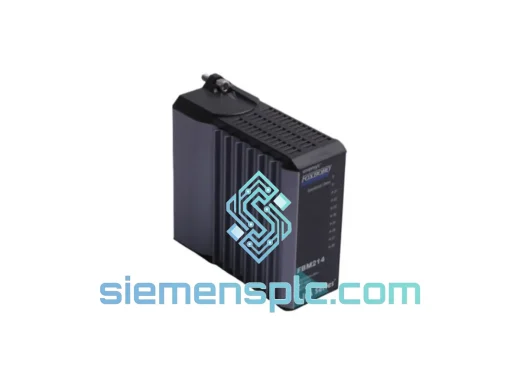
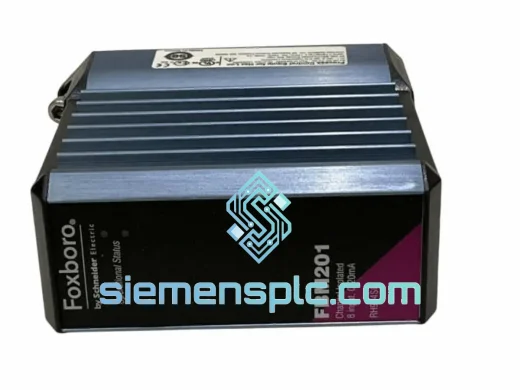
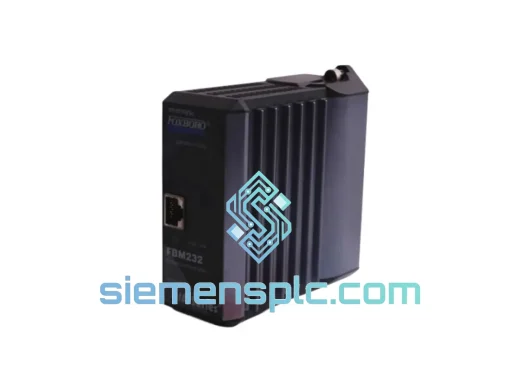
FOXBORO FBM233 P0926GX Ethernet Communication Module
I/A Series
Origin FR
Ethernet Communication Module
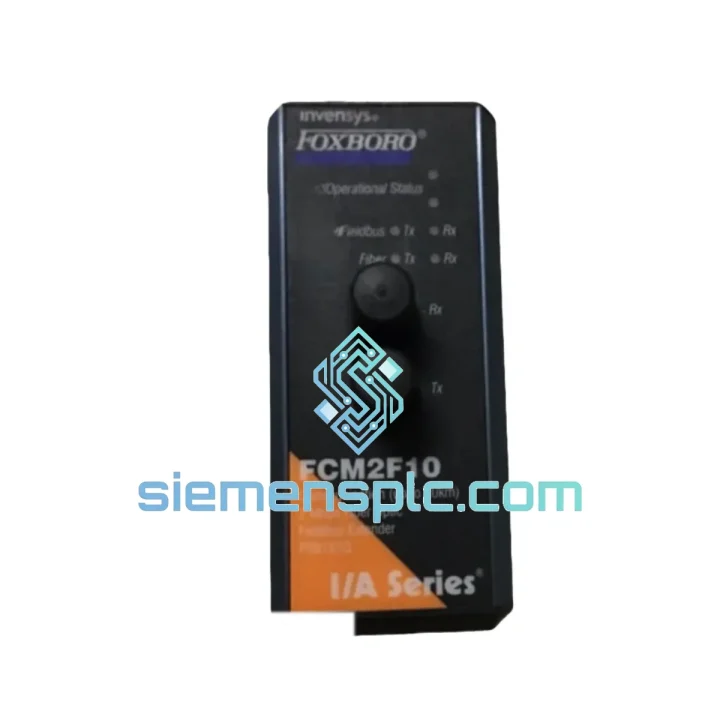
Request verified availability, condition, replacement risk review, packing options and courier lead time for FCM2F10-P0916TQ.
Click Request Quote and the part number is inserted into the inquiry form automatically.
Core fields for model confirmation and RFQ routing. Detailed product narrative remains below.
The Foxboro FCM2F10-P0916TQ is a Fieldbus Communications Module (FCM) engineered for the I/A Series Distributed Control System platform, originally developed by Foxboro and now maintained under Schneider Electric’s process automation portfolio. Its primary function is to terminate and manage Foundation Fieldbus H1 segments, acting as the physical and protocol boundary between the deterministic H1 field network and the I/A Series control bus. Each FCM2F10-P0916TQ hosts two independent H1 ports, each capable of sustaining a segment with up to 32 field devices at a nominal data rate of 31.25 kbit/s. The module handles all link scheduling, token passing, and publisher/subscriber coordination autonomously, offloading these tasks entirely from the host control processor.
In a typical I/A Series cabinet, the FCM2F10-P0916TQ occupies a single FBM baseplate slot and draws power directly from the baseplate’s 24 V DC bus. Its firmware revision P0916TQ defines the specific link active scheduler (LAS) behavior, macrocycle timing tables, and diagnostic register map. Substituting a module with a different firmware suffix without re-importing the SysDef configuration database will result in LAS arbitration failures and segment communication loss — a critical operational consideration during maintenance planning.
The module’s internal architecture separates the H1 physical layer driver circuitry from the backplane communication ASIC via an optically isolated barrier. This galvanic isolation prevents ground loop currents — common in large petrochemical installations where field cable runs exceed 200 m — from propagating into the control network. The isolation barrier is rated at 500 V DC continuous, with a transient withstand of 1500 V for 1 minute per IEC 61158-2 physical layer requirements.
Each H1 port integrates a software-configurable intrinsic safety (IS) power conditioner output, allowing the FCM2F10-P0916TQ to supply bus power directly to IS-rated field instruments without an external segment power supply in low-device-count segments. For segments requiring higher current budgets — typically above 380 mA — an external Fieldbus segment power supply with repeater is required, and the FCM port transitions to a passive termination role. The module’s internal terminator can be enabled or disabled via SysDef parameter, eliminating the need for physical terminator plugs at the cabinet end of the segment.
Diagnostics are a core design element of the FCM2F10-P0916TQ. The module continuously monitors H1 segment voltage levels, token pass latency, and device live-list changes. Any deviation outside configured thresholds generates an alarm in the I/A Series alarm management system with a structured diagnostic code, enabling maintenance personnel to isolate faults to the segment, device, or cable level without physical inspection. This diagnostic transparency is particularly valuable in offshore and remote installations where access to field junction boxes is constrained.
From a system redundancy perspective, the FCM2F10-P0916TQ supports hot-standby pairing when installed in a redundant FBM baseplate configuration. The primary and secondary modules synchronize their LAS macrocycle state continuously over the backplane, enabling bumpless switchover in under 100 ms upon primary module failure — a performance threshold that preserves PID loop integrity in fast-response control applications such as compressor surge control and fired heater fuel gas regulation.
At siemensplc.com, each FCM2F10-P0916TQ unit is sourced from verified supply channels, subjected to power-on functional verification, and shipped in ESD-protective packaging from our Xiamen, China logistics hub. Stock availability is maintained for immediate dispatch to minimize plant downtime during unplanned module failures.
Real-time Stock & RFQ: [email protected] | WhatsApp: +86 18359268345
| Parameter | Specification |
|---|---|
| Part Number | FCM2F10-P0916TQ |
| Manufacturer | Foxboro (Schneider Electric) |
| Platform | I/A Series DCS |
| Module Function | Foundation Fieldbus H1 Communications Module |
| H1 Ports | 2 × independent H1 segments |
| H1 Data Rate | 31.25 kbit/s (per IEC 61158-2) |
| Max Devices per Segment | 32 (including LAS) |
| Backplane Interface | I/A Series FBM Baseplate (4-slot / 8-slot) |
| Supply Voltage | 24 V DC via baseplate bus |
| Galvanic Isolation | 500 V DC continuous; 1500 V / 1 min transient |
| Segment Bus Power Output | Configurable IS power conditioner per port |
| Internal Terminator | Software-selectable via SysDef |
| Redundancy Support | Hot-standby, switchover <100 ms |
| Operating Temperature | 0 °C to +60 °C |
| Storage Temperature | −40 °C to +85 °C |
| Relative Humidity | 5% to 95% non-condensing |
| EMC Compliance | IEC 61000-4 series; CE marked |
| Firmware Revision | P0916TQ |
| Weight | Approx. 1,300 g |
| Warranty | 12 months from date of shipment |
The FCM2F10-P0916TQ’s internal architecture is structured around three functional layers: the H1 physical layer interface, the protocol processing engine, and the backplane communication controller.
H1 Physical Layer & EMC Design: Each H1 port uses a Manchester-encoded differential driver compliant with IEC 61158-2. The driver output impedance is matched to the standard 100 Ω fieldbus cable characteristic impedance, minimizing reflections on long cable runs. Common-mode chokes at the port connector suppress high-frequency conducted interference — a frequent source of communication errors in installations near variable-frequency drives (VFDs) or large motor starters. The module’s PCB layout routes H1 signal traces with controlled impedance and ground plane shielding, reducing susceptibility to radiated EMI from adjacent relay or contactor coils in the same cabinet.
Optical Isolation Barrier: The galvanic isolation between the H1 field side and the backplane logic side is implemented using high-speed optocouplers with a propagation delay below 1 µs, preserving the timing integrity of the 31.25 kbit/s Manchester signal without introducing detectable jitter at the LAS macrocycle level. This architecture ensures that field-side ground faults — including cable insulation breakdown to earth — do not corrupt backplane data or trigger false alarms in the control processor.
Link Active Scheduler (LAS) Engine: The LAS function is executed on a dedicated microcontroller within the module, independent of the backplane communication path. This separation ensures that H1 token scheduling continues uninterrupted even during periods of high backplane traffic, maintaining deterministic cycle times for time-critical function blocks such as PID, ratio, and cascade control. The LAS macrocycle period is defined in the SysDef configuration and stored in non-volatile memory on the module, allowing it to resume scheduling autonomously after a power cycle without requiring re-download from the control processor.
Redundancy Arbitration Logic: In hot-standby configurations, the primary and secondary FCM2F10-P0916TQ modules communicate over a dedicated backplane arbitration channel. The secondary module monitors the primary’s LAS heartbeat signal at 10 ms intervals. Upon detecting three consecutive missed heartbeats (30 ms timeout), the secondary asserts LAS ownership and begins token passing within one macrocycle period, achieving the sub-100 ms switchover specification. This arbitration logic is implemented in hardware-assisted firmware, not in software running on the host CP, eliminating any dependency on CP load conditions during failover.
Every FCM2F10-P0916TQ unit supplied by siemensplc.com is sourced through verified distribution channels with full supply chain traceability. Prior to dispatch, each module undergoes a structured functional verification procedure: power-on self-test confirmation, H1 port communication verification against a reference segment, and firmware revision check against the P0916TQ baseline. Units that do not pass all verification steps are quarantined and not offered for sale.
Packaging follows ESD-safe handling protocols: modules are placed in anti-static bags, cushioned with conductive foam, and enclosed in double-wall corrugated cartons rated for international air freight. Each shipment includes a packing list with the module serial number, firmware revision, and test date for incoming inspection records.
Logistics operations are based in Xiamen, China, with direct access to Xiamen Gaoqi International Airport and Xiamen Port, enabling same-day handover to DHL Express, FedEx International Priority, and UPS Worldwide Express services. In-stock units are dispatched within 1 business day of order confirmation. Transit times to major industrial hubs: Europe 3–5 days, North America 3–4 days, Middle East 2–3 days, Southeast Asia 1–2 days. All shipments include tracking and are covered by cargo insurance. Export documentation — commercial invoice, packing list, and certificate of origin — is prepared to meet customs clearance requirements in all major destination countries. A 12-month warranty covers manufacturing defects and functional failures under normal operating conditions.
📧 Email: [email protected]
💬 WhatsApp: +86 18359268345
🌐 Web: siemensplc.com
📍 Location: Xiamen, China
© 2026 siemensplc.com. All rights reserved.
We check the full part number, brand, series and visible nameplate information before quotation.
Sales confirms stock path, condition option, quantity and realistic lead time for export dispatch.
DHL, FedEx, UPS or buyer courier arrangements can be reviewed with packing requirements.
Similar brand or category products for fast comparison and multi-item RFQ lists.