
FOXBORO
In Stock OK
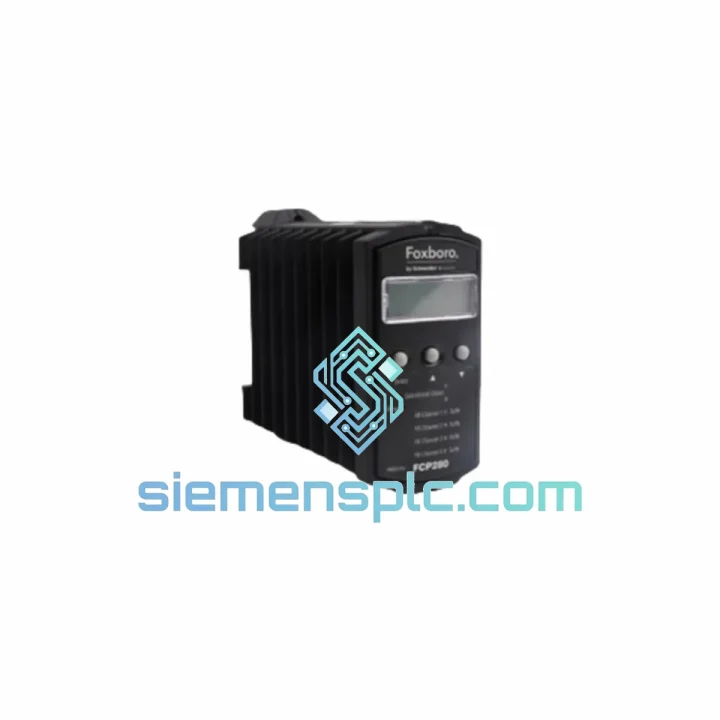
Foxboro FCP280 RH924YA Field Control Processor – I/A Series
Request verified availability, condition, replacement risk review, packing options and courier lead time for FCP280-RH924YA.
BrandFOXBORO
Part NumberFCP280-RH924YA
ConditionAvailability Check
Lead TimeRFQ Confirmation
DocumentsDatasheet / photos by RFQ
ShippingExport packing available
Auto-filled RFQ
FCP280-RH924YA
Click Request Quote and the part number is inserted into the inquiry form automatically.
- Reply by email: [email protected]
- WhatsApp / Tel: +86 18359268345
- Mon-Sat 9:00-18:00 GMT+8
Procurement Data
Key Product Information
Core fields for model confirmation and RFQ routing. Detailed product narrative remains below.
- Brand
- FOXBORO
- Primary Part Number
- FCP280-RH924YA
- Product Type
- Field Control Processor
- Series / Family
- I/A Series
- Manufacturer
- Foxboro (Schneider Electric I/A Series)
- Country of Origin
- FR
- Catalog Category
- DCS & Safety Modules
- Operating Temp.
- 0 °C to +60 °C
- Warranty
- 12 months from date of shipment
Model confirmed for inquiry
FCP280-RH924YA
Send quantity, destination and urgency. The RFQ form keeps this part number attached.
Request Quote
Product Overview
Foxboro FCP280 RH924YA – Field Control Processor for I/A Series Distributed Control Architecture
The Foxboro FCP280 (catalog reference RH924YA) occupies the deterministic execution layer of the I/A Series DCS hierarchy. Positioned between the operator workstation tier and the field I/O bus, this processor is the sole arbitrator of real-time control loop execution, function block scheduling, and Nodebus frame management within its control station. Unlike gateway-style controllers that relay pre-processed data, the FCP280 performs all PID computation, cascade logic, and sequence-of-events timestamping on-board, eliminating round-trip latency to a host CPU. Its role is therefore not peripheral — it is the deterministic core around which the entire process control strategy is built.
In continuous process industries — petroleum refining, ethylene cracking, pulp digestion, combined-cycle power generation — the FCP280 manages multi-loop interactions where a disturbance in one variable propagates across three or four dependent loops within a single scan cycle. The processor’s embedded real-time operating environment enforces fixed-priority preemptive scheduling, ensuring that fast loops (e.g., pressure control at 100 ms) are never delayed by slower batch sequencing tasks running in the same station. This architectural separation of timing domains is a fundamental requirement for safe, stable process operation and is not achievable with general-purpose PLCs operating under non-deterministic OS kernels.
Real-time Stock & RFQ: [email protected] | WhatsApp: +86 18359268345
Technical Parameters
| Parameter | Specification |
|---|---|
| Manufacturer | Foxboro (Schneider Electric I/A Series) |
| Model Number | FCP280 |
| Catalog / Part Number | RH924YA |
| Module Classification | Field Control Processor (FCP) |
| Control Bus Interface | Nodebus (proprietary 10 Mbps deterministic token-ring) |
| FBM I/O Bus | Fieldbus Module (FBM) interface, supports up to 16 FBM drops per station |
| Redundancy Mode | 1:1 hot-standby; bumpless switchover <100 ms |
| Function Block Capacity | Up to 2,000 function blocks per control station |
| Minimum Scan Period | 100 ms (configurable per block) |
| Configuration Memory | Non-volatile flash; retains configuration through power loss |
| Supply Voltage | 24 VDC nominal (via I/A Series baseplate power rail) |
| Power Consumption | ≤ 18 W typical under full load |
| Operating Temperature | 0 °C to +60 °C |
| Storage Temperature | −40 °C to +85 °C |
| Relative Humidity | 5% to 95% non-condensing |
| EMC Compliance | IEC 61000-4 series (ESD, EFT, surge, conducted/radiated immunity) |
| Safety Standards | UL Listed; CE Marked; RoHS compliant |
| Programming Standard | IEC 61131-3 Function Block Diagram (FBD) |
| Form Factor | I/A Series rack-mount module (single slot) |
| Weight | 2.55 kg |
| Country of Origin | United States of America |
| Warranty | 12 months from date of shipment |
Hardware Logical Analysis
The FCP280’s internal architecture reflects design decisions made specifically for process-industry determinism rather than general-purpose computing throughput. Several hardware-level characteristics distinguish it from commodity controller platforms:
Nodebus Token-Ring Arbitration: The FCP280 participates in a 10 Mbps token-ring Nodebus as both a token holder and a frame originator. The token-passing protocol enforces a bounded worst-case latency for every node on the bus — a property that Ethernet-based systems with CSMA/CD cannot guarantee without additional QoS overlays. This means that even under maximum bus load, the FCP280 can predict, to the microsecond, when its next transmission window will open. For pressure and flow control loops where derivative action amplifies noise at high frequencies, this timing predictability directly translates to tighter loop performance.
Dual-Port Memory Architecture for Redundancy: In a 1:1 hot-standby pair, the primary FCP280 continuously mirrors its execution state — including all function block outputs, PID integral terms, and sequence step pointers — to the standby unit via a dedicated synchronization link. This link operates independently of the Nodebus, so a Nodebus fault does not interrupt state synchronization. The standby unit maintains a shadow copy of the control database that is current to within one scan cycle. Upon primary failure detection (hardware watchdog timeout or self-diagnostic fault), the standby asserts bus mastership and resumes execution from the last synchronized state. The process sees no bump, no step change, and no alarm — the switchover is transparent at the field device level.
EMC Hardening: The module’s backplane connector and internal PCB layout follow IEC 61000-4-4 (electrical fast transient) and IEC 61000-4-5 (surge) design rules. Opto-isolated signal paths on the FBM interface prevent ground loop currents from coupling into the processor’s analog reference plane. The metal enclosure provides a Faraday shield rated to attenuate radiated fields above 30 MHz, which is particularly relevant in substations and motor control centers where variable-frequency drives generate broadband RF emissions.
Watchdog and Self-Diagnostic Logic: An independent hardware watchdog timer, clocked from a crystal oscillator separate from the main CPU clock domain, monitors the application task heartbeat. If the control task fails to service the watchdog within the configured timeout window (typically 1.5× the maximum scan period), the watchdog asserts a hardware reset and simultaneously signals the standby unit to take over. This two-stage response — local reset plus standby promotion — prevents a hung processor from holding the Nodebus token indefinitely, which would otherwise stall all other stations on the segment.
System Integration Benefits
The FCP280 delivers measurable operational advantages across eight dimensions of system performance:
1. Deterministic Real-Time Response: Fixed-priority preemptive scheduling with a hardware-enforced scan clock ensures that critical control loops execute within ±1 ms of their configured period, regardless of database size or communication load. This is a contractual timing guarantee, not a statistical average.
2. Transparent Redundancy Without Process Disruption: Hot-standby switchover completes in under 100 ms with full state continuity. PID integral terms, ramp generators, and sequence step indices are preserved across the transition, eliminating the process upsets that accompany cold-start controller replacements.
3. Native FBM I/O Integration: The FCP280 communicates with Foxboro FBM I/O modules over a dedicated fieldbus without requiring marshalling cabinets, protocol converters, or third-party gateways. Signal latency from field transmitter to control algorithm is bounded and measurable, supporting accurate derivative calculations in fast loops.
4. Scalable Function Block Execution: Up to 2,000 function blocks per station — including PID, ratio, cascade, lead-lag, signal characterizer, and sequence blocks — execute within a single FCP280 without external co-processors. This density reduces the number of physical controllers required per process unit, lowering cabinet footprint and inter-controller communication overhead.
5. Diagnostic Transparency: The FCP280 reports module health, scan overrun counts, Nodebus error statistics, and redundancy synchronization status to the I/A Series system historian and alarm manager in real time. Maintenance engineers can trend controller CPU utilization and identify scan overruns before they affect loop performance — a proactive diagnostic capability absent in many legacy DCS platforms.
6. Non-Volatile Configuration Retention: All function block parameters, tuning constants, and I/O assignments are stored in on-board flash memory. A power cycle — planned or unplanned — does not require a configuration download from the workstation. The FCP280 resumes autonomous control within seconds of power restoration, which is critical for processes where a prolonged startup sequence carries safety or product quality implications.
7. Backward Compatibility with I/A Series Infrastructure: The FCP280 is a direct functional successor to the FCP270 and operates on the same Nodebus segment alongside older FCP270 stations without firmware negotiation or bus reconfiguration. This allows phased migration of brownfield plants — replacing individual controllers as they reach end-of-life without a system-wide cutover.
8. Long-Term Spare Parts Availability: The I/A Series platform has a documented installed base spanning several decades across refining, chemical, and power generation sectors. The FCP280 remains an active spare requirement for thousands of operating plants. Maintaining a verified spare inventory of RH924YA units is a standard practice in plant reliability programs, and sourcing from a specialist supplier with traceable stock is the most reliable path to meeting unplanned maintenance demand.
Quality Assurance & Global Logistics
Every FCP280 RH924YA unit dispatched from our Xiamen, China facility passes through a structured verification protocol before packaging:
- Physical inspection: enclosure integrity, connector pin condition, label legibility, and firmware version confirmation against Foxboro release documentation
- Power-on functional test: module self-diagnostic pass, Nodebus interface enumeration, and watchdog timer verification
- Anti-static packaging: conductive foam insert, moisture barrier bag with desiccant, and humidity indicator card
- Documentation package: commercial invoice, packing list, and sourcing traceability record available upon request
All units carry a 12-month warranty from the date of shipment. Warranty coverage includes functional failure under normal operating conditions. Units are sourced from authorized distribution channels and verified surplus inventories — condition (new-surplus or tested-functional) is declared explicitly on each order confirmation.
Logistics from Xiamen port supports DHL Express (2–4 business days to Europe/North America), FedEx International Priority, and sea freight consolidation for volume orders. Export documentation — including HS code classification, certificate of origin, and EAR99 export control confirmation — is prepared as standard for all international shipments.
Contact Information
Email: [email protected]
WhatsApp: +86 18359268345
Web: siemensplc.com
Location: Xiamen, China
© 2026 siemensplc.com. All rights reserved.
Ready to quote
[email protected]
Send This Part Number to Sales
RFQ workflow
Quality workflow ->
Confirmation Process
01Model confirmation
We check the full part number, brand, series and visible nameplate information before quotation.
02Availability reply
Sales confirms stock path, condition option, quantity and realistic lead time for export dispatch.
03Packing & courier
DHL, FedEx, UPS or buyer courier arrangements can be reviewed with packing requirements.
Continue sourcing
Browse full catalog ->
Related Automation Parts
Similar brand or category products for fast comparison and multi-item RFQ lists.
FOXBORO
RFQ Ready
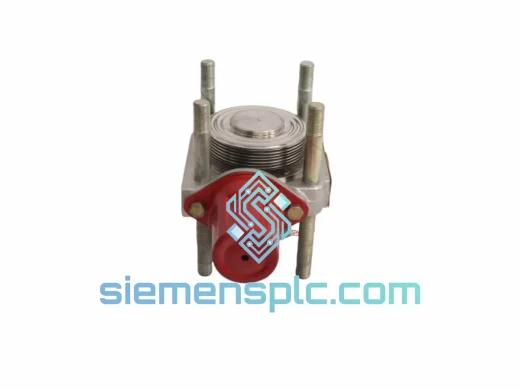
FOXBORO D0128QJ Differential Pressure Flow Element – I/A Series
I/A Series
Origin FR
Differential Pressure Flow Meter
FOXBORO
RFQ Ready
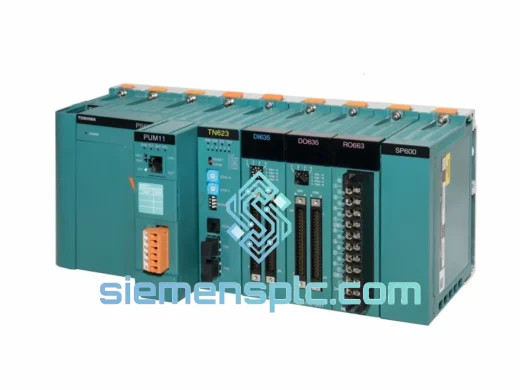
FOXBORO S3PU65A GS3PU65AS DCS CPU Module
I/A Series
Origin FR
DCS Processor Module
FOXBORO
RFQ Ready
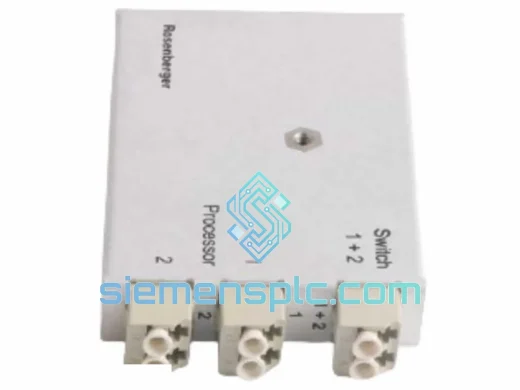
FOXBORO P0926MX Signal Splitter / Isolator
I/A Series
Origin FR
Signal Splitter / Isolator