
FOXBORO
In Stock OK
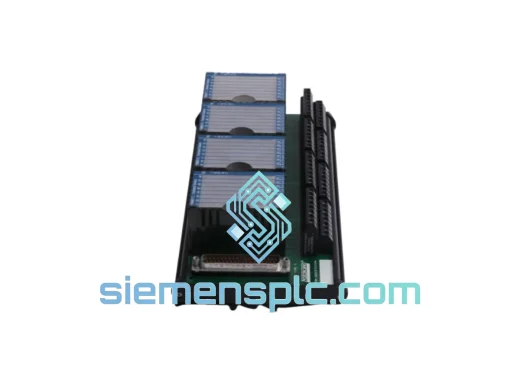
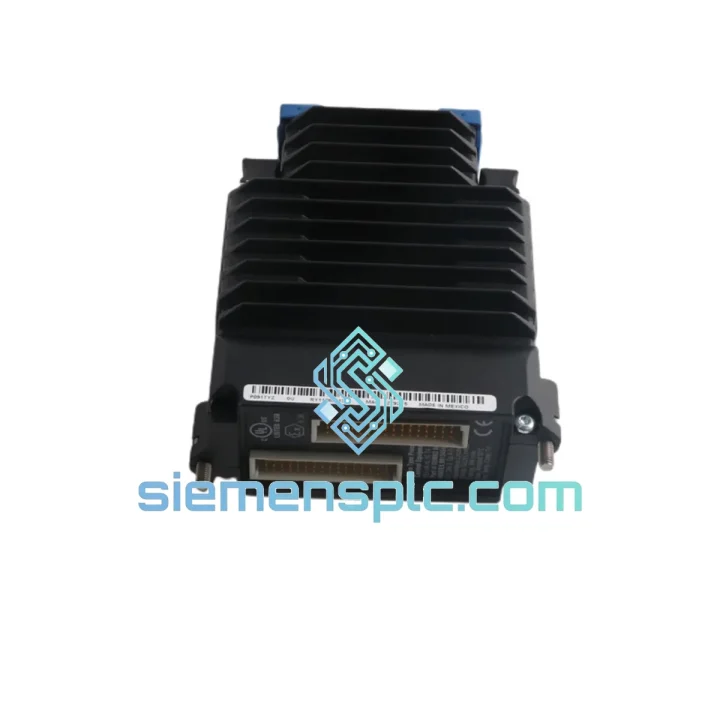
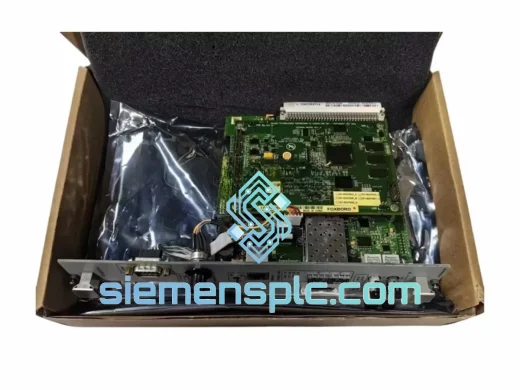
FOXBORO FEM100 P0973CA Fieldbus Expansion Module
Request verified availability, condition, replacement risk review, packing options and courier lead time for FEM100 P0973CA.
BrandFOXBORO
Part NumberFEM100 P0973CA
ConditionAvailability Check
Lead TimeRFQ Confirmation
DocumentsDatasheet / photos by RFQ
ShippingExport packing available
Auto-filled RFQ
FEM100 P0973CA
Click Request Quote and the part number is inserted into the inquiry form automatically.
- Reply by email: [email protected]
- WhatsApp / Tel: +86 18359268345
- Mon-Sat 9:00-18:00 GMT+8
Procurement Data
Key Product Information
Core fields for model confirmation and RFQ routing. Detailed product narrative remains below.
- Brand
- FOXBORO
- Primary Part Number
- FEM100 P0973CA
- Product Type
- Fieldbus Expansion Module
- Series / Family
- I/A Series
- Manufacturer
- FOXBORO (Schneider Electric)
- Country of Origin
- FR
- Catalog Category
- DCS & Safety Modules
- Operating Temp.
- 0°C to 60°C
Model confirmed for inquiry
FEM100 P0973CA
Send quantity, destination and urgency. The RFQ form keeps this part number attached.
Request Quote
Product Overview
FOXBORO FEM100 P0973CA — Stop the Bleed: Every Minute of DCS Downtime Costs You Real Money
Your Foxboro I/A Series DCS just threw a fault. The FEM100 P0973CA is offline. The fieldbus segment is dark. Operators are on manual. Production is bleeding out at whatever your per-hour loss rate is — and you already know that number by heart. We stock the FOXBORO FEM100 P0973CA in Xiamen, verified, tested, and ready to leave the warehouse today. This is not a lead-time quote. This is a same-day ship commitment.
URGENT REQUIREMENT? Contact: [email protected] | WhatsApp: +86 18359268345
Quick Technical Datasheet
| Manufacturer | FOXBORO (Schneider Electric) |
| Part Number | FEM100 / P0973CA |
| Module Type | Fieldbus Expansion Module |
| Protocol | FOUNDATION Fieldbus H1 (IEC 61158) |
| Compatible Platform | Foxboro I/A Series DCS (all FF-capable generations) |
| H1 Segments | Up to 4 per module |
| Host Interface | Nodebus / Mesh (I/A Series internal bus) |
| Power Supply | Via I/A Series backplane (no external PSU required) |
| Operating Temperature | 0°C to 60°C |
| Mounting | I/A Series FBM enclosure / rack |
| Weight | Approx. 100 g |
| Certifications | CE, UL |
| Stock Status | ✔ READY TO SHIP — Xiamen Warehouse |
Troubleshooting & Replacement Tips
After ten years of pulling failed modules out of racks at 2 AM, here is what actually matters when you are swapping an FEM100 P0973CA under pressure:
Common Fault Signatures Before Full Failure
- Intermittent FF device dropouts on one or more H1 segments — often misdiagnosed as cable or terminator faults. If you have already checked the field wiring and terminators are confirmed at both ends, the FEM100 itself is the next suspect.
- AIM*AT showing “Module Not Responding” or repeated “Communication Error” alarms on the Nodebus side — the module’s internal Nodebus interface is degrading, typically a capacitor or ASIC failure on older units.
- Segment power LED cycling or extinguished — the onboard H1 segment power conditioner has failed. Field devices will lose power and go offline sequentially.
- Partial segment loss — only 1 or 2 of the 4 H1 ports are active. The internal multiplexer is partially failed; replacement is the only fix.
Step-by-Step Hot-Swap Procedure
- Confirm redundancy status. If your I/A Series configuration has a redundant FEM100 pair, verify the standby module has taken over before pulling the primary. Do not assume — check the AIM*AT module status screen explicitly.
- Inhibit alarms. Suppress FF device alarms in your DCS console before extraction to prevent alarm floods during the swap.
- Note the slot address. The FEM100 uses auto-addressing based on physical slot position in the FBM enclosure. Replacement in the same slot will inherit the same Nodebus address automatically — no manual address configuration required. Do not move it to a different slot unless you intend to reconfigure.
- Check hardware revision. The P0973CA has known hardware revisions (Rev A through Rev D). Confirm the replacement unit’s revision matches or is a later revision than the failed unit. Earlier revisions may not support all firmware features active in your system.
- Firmware compatibility check. Before insertion, verify your I/A Series release level against the FEM100 firmware matrix in Foxboro TechAlert or your site’s release notes. Mismatched firmware will cause the module to boot into a degraded state and refuse to join the Nodebus.
- Seat and latch firmly. The FBM enclosure connector is a 96-pin DIN backplane. Partial seating causes intermittent Nodebus errors that are extremely difficult to diagnose. Push until you feel both latches click.
- Observe boot sequence. After insertion, the module runs a self-test (approximately 45–90 seconds). The status LED will cycle amber → green. If it stays amber or goes red, pull and re-seat before assuming a DOA unit.
- Verify H1 segment recovery. In AIM*AT, confirm all previously configured FF devices re-appear on their respective segments within 2–3 minutes. If a device does not return, check the device’s own power and address — the segment power conditioner on the new module may have a slightly different output voltage that triggers re-initialization on some older FF devices.
- Re-enable alarms and document. Log the swap with timestamp, failed unit serial number, and replacement unit serial number. Update your site’s spare parts register.
P0973CA vs P0973CB — What Changed?
The P0973CB is the revised variant. The primary differences are an updated H1 segment power conditioner with higher short-circuit tolerance and a revised Nodebus transceiver with improved noise immunity. In most I/A Series installations, P0973CB is a direct drop-in for P0973CA. However, if your site is running I/A Series software below v8.4, confirm with Foxboro TechAlert before substituting — there is a known firmware handshake difference that can cause the CB variant to report as “Unknown Module” on older release levels.
Reliability in Harsh Conditions
The FEM100 P0973CA was designed for process plant environments, not office racks. Foxboro’s qualification testing for this module series covers the conditions that actually kill electronics in the field:
Vibration: Qualified to IEC 60068-2-6 sinusoidal vibration and IEC 60068-2-64 random vibration profiles. In practice, this means the module survives continuous low-frequency vibration from compressors, pumps, and rotating equipment mounted in the same structure as the control room. Solder joint fatigue — the primary vibration failure mode in lesser modules — is addressed through Foxboro’s conformal coating and through-hole component strategy on critical signal paths.
Thermal Cycling: Process plants are not climate-controlled. Ambient temperatures in FBM enclosures can swing from sub-zero during winter shutdowns to 55°C+ during summer operation in tropical refineries. The FEM100’s thermal design accounts for this: the onboard power regulation components are rated to 85°C junction temperature with derating curves that keep them within safe limits even at maximum ambient. Electrolytic capacitors — the component most sensitive to thermal stress — are specified at 105°C rated parts with conservative voltage derating.
Humidity and Condensation: Coastal and offshore installations expose electronics to salt-laden humid air. The FEM100 PCB assembly is conformal coated to IPC-CC-830 standards, providing a barrier against moisture ingress, conductive contamination, and corrosion on exposed copper traces. This is not a marketing claim — it is a process qualification requirement for modules deployed on offshore platforms in the North Sea and Gulf of Mexico.
EMI/RFI: Heavy industrial environments generate significant electromagnetic interference from variable frequency drives, large motor starters, and welding equipment. The FEM100 meets IEC 61000-4 series immunity requirements, including ESD (Level 3), EFT/Burst (Level 3), and surge (Level 3). The Nodebus interface includes galvanic isolation to prevent ground loop currents from corrupting communication.
Global Express Logistics
Our warehouse is in Xiamen, Fujian — one of China’s primary export hubs with direct access to international freight lanes. When you place an urgent order, here is exactly what happens:
- Same-day cutoff: 16:00 CST. Orders confirmed before 16:00 Xiamen time ship the same business day. Orders after cutoff ship the following morning.
- Carrier selection: DHL Express and FedEx International Priority are our primary carriers for urgent shipments. We select based on destination and current transit time performance — we check both before booking.
- Transit times (typical): Southeast Asia 1–2 days; Middle East 2–3 days; Europe 2–4 days; North America 3–5 days; South America / Africa 4–7 days. These are door-to-door estimates under normal customs conditions.
- Export documentation: Commercial invoice, packing list, and certificate of origin are prepared same-day. For customers requiring CITES, EUC, or end-user certificates, notify us at order placement — we can accommodate most requirements within 24 hours.
- Customs HS code: 8537.10 (boards, panels, consoles for electric control). We pre-declare correctly to minimize customs hold risk. Mis-declaration is the single largest cause of customs delays — we do not cut corners here.
- Tracking: AWB number sent via email and WhatsApp within 2 hours of pickup. We monitor shipments actively and flag any customs holds to you immediately so you can intervene with your local broker if needed.
- Insurance: All shipments are fully insured at declared value. In the event of carrier damage or loss, we initiate the claim and ship a replacement unit immediately — we do not make you wait for the claim to settle.
If your plant is down and you need the fastest possible delivery, contact us directly on WhatsApp before placing the order. We will check the next available flight out of Xiamen and give you a realistic door-to-door commitment before you commit to the purchase.
Contact Information
Email: [email protected]
WhatsApp: +86 18359268345
Web: siemensplc.com
© 2026. All rights reserved.
Ready to quote
[email protected]
Send This Part Number to Sales
RFQ workflow
Quality workflow ->
Confirmation Process
01Model confirmation
We check the full part number, brand, series and visible nameplate information before quotation.
02Availability reply
Sales confirms stock path, condition option, quantity and realistic lead time for export dispatch.
03Packing & courier
DHL, FedEx, UPS or buyer courier arrangements can be reviewed with packing requirements.
Continue sourcing
Browse full catalog ->
Related Automation Parts
Similar brand or category products for fast comparison and multi-item RFQ lists.
FOXBORO
RFQ Ready
FOXBORO D0128QJ Differential Pressure Flow Element – I/A Series
I/A Series
Origin FR
Differential Pressure Flow Meter
FOXBORO
RFQ Ready
FOXBORO SY-0399140L SY-0303372J DCS Motherboard
I/A Series
Origin FR
DCS Motherboard
FOXBORO
RFQ Ready
FOXBORO SY-60301002RB DCS Backplane Motherboard – SCD6000 Series
I/A Series
Origin FR
DCS Backplane Motherboard