Fuji Electric
RFQ Ready
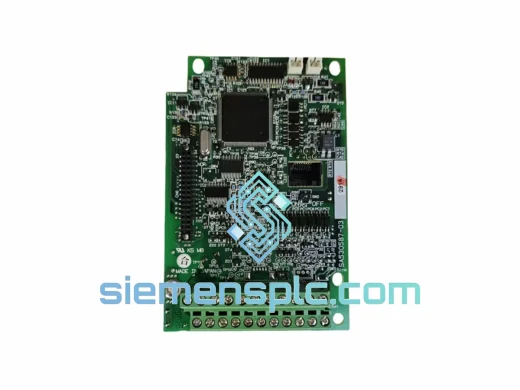
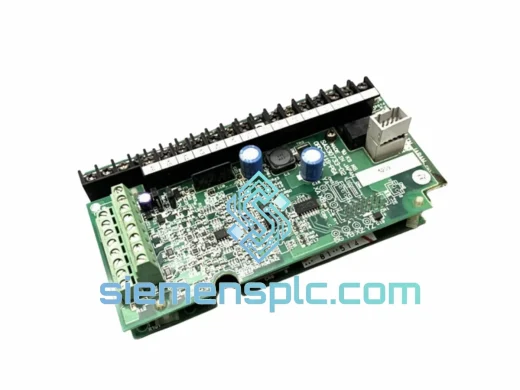
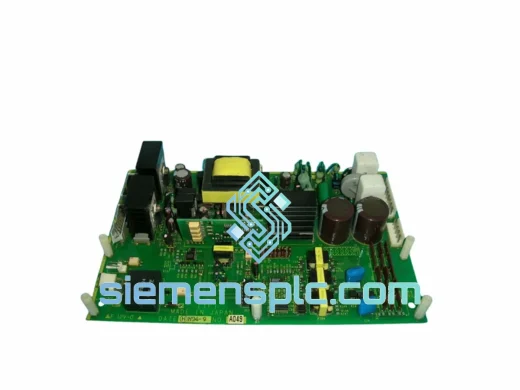
FUJI Electric EP-3531D C1-Z1 Inverter Control Board
P-3531D C1-Z1 FRENIC Series
Origin Japan
Inverter Drive Control Board
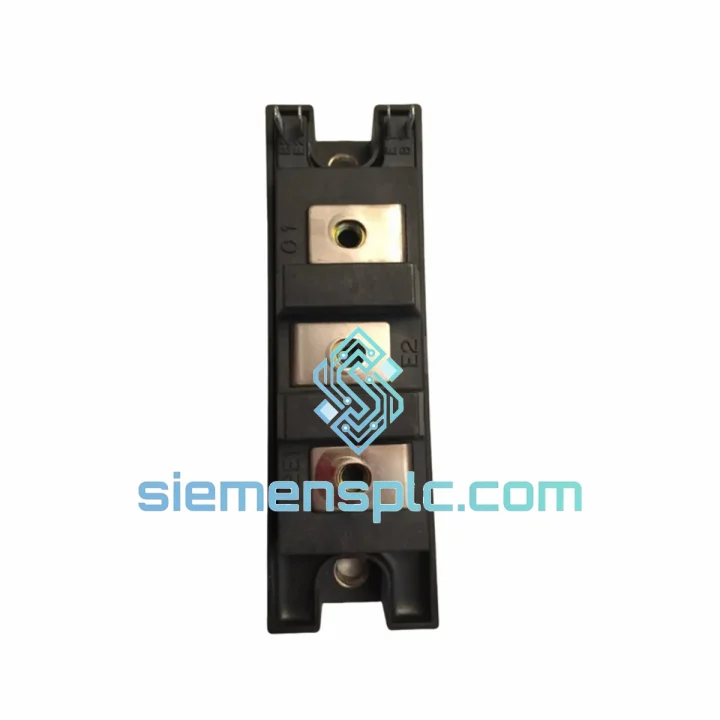
Request verified availability, condition, replacement risk review, packing options and courier lead time for 2DI75Z-120.
Click Request Quote and the part number is inserted into the inquiry form automatically.
Core fields for model confirmation and RFQ routing. Detailed product narrative remains below.
The 2DI75Z-120 is a 75 A / 1200 V dual IGBT module manufactured by Fuji Electric under the Z-Series platform. It integrates two discrete IGBT chips and two anti-parallel freewheeling diodes into a single isolated-base package, forming a complete half-bridge switching cell. This topology is the fundamental building block of three-phase voltage-source inverters (VSI), bidirectional DC-DC converters, and active front-end rectifiers deployed across industrial drive, servo, and energy conversion systems.
Unlike earlier Fuji D-Series and M-Series modules, the Z-Series introduces a refined carrier lifetime profile in the IGBT drift region, reducing tail current duration during turn-off. At a switching frequency of 10 kHz and a DC bus voltage of 600 V, this translates to measurably lower Eoff per switching cycle — a parameter that directly governs thermal budget allocation in the power stage design. Engineers working within tight heatsink volume constraints will find this characteristic particularly relevant when sizing thermal management for continuous 75 A operation.
📩 Real-time Stock & RFQ: [email protected] | WhatsApp: +86 18359268345
| Part Number | 2DI75Z-120 |
| Manufacturer | Fuji Electric Co., Ltd. |
| Module Configuration | Dual IGBT — 2-in-1 Half-Bridge (H-Bridge leg) |
| Collector Current (IC) | 75 A (DC, Tc = 25°C) |
| Collector-Emitter Voltage (VCES) | 1200 V |
| Gate-Emitter Voltage (VGES) | ±20 V (absolute maximum) |
| Saturation Voltage (VCE(sat)) | ≤ 2.0 V @ IC = 75 A, VGE = 15 V |
| Switching Frequency | Up to 20 kHz (application-dependent) |
| Junction Temperature (Tj) | –40°C to +150°C |
| Case Temperature (Tc max) | +125°C |
| Isolation Voltage (Visol) | 2500 V AC, 1 min (baseplate to terminals) |
| Thermal Resistance (Rth j-c per IGBT) | ≤ 0.50 °C/W |
| Package Series | Z-Series Isolated Copper Baseplate |
| Mounting | M5 screw-mount to heatsink surface |
| Terminal Type | Screw terminals (P, N, AC output, gate, emitter sense) |
| Approximate Weight | 200 g |
| RoHS Compliance | Yes — Directive 2011/65/EU |
| Warranty | 12 months from date of shipment |
The 2DI75Z-120 is constructed on a Direct Copper Bonding (DCB) ceramic substrate — typically Al₂O₃ or AlN — which bonds copper conductor layers directly to the ceramic without solder or adhesive intermediaries. This eliminates the thermal interface resistance layer that exists in older wire-bonded modules with separate insulation pads. The result is a Rth(j-c) value that remains stable over thermal cycling, as there is no delamination risk at a solder-to-insulator interface.
Each IGBT chip within the module is a planar-gate, n-channel, punch-through (PT) or non-punch-through (NPT) structure depending on the production batch. The Z-Series designation specifically refers to Fuji Electric’s optimization of the buffer layer doping profile, which controls the minority carrier injection efficiency during conduction and the recombination rate during turn-off. A faster recombination rate reduces the tail current — the residual collector current that flows after gate turn-off — which is the dominant source of turn-off switching loss (Eoff) at voltages above 400 V DC.
The integrated freewheeling diodes (FWD) are co-packaged anti-parallel diodes with a soft-recovery characteristic. Soft recovery means the reverse recovery current (Irr) decays gradually rather than abruptly, suppressing the di/dt spike that would otherwise induce voltage overshoot across stray bus inductance. In a practical PCB or busbar layout with 50–100 nH of parasitic inductance, a hard-recovery diode can generate voltage spikes of 200–400 V above the DC bus — a condition that stresses gate oxide and can cause latent IGBT failure. The soft-recovery FWD in the 2DI75Z-120 reduces this spike to manageable levels without requiring large snubber capacitors.
The isolated copper baseplate provides a low-resistance thermal path from the DCB substrate to the heatsink mounting surface. The baseplate flatness specification (typically < 50 µm bow over the mounting area) ensures uniform thermal interface material (TIM) compression, which is critical for achieving the rated Rth(c-h) value. Uneven baseplate contact is a common root cause of premature IGBT failure in field installations where TIM application is not controlled.
EMC performance of the module is influenced by the internal bond wire inductance and the layout of the gate-emitter sense terminals. The 2DI75Z-120 provides separate Kelvin emitter sense terminals for each IGBT, allowing the gate driver to reference the true emitter potential rather than the power emitter terminal, which carries high di/dt current. This Kelvin connection eliminates the emitter inductance-induced feedback that would otherwise reduce effective gate drive voltage during fast switching transients — a mechanism that degrades switching speed and increases switching losses in modules without this feature.
Every 2DI75Z-120 unit supplied by siemensplc.com is sourced through verified Fuji Electric authorized distribution channels. Fuji Electric manufactures IGBT modules under ISO 9001:2015 quality management systems at facilities in Japan, with each production lot subject to 100% electrical parametric testing at the factory level — including VCES blocking voltage, VCE(sat), VGE(th), and leakage current verification.
Upon receipt at our Xiamen, China facility, incoming units undergo secondary inspection: package marking verification against Fuji Electric’s official date code and lot number format, visual inspection for baseplate flatness and terminal integrity, and random-sample electrical spot-testing using calibrated curve tracer equipment. Units that do not pass inspection are quarantined and returned to the supply chain — they are not offered for sale.
Orders are dispatched from Xiamen within 1–3 business days of payment confirmation. Standard export logistics options include DHL Express (3–5 business days to Europe and North America), FedEx International Priority, and UPS Worldwide Express. For bulk orders exceeding 20 units, sea freight consolidation via Xiamen Port is available with lead times of 18–25 days to major global ports. All shipments include full tracking, commercial invoice, packing list, and certificate of origin documentation. Export classification is handled in compliance with Chinese customs regulations and applicable international trade controls.
A 12-month warranty covers manufacturing defects under normal operating conditions. Warranty claims require return of the unit with a failure description and application context. Physical damage, overvoltage events, or installation errors are excluded from warranty coverage per standard semiconductor component terms.
📧 Email: [email protected]
💬 WhatsApp: +86 18359268345
🌐 Web: siemensplc.com
📍 Location: Xiamen, China
© 2026 siemensplc.com. All rights reserved.
We check the full part number, brand, series and visible nameplate information before quotation.
Sales confirms stock path, condition option, quantity and realistic lead time for export dispatch.
DHL, FedEx, UPS or buyer courier arrangements can be reviewed with packing requirements.
Similar brand or category products for fast comparison and multi-item RFQ lists.