
GE
In Stock OK
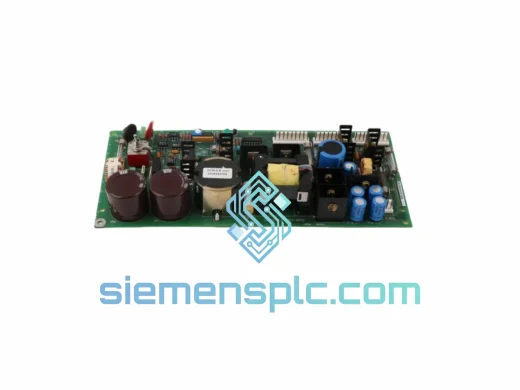
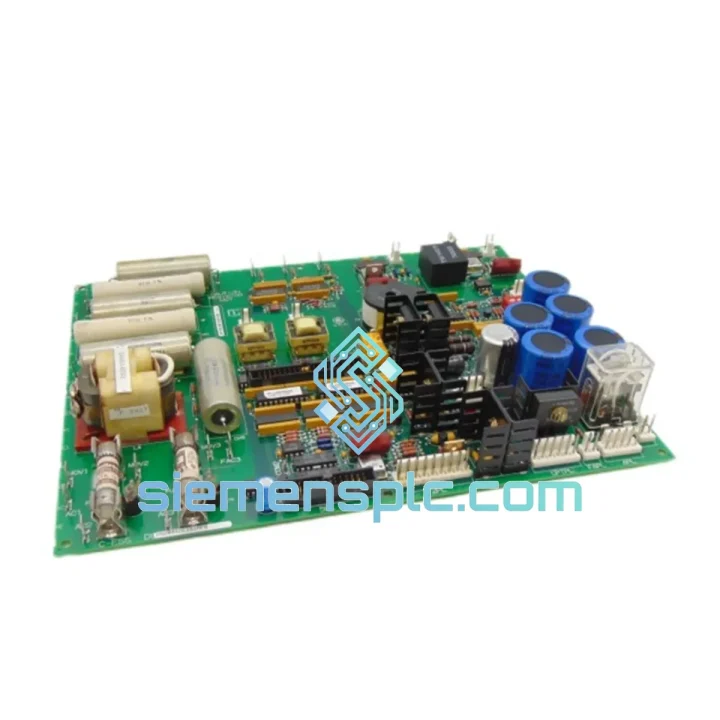
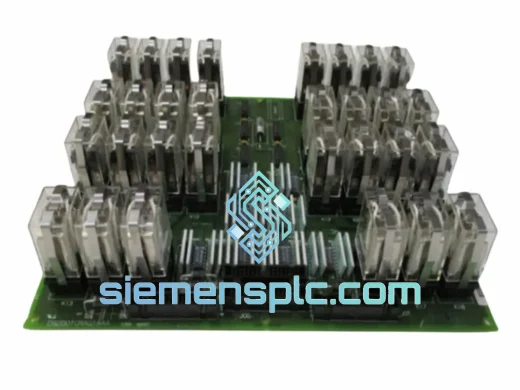
GE DS200SDCIG1AFB Turbine Control Board – Mark V
Request verified availability, condition, replacement risk review, packing options and courier lead time for DS200SDCIG1AFB.
BrandGE
Part NumberDS200SDCIG1AFB
ConditionAvailability Check
Lead TimeRFQ Confirmation
DocumentsDatasheet / photos by RFQ
ShippingExport packing available
Auto-filled RFQ
DS200SDCIG1AFB
Click Request Quote and the part number is inserted into the inquiry form automatically.
- Reply by email: [email protected]
- WhatsApp / Tel: +86 18359268345
- Mon-Sat 9:00-18:00 GMT+8
Procurement Data
Key Product Information
Core fields for model confirmation and RFQ routing. Detailed product narrative remains below.
- Brand
- GE
- Primary Part Number
- DS200SDCIG1AFB
- Product Type
- Turbine Control Board
- Series / Family
- Mark V
- Country of Origin
- US
- Catalog Category
- Power Supplies
- Operating Temp.
- 0°C to +60°C
- Warranty
- 12 months from date of shipment
Model confirmed for inquiry
DS200SDCIG1AFB
Send quantity, destination and urgency. The RFQ form keeps this part number attached.
Request Quote
Product Overview
GE DS200SDCIG1AFB: DC Power Conditioning and Instrument Signal Interface Board in the Mark V Turbine Control Architecture
The DS200SDCIG1AFB occupies a structurally non-negotiable position within the GE Speedtronic Mark V turbine control panel. Its function is dual: it conditions the DC bus voltage into the regulated, low-ripple supply rails demanded by the Mark V’s processor and I/O cards, and it buffers analog instrument signals — thermocouples, RTDs, and 4–20 mA transmitters — before those signals reach the control processor. When this board degrades, the consequences propagate across the entire control loop: voltage rail sag introduces timing jitter into the processor’s scan cycle, and uncompensated analog drift corrupts the temperature and pressure measurements that govern fuel valve positioning, flame detection, and overspeed protection logic. The board is not a support component; it is the electrical substrate on which the Mark V’s deterministic control behavior depends.
Deployed across GE Frame 6B, 7EA, 9E, and LM-series gas turbines, as well as industrial steam turbines in refinery cogeneration and combined-cycle configurations, the DS200SDCIG1AFB has accumulated field hours in some of the most demanding continuous-duty environments in power generation. Its architecture reflects GE’s turbine-grade design philosophy: conservative derating of power components, multi-layer PCB construction for EMI suppression, and edge-connector backplane integration that eliminates field wiring as a failure mode during board replacement.
Real-time Stock & RFQ: [email protected] | WhatsApp: +86 18359268345
Technical Parameters
| Parameter | Value / Specification |
|---|---|
| Part Number | DS200SDCIG1AFB |
| Brand | General Electric (GE) |
| Series | Speedtronic Mark V Turbine Control System |
| Board Function | DC Power Supply Conditioning & Analog Instrument Signal Interface |
| Input Voltage | 28 VDC nominal (Mark V panel DC bus) |
| Output Rails | Multiple regulated DC outputs for I/O and processor card supply |
| Analog Input Types | Thermocouple, RTD, 4–20 mA current loop |
| Signal Accuracy | ±0.1% of full scale under rated load |
| Form Factor | Eurocard PCB, Mark V rack-mount backplane compatible |
| Connector Interface | Edge connector, Mark V backplane standard |
| Operating Temperature | 0°C to +60°C |
| Storage Temperature | −40°C to +85°C |
| Relative Humidity | 5% to 95% non-condensing |
| Board Weight | 380 g (bare board) |
| Country of Origin | United States |
| Compatible Systems | Mark V, Mark V LM, selected Mark VI transition configurations |
| Functional Safety | Applicable to IEC 61511 SIL-rated protection loop architectures |
| Warranty | 12 months from date of shipment |
Hardware Logical Analysis
The DS200SDCIG1AFB’s power conditioning stage employs a linear regulation topology rather than a switching architecture. This is a deliberate design choice for turbine control environments: linear regulators produce no switching noise harmonics, eliminating a primary source of common-mode interference that would otherwise couple into the analog signal conditioning chain sharing the same board. The absence of a switching frequency means there is no 50–500 kHz noise floor to suppress — a meaningful advantage when the board is conditioning millivolt-level thermocouple signals in a turbine hall where variable-frequency drives and high-current bus bars generate broadband electromagnetic interference.
The analog front end uses instrumentation amplifier topology for differential signal acquisition. Each input channel presents a high common-mode rejection ratio (CMRR), typically exceeding 80 dB at 50/60 Hz, which is the dominant interference frequency in power plant environments. This architecture allows the board to extract accurate temperature and pressure readings from sensors located tens of meters from the control panel, across cable runs that traverse high-voltage cable trays — a routing scenario that would saturate a single-ended input stage.
The PCB construction uses a multi-layer stackup with dedicated ground planes separating the power conditioning layer from the analog signal layer. This physical separation prevents the return currents of the power stage from modulating the analog ground reference — a failure mode that manifests as a load-dependent offset error in temperature measurements, which is particularly dangerous in fuel control loops where a 2°C measurement error at the combustion reference point can shift the fuel-to-air ratio outside the flame stability envelope.
The edge connector interface to the Mark V backplane is designed with gold-plated contacts rated for a minimum of 500 insertion cycles, which supports the board’s role as a field-replaceable unit (FRU) in a maintenance strategy that requires periodic removal for inspection without connector degradation. The backplane bus architecture ensures that board removal and reinsertion does not require panel rewiring, reducing MTTR to under two hours for a trained technician with the correct spare on hand.
System Integration Benefits
- Deterministic scan cycle integrity: Regulated supply rails with low ripple (<50 mV peak-to-peak) prevent voltage-induced timing variation in the Mark V processor’s scan cycle, maintaining the sub-millisecond determinism required for overspeed protection response.
- Analog measurement traceability: On-board signal conditioning with documented accuracy tolerances allows plant engineers to establish a calibration baseline for thermocouple and RTD channels, supporting IEC 61511 proof-test documentation requirements.
- Reduced spare parts inventory complexity: Cross-compatibility across Mark V, Mark V LM, and selected Mark VI transition panels means a single board SKU covers multiple turbine unit types within a multi-unit plant, reducing the number of line items in the critical spares inventory.
- Zero-rewiring replacement: Backplane edge-connector integration means board swap does not disturb field wiring terminations, eliminating the risk of wiring errors during emergency maintenance under time pressure.
- EMI-hardened signal path: Differential input architecture with >80 dB CMRR at power-line frequencies maintains measurement accuracy in turbine halls with high electromagnetic interference density from variable-frequency drives and bus duct installations.
- Diagnostic transparency: Stable, well-characterized supply rails allow the Mark V’s built-in diagnostics to distinguish between a genuine sensor fault and a power-quality-induced measurement anomaly — reducing nuisance trips and improving fault isolation speed.
- SIL loop compatibility: The board’s signal conditioning chain is part of the safety instrumented system (SIS) architecture in IEC 61511-compliant Mark V installations, and its replacement with a tested, documented unit maintains the integrity of the SIL verification record.
- Long-term platform supportability: The Mark V is a mature control platform with an installed base that will remain in service for another decade or more at many sites. Maintaining access to tested, traceable DS200SDCIG1AFB units is a prerequisite for sustaining the platform without a full control system upgrade.
Quality Assurance & Global Logistics
Every DS200SDCIG1AFB dispatched from our Xiamen facility passes through a four-stage inspection and test protocol. Visual inspection screens for component damage, PCB trace integrity, capacitor condition, and connector pin geometry. Functional power-on testing energizes the board in a Mark V-compatible test fixture and verifies all output voltage rails against GE’s original specification over a 30-minute thermal soak. Analog channel verification applies calibrated stimulus signals to each input and confirms output linearity and accuracy within the documented tolerance band. Each unit is assigned a serialized test record with technician ID, test date, and measured results, providing full traceability from procurement source to shipment.
Shipments originate from Xiamen, China, with access to direct air freight connections to major industrial hubs in Europe, the Middle East, Southeast Asia, and the Americas. Standard international lead time for in-stock units is 3–7 business days. For unplanned turbine outages where every hour of downtime carries a measurable financial cost, expedited next-flight-out freight is available upon request. All shipments include commercial invoice, packing list, and country-of-origin documentation suitable for customs clearance in regulated import markets. Export compliance screening is applied to all orders in accordance with applicable trade regulations.
Contact Information
Email: [email protected]
WhatsApp: +86 18359268345
Web: siemensplc.com
Location: Xiamen, China
© 2026
Ready to quote
[email protected]
Send This Part Number to Sales
RFQ workflow
Quality workflow ->
Confirmation Process
01Model confirmation
We check the full part number, brand, series and visible nameplate information before quotation.
02Availability reply
Sales confirms stock path, condition option, quantity and realistic lead time for export dispatch.
03Packing & courier
DHL, FedEx, UPS or buyer courier arrangements can be reviewed with packing requirements.
Continue sourcing
Browse full catalog ->
Related Automation Parts
Similar brand or category products for fast comparison and multi-item RFQ lists.
GE
RFQ Ready
GE DS200TCRAG1AAA Power Supply Board – Mark V Speedtronic
Mark V
Origin US
Power Supply Board