GE
In Stock OK
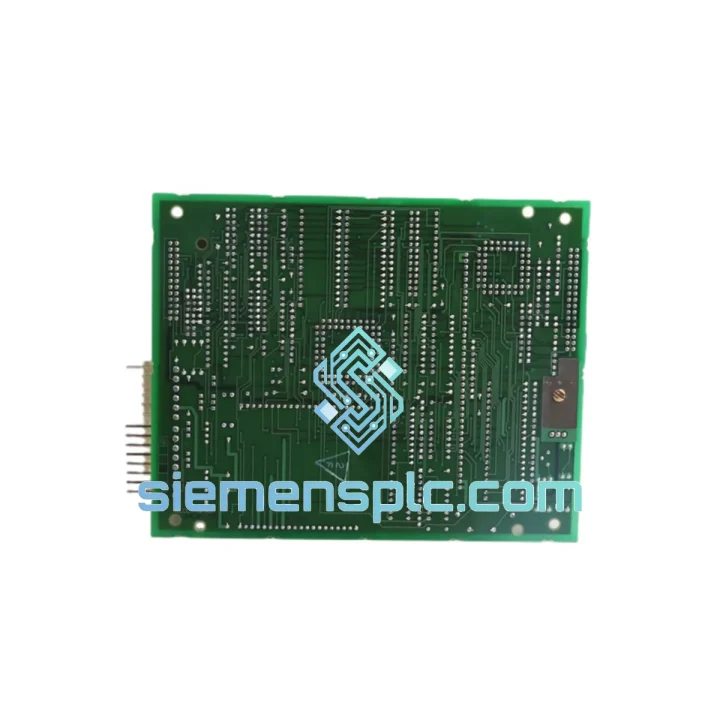
GE DS200SLCCG3RGH Communication Board – Mark VI Series
Request verified availability, condition, replacement risk review, packing options and courier lead time for DS200SLCCG3RGH.
BrandGE
Part NumberDS200SLCCG3RGH
ConditionAvailability Check
Lead TimeRFQ Confirmation
DocumentsDatasheet / photos by RFQ
ShippingExport packing available
Auto-filled RFQ
DS200SLCCG3RGH
Click Request Quote and the part number is inserted into the inquiry form automatically.
- Reply by email: [email protected]
- WhatsApp / Tel: +86 18359268345
- Mon-Sat 9:00-18:00 GMT+8
Procurement Data
Key Product Information
Core fields for model confirmation and RFQ routing. Detailed product narrative remains below.
- Brand
- GE
- Primary Part Number
- DS200SLCCG3RGH
- Product Type
- Communication Interface Board
- Series / Family
- Mark VI
- Manufacturer
- General Electric (GE)
- Country of Origin
- US
- Catalog Category
- Communication
- Operating Temp.
- 0°C to +60°C (panel ambient)
- Humidity
- 5% to 95% RH, non-condensing
- Warranty
- 12 months from date of shipment
Model confirmed for inquiry
DS200SLCCG3RGH
Send quantity, destination and urgency. The RFQ form keeps this part number attached.
Request Quote
Product Overview
GE DS200SLCCG3RGH — Serial Communication Interface Board in the Mark VI Turbine Control Architecture
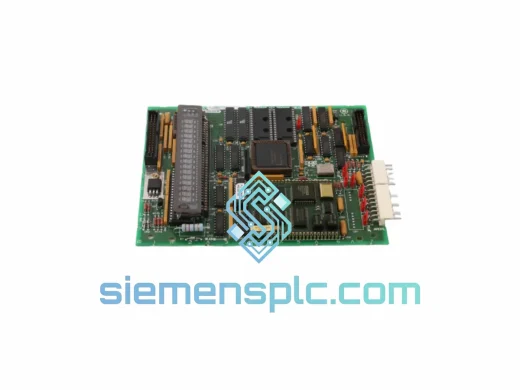
The DS200SLCCG3RGH is a serial communication interface board engineered for deployment within GE’s Mark VI turbine control platform. Its primary function is to manage the low-level serial data exchange between the Mark VI controller and peripheral field devices — including operator HMI workstations, remote I/O packs, and plant-level SCADA or DCS networks. Without a functional communication board at this node, the controller loses its ability to transmit state data, receive operator commands, and execute coordinated protective actions across the turbine control loop.
In the Mark VI architecture, the controller backplane distributes real-time process data across a high-speed internal bus. The DS200SLCCG3RGH interfaces with this bus and translates data into serial protocol frames compatible with external communication standards. This translation layer is not a passive relay — it performs protocol framing, error detection, and handshake management autonomously, offloading communication overhead from the main processor board. The result is deterministic data delivery with bounded latency, which is a non-negotiable requirement in turbine protection and sequencing logic.
This board has been deployed across GE Frame 5, Frame 6B, Frame 7EA, Frame 7FA, Frame 9E, and Frame 9FA gas turbine installations, as well as steam turbine and combined-cycle plant configurations. Its service history spans power generation, oil and gas compression, and petrochemical process compressor trains — environments characterized by continuous operation, high ambient electrical noise, and zero tolerance for communication dropout.
Real-time Stock & RFQ: [email protected] | WhatsApp: +86 18359268345
Technical Parameters
| Parameter | Specification |
|---|---|
| Part Number | DS200SLCCG3RGH |
| Manufacturer | General Electric (GE) |
| Series | Mark VI Turbine Control System |
| Board Function | Serial Communication Interface |
| Form Factor | PCB module, Mark VI panel rack-mount |
| Communication Protocols | RS-232, RS-485 serial; Mark VI internal backplane bus |
| Operating Voltage | +5 VDC / +24 VDC (supplied via backplane) |
| Operating Temperature | 0°C to +60°C (panel ambient) |
| Humidity Tolerance | 5% to 95% RH, non-condensing |
| PCB Weight | Approx. 240 g |
| Connector Interface | Edge connector + D-sub serial ports |
| Compatible Platform | GE Mark VI control panels (VCMI, VTUR, VPRO configurations) |
| Condition Available | Genuine OEM / Tested Surplus |
| Warranty | 12 months from date of shipment |
Hardware Logical Analysis
The DS200SLCCG3RGH implements a dedicated serial communication controller IC that operates independently of the Mark VI main CPU. This separation of concerns is architecturally deliberate: communication tasks — including baud rate generation, start/stop bit framing, parity checking, and FIFO buffer management — are handled entirely within the board’s own logic, preventing communication latency from propagating into the controller’s scan cycle.
The board’s PCB layout follows controlled-impedance trace routing on the serial signal lines, which is essential for maintaining signal integrity at RS-485 baud rates up to 115,200 bps across cable runs typical in turbine panel installations. Differential signaling on the RS-485 interface provides inherent common-mode noise rejection — a critical property in environments where high-voltage switchgear, variable frequency drives, and large rotating machinery generate continuous broadband electromagnetic interference.
Optical isolation is implemented at the serial port boundary. The isolation barrier — typically rated at 2,500 Vrms or higher in GE Mark VI communication boards — prevents ground loop currents from corrupting serial data and protects the backplane logic from transient overvoltages originating on field cable runs. This isolation architecture means that a wiring fault or surge event on the external serial cable does not propagate into the controller backplane, preserving system integrity during fault conditions.
The board also incorporates watchdog logic that monitors communication activity on each serial channel. If a channel goes silent beyond a configurable timeout threshold, the watchdog asserts a diagnostic flag that the Mark VI controller can read and act upon — triggering an alarm, initiating a controlled shutdown sequence, or switching to a redundant communication path depending on the system configuration. This self-monitoring capability is what distinguishes a purpose-built industrial communication board from a generic serial interface card.
System Integration Benefits
- Deterministic Communication Latency: Dedicated serial controller IC ensures communication tasks execute with fixed, bounded timing — scan cycle jitter from communication overhead is eliminated at the hardware level.
- Optical Isolation at Port Boundary: 2,500 Vrms isolation barrier on serial interfaces prevents ground loop interference and protects backplane logic from field-side transients.
- RS-485 Differential Signaling: Common-mode noise rejection inherent to the differential pair architecture maintains signal integrity in high-EMI turbine panel environments without requiring additional filtering hardware.
- Independent Watchdog Monitoring: Per-channel watchdog logic generates diagnostic flags on communication timeout, enabling the Mark VI controller to execute pre-programmed fault responses without operator intervention.
- Backplane Bus Offload: Protocol framing and error detection are handled on-board, reducing the data processing burden on the main controller CPU and preserving scan cycle bandwidth for control logic execution.
- Multi-Protocol Flexibility: RS-232 and RS-485 port availability on a single board allows simultaneous connection to HMI workstations (RS-232) and multi-drop field device networks (RS-485) without additional interface hardware.
- Direct OEM Replacement Compatibility: Board pinout and firmware interface conform to GE Mark VI OEM specifications, enabling drop-in replacement in VCMI, VTUR, and VPRO panel configurations without software reconfiguration in standard deployments.
- Diagnostic Transparency: Communication status registers are readable by the Mark VI controller and surfaceable to the operator HMI, providing real-time visibility into serial channel health, error counts, and buffer utilization — enabling predictive maintenance before a communication failure causes a trip.
- Thermal Stability: Rated for 0°C to +60°C continuous operation, covering the full ambient temperature range of enclosed turbine control panels in both temperate and tropical installation environments.
- ESD Protection on All I/O Lines: Transient voltage suppression (TVS) devices on serial port lines clamp electrostatic discharge events, protecting the board during installation and maintenance activities in the field.
Quality Assurance & Global Logistics
Every DS200SLCCG3RGH unit dispatched from our Xiamen, China facility undergoes a structured inspection and verification process before packaging. Visual inspection covers PCB surface condition, solder joint integrity, connector pin alignment, and component presence verification against the OEM bill of materials. Functional verification confirms serial port operation, backplane interface continuity, and watchdog logic response. Units that do not pass all inspection criteria are quarantined and not offered for sale.
Packaging follows ESD-safe protocols: anti-static bags, foam cushioning, and double-wall corrugated cartons rated for international air freight handling. Each shipment includes a packing list with the unit’s inspection record reference number, enabling full traceability from our facility to the end destination.
From Xiamen, we ship via DHL Express, FedEx International Priority, and UPS Worldwide Express. Transit times to major industrial hubs are typically 3–5 business days to Europe and North America, 2–4 business days to Southeast Asia and the Middle East, and 1–2 business days to Northeast Asia. Emergency outage shipments can be processed same-day for orders confirmed before 14:00 CST. All shipments are covered by cargo insurance and include full tracking from pickup to delivery.
The 12-month warranty covers manufacturing defects and functional failure under normal operating conditions. Warranty claims are processed with a replacement-first policy — we ship a verified replacement unit before requiring return of the failed board, minimizing turbine downtime during the warranty resolution process.
Contact Information
Email: [email protected]
WhatsApp: +86 18359268345
Web: siemensplc.com
Location: Xiamen, China
© 2026 siemensplc.com. All rights reserved.
Ready to quote
[email protected]
Send This Part Number to Sales
RFQ workflow
Quality workflow ->
Confirmation Process
01Model confirmation
We check the full part number, brand, series and visible nameplate information before quotation.
02Availability reply
Sales confirms stock path, condition option, quantity and realistic lead time for export dispatch.
03Packing & courier
DHL, FedEx, UPS or buyer courier arrangements can be reviewed with packing requirements.
Continue sourcing
Browse full catalog ->
Related Automation Parts
Similar brand or category products for fast comparison and multi-item RFQ lists.