
GE
In Stock OK
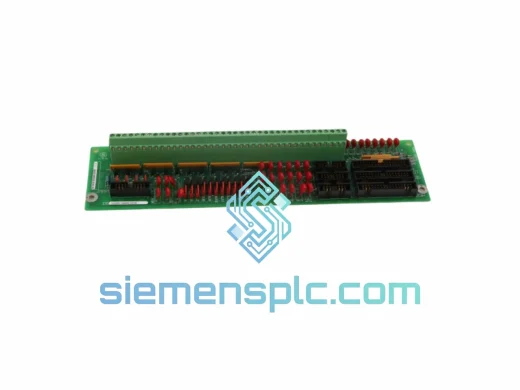
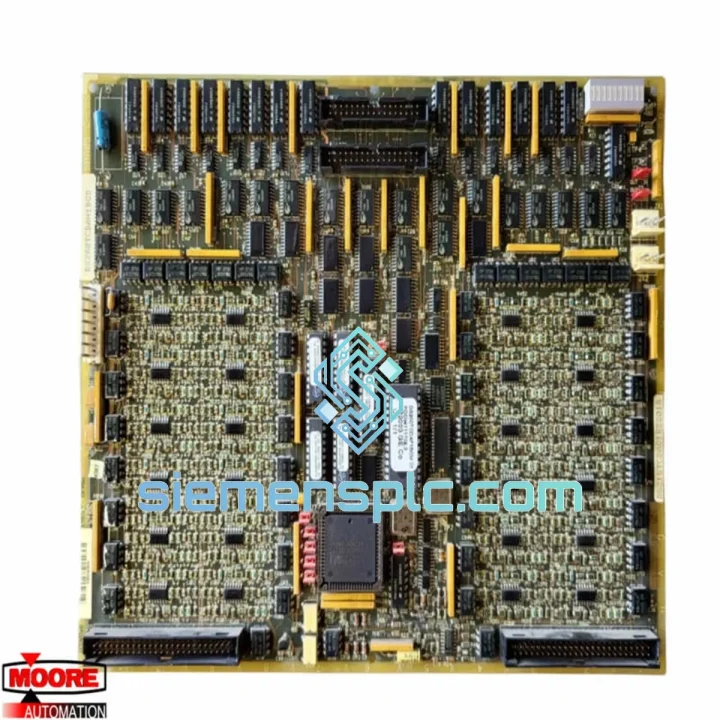
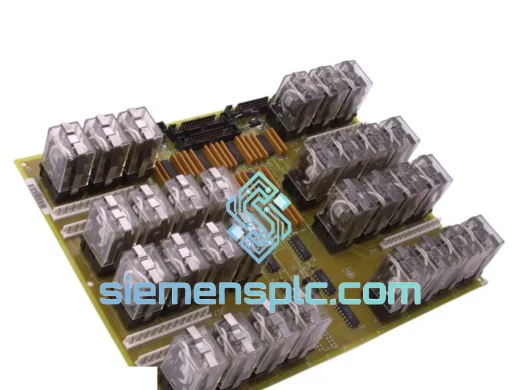
GE DS200TCDAH1BGD Interface Option Board – Mark V Speedtronic
Request verified availability, condition, replacement risk review, packing options and courier lead time for DS200TCDAH1BGD.
BrandGE
Part NumberDS200TCDAH1BGD
ConditionAvailability Check
Lead TimeRFQ Confirmation
DocumentsDatasheet / photos by RFQ
ShippingExport packing available
Auto-filled RFQ
DS200TCDAH1BGD
Click Request Quote and the part number is inserted into the inquiry form automatically.
- Reply by email: [email protected]
- WhatsApp / Tel: +86 18359268345
- Mon-Sat 9:00-18:00 GMT+8
Procurement Data
Key Product Information
Core fields for model confirmation and RFQ routing. Detailed product narrative remains below.
- Brand
- GE
- Primary Part Number
- DS200TCDAH1BGD
- Product Type
- Interface Option Board
- Series / Family
- Mark V
- Manufacturer
- General Electric (GE)
- Country of Origin
- US
- Catalog Category
- PLCs & Controllers
- Operating Temp.
- 0°C to +60°C (panel ambient, forced-air cooled rack)
- Warranty
- 12 months from date of shipment
Model confirmed for inquiry
DS200TCDAH1BGD
Send quantity, destination and urgency. The RFQ form keeps this part number attached.
Request Quote
Product Overview
GE DS200TCDAH1BGD: Interface Communication Backbone of the Mark V Speedtronic Control Architecture
The GE DS200TCDAH1BGD is a hardware interface option board engineered for deployment within GE’s Mark V Speedtronic turbine control platform — one of the most extensively installed gas turbine control systems globally, with operational footprints spanning combined-cycle power plants, LNG compression trains, pipeline booster stations, and industrial co-generation facilities. Within the Mark V panel rack, this board occupies the interface layer between the triple-redundant controller cores (, , ) and the external communication infrastructure, including operator workstations, SCADA gateways, and plant-level DCS networks.
The TCDA series boards — of which the DS200TCDAH1BGD is a specific hardware revision — handle the physical and logical translation of the Mark V’s internal backplane bus signals into formats consumable by external systems. When this board degrades or fails, the consequence is not merely a loss of visibility: the Mark V’s ability to execute sequencing commands, transmit alarm states, and synchronize protection logic with upstream control layers is directly compromised. In power generation environments where turbine availability directly maps to grid stability or process throughput, the operational cost of an unplanned outage attributable to a failed interface board can exceed tens of thousands of dollars per hour.
This product page provides verified technical parameters, hardware architecture analysis, and procurement guidance for maintenance engineers, MRO buyers, and EPC procurement teams sourcing the DS200TCDAH1BGD as a direct replacement or strategic spare.
📧 Real-time Stock & RFQ: [email protected] | WhatsApp: +86 18359268345
Technical Parameters
| Parameter | Value / Specification |
|---|---|
| Part Number | DS200TCDAH1BGD |
| Manufacturer | General Electric (GE) |
| Series | DS200 / TCDA |
| Compatible Platform | Mark V Speedtronic Turbine Control System |
| Board Function | Interface Option Board — backplane-to-external communication bridge |
| Form Factor | PCB module, Mark V panel rack slot-mount |
| Operating Temperature | 0°C to +60°C (panel ambient, forced-air cooled rack) |
| Storage Temperature | -40°C to +85°C |
| Supply Voltage | +5 VDC, +15 VDC, -15 VDC (from Mark V backplane) |
| Communication Interface | Mark V internal serial bus; external RS-422 / RS-485 compatible ports |
| Isolation | Opto-isolated signal paths on external I/O lines |
| PCB Coating | Conformal coating (moisture and contamination resistance) |
| Approx. Weight | 380 g |
| Revision Suffix | H1BGD (verify against panel BOM before ordering) |
| Warranty | 12 months from date of shipment |
Hardware Logical Analysis
The DS200TCDAH1BGD operates at the intersection of the Mark V’s internal VME-derived backplane and the external serial communication fabric. Several hardware design characteristics distinguish this board from generic interface modules:
Opto-Isolation Architecture: All external-facing signal lines pass through opto-isolators rated for transient suppression in excess of 2.5 kV peak. This is not a passive protection measure — it is a deliberate EMC design decision that prevents ground loop currents and high-frequency noise generated by turbine excitation systems, generator AVRs, and adjacent switchgear from propagating into the Mark V’s logic domain. In turbine hall environments where magnetic field intensities from large generators can exceed 10 mT at close range, this isolation barrier is the primary defense against data corruption on the communication bus.
Backplane Bus Arbitration: The TCDA board participates in the Mark V’s deterministic bus arbitration cycle. Unlike asynchronous communication architectures, the Mark V backplane operates on a fixed scan cycle — typically 10 ms for protection-class I/O. The DS200TCDAH1BGD’s onboard logic must complete its read/write transactions within this window without introducing jitter that could cause the TMR voting logic to flag a mismatch between the three controller cores. The board’s local FIFO buffering and handshake protocol are sized to accommodate worst-case latency from external SCADA polling without blocking the backplane cycle.
Conformal Coating and Thermal Management: The PCB substrate is conformally coated to IPC-CC-830 standards, providing resistance to humidity, sulfur compounds, and particulate contamination common in industrial turbine environments. Component placement follows thermal zoning principles: high-dissipation drivers are positioned at the board edge nearest the rack’s forced-air exhaust path, while sensitive analog signal conditioning circuits are thermally isolated in the board’s interior zone.
Revision Control (H1BGD suffix): The suffix encodes hardware revision level and firmware compatibility class. Substituting a board with a non-matching suffix can result in communication protocol mismatches that manifest as intermittent diagnostic alarms rather than hard faults — a failure mode that is significantly more difficult to diagnose than an outright communication loss. Always verify the full part number including suffix against the panel’s Bill of Materials.
System Integration Benefits
- Direct Slot-Compatible Replacement: The DS200TCDAH1BGD installs into the existing Mark V panel rack without mechanical modification, connector adaptation, or firmware re-flashing of adjacent boards — minimizing mean time to repair (MTTR) during unplanned outages.
- TMR Architecture Compatibility: Fully compatible with the Mark V’s triple modular redundancy voting scheme. The board’s bus interface logic does not introduce asymmetric latency between the three controller cores, preserving the integrity of the 2-of-3 voting mechanism that underpins the Mark V’s SIL-rated protection functions.
- Deterministic Real-Time Response: Fixed-latency backplane transactions ensure that SCADA polling and operator workstation updates do not degrade the Mark V’s protection scan cycle, maintaining deterministic response times for turbine trip and alarm functions.
- Diagnostic Transparency: The board supports the Mark V’s onboard diagnostic registers, allowing maintenance personnel to read communication error counters, bus timeout events, and isolation fault flags directly from the Mark V toolbox software without requiring external test equipment.
- Broad Peripheral Compatibility: Interoperable with GE’s CIMPLICITY HMI, third-party OPC-DA/UA gateways, and legacy Modbus RTU SCADA systems — preserving existing plant communication infrastructure investments when replacing the board.
- Reduced Spare Parts Complexity: The TCDA series shares connector pinouts and rack slot assignments across multiple Mark V panel configurations (simplex, dual, TMR), allowing a single spare board to cover multiple panel types within a fleet of turbines.
- Long-Term Availability: Sourced through established industrial automation supply channels with documented traceability, supporting asset lifecycle management programs that require multi-year spare parts availability commitments.
- ESD-Protected Supply Chain: All units are handled, stored, and shipped in anti-static packaging conforming to ANSI/ESD S20.20, preventing electrostatic damage to CMOS logic components during transit — a failure mode that produces latent defects not detectable until the board is under operational load.
Quality Assurance & Global Logistics
Every DS200TCDAH1BGD unit dispatched from our Xiamen, China facility undergoes a structured pre-shipment process. Visual inspection covers solder joint integrity, connector pin condition, component seating, and conformal coating continuity. Functional verification is performed against Mark V communication protocol parameters where test fixtures are available. Serial numbers and condition grades are recorded in our shipment documentation, providing full traceability from our inventory to the end-user installation.
Units are packed in anti-static bags, cushioned with foam inserts rated for the board’s weight class, and placed in double-wall corrugated cartons. For international shipments, we provide commercial invoices, packing lists, and certificates of origin compliant with customs requirements in the EU, Middle East, Southeast Asia, and the Americas. End User Certificates (EUC) can be arranged for controlled-destination shipments upon request.
Logistics partners include DHL Express, FedEx International Priority, and UPS Worldwide Express. Typical transit times: Europe 3–5 business days; Middle East 4–6 business days; Southeast Asia 2–3 business days; North America 5–7 business days. All shipments include full tracking and are insured to declared value. Emergency same-day dispatch is available for confirmed orders received before 14:00 CST.
A 12-month warranty covers manufacturing defects and verified functional failures under normal operating conditions. Warranty claims are processed with a replacement-first policy to minimize customer downtime.
Contact Information
📧 Email: [email protected]
💬 WhatsApp: +86 18359268345
🌐 Web: siemensplc.com
📍 Location: Xiamen, China
© 2026 siemensplc.com. All rights reserved.
Ready to quote
[email protected]
Send This Part Number to Sales
RFQ workflow
Quality workflow ->
Confirmation Process
01Model confirmation
We check the full part number, brand, series and visible nameplate information before quotation.
02Availability reply
Sales confirms stock path, condition option, quantity and realistic lead time for export dispatch.
03Packing & courier
DHL, FedEx, UPS or buyer courier arrangements can be reviewed with packing requirements.
Continue sourcing
Browse full catalog ->
Related Automation Parts
Similar brand or category products for fast comparison and multi-item RFQ lists.
GE
RFQ Ready
GE IC3600TUAA1 PLC Amplifier Board – Mark V Speedtronic
Mark V
Origin US
PLC Amplifier Board
GE
RFQ Ready
GE DS200SLCCG3ACC PC Board – DS200 Speedtronic Series
Mark V
Origin US
Turbine Control Board