
GE
In Stock OK
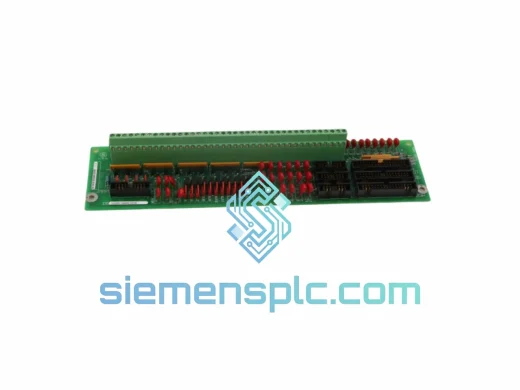
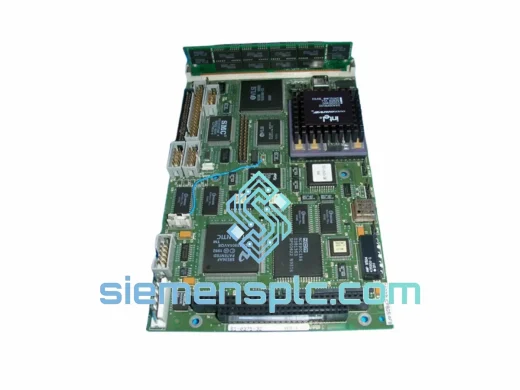
GE DS200TCTGG1AFF Turbine Control Board – Speedtronic Mark V
Request verified availability, condition, replacement risk review, packing options and courier lead time for DS200TCTGG1AFF.
BrandGE
Part NumberDS200TCTGG1AFF
ConditionAvailability Check
Lead TimeRFQ Confirmation
DocumentsDatasheet / photos by RFQ
ShippingExport packing available
Auto-filled RFQ
DS200TCTGG1AFF
Click Request Quote and the part number is inserted into the inquiry form automatically.
- Reply by email: [email protected]
- WhatsApp / Tel: +86 18359268345
- Mon-Sat 9:00-18:00 GMT+8
Procurement Data
Key Product Information
Core fields for model confirmation and RFQ routing. Detailed product narrative remains below.
- Brand
- GE
- Primary Part Number
- DS200TCTGG1AFF
- Product Type
- Turbine Control Board
- Series / Family
- Mark V
- Manufacturer
- General Electric (GE)
- Country of Origin
- US
- Catalog Category
- PLCs & Controllers
- Operating Temp.
- 0 °C to +60 °C (cabinet ambient)
- Warranty
- 12 months from date of shipment
Model confirmed for inquiry
DS200TCTGG1AFF
Send quantity, destination and urgency. The RFQ form keeps this part number attached.
Request Quote
Product Overview
GE DS200TCTGG1AFF — Turbine Control Board for Speedtronic Mark V Control Systems
The DS200TCTGG1AFF is a dedicated turbine control board engineered by General Electric for deployment within the Speedtronic Mark V platform — a triple-modular-redundant (TMR) control architecture that has accumulated over three decades of field runtime in gas turbine, steam turbine, and combined-cycle power generation facilities. Within the Mark V cabinet, this board occupies the T-core slot and serves as the primary machine control interface: it conditions analog process signals, executes protective relay logic, and coordinates real-time I/O transactions across the internal ARCNET backplane at deterministic scan rates. Its role is not peripheral — loss of this board results in immediate turbine trip, underscoring the criticality of sourcing a verified, revision-matched replacement.
Real-time Stock & RFQ: [email protected] | WhatsApp: +86 18359268345
Technical Parameters
| Parameter | Specification |
|---|---|
| Part Number | DS200TCTGG1AFF |
| Manufacturer | General Electric (GE) |
| Platform / Series | Speedtronic Mark V |
| Board Classification | Turbine Control Board (T-core family) |
| Form Factor | PCB module, Mark V rack-mount compatible |
| Backplane Interface | ARCNET serial bus, internal Mark V backplane |
| Analog Input Types | Thermocouple (J, K, T), RTD (Pt100), 4–20 mA |
| Digital Output Drivers | Relay and solenoid actuation outputs |
| Operating Voltage | 28 VDC (per Mark V cabinet power rail) |
| Operating Temperature | 0 °C to +60 °C (cabinet ambient) |
| Redundancy Architecture | TMR (Triple Modular Redundancy) compatible |
| Revision Suffix | GG1AFF (hardware revision and feature configuration) |
| Weight | 980 g |
| Condition | New / Refurbished (specify at inquiry) |
| Warranty | 12 months from date of shipment |
| Lead Time | In stock — 3 to 7 business days |
| Compatible Turbine Frames | GE Frame 5, Frame 6B, Frame 7EA/FA, Frame 9E/FA |
| Reference Manual | GEH-6195 (Mark V Maintenance Manual) |
Hardware Logical Analysis
The DS200TCTGG1AFF is built around a multi-layer PCB substrate with dedicated analog front-end circuitry isolated from the digital processing domain via optocoupler barriers rated at 1,500 V isolation voltage. This galvanic separation is not cosmetic — in turbine environments where ground loops between thermocouple sheaths and cabinet chassis are common, the isolation prevents common-mode noise from corrupting 12-bit ADC conversion accuracy. The analog input stage employs instrumentation amplifiers with a common-mode rejection ratio (CMRR) exceeding 90 dB at 50/60 Hz, which is the primary interference frequency in power plant environments.
The board’s digital output section uses relay driver ICs with flyback diode protection on each channel, suppressing inductive kickback from solenoid valve coils — a failure mode that historically degrades unprotected MOSFET output stages within 12 to 18 months of operation in valve-dense turbine control applications. The ARCNET backplane interface operates at 2.5 Mbit/s with a token-passing protocol that guarantees bounded latency, a non-negotiable requirement for protective trip logic where response time from sensor threshold breach to relay actuation must remain under 100 ms.
Within the TMR architecture, the DS200TCTGG1AFF participates in a 2-of-3 voting scheme. Each of the three redundant controllers (R, S, T) independently processes the same sensor inputs and computes output commands. The voting arbitration logic compares outputs at the backplane level; a single board failure results in a 2-of-2 degraded mode rather than an immediate trip, providing maintenance personnel a window to replace the faulty board without shutting down the turbine. The GG1AFF revision suffix encodes specific hardware options — including the analog input channel count and output driver configuration — and must be matched exactly when ordering a replacement to preserve voting symmetry across the TMR triplet.
EMC compliance is achieved through a combination of board-level filtering (ferrite beads on all I/O lines entering the PCB), chassis grounding via the rack connector, and shielded cable termination points. The design targets IEC 61000-4-4 (electrical fast transient) and IEC 61000-4-5 (surge) immunity levels consistent with industrial Class A environments, which is the baseline for power generation control rooms.
System Integration Benefits
- Zero-modification drop-in replacement: The DS200TCTGG1AFF is pin-compatible and firmware-compatible with existing Mark V T-slot installations. No re-parameterization of the TCCA or TCDA processor cards is required in standard board swap scenarios, reducing commissioning time to under two hours.
- Deterministic scan cycle preservation: The ARCNET token-passing protocol maintains a fixed worst-case latency regardless of network load, ensuring that protective trip logic scan cycles remain within the 20 ms window specified in GEH-6195 even under full I/O utilization.
- TMR voting integrity: Revision-matched boards maintain identical signal conditioning characteristics across all three TMR channels, preventing systematic voting bias that can arise when mismatched hardware revisions produce subtly different ADC readings from the same physical sensor.
- Analog input diagnostic transparency: The board’s self-test circuitry injects a known reference signal into the analog front end during each scan cycle and compares the digitized result against a stored calibration constant. Out-of-tolerance deviations generate a diagnostic fault code visible in the Mark V HMI without requiring external test equipment.
- Solenoid output health monitoring: Digital output channels include current-sense feedback that detects open-circuit and short-circuit conditions on connected solenoid valve coils, enabling predictive maintenance before a coil failure causes an unplanned trip.
- Reduced outage window: Board-level replacement versus full panel changeout reduces planned maintenance outage duration from a typical 5 to 7 days (panel swap) to 4 to 8 hours, directly improving plant availability metrics and capacity factor.
- Backward compatibility with legacy sensor wiring: The analog input stage accepts thermocouple and RTD wiring installed during original plant commissioning without requiring signal conditioner upgrades, preserving the existing field wiring investment.
- Standardized spare parts inventory: A single DS200TCTGG1AFF board covers the T-slot function across multiple GE Frame turbine variants, allowing plant maintenance teams to consolidate spare parts inventory rather than stocking frame-specific assemblies.
Quality Assurance & Global Logistics
Every DS200TCTGG1AFF unit supplied by siemensplc.com undergoes a structured pre-shipment verification process. Visual inspection covers PCB solder joint integrity, component seating, connector pin condition, and board marking verification against GE part number documentation. The revision suffix (GG1AFF) is cross-referenced against GE engineering records to confirm hardware configuration authenticity. Units with inconsistent markings, evidence of rework without documentation, or suspect component substitutions are rejected at intake.
Functional bench testing is performed where test fixtures are available, with results documented in a test report issued alongside the shipment. Anti-static ESD packaging (conductive bag + foam-lined carton) is standard for all PCB shipments. A certificate of conformance is available on request, and HS code classification assistance (HS 8537.10 or 8543.70 depending on destination customs authority) is provided for international import clearance.
Logistics operations are based in Xiamen, China, with established export lanes via DHL Express, FedEx International Priority, and SF Express International. Standard transit times are 3 to 5 business days to Europe and North America, 2 to 4 business days to Southeast Asia and the Middle East. Full export documentation — commercial invoice, packing list, certificate of origin, and airway bill — is included with every shipment. For time-critical plant outages, same-day dispatch is available for in-stock units when orders are confirmed before 14:00 CST.
The 12-month warranty covers manufacturing defects and functional failure under normal operating conditions. Warranty claims are processed within 5 business days of receipt of the returned unit, with replacement dispatch or credit note issued accordingly.
Contact Information
Email: [email protected]
WhatsApp: +86 18359268345
Web: siemensplc.com
Location: Xiamen, China
© 2026 siemensplc.com. All rights reserved.
Ready to quote
[email protected]
Send This Part Number to Sales
RFQ workflow
Quality workflow ->
Confirmation Process
01Model confirmation
We check the full part number, brand, series and visible nameplate information before quotation.
02Availability reply
Sales confirms stock path, condition option, quantity and realistic lead time for export dispatch.
03Packing & courier
DHL, FedEx, UPS or buyer courier arrangements can be reviewed with packing requirements.
Continue sourcing
Browse full catalog ->
Related Automation Parts
Similar brand or category products for fast comparison and multi-item RFQ lists.
GE
RFQ Ready
GE IC3600TUAA1 PLC Amplifier Board – Mark V Speedtronic
Mark V
Origin US
PLC Amplifier Board
GE
RFQ Ready
GE DS200UCPBG5AFB Unit Control Processor Board
Mark V
Origin US
Unit Control Processor Board