GE
In Stock OK
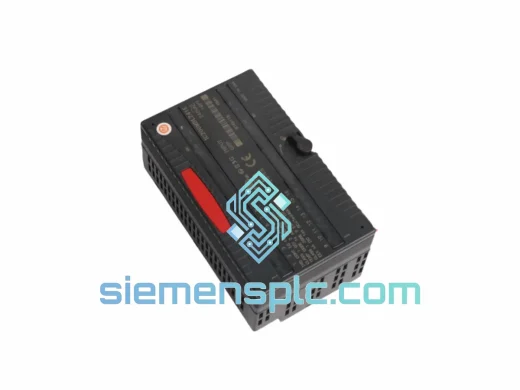
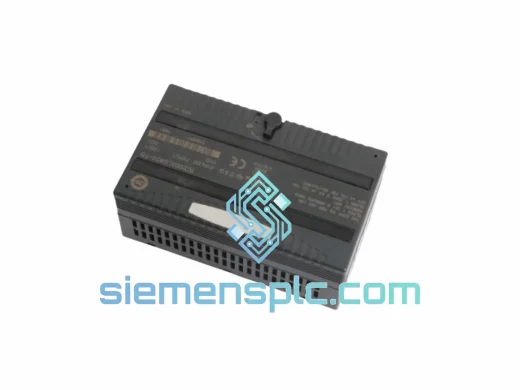
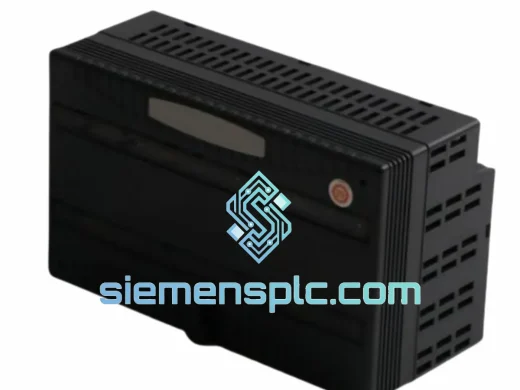
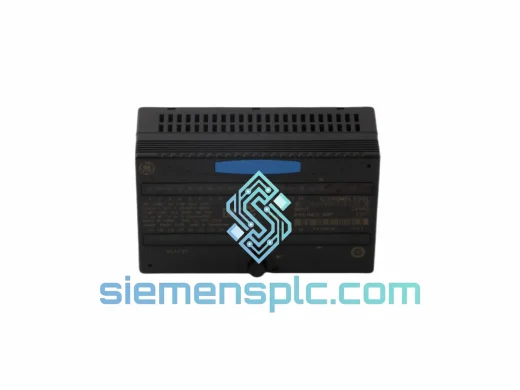
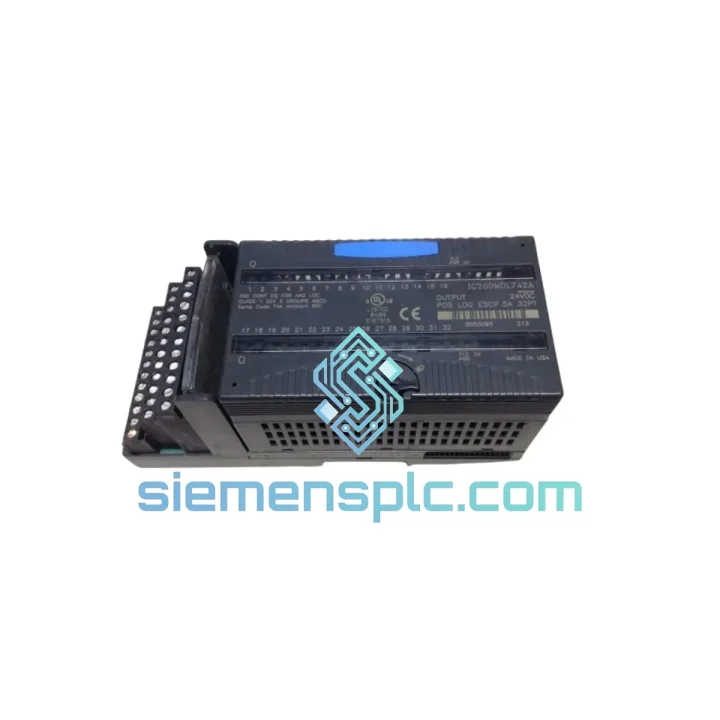
GE IC200MDL742 Discrete Output Module – VersaMax
Request verified availability, condition, replacement risk review, packing options and courier lead time for IC200MDL742.
BrandGE
Part NumberIC200MDL742
ConditionAvailability Check
Lead TimeRFQ Confirmation
DocumentsDatasheet / photos by RFQ
ShippingExport packing available
Auto-filled RFQ
IC200MDL742
Click Request Quote and the part number is inserted into the inquiry form automatically.
- Reply by email: [email protected]
- WhatsApp / Tel: +86 18359268345
- Mon-Sat 9:00-18:00 GMT+8
Procurement Data
Key Product Information
Core fields for model confirmation and RFQ routing. Detailed product narrative remains below.
- Brand
- GE
- Primary Part Number
- IC200MDL742
- Product Type
- PLC Output Module
- Series / Family
- VersaMax
- Manufacturer
- GE (General Electric Automation & Controls)
- Country of Origin
- US
- Catalog Category
- I/O Modules
- Operating Temp.
- 0 °C to +60 °C
- Warranty
- 12 months from date of shipment
Model confirmed for inquiry
IC200MDL742
Send quantity, destination and urgency. The RFQ form keeps this part number attached.
Request Quote
Product Overview
GE IC200MDL742 16-Point 120VAC Discrete Output Module: Deterministic Load Switching in VersaMax Modular Control Architectures
The IC200MDL742 occupies a well-defined functional position in the GE VersaMax Modular I/O hierarchy: it is the primary interface between the PLC’s logic execution layer and field-side 120 VAC loads. Each of its 16 output channels drives a triac-based solid-state switch, eliminating the mechanical contact bounce and arc erosion inherent to relay-output alternatives. In process and discrete manufacturing environments where output switching frequency exceeds several hundred cycles per shift — motor starters, solenoid valve banks, heating element arrays — the absence of mechanical wear translates directly into reduced unplanned downtime and lower mean-time-to-repair (MTTR) figures.
Within the VersaMax backplane, the IC200MDL742 communicates via the local I/O bus at the carrier level, with the CPU or Network Interface Unit (NIU) polling output state data on each scan cycle. The module’s internal logic accepts the commanded output word from the backplane, latches the state per channel, and drives the triac gate accordingly — all within the module’s internal propagation delay, which is deterministic and does not introduce jitter into the control loop. This characteristic is particularly relevant in coordinated multi-axis or multi-zone control schemes where output timing consistency affects process quality.
The optical isolation barrier between the logic-side backplane interface and the field-side triac outputs is a fundamental EMC design element. In motor-heavy environments, the 120 VAC bus carries significant conducted noise from variable-frequency drives, soft starters, and contactor switching transients. Without galvanic separation, these transients propagate into the backplane and corrupt I/O data or trigger spurious CPU faults. The IC200MDL742’s optocoupler stage presents a high common-mode rejection ratio (CMRR), blocking transient voltages that would otherwise couple into the logic circuitry. This design choice reflects IEC 61131-2 requirements for discrete output modules operating in industrial electromagnetic environments.
Real-time Stock & RFQ: [email protected] | WhatsApp: +86 18359268345
Technical Parameters
| Part Number | IC200MDL742 |
| Manufacturer | GE (General Electric Automation & Controls) |
| Series | VersaMax Modular I/O (IC200 Series) |
| Module Function | Discrete Output |
| Output Points | 16 Channels |
| Output Voltage Range | 120 VAC (nominal) |
| Output Current per Point | 0.5 A continuous |
| Output Device Type | Triac (solid-state, no mechanical contacts) |
| Field-to-Logic Isolation | Optical isolation (optocoupler per channel group) |
| Backplane Interface | VersaMax local I/O bus (carrier-mounted) |
| Compatible Carriers | IC200CHS002, IC200CHS022 (5-slot and 10-slot) |
| Operating Temperature | 0 °C to +60 °C |
| Storage Temperature | -40 °C to +85 °C |
| Relative Humidity | 5% to 95%, non-condensing |
| Certifications | UL 508, CE (LVD + EMC Directive), RoHS |
| Reference Documentation | GFK-1504 (VersaMax Modular I/O User Manual) |
| Warranty | 12 months from date of shipment |
Hardware Logical Analysis
The IC200MDL742’s triac output topology deserves examination beyond the datasheet summary. Each triac is a bidirectional thyristor device that conducts on both half-cycles of the AC waveform once triggered, making it inherently suited to resistive and moderate inductive loads at 120 VAC. The gate drive circuit within the module applies a controlled trigger pulse synchronized to the AC zero-crossing region where applicable, which reduces inrush current stress on the triac junction and suppresses conducted EMI generated by hard switching at arbitrary phase angles.
The optical isolation stage uses a phototransistor-based optocoupler with a defined current transfer ratio (CTR). The LED side is driven by the module’s internal logic at a current level that ensures reliable triggering across the full operating temperature range — a non-trivial design constraint, since optocoupler CTR degrades with temperature and age. GE’s component selection and drive current margin account for this degradation over the module’s rated service life, maintaining output switching reliability without requiring field recalibration.
From an EMC standpoint, the module’s PCB layout routes the field-side triac circuitry on a physically separated copper pour from the logic-side backplane interface traces. The creepage and clearance distances between these domains comply with IEC 60664-1 for 120 VAC working voltage in Pollution Degree 2 environments. Snubber networks across each triac suppress voltage spikes generated by inductive load switching — a critical protection mechanism when driving motor contactors or solenoid coils, which store energy in their magnetic fields and release it as a transient upon de-energization.
The module’s internal watchdog logic monitors backplane communication health. If the CPU or NIU fails to update the output data within the configured watchdog timeout, the module drives all outputs to a defined safe state (de-energized), preventing uncontrolled load activation during a controller fault condition. This behavior aligns with IEC 61511 functional safety principles for process shutdown architectures, though the IC200MDL742 itself is not SIL-rated.
System Integration Benefits
- Zero mechanical wear on output contacts — Triac switching eliminates contact pitting and spring fatigue, extending module service intervals beyond 10 million switching cycles under rated load conditions.
- Deterministic output propagation delay — Fixed internal latency from backplane command to field-side output state change supports tight timing coordination in multi-module control sequences without scan-cycle jitter.
- High channel density per rack slot — 16 output points in a single slot reduces the number of carriers, power supplies, and wiring termination assemblies required for a given I/O count, lowering panel BOM cost and footprint.
- Galvanic isolation protects backplane integrity — Optical isolation prevents field-side ground loops and conducted transients from propagating into the CPU or NIU, reducing nuisance faults and improving overall system MTBF.
- Watchdog-driven safe-state behavior — Automatic output de-energization on communication loss prevents uncontrolled actuator activation during controller faults, supporting process safety interlocking requirements.
- Seamless VersaMax ecosystem compatibility — Direct plug-in to IC200CHS002/022 carriers with no additional interface hardware; recognized automatically by Proficy Machine Edition during I/O configuration.
- Mixed I/O carrier support — Can be installed alongside discrete input modules (IC200MDL640, IC200MDL650) and analog modules (IC200ALG260) on the same carrier, enabling compact mixed-signal I/O nodes.
- Diagnostic transparency via CPU fault tables — Module-level fault data (output overload, field power loss) is surfaced in the VersaMax CPU’s I/O fault table, enabling maintenance personnel to isolate faults to the specific module and channel without external test equipment.
- Wide thermal operating envelope — 0 °C to +60 °C operating range accommodates installation in non-climate-controlled enclosures in outdoor substations, pump houses, and remote RTU cabinets.
- Snubber-protected outputs for inductive loads — Internal snubber networks across each triac absorb inductive kickback from contactor coils and solenoids, eliminating the need for external suppression components on most standard loads.
Quality Assurance & Global Logistics
Every IC200MDL742 unit dispatched from our Xiamen, China facility is sourced through verified industrial automation supply channels and subjected to a structured pre-shipment inspection protocol. Physical inspection covers label integrity, connector pin condition, housing for mechanical damage, and revision-level verification against GE Automation & Controls release documentation. Where applicable, functional power-on verification confirms module initialization and backplane communication readiness prior to packaging.
Units are packaged in anti-static shielding bags with humidity indicator cards, placed in rigid foam-lined cartons rated for international air freight handling. Export documentation — including commercial invoice, packing list, and certificate of conformance (CoC) — is prepared for each shipment. DHL Express, FedEx International Priority, and UPS Worldwide Expedited are the primary carriers, with typical transit times of 3–7 business days to major industrial hubs in North America, Europe, Southeast Asia, and the Middle East. Emergency same-day dispatch is available for orders confirmed before 14:00 CST.
A 12-month warranty covers manufacturing defects and confirmed functional failures under normal operating conditions. Warranty claims are processed with a replacement-first policy to minimize customer downtime. Detailed failure analysis reports are available upon request for quality-critical applications.
Contact Information
Email: [email protected]
WhatsApp: +86 18359268345
Web: siemensplc.com
Location: Xiamen, China
© 2026. All rights reserved.
Ready to quote
[email protected]
Send This Part Number to Sales
RFQ workflow
Quality workflow ->
Confirmation Process
01Model confirmation
We check the full part number, brand, series and visible nameplate information before quotation.
02Availability reply
Sales confirms stock path, condition option, quantity and realistic lead time for export dispatch.
03Packing & courier
DHL, FedEx, UPS or buyer courier arrangements can be reviewed with packing requirements.
Continue sourcing
Browse full catalog ->
Related Automation Parts
Similar brand or category products for fast comparison and multi-item RFQ lists.