
GE
In Stock OK
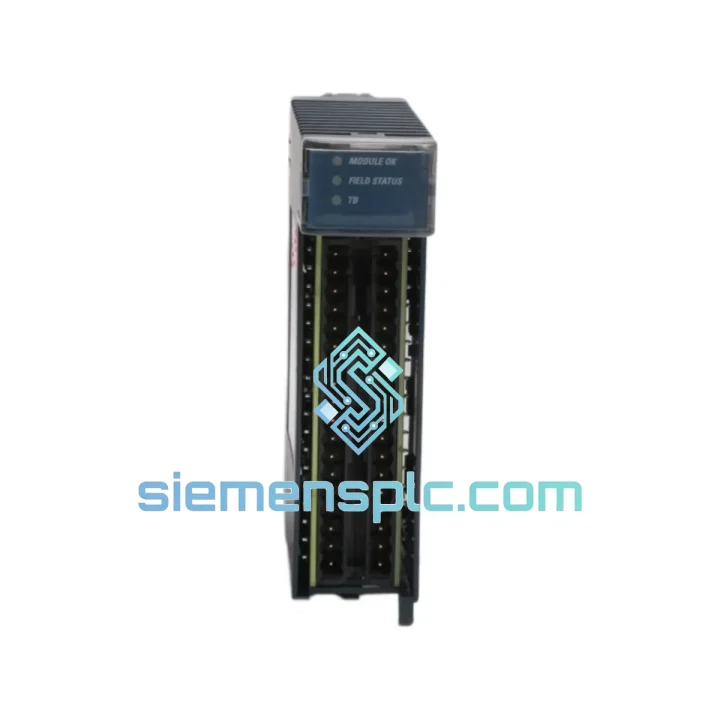
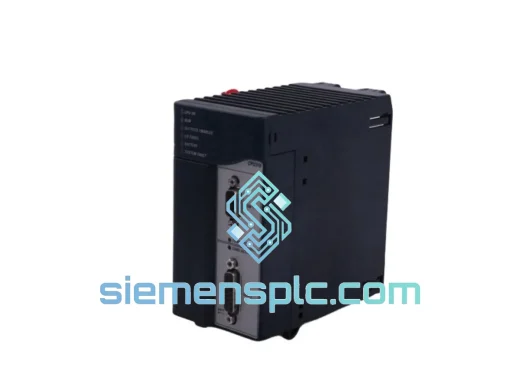
GE IC695ALG508 RTD Analog Input Module – PACSystems RX3i
Request verified availability, condition, replacement risk review, packing options and courier lead time for IC695ALG508.
BrandGE
Part NumberIC695ALG508
ConditionAvailability Check
Lead TimeRFQ Confirmation
DocumentsDatasheet / photos by RFQ
ShippingExport packing available
Auto-filled RFQ
IC695ALG508
Click Request Quote and the part number is inserted into the inquiry form automatically.
- Reply by email: [email protected]
- WhatsApp / Tel: +86 18359268345
- Mon-Sat 9:00-18:00 GMT+8
Procurement Data
Key Product Information
Core fields for model confirmation and RFQ routing. Detailed product narrative remains below.
- Brand
- GE
- Primary Part Number
- IC695ALG508
- Product Type
- RTD Analog Input Module
- Series / Family
- PACSystems
- Manufacturer
- GE Intelligent Platforms (now Emerson)
- Country of Origin
- US
- Catalog Category
- I/O Modules
- Operating Temp.
- 0°C to +60°C
- Warranty
- 12 months from shipment date
Model confirmed for inquiry
IC695ALG508
Send quantity, destination and urgency. The RFQ form keeps this part number attached.
Request Quote
Product Overview
GE IC695ALG508: Eight-Channel Per-Channel Isolated RTD Analog Input Module for PACSystems RX3i Backplane Architecture
The IC695ALG508 is a dedicated resistance temperature detector (RTD) input module designed for GE’s PACSystems RX3i distributed control platform. Occupying a single universal backplane slot, the module delivers eight fully isolated analog input channels, each independently conditioned and digitized. Unlike multiplexed analog front-end designs — where a single ADC services multiple channels sequentially — the IC695ALG508 implements per-channel signal conditioning, meaning each channel maintains its own excitation source, lead-resistance compensation network, and analog-to-digital conversion path. This architecture eliminates inter-channel crosstalk and ensures that a degraded or faulted sensor on one channel does not introduce measurement artifacts on adjacent channels.
In process control installations, RTD signals are inherently low-level: a Pt100 element at 0°C presents 100 Ω, and the full measurement span from −200°C to +850°C corresponds to a resistance change of approximately 280 Ω. Superimposed on this signal are common-mode voltages arising from ground potential differences between the field instrument and the control cabinet — differences that can reach tens of volts in large petrochemical or power generation facilities where grounding systems span hundreds of meters. The IC695ALG508 addresses this at the hardware level through 250 V AC channel-to-channel and channel-to-backplane isolation barriers, implemented via transformer-coupled signal paths at each analog front-end stage. This isolation rating is not a marketing specification; it is the tested withstand voltage that defines the module’s ability to reject common-mode interference without corrupting the differential RTD measurement.
The module supports Pt100, Pt200, Pt500, Pt1000, Ni120, and Cu10 RTD types, configurable independently per channel through GE’s Proficy Machine Edition programming environment. Three-wire RTD connection is supported with hardware lead-resistance compensation: the module measures the resistance of the return lead by applying a known excitation current and comparing the voltage drop against the forward lead, then subtracts this value from the total loop resistance before digitization. This compensation is performed in the analog signal conditioning stage — not in software — ensuring that the 16-bit ADC receives a signal that represents the sensor resistance alone, independent of cable length or conductor gauge.
Within the RX3i backplane, the IC695ALG508 communicates via the high-speed serial backplane bus, transferring digitized channel data to the CPU at deterministic scan intervals. Open-wire detection operates by monitoring the excitation current return path on each channel; an interrupted circuit is detected within one scan cycle and the fault status is written to the module’s diagnostic status word, which maps directly to the CPU’s input image table. The application program can therefore respond to a sensor fault within the same PLC scan in which it occurs — a response latency that external diagnostic relays or SCADA-layer alarming cannot achieve.
Deployment contexts for the IC695ALG508 include turbine inlet and exhaust temperature monitoring in combined-cycle power plants, reactor jacket temperature control in pharmaceutical batch manufacturing, heat exchanger performance monitoring in refinery operations, and furnace zone temperature management in metals processing. In each of these applications, the module’s isolation architecture, per-channel fault detection, and deterministic backplane communication contribute directly to measurement integrity and control loop reliability.
Real-time Stock & RFQ: [email protected] | WhatsApp: +86 18359268345
Technical Parameters
| Parameter | Specification |
|---|---|
| Part Number | IC695ALG508 |
| Manufacturer | GE Intelligent Platforms (now Emerson) |
| Platform | PACSystems RX3i |
| Module Function | Isolated RTD Analog Input |
| Input Channels | 8, fully isolated per channel |
| Supported RTD Types | Pt100, Pt200, Pt500, Pt1000, Ni120, Cu10 (per-channel configurable) |
| Measurement Range | −200°C to +850°C (type-dependent) |
| ADC Resolution | 16-bit per channel |
| Accuracy | ±0.1°C typical at 25°C ambient (Pt100 reference) |
| Channel-to-Channel Isolation | 250 V AC |
| Channel-to-Backplane Isolation | 250 V AC |
| RTD Connection | 2-wire or 3-wire (hardware lead-resistance compensation on 3-wire) |
| Backplane Compatibility | IC695CHS007, IC695CHS012, IC695CHS016 (RX3i Universal Backplane) |
| Backplane Bus | RX3i high-speed serial backplane bus |
| Open-Wire Detection | Per channel, within one scan cycle |
| Operating Temperature | 0°C to +60°C |
| Storage Temperature | −40°C to +85°C |
| Relative Humidity | 5% to 95% non-condensing |
| Form Factor | Single-slot RX3i module |
| Certifications | CE, UL Listed, cUL |
| Configuration Tool | Proficy Machine Edition |
| Warranty | 12 months from shipment date |
Hardware Logical Analysis
The IC695ALG508’s analog front-end is structured around eight independent signal conditioning chains, each comprising an excitation current source, a differential input amplifier, an isolation barrier, and a dedicated 16-bit sigma-delta ADC. The excitation current source drives a known constant current through the RTD element; the resulting voltage drop — proportional to the element’s resistance and therefore to temperature — is amplified differentially before crossing the isolation barrier. The isolation barrier itself is implemented as a transformer-coupled stage, which passes the modulated analog signal while blocking DC continuity between the field wiring and the backplane ground plane. This approach maintains the full 250 V AC isolation rating across the operating temperature range without the drift characteristics associated with optocoupler-based isolation in precision measurement applications.
The sigma-delta ADC architecture used per channel provides inherent oversampling and noise shaping, which attenuates high-frequency interference — including switching transients from variable frequency drives operating in the 2–16 kHz carrier frequency range — before the digital filter produces the final 16-bit output word. The digital filter’s settling time determines the effective update rate per channel; this is a fixed parameter defined by the module’s firmware and is documented in GE reference manual GFK-2314. The module does not support user-adjustable filter bandwidth, which is a deliberate design choice: the fixed filter characteristic ensures consistent measurement latency across all installations, supporting deterministic control loop timing calculations.
EMC immunity is addressed through the module’s shielded aluminum housing, which provides a continuous Faraday enclosure around the analog circuitry. Internal PCB layout follows controlled-impedance routing practices, with analog signal traces separated from digital clock lines by ground plane pours. The module’s compliance with EN 61000-4-2 (ESD), EN 61000-4-4 (EFT/burst), and EN 61000-4-6 (conducted RF immunity) confirms tested immunity at levels representative of heavy industrial environments. The backplane connector uses a keyed, positive-retention mechanical interface that maintains contact integrity under vibration profiles consistent with IEC 60068-2-6 (sinusoidal vibration, 10–150 Hz).
Lead-resistance compensation on three-wire connections is implemented by measuring the voltage drop across the return lead using the same excitation current that drives the RTD element. Because the excitation current is precisely controlled and the return lead resistance is measured in the same analog chain as the RTD signal, the compensation accuracy is limited only by the matching of the two measurement paths — not by external cable resistance assumptions. This hardware-level compensation eliminates the need for software correction factors in the application program, reducing the risk of calibration errors introduced during commissioning or after cable replacement.
System Integration Benefits
- Scan-synchronous fault reporting: Open-wire and out-of-range conditions are written to the CPU input image within the same scan cycle they are detected, enabling application-level fault response without additional polling logic or external diagnostic hardware.
- Independent per-channel RTD type selection: Each channel is configured individually in Proficy Machine Edition, allowing a single IC695ALG508 to serve mixed RTD type installations — Pt100 and Ni120 on the same module — without requiring separate hardware SKUs or external signal converters.
- Elimination of external isolation hardware: The 250 V AC per-channel isolation rating removes the need for external isolation barriers, DIN-rail signal conditioners, or galvanic separators, reducing panel wiring density, component count, and associated failure modes.
- Deterministic backplane latency: Communication over the RX3i high-speed serial backplane bus adds no variable latency beyond the fixed backplane scan cycle, supporting precise timing calculations for temperature control loops with defined update rate requirements.
- Hardware lead-resistance compensation: Three-wire RTD compensation is performed in the analog signal conditioning stage before digitization, ensuring that cable length and conductor resistance do not introduce systematic measurement offsets that require software correction.
- High channel density per slot: Eight isolated channels in a single backplane slot maximizes temperature measurement point density, reducing the number of slots consumed in high-channel-count installations and lowering per-channel hardware cost.
- Diagnostic register transparency: Module status, channel fault flags, and configuration error codes are accessible through standard Machine Edition diagnostic tools and mapped to defined addresses in the CPU input image, supporting structured fault management without custom function blocks.
- Broad RTD type coverage: Support for Pt100, Pt200, Pt500, Pt1000, Ni120, and Cu10 within a single module type covers the RTD sensor inventory used across power generation, pharmaceutical, chemical, and metals processing industries, simplifying spare parts management.
- Ground loop immunity in distributed installations: The 250 V AC channel-to-backplane isolation rating prevents ground loop currents — which can reach tens of milliamps in large plant installations with distributed grounding — from corrupting the millivolt-level RTD measurement signal.
- Validated compatibility with RX3i CPU families: The IC695ALG508 is compatible with IC695CPE302, IC695CPE305, IC695CPE310, IC695CPE330, and IC695CPE400 CPU modules, covering the full range of RX3i processing performance tiers without firmware modification.
Quality Assurance & Global Logistics
All IC695ALG508 units supplied through siemensplc.com are sourced as genuine GE-manufactured hardware through verified procurement channels. Each unit undergoes a structured pre-shipment inspection protocol: visual examination of housing integrity, backplane connector pin condition, label and date code legibility, and firmware revision markings cross-referenced against GE production records. Where applicable, functional verification is performed using calibrated RTD resistance simulators to confirm channel response across the configured measurement range. Units are repackaged in anti-static bags with desiccant packs and foam-cushioned cartons to maintain ESD protection and mechanical integrity during international transit.
A 12-month warranty is provided from the date of shipment. Units exhibiting functional failure under normal operating conditions within this period are replaced or credited. Inspection records and serial number documentation are available upon request to support incoming quality verification at the customer’s facility.
Logistics operations are based in Xiamen, China. Shipments are dispatched via DHL Express, FedEx International Priority, and UPS Worldwide Express to destinations across Asia-Pacific, Europe, the Middle East, and the Americas. Standard export documentation — commercial invoice, packing list, and certificate of origin — accompanies every shipment to support customs clearance. In-stock units typically ship within 1–3 business days of order confirmation. For sourced orders, lead time is 2–4 weeks subject to availability. Minimum order quantity is one unit; volume pricing is available for orders of five units or more.
Contact Information
Email: [email protected]
WhatsApp: +86 18359268345
Web: siemensplc.com
Location: Xiamen, China
© 2026 siemensplc.com. All rights reserved.
Ready to quote
[email protected]
Send This Part Number to Sales
RFQ workflow
Quality workflow ->
Confirmation Process
01Model confirmation
We check the full part number, brand, series and visible nameplate information before quotation.
02Availability reply
Sales confirms stock path, condition option, quantity and realistic lead time for export dispatch.
03Packing & courier
DHL, FedEx, UPS or buyer courier arrangements can be reviewed with packing requirements.
Continue sourcing
Browse full catalog ->
Related Automation Parts
Similar brand or category products for fast comparison and multi-item RFQ lists.
GE
RFQ Ready
GE IC695ALG704 Analog Output Module – PACSystems RX3i
PACSystems
Origin US
Analog Output Module