GE
In Stock OK
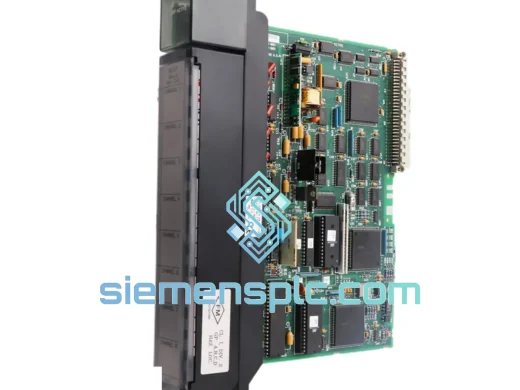
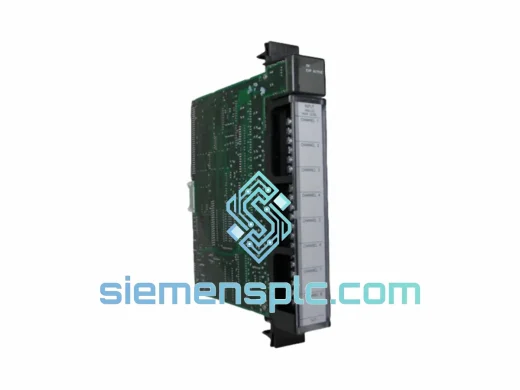
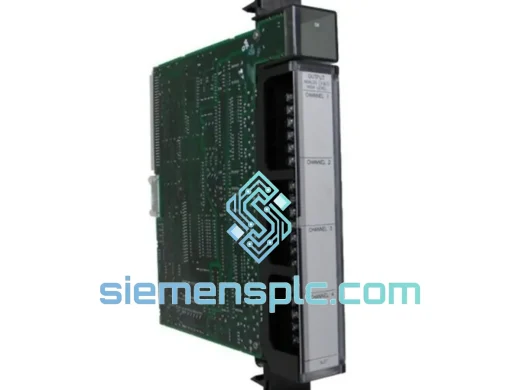
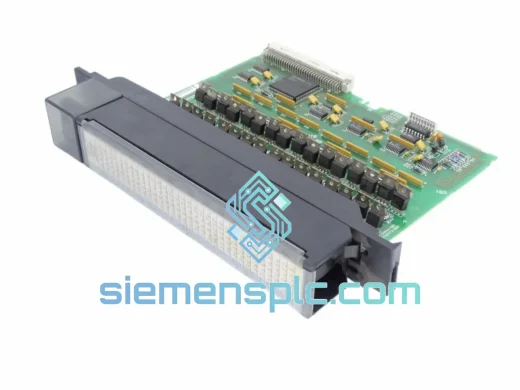
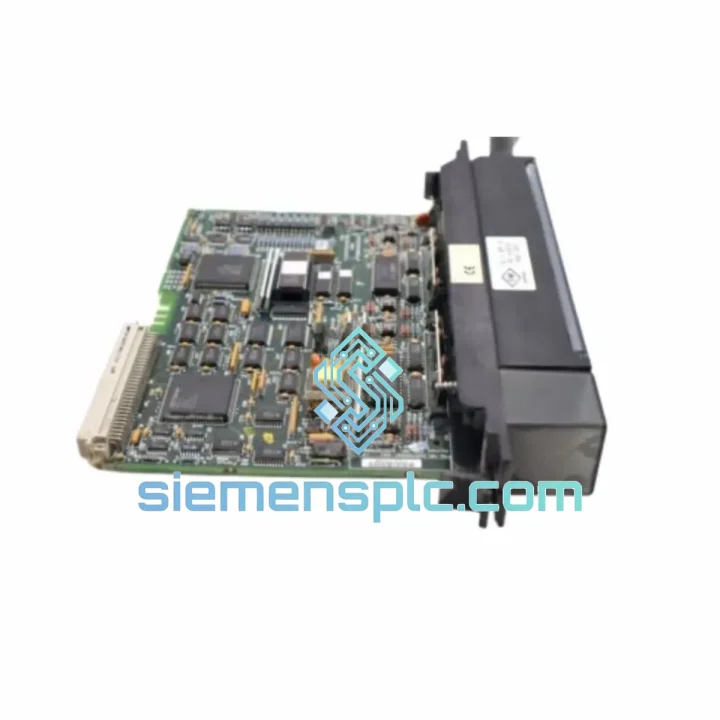
GE IC697ALG320 Analog Output Module – Series 90-70
Request verified availability, condition, replacement risk review, packing options and courier lead time for IC697ALG320.
BrandGE
Part NumberIC697ALG320
ConditionAvailability Check
Lead TimeRFQ Confirmation
DocumentsDatasheet / photos by RFQ
ShippingExport packing available
Auto-filled RFQ
IC697ALG320
Click Request Quote and the part number is inserted into the inquiry form automatically.
- Reply by email: [email protected]
- WhatsApp / Tel: +86 18359268345
- Mon-Sat 9:00-18:00 GMT+8
Procurement Data
Key Product Information
Core fields for model confirmation and RFQ routing. Detailed product narrative remains below.
- Brand
- GE
- Primary Part Number
- IC697ALG320
- Product Type
- PLC Analog Output Module
- Series / Family
- 90-70
- Country of Origin
- US
- Catalog Category
- I/O Modules
- Operating Temp.
- 0°C to +60°C
- Warranty
- 12 months
Model confirmed for inquiry
IC697ALG320
Send quantity, destination and urgency. The RFQ form keeps this part number attached.
Request Quote
Product Overview
GE IC697ALG320: Four-Channel Isolated Analog Output Module for Series 90-70 Rack Architecture
The IC697ALG320 occupies a single slot in any GE Series 90-70 backplane and provides four independently isolated analog output channels, each software-configurable to one of four signal ranges: 0–10 V, ±10 V, 4–20 mA, or 0–20 mA. Unlike modules that require physical jumper changes to switch output mode, the IC697ALG320 accepts range configuration through the CPU hardware configuration table, allowing engineers to reassign channel function during commissioning or process retooling without opening the panel. Each channel drives its load from a dedicated 12-bit digital-to-analog converter, producing a resolution of 1 part in 4,096 — equivalent to 0.024% of span — which satisfies the signal precision requirements of ISA-5.1 for closed-loop process control instrumentation.
The module communicates with the Series 90-70 CPU via the VME-derived backplane bus. Output register writes are executed synchronously with the CPU scan cycle, meaning field devices receive updated setpoints within one scan period — typically 5 to 50 ms depending on program size and CPU model. This deterministic update behavior is a prerequisite for cascade control architectures, where the secondary loop output must track the primary loop output without communication-induced phase lag. The module draws all operating power from the backplane; no auxiliary 24 VDC supply is required at the module terminals, simplifying panel wiring and reducing potential failure points.
Channel-to-channel isolation is implemented at the output stage, with each channel’s return path electrically separated from adjacent channels. This architecture prevents ground-loop currents from forming between field devices that share a common physical ground at different potential levels — a condition that routinely introduces 1–5 mA of offset error in non-isolated output modules installed in large industrial facilities with distributed grounding systems. In petrochemical and power generation applications where valve positioners, VFD speed references, and electro-hydraulic actuators may be grounded at different structural steel members, this isolation is not optional; it is a fundamental requirement for signal accuracy.
Real-time Stock & RFQ: [email protected] | WhatsApp: +86 18359268345
Technical Parameters
| Parameter | Value | Notes |
|---|---|---|
| Catalog Number | IC697ALG320 | GE Automation & Controls |
| Module Function | Analog Output | 4 channels, rack-mount, backplane-powered |
| Output Channels | 4 (individually isolated) | Each channel independently configurable |
| Output Ranges | 0–10 V / ±10 V / 4–20 mA / 0–20 mA | Software-selectable per channel via CPU HW config |
| Resolution | 12-bit (4096 counts) | 0.024% of full scale per step |
| Accuracy | ±0.1% of full scale at 25°C | Across calibrated temperature range |
| Current Output Max Load | 750 Ω | Drives standard I/P transducers and HART devices |
| Voltage Output Min Load | 1 kΩ | Compatible with electro-hydraulic actuator inputs |
| Channel Isolation | Channel-to-channel isolated | Independent return paths; eliminates ground loops |
| Output Update Rate | Every CPU scan cycle | Deterministic; no serial communication latency |
| Operating Temperature | 0°C to +60°C | Standard industrial control room rating |
| Storage Temperature | –40°C to +85°C | Safe for transit in extreme climates |
| Relative Humidity | 5–95% non-condensing | Rated for high-humidity process environments |
| Backplane Power Source | Series 90-70 VME backplane | No external auxiliary supply required |
| Compatible Racks | IC697CHS750 / IC697CHS782 / IC697CHS790 | All standard Series 90-70 rack configurations |
| Module Form Factor | Single-slot Series 90-70 | Standard VME-based card dimensions |
| Approx. Weight | 180 g | Without packaging |
| Warranty | 12 months | From date of shipment; covers functional defects |
Hardware Logical Analysis
The IC697ALG320’s output stage is built around four discrete 12-bit DAC circuits, one per channel, each followed by an output amplifier stage capable of sourcing the full current range (0–20 mA) or driving the voltage range (±10 V) into the specified load impedance. The DAC reference voltage is derived from a precision internal reference, not from the backplane supply rail — this design choice decouples output accuracy from backplane voltage fluctuations caused by other modules drawing transient current during scan cycles. In high-density racks where CPU modules, communications modules, and multiple I/O modules share the same power supply, backplane rail noise of 50–200 mV is not uncommon; a DAC referenced to the supply rail would translate this noise directly into output signal error. The IC697ALG320’s internal reference architecture suppresses this coupling path.
EMC performance is addressed at two levels. At the board level, the analog output traces are routed away from the digital logic section, with a ground plane separation between the DAC output stage and the backplane interface logic. This physical separation reduces capacitive coupling of high-frequency digital switching noise (generated by the backplane bus transactions at VME clock rates) into the analog output signal path. At the connector level, the module’s field wiring terminals are positioned at the front of the card, maximizing the physical distance between the backplane connector (rear) and the field cable entry point (front), which reduces the antenna area formed by the signal loop.
The channel isolation topology uses transformer-coupled or optocoupler-based isolation barriers at the output stage boundary, depending on the signal range. For current outputs, the isolation barrier sits between the DAC output and the current-drive transistor, allowing the current loop to float relative to the module’s internal ground. For voltage outputs, the isolation is implemented at the amplifier stage, with the output amplifier’s negative supply referenced to the channel’s isolated return terminal rather than to the module’s common ground. This means that in a 4-channel installation driving four separate valve positioners, each positioner’s signal cable shield can be grounded at the field device end without creating a ground loop back through the module — a wiring practice that is standard in petrochemical facilities following ISA-5.1 and API 554 cable grounding guidelines.
The backplane interface logic implements the Series 90-70 VME-derived protocol, which uses a parallel address/data bus with hardware handshaking. The CPU writes output values to the module’s internal register file during the output scan phase of each PLC cycle. The module’s local logic latches the new values and initiates a DAC update immediately upon receipt, without waiting for the next module clock cycle. This latch-and-update architecture ensures that the analog output reflects the CPU’s commanded value within the module’s internal settling time (typically <1 ms for full-scale step changes), not within the next scan cycle — a distinction that matters in fast-response control loops such as compressor anti-surge or turbine governor applications where output latency directly affects loop stability margins.
System Integration Benefits
- Zero-jumper range reconfiguration: Output range changes are executed through the CPU hardware configuration file and downloaded via the programming terminal. No physical access to the module is required, reducing reconfiguration time from hours (panel access, jumper change, re-wiring verification) to minutes, and eliminating the risk of incorrect jumper placement.
- Deterministic scan-synchronous output updates: Because the module is directly addressed on the VME backplane, output register writes complete within the CPU’s output scan phase. There is no serial communication protocol, no token-passing delay, and no network scheduling uncertainty — the output value at the field terminal is always current to within one PLC scan cycle.
- Ground-loop immunity in multi-device installations: Channel-to-channel isolation allows each output channel to drive a field device with an independent signal return, preventing ground-loop currents that would otherwise introduce DC offset errors proportional to the ground potential difference between field devices — a common source of unexplained process drift in non-isolated output installations.
- Backplane-powered operation simplifies panel design: The absence of an auxiliary 24 VDC supply requirement eliminates one potential failure point (the auxiliary supply itself), reduces panel wiring complexity, and removes the need for auxiliary supply monitoring in the control program. Panel engineers can allocate the freed terminal space and wiring budget to field device connections.
- 12-bit resolution supports validated control loops: In pharmaceutical and food processing applications subject to FDA 21 CFR Part 11 or EU GMP Annex 11, control loop validation requires demonstrated output resolution finer than the process tolerance band. At 0.024% of span, the IC697ALG320 satisfies this requirement for temperature, pressure, and flow control loops with ±0.1% tolerance specifications.
- Compatible with all Series 90-70 CPU models: The module operates with IC697CPU731, IC697CPU771, IC697CPU781, and IC697CPU788 CPUs without firmware modification. This compatibility allows the module to be deployed as a direct replacement in existing installations without CPU upgrade or program modification, provided the hardware configuration table is updated to reflect the new module’s slot assignment.
- Supports split-range control strategies natively: Two channels of a single IC697ALG320 can be configured to drive a split-range valve pair (e.g., a heating valve on 4–12 mA and a cooling valve on 12–20 mA) from a single PID output block in the CPU program. The CPU writes a single output value; the program logic scales and distributes it to the two channels. No external signal splitter hardware is required.
- Diagnostic transparency through CPU fault table: If a channel output is driven to a value outside the configured range, or if the module detects an internal DAC fault, the Series 90-70 CPU fault table logs the event with module slot number, channel number, and fault type. Maintenance personnel can identify the specific failed channel from the HMI without physical panel access, reducing mean time to diagnose (MTTD) in multi-rack installations.
Quality Assurance & Global Logistics
Every IC697ALG320 unit dispatched from our Xiamen, China facility undergoes a structured incoming inspection protocol before it is offered for sale. Visual inspection covers board-level examination for corrosion on copper traces, electrolytic capacitor condition, connector pin straightness, and label integrity — any unit with physical anomalies is quarantined and not listed. Functional testing places each module in a live Series 90-70 test rack, where all four output channels are exercised across their full configured ranges using calibrated reference instruments traceable to national metrology standards. Output accuracy, channel isolation, and backplane communication are verified and recorded. Units that pass all test criteria are repackaged in anti-static ESD bags with foam cushioning and held in a climate-controlled storage area until dispatch.
Shipments from Xiamen reach major industrial hubs on the following typical transit schedules: Hong Kong and Southeast Asia within 1–3 business days via express courier; Europe and North America within 3–5 business days via DHL Express or FedEx International Priority; Middle East and South Asia within 2–4 business days. All shipments include a commercial invoice, packing list, and certificate of origin for customs clearance. For orders requiring expedited delivery, same-day dispatch is available for orders confirmed before 14:00 CST. Export compliance documentation is prepared for all international shipments in accordance with applicable export control regulations.
The 12-month warranty covers functional defects attributable to the module’s internal components and workmanship. Units that fail in service within the warranty period are replaced or refunded after return and inspection. Pre-sale technical support includes application compatibility review, rack configuration advice, and identification of functional equivalents for obsolete variants. Post-sale support covers installation guidance and integration troubleshooting with the Series 90-70 CPU and programming software.
Contact Information
Email: [email protected]
WhatsApp: +86 18359268345
Web: siemensplc.com
Location: Xiamen, China
© 2026 siemensplc.com. All rights reserved.
Ready to quote
[email protected]
Send This Part Number to Sales
RFQ workflow
Quality workflow ->
Confirmation Process
01Model confirmation
We check the full part number, brand, series and visible nameplate information before quotation.
02Availability reply
Sales confirms stock path, condition option, quantity and realistic lead time for export dispatch.
03Packing & courier
DHL, FedEx, UPS or buyer courier arrangements can be reviewed with packing requirements.
Continue sourcing
Browse full catalog ->
Related Automation Parts
Similar brand or category products for fast comparison and multi-item RFQ lists.