
GE
In Stock OK
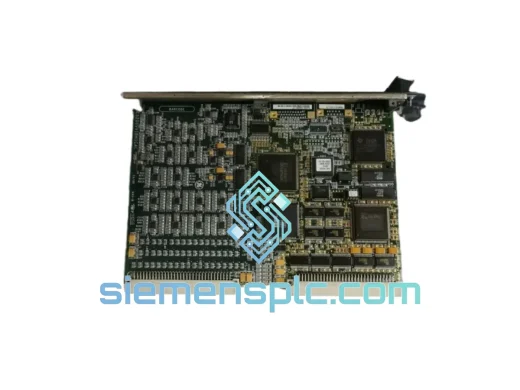
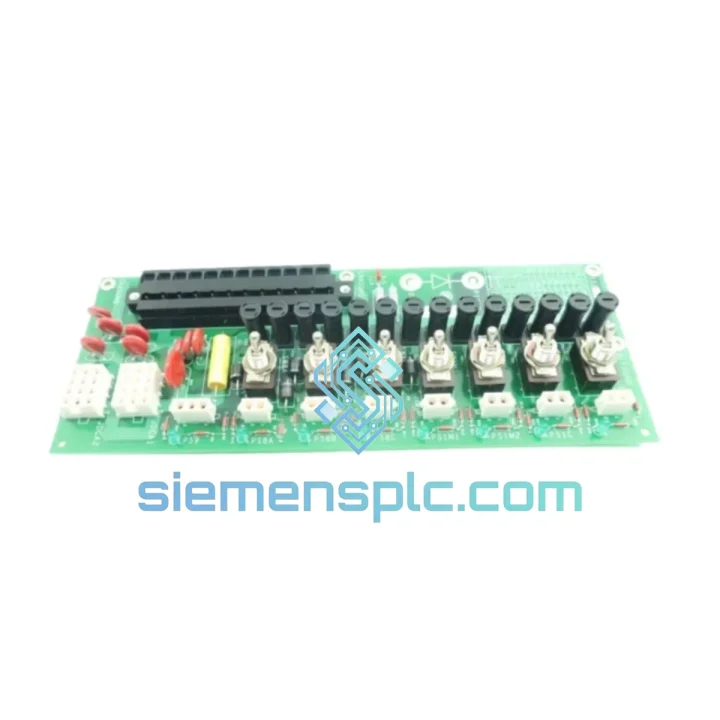
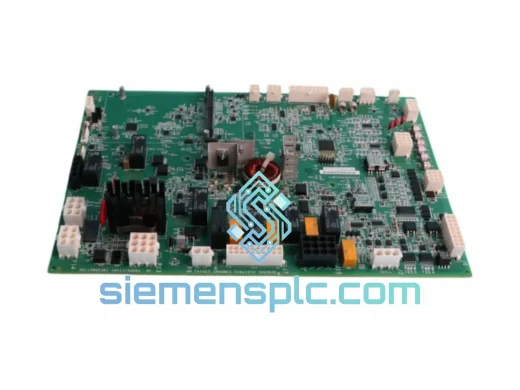
GE IS200EPDMG1A Exciter Power Distribution Module
Request verified availability, condition, replacement risk review, packing options and courier lead time for IS200EPDMG1A.
BrandGE
Part NumberIS200EPDMG1A
ConditionAvailability Check
Lead TimeRFQ Confirmation
DocumentsDatasheet / photos by RFQ
ShippingExport packing available
Auto-filled RFQ
IS200EPDMG1A
Click Request Quote and the part number is inserted into the inquiry form automatically.
- Reply by email: [email protected]
- WhatsApp / Tel: +86 18359268345
- Mon-Sat 9:00-18:00 GMT+8
Procurement Data
Key Product Information
Core fields for model confirmation and RFQ routing. Detailed product narrative remains below.
- Brand
- GE
- Primary Part Number
- IS200EPDMG1A
- Product Type
- Exciter Power Distribution Module
- Series / Family
- Mark VI
- Manufacturer
- GE (General Electric)
- Country of Origin
- US
- Catalog Category
- Industrial Automation Spares
- Warranty
- 12 months against manufacturing defects
Model confirmed for inquiry
IS200EPDMG1A
Send quantity, destination and urgency. The RFQ form keeps this part number attached.
Request Quote
Product Overview
GE IS200EPDMG1A Exciter Power Distribution Module – Every Hour of Downtime Costs You Money. We Ship Today.
Your Mark VI exciter cabinet just threw a fault. The turbine is offline. The control room is waiting. You’ve traced it to the IS200EPDMG1A — the Exciter Power Distribution Module that routes DC bus power to the field winding circuit. Without it, your generator stays dark. We stock this module in Xiamen and can have it on a DHL Express flight within hours of your order confirmation. That’s not a sales pitch — that’s the only thing that matters right now.
URGENT REQUIREMENT? Contact: [email protected] | WhatsApp: +86 18359268345
Quick Technical Datasheet
| Parameter | Detail |
|---|---|
| Part Number | IS200EPDMG1A |
| Manufacturer | GE (General Electric) |
| Series | IS200 / GE Mark VI Turbine Control |
| Module Function | Exciter Power Distribution – DC Bus Management |
| Form Factor | PCB Card, Rack-Mount, Mark VI Exciter Cabinet |
| Compatible Platform | GE Mark VI Turbine Control System |
| Typical Application | Generator excitation, field winding power routing |
| Weight | ~1,100 g |
| Condition | New / Tested Surplus / Refurbished |
| Stock Status | ✅ Ready to Ship – Xiamen Warehouse |
| Lead Time | Same-day dispatch for in-stock units |
| Warranty | 12 months against manufacturing defects |
| Country of Origin | United States |
Troubleshooting & Replacement Tips
After ten years of pulling failed boards out of live exciter cabinets, here’s what actually matters when you’re swapping an IS200EPDMG1A under pressure:
Step 1 – Confirm the fault before you pull the board. On the Mark VI HMI, navigate to Toolbox → I/O Diagnostics → Exciter Cabinet. Look for fault codes L3EXFLT (exciter fault) or L3DCBUS (DC bus undervoltage). If you’re seeing L3EXFLT alongside a healthy EACF and EDCF reading, the EPDM is your prime suspect — but don’t skip checking the DC bus fuses on the terminal board first. A blown fuse mimics a dead EPDM perfectly.
Step 2 – De-energize correctly. The exciter cabinet operates at hazardous DC voltages even after the turbine trips. Follow your site LOTO procedure. Verify zero energy on the DC bus with a calibrated meter before touching the module. The EPDMG1A sits in a high-current path — residual charge in the bus capacitors is real.
Step 3 – Note the revision suffix before ordering. The IS200EPDMG1A suffix G1A is the standard revision. Some later Mark VI builds use G1B or G2A variants with minor PCB layout changes. Check the label on your failed unit. Cross-revision substitution is usually field-acceptable, but confirm with your GE service documentation or contact us — we’ll verify compatibility before shipping.
Step 4 – No DIP switch or address configuration required. Unlike I/O modules in the Mark VI VME rack, the EPDMG1A does not require manual address setting or firmware flashing. It is a passive power distribution board. Seat it firmly in the connector, torque the hold-down screws to spec, and restore power. The Mark VI controller will recognize it automatically on the next boot cycle.
Step 5 – Post-replacement verification. After power-up, confirm DC bus voltage is within the nominal band (typically 125 VDC ±5% for most Frame 7 configurations). Check the HMI for cleared faults. Run the exciter self-test sequence from Toolbox before returning the unit to auto mode. If L3EXFLT persists after a confirmed good board swap, shift your investigation to the EACF or EDCF modules — cascading failures in the exciter cabinet are not uncommon after a bus fault event.
Common failure modes we see on returned units: power MOSFET degradation from thermal cycling, capacitor ESR drift causing bus ripple faults, and gate driver IC failures triggered by voltage transients during grid disturbances. All are repairable at board level — ask us about our repair evaluation service if you want a cost-effective backup spare.
Reliability in Harsh Conditions
Exciter cabinets are not gentle environments. The IS200EPDMG1A was engineered for exactly the conditions that destroy lesser hardware. The PCB substrate is rated for continuous operation across a wide thermal range — ambient temperatures inside a running exciter cabinet routinely exceed 55°C, and the board handles it without derating. Conformal coating on the production revision protects against condensation during cold-start cycles in coastal and tropical installations, where humidity swings from 20% to 95% RH between shutdown and restart are common.
Vibration tolerance is validated to IEC 60068-2-6 test profiles — relevant for gas turbine installations where compressor-induced vibration transmits through the baseplate into the control cabinet. We have seen competitor aftermarket boards develop solder joint fatigue cracks within 18 months in high-vibration Frame 6B installations; OEM IS200EPDMG1A units in the same sites routinely run 8–12 years between failures. That service life difference is the argument for sourcing original GE hardware, not a copy.
Every unit we ship from our Xiamen warehouse has passed a power-on functional test under load. We do not ship untested boards. The test report is available on request and documents DC bus output voltage, current distribution balance across output channels, and thermal performance under a 30-minute soak. If a unit doesn’t pass, it goes to repair — not to a customer.
Global Express Logistics
Our dispatch hub is in Xiamen, China — one of the most connected air cargo ports in Asia, with direct DHL Express and FedEx International Priority flights to major industrial hubs worldwide. Here’s how the process works from the moment you confirm your order:
- Order confirmed before 14:00 CST: Same-day packaging and handoff to DHL/FedEx courier.
- Export documentation: We prepare the commercial invoice, packing list, and HS code declaration (HS 8537.10) in-house. No delays waiting for paperwork.
- Transit times (typical): Southeast Asia 1–2 days | Middle East 2–3 days | Europe 3–4 days | North America 3–5 days | South America / Africa 4–6 days.
- Tracking: AWB number sent to your email within 2 hours of pickup. Real-time tracking link provided.
- Customs clearance support: We provide all documentation required for customs clearance in most jurisdictions. For countries requiring import licenses for industrial electronics, contact us in advance — we’ve handled it before.
- Emergency freight: For critical outage situations, we can arrange charter courier or hand-carry service to your site. Call or WhatsApp us directly to discuss options.
We understand that a module sitting in a warehouse in Xiamen is worthless to you if it doesn’t arrive before your next scheduled maintenance window closes. Speed is the product. The hardware is just what’s inside the box.
Contact Information
📧 Email: [email protected]
📱 WhatsApp: +86 18359268345
🌐 Web: siemensplc.com
© 2026 siemensplc.com. All rights reserved.
Ready to quote
[email protected]
Send This Part Number to Sales
RFQ workflow
Quality workflow ->
Confirmation Process
01Model confirmation
We check the full part number, brand, series and visible nameplate information before quotation.
02Availability reply
Sales confirms stock path, condition option, quantity and realistic lead time for export dispatch.
03Packing & courier
DHL, FedEx, UPS or buyer courier arrangements can be reviewed with packing requirements.
Continue sourcing
Browse full catalog ->
Related Automation Parts
Similar brand or category products for fast comparison and multi-item RFQ lists.
GE
RFQ Ready
GE IS215WETAH1CA Wind Turbine Control Module
Mark VI
Origin US
Wind Turbine Control Module