
GE
In Stock OK
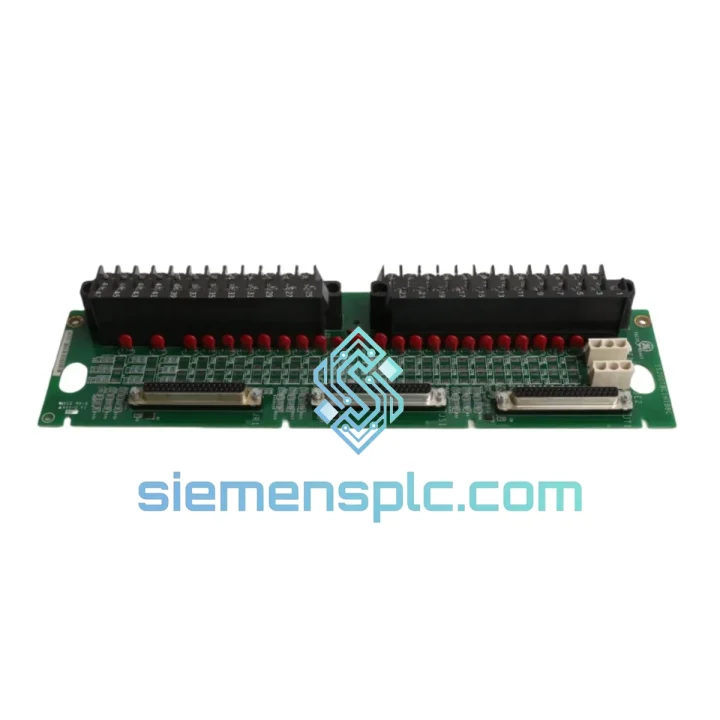
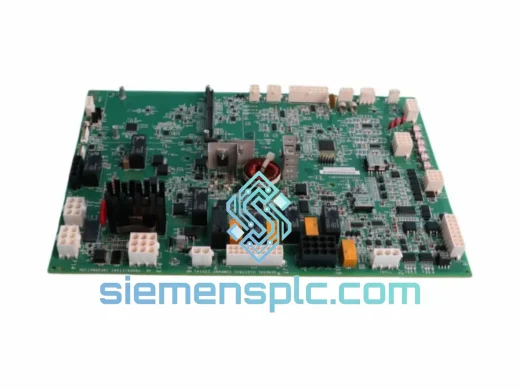
GE IS200TBCIS2C Termination Board
Request verified availability, condition, replacement risk review, packing options and courier lead time for IS200TBCIS2C.
BrandGE
Part NumberIS200TBCIS2C
ConditionAvailability Check
Lead TimeRFQ Confirmation
DocumentsDatasheet / photos by RFQ
ShippingExport packing available
Auto-filled RFQ
IS200TBCIS2C
Click Request Quote and the part number is inserted into the inquiry form automatically.
- Reply by email: [email protected]
- WhatsApp / Tel: +86 18359268345
- Mon-Sat 9:00-18:00 GMT+8
Procurement Data
Key Product Information
Core fields for model confirmation and RFQ routing. Detailed product narrative remains below.
- Brand
- GE
- Primary Part Number
- IS200TBCIS2C
- Product Type
- Termination Board
- Series / Family
- Mark VI
- Manufacturer
- GE (General Electric)
- Country of Origin
- US
- Model Function
- Contact Input Termination Board – discrete dry contact signal interface
- Catalog Category
- Industrial Automation Spares
- Operating Temp.
- 0°C to +60°C continuous
- Warranty
- 12 months from shipment date
Model confirmed for inquiry
IS200TBCIS2C
Send quantity, destination and urgency. The RFQ form keeps this part number attached.
Request Quote
Product Overview
GE IS200TBCIS2C Contact Input Termination Board – Every Hour of Downtime Has a Price Tag
When a Mark VI turbine control panel throws a contact input fault, the clock starts immediately. Forced outage costs in gas-fired generation routinely exceed $50,000 per hour. The IS200TBCIS2C is the discrete contact input termination board that sits between your field wiring — emergency stops, vibration switches, flame detectors, lube oil pressure contacts — and the Mark VI controller rack. When this board fails, those signals go dark. The controller loses visibility. Protection logic cannot execute. The unit trips.
At siemensplc.com, we maintain verified stock of the IS200TBCIS2C specifically because procurement lead times from OEM channels can stretch 8–16 weeks. Our Xiamen warehouse ships confirmed in-stock units within 24 hours of order. That gap between “part on order” and “turbine back online” is exactly where we operate.
URGENT REQUIREMENT? Contact: [email protected] | WhatsApp: +86 18359268345
Quick Technical Datasheet
| Part Number | IS200TBCIS2C |
| Manufacturer | GE (General Electric) |
| Series | Mark VI / Mark VIe Turbine Control |
| Function | Contact Input Termination Board – discrete dry contact signal interface |
| Signal Type | Dry contact (volt-free) discrete inputs |
| Isolation | Optical / relay isolation, field-side transient protection |
| Form Factor | Panel-mount termination board, Mark VI rack-compatible |
| Operating Temperature | 0°C to +60°C continuous |
| Weight | 550 g |
| Condition | New surplus / Tested refurbished (confirmed at quotation) |
| Warranty | 12 months from shipment date |
| Stock Status | ✅ Ready to Ship – Xiamen warehouse |
| Lead Time (in-stock) | Ships within 24 hours of order confirmation |
| Lead Time (sourced) | 7–14 business days via global procurement network |
Troubleshooting & Replacement Tips
The IS200TBCIS2C is a passive termination board — it carries no firmware and requires no software configuration. That said, field replacements go wrong for predictable reasons. Here is what to check before you pull the old board and after you seat the new one.
Common failure indicators pointing to IS200TBCIS2C:
- Mark VI HMI showing multiple contact input channels simultaneously faulted (not a single field device failure pattern)
- Diagnostic alarm: “TBCI hardware fault” or “contact input board not responding” in the Mark VI toolbox
- Intermittent contact state changes on channels that have confirmed healthy field wiring — classic sign of a degraded connector or cracked PCB trace on the termination board
- Visible burn marks, corrosion on screw terminals, or swollen capacitors on the board surface
- Fault persists after field wiring is disconnected and channels are jumpered at the terminal block — isolates the fault to the board itself, not the field device
Replacement procedure — field-verified steps:
- Document current wiring before disconnecting anything. Photograph every terminal row. The IS200TBCIS2C uses labeled screw terminals, but field wiring labels degrade over years of service. Do not rely on panel drawings alone — verify against physical wiring.
- De-energize the contact input circuits. Confirm with a multimeter that no voltage is present on field terminals. Some installations use wetted contact circuits with 24 VDC or 125 VDC wetting voltage — treat these as live until proven otherwise.
- Remove field wiring systematically. Work terminal-by-terminal, tagging each wire as you go. The IS200TBCIS2C typically handles 16–32 contact input channels; rushing this step causes re-wiring errors that generate new faults post-replacement.
- Seat the replacement board. Verify the connector to the Mark VI I/O module is fully engaged — a partially seated ribbon or backplane connector is the most common cause of “new board, same fault” callbacks.
- Re-terminate field wiring. Torque screw terminals to specification (typically 0.5–0.6 N·m for this board class). Under-torqued terminals cause intermittent contact resistance faults that are extremely difficult to diagnose remotely.
- Power up and force-test each channel. Use the Mark VI toolbox to monitor contact input states in real time. Actuate each field device individually and confirm the corresponding channel toggles correctly. Do not skip this step — a single mis-wired channel on a protection circuit is a safety event waiting to happen.
- Clear diagnostic alarms and verify no latched faults remain. Some Mark VI configurations require a controller reset or alarm acknowledgment sequence after hardware replacement.
Configuration notes: The IS200TBCIS2C does not have DIP switches or jumper-selectable addressing. Board identity is determined by its physical slot position in the Mark VI I/O rack and the corresponding I/O configuration in the Mark VI toolbox. If you are replacing a board in a different slot than the original (e.g., due to rack damage), update the I/O assignment in the toolbox configuration and download to the controller before commissioning.
Reliability in Harsh Conditions
Turbine control enclosures are not benign environments. The IS200TBCIS2C is built to GE’s industrial-grade specifications for continuous operation in conditions that would degrade commercial-grade electronics within months.
Vibration: Gas turbine enclosures transmit broadband mechanical vibration from the turbine shaft, compressor stages, and auxiliary equipment. The IS200TBCIS2C’s PCB layout and component mounting are designed to withstand sustained vibration profiles consistent with IEC 60068-2-6 test conditions. Connector retention mechanisms are specified to maintain electrical continuity under these loads.
Thermal cycling: Turbine control panels experience significant temperature swings between cold startup and full-load operation. Repeated thermal cycling stresses solder joints and PCB laminates. GE’s manufacturing process for this board class uses controlled-expansion materials and conformal coating on critical circuit areas to extend service life under these conditions.
Humidity and contamination: Offshore platforms, coastal power plants, and tropical installations expose control hardware to elevated humidity and airborne salt or chemical contamination. The IS200TBCIS2C’s conformal coating provides a barrier against moisture ingress and conductive contamination that would otherwise cause leakage currents between adjacent signal traces — a failure mode that produces exactly the kind of erratic contact input behavior described in the troubleshooting section above.
Units supplied by siemensplc.com are inspected for coating integrity and connector condition before shipment. Boards showing evidence of moisture damage, corrosion, or coating delamination are rejected from stock.
Global Express Logistics
Our Xiamen facility is positioned within the Xiamen Gaoqi International Airport logistics zone, with direct access to DHL Express, FedEx International Priority, and UPS Worldwide Express services. For emergency shipments, this matters: Xiamen connects to major industrial hubs in Southeast Asia, the Middle East, and Europe with next-flight-out capability on most routes.
Standard emergency shipment process:
- Order confirmed before 14:00 CST → same-day dispatch, DHL or FedEx tracking number issued by 18:00 CST
- Transit times: Southeast Asia 1–2 days | Middle East 2–3 days | Europe 3–4 days | North America 3–5 days
- Export documentation: Commercial invoice, packing list, certificate of origin, and HS code declaration (HS 8537.10) prepared for every shipment — no customs clearance delays caused by incomplete paperwork
- Incoterms available: EXW, FOB Xiamen, CIF destination port — specify your preference at order
- Multi-currency payment: USD, EUR, CNY, HKD accepted via T/T wire transfer; PayPal and credit card available for smaller orders
For projects requiring multiple parts from a single BOM, we consolidate shipments to reduce freight cost and customs entries. Contact us with your full parts list for a consolidated logistics quote.
Contact Information
📧 Email: [email protected]
📱 WhatsApp: +86 18359268345
🌐 Web: siemensplc.com
© 2026 siemensplc.com. All rights reserved.
Ready to quote
[email protected]
Send This Part Number to Sales
RFQ workflow
Quality workflow ->
Confirmation Process
01Model confirmation
We check the full part number, brand, series and visible nameplate information before quotation.
02Availability reply
Sales confirms stock path, condition option, quantity and realistic lead time for export dispatch.
03Packing & courier
DHL, FedEx, UPS or buyer courier arrangements can be reviewed with packing requirements.
Continue sourcing
Browse full catalog ->
Related Automation Parts
Similar brand or category products for fast comparison and multi-item RFQ lists.
GE
RFQ Ready
GE IS215WETAH1CA Wind Turbine Control Module
Mark VI
Origin US
Wind Turbine Control Module