GE
In Stock OK
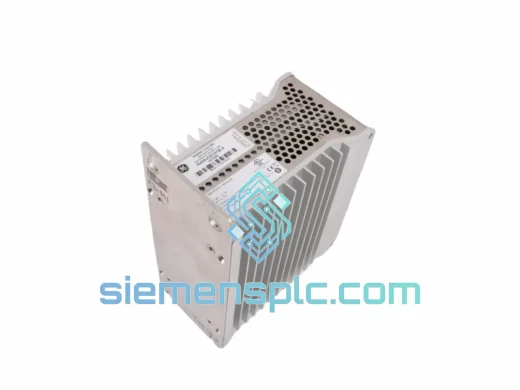
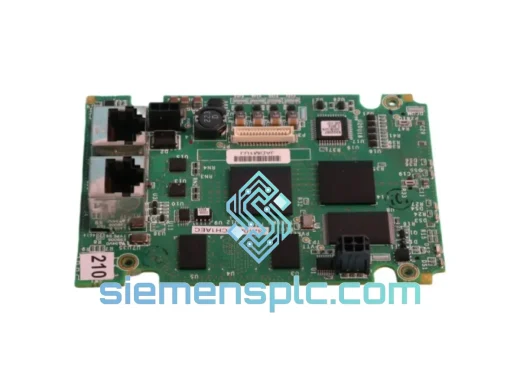
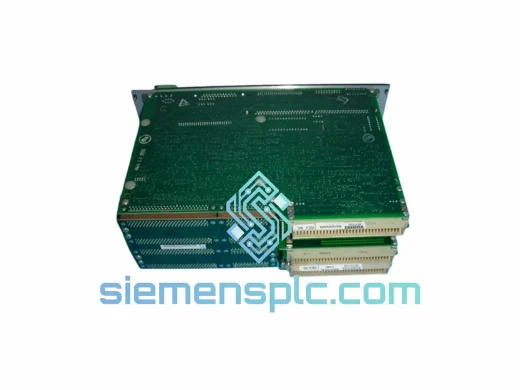
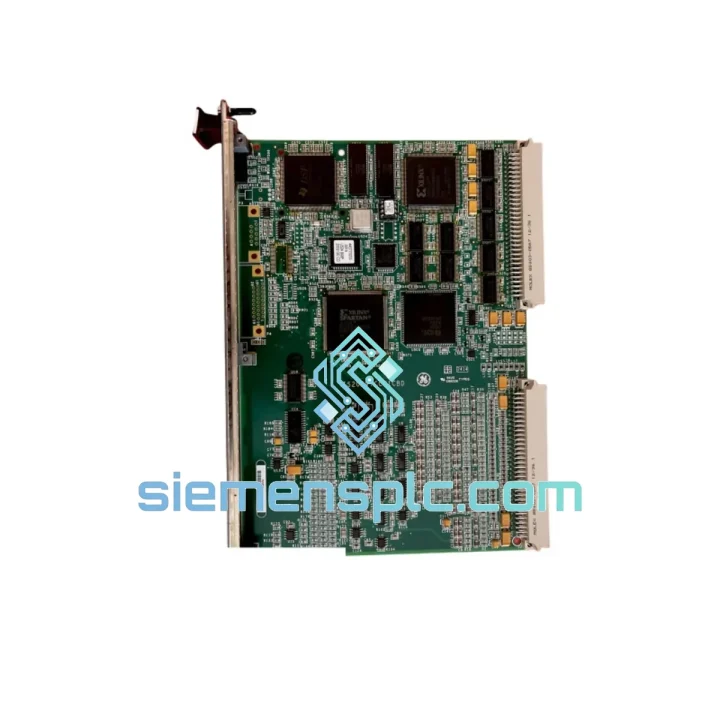
GE IS200VTCCH1CBD Thermocouple Processor Board – Mark VI IS200 Series
Request verified availability, condition, replacement risk review, packing options and courier lead time for VTCC H1C IS200VTCCH1CBD.
BrandGE
Part NumberVTCC H1C IS200VTCCH1CBD
ConditionAvailability Check
Lead TimeRFQ Confirmation
DocumentsDatasheet / photos by RFQ
ShippingExport packing available
Auto-filled RFQ
VTCC H1C IS200VTCCH1CBD
Click Request Quote and the part number is inserted into the inquiry form automatically.
- Reply by email: [email protected]
- WhatsApp / Tel: +86 18359268345
- Mon-Sat 9:00-18:00 GMT+8
Procurement Data
Key Product Information
Core fields for model confirmation and RFQ routing. Detailed product narrative remains below.
- Brand
- GE
- Primary Part Number
- VTCC H1C IS200VTCCH1CBD
- Product Type
- Thermocouple Processor Board
- Series / Family
- Mark VI
- Manufacturer
- GE (General Electric)
- Country of Origin
- US
- Catalog Category
- PLCs & Controllers
- Warranty
- 12 months from date of shipment
Model confirmed for inquiry
VTCC H1C IS200VTCCH1CBD
Send quantity, destination and urgency. The RFQ form keeps this part number attached.
Request Quote
Product Overview
GE IS200VTCCH1CBD — Thermocouple Signal Processor in Mark VI Distributed Turbine Control Architecture
The GE IS200VTCCH1CBD is a dedicated thermocouple processor board (board designator: VTCC) within GE’s IS200 hardware family, engineered to serve as the primary analog front-end for temperature measurement loops in Mark VI-based turbine control systems. Unlike general-purpose analog input modules, the IS200VTCCH1CBD is purpose-built for thermocouple signal chains: it handles linearization, cold junction compensation (CJC), and analog-to-digital conversion in a single board footprint, delivering calibrated temperature values directly to the Mark VI controller backplane via the IONet serial bus.
In a gas turbine or steam turbine control loop, temperature is not a secondary diagnostic variable — it is a primary protection parameter. Exhaust gas temperature (EGT) spread, combustion reference temperature, and bearing metal temperature are all routed through VTCC-class boards. A degraded or failed IS200VTCCH1CBD does not merely generate an alarm; it forces the control system into a protective shutdown state, removing the unit from service until the board is replaced and the loop is re-validated. For operators running combined-cycle plants, compressor stations, or offshore turbine-driven generators, the cost of unplanned downtime per hour routinely exceeds the replacement cost of the board by two to three orders of magnitude.
This page provides complete technical parameters, hardware architecture analysis, and system integration guidance for the IS200VTCCH1CBD, sourced and stocked by siemensplc.com from Xiamen, China, with global logistics capability.
Real-time Stock & RFQ: [email protected] | WhatsApp: +86 18359268345
Technical Parameters
| Parameter | Specification |
|---|---|
| Part Number | IS200VTCCH1CBD |
| Board Designator | VTCC (Thermocouple Conditioner) |
| Variant Code | H1C |
| Manufacturer | GE (General Electric) |
| Compatible Platform | GE Mark VI Turbine Control System |
| Board Family | IS200 Series |
| Input Signal Type | Thermocouple (Type J, K, T, E, R, S, B — per configuration) |
| Number of Input Channels | Up to 12 thermocouple channels (per Mark VI rack slot assignment) |
| Cold Junction Compensation | On-board isothermal reference junction, hardware CJC |
| ADC Resolution | 16-bit sigma-delta conversion per channel |
| Measurement Range | −200 °C to +1820 °C (type-dependent) |
| Accuracy | ±0.5 °C typical at calibrated reference temperature |
| Input Impedance | >10 MΩ differential |
| Common Mode Rejection | >120 dB at 50/60 Hz |
| Isolation | Channel-to-backplane optical isolation; 500 V DC working isolation |
| Backplane Interface | IONet serial bus (Mark VI proprietary) |
| Operating Temperature | 0 °C to +60 °C ambient |
| Storage Temperature | −40 °C to +85 °C |
| Humidity | 5% to 95% RH, non-condensing |
| Power Consumption | ≤3.5 W from Mark VI rack backplane supply |
| Form Factor | Single-slot PCB module, Mark VI I/O rack compatible |
| Weight | 420 g (approx.) |
| Condition Available | New surplus / Tested refurbished |
| Warranty | 12 months from date of shipment |
| Country of Origin | United States |
Hardware Logical Analysis
The IS200VTCCH1CBD’s signal path begins at the terminal board connector, where raw thermocouple EMF voltages — typically in the range of 0 to 70 mV for common types — are routed through a passive low-pass filter network. This RC filter stage attenuates high-frequency conducted noise before the signal reaches the instrumentation amplifier stage, which provides a differential gain of approximately 100× to bring the thermocouple signal into the ADC’s optimal input range.
Cold junction compensation is implemented in hardware rather than software. An isothermal copper bar spans the terminal connection points, and a precision thermistor mounted directly on this bar measures the ambient reference temperature. The thermistor output is digitized by a dedicated low-noise ADC channel and added algebraically to the thermocouple measurement in the board’s onboard DSP, producing a compensated absolute temperature value before the data is serialized onto the IONet bus. This hardware-first CJC approach eliminates the latency and potential firmware errors associated with software-only compensation schemes.
Each thermocouple channel is galvanically isolated from the backplane using optocoupler-based isolation barriers rated at 500 V DC working voltage. This isolation architecture serves two functions: it prevents ground loop currents — which are endemic in large industrial installations where thermocouple extension cables may run hundreds of meters through electrically noisy cable trays — from corrupting the measurement, and it protects the Mark VI controller backplane from fault voltages that may appear on field wiring during insulation breakdown events.
The board’s EMC design follows IEC 61000-4 series test criteria. The PCB layout uses a split ground plane strategy: the analog measurement ground and the digital logic ground are separated and joined at a single star point near the power entry, preventing digital switching noise from coupling into the high-impedance analog front end. Differential signal routing with controlled impedance traces and guard rings around the instrumentation amplifier inputs further suppresses capacitively coupled interference. The result is a common mode rejection ratio exceeding 120 dB at 50 Hz and 60 Hz — sufficient to reject the full-scale interference from adjacent power cables in a typical turbine control cabinet.
The onboard microcontroller manages channel scanning, linearization table lookup (stored in non-volatile flash), open-circuit detection, and IONet frame assembly. Open thermocouple detection is implemented by injecting a small bias current into each channel; if the thermocouple circuit is open, the bias current drives the input to a rail voltage, which the firmware detects and flags as a diagnostic fault code transmitted to the Mark VI controller. This allows the control system to distinguish between a genuine over-temperature condition and a wiring fault — a distinction that is operationally critical for protection logic.
System Integration Benefits
- Zero-modification rack insertion: The IS200VTCCH1CBD occupies a standard single-slot position in the Mark VI I/O rack and communicates via the native IONet bus. No firmware patches, no rack rewiring, and no controller configuration changes are required for a like-for-like replacement.
- Deterministic scan cycle: The board delivers temperature data to the Mark VI controller on a fixed, deterministic scan period synchronized to the controller’s execution cycle, ensuring that temperature protection logic operates with consistent, predictable latency — a requirement for turbine overheat protection algorithms.
- Diagnostic transparency: Each channel transmits not only the measured temperature value but also a channel health status word, including open-circuit flags, CJC sensor fault indicators, and ADC saturation warnings. This data is visible in the Mark VI Toolbox diagnostic interface without additional configuration.
- Multi-type thermocouple support: The linearization firmware supports all IEC 60584-compliant thermocouple types. Type selection is configured via the Mark VI Toolbox software, allowing the same physical board to serve different measurement points across a plant without hardware modification.
- Redundancy compatibility: In TMR (Triple Modular Redundant) Mark VI configurations, three IS200VTCCH1CBD boards can be assigned to the same thermocouple loop. The Mark VI controller’s voting logic compares the three independent temperature readings and flags a discrepancy if any single board deviates beyond the configured threshold, enabling fault detection without process interruption.
- Reduced wiring complexity: The multi-channel architecture consolidates up to 12 thermocouple inputs per board slot, reducing the number of analog input boards required in a large turbine installation and simplifying cabinet wiring density.
- Long-term platform continuity: The IS200 board family has been in production and active support for over two decades. Replacement boards are available from authorized distributors and specialist suppliers, providing a credible long-term maintenance strategy for plants with 20- to 30-year operational horizons.
- Calibration traceability: The board’s ADC and CJC reference components are factory-calibrated against NIST-traceable standards. Calibration coefficients are stored in onboard non-volatile memory and are accessible via the Mark VI Toolbox for verification during scheduled maintenance intervals.
Quality Assurance & Global Logistics
Every IS200VTCCH1CBD unit supplied by siemensplc.com undergoes a structured incoming inspection protocol before it is offered for sale. Visual inspection covers PCB surface condition, component seating integrity, connector pin condition, and conformal coating uniformity. Boards designated as tested refurbished are bench-tested using a Mark VI-compatible rack simulator that exercises all thermocouple input channels, verifies CJC compensation accuracy, and confirms IONet communication integrity under load. Test data records are retained and available upon request for applications requiring documented traceability.
All units are packaged in anti-static (ESD) shielding bags, placed in foam-lined rigid cartons, and sealed with tamper-evident tape. For international shipments, cartons are labeled with IATA-compliant markings and accompanied by a commercial invoice, packing list, and — where required by the destination country — a certificate of origin. Shipments from our Xiamen, China warehouse are dispatched via DHL Express, FedEx International Priority, or UPS Worldwide Expedited, with typical transit times of 3 to 7 business days to major industrial hubs in Europe, the Middle East, Southeast Asia, and the Americas. For urgent plant maintenance scenarios, same-day dispatch is available for orders confirmed before 14:00 CST.
The 12-month warranty covers manufacturing defects and functional failure under normal operating conditions. Warranty claims are processed with a replacement-first policy: a replacement unit is dispatched upon receipt of the failed board, minimizing plant downtime. Boards that fail within the warranty period are analyzed to determine root cause, and findings are shared with the customer where relevant to ongoing reliability improvement.
Contact Information
Email: [email protected]
WhatsApp: +86 18359268345
Web: siemensplc.com
Location: Xiamen, China
© 2026 siemensplc.com. All rights reserved.
Ready to quote
[email protected]
Send This Part Number to Sales
RFQ workflow
Quality workflow ->
Confirmation Process
01Model confirmation
We check the full part number, brand, series and visible nameplate information before quotation.
02Availability reply
Sales confirms stock path, condition option, quantity and realistic lead time for export dispatch.
03Packing & courier
DHL, FedEx, UPS or buyer courier arrangements can be reviewed with packing requirements.
Continue sourcing
Browse full catalog ->
Related Automation Parts
Similar brand or category products for fast comparison and multi-item RFQ lists.
GE
RFQ Ready
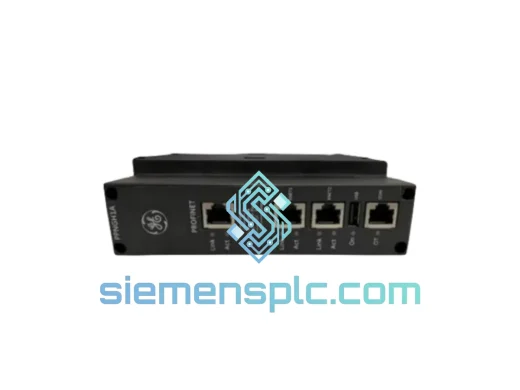
GE 0552N1QLG132A-01 Controller Gateway Module
Mark VI
Origin US
Controller Gateway Module