
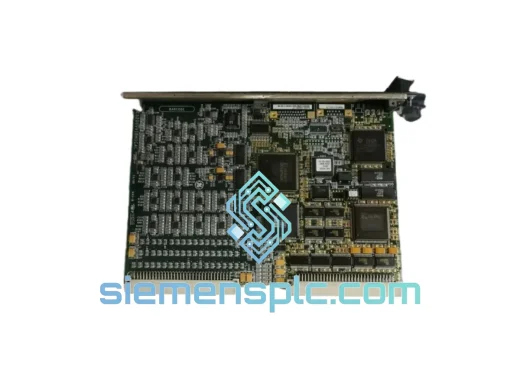
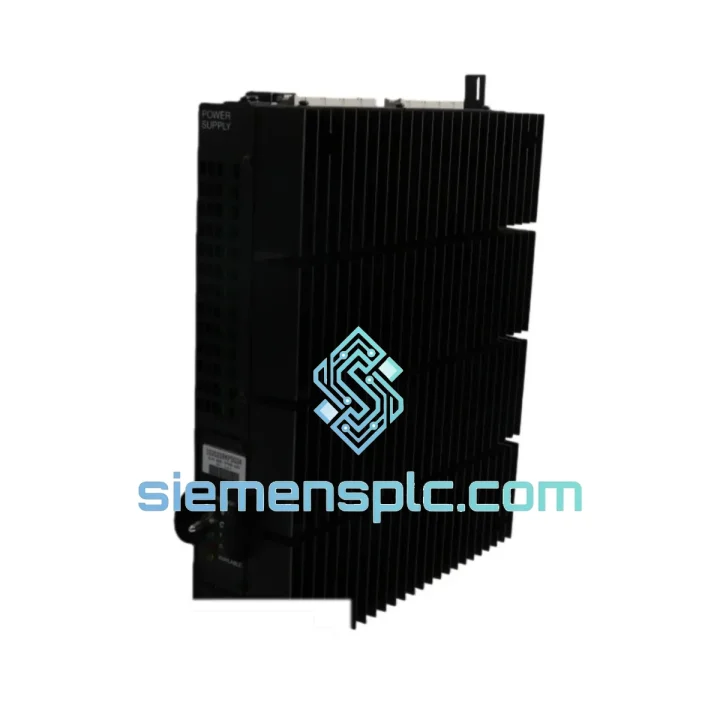
GE
In Stock OK
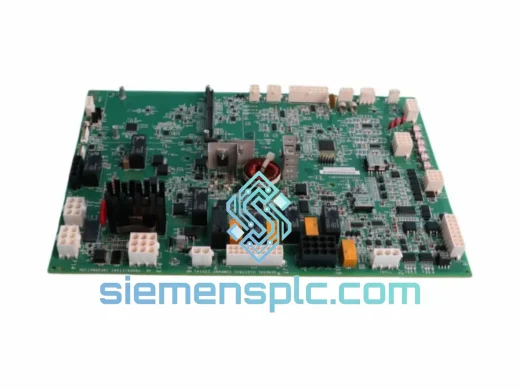
GE IS2020JPDCG1ACB Power Distribution Module – Mark VI
Request verified availability, condition, replacement risk review, packing options and courier lead time for IS2020JPDCG1ACB.
BrandGE
Part NumberIS2020JPDCG1ACB
ConditionAvailability Check
Lead TimeRFQ Confirmation
DocumentsDatasheet / photos by RFQ
ShippingExport packing available
Auto-filled RFQ
IS2020JPDCG1ACB
Click Request Quote and the part number is inserted into the inquiry form automatically.
- Reply by email: [email protected]
- WhatsApp / Tel: +86 18359268345
- Mon-Sat 9:00-18:00 GMT+8
Procurement Data
Key Product Information
Core fields for model confirmation and RFQ routing. Detailed product narrative remains below.
- Brand
- GE
- Primary Part Number
- IS2020JPDCG1ACB
- Product Type
- Power Distribution Module
- Series / Family
- Mark VI
- Manufacturer
- GE (General Electric / GE Vernova)
- Country of Origin
- US
- Catalog Category
- Industrial Automation Spares
- Warranty
- 12 months from date of shipment
Model confirmed for inquiry
IS2020JPDCG1ACB
Send quantity, destination and urgency. The RFQ form keeps this part number attached.
Request Quote
Product Overview
GE IS2020JPDCG1ACB – DC Power Distribution Module for Mark VI Triple Modular Redundancy Turbine Control Systems
The GE IS2020JPDCG1ACB is a DC power distribution module engineered for deployment within GE’s Mark VI turbine control platform — a distributed control architecture that governs gas turbines, steam turbines, and combined-cycle units across power generation, oil & gas, and heavy industrial sectors. Within the Mark VI cabinet assembly, this module occupies the power backbone layer: it receives conditioned DC input from upstream power supply cards and redistributes regulated voltage rails to downstream I/O boards, communication modules, and terminal assemblies. Any degradation in this distribution path directly compromises the deterministic behavior of the entire control loop.
The IS2020 hardware family was developed to support GE’s TMR (Triple Modular Redundancy) control philosophy, where three independent processing channels — designated R, S, and T — execute identical control algorithms in parallel. Each channel requires its own isolated power feed. The IS2020JPDCG1ACB provides the per-channel DC distribution infrastructure that makes this fault-tolerant architecture physically realizable. Without a correctly functioning power distribution module, the TMR voting logic cannot maintain channel independence, and the system degrades from fault-tolerant to simplex operation — a condition that most plant safety standards prohibit during normal turbine operation.
The module’s PCB construction uses conformal coating across all active areas, providing protection against condensation, airborne particulates, and corrosive atmospheres typical of turbine hall environments. Connector interfaces are gold-plated to maintain low-resistance contact integrity across the thermal cycling that accompanies turbine start-stop sequences. The board revision suffix ACB identifies a specific hardware iteration with defined electrical tolerances; substituting a mismatched revision can introduce impedance discontinuities on shared bus segments.
Real-time Stock & RFQ: [email protected] | WhatsApp: +86 18359268345
Technical Parameters
| Parameter | Specification |
|---|---|
| Part Number | IS2020JPDCG1ACB |
| Manufacturer | GE (General Electric / GE Vernova) |
| Platform | IS200 / IS2020 — Mark VI Turbine Control System |
| Module Function | DC Power Distribution |
| Architecture Compatibility | Mark VI TMR (Triple Modular Redundancy) |
| Form Factor | Rack-mount PCB, Mark VI cabinet slot |
| PCB Protection | Full conformal coating |
| Connector Type | Gold-plated multi-pin backplane interface |
| Hardware Revision | ACB |
| Compatible Systems | GE Mark VI, Mark VIe (verify revision) |
| Operating Environment | Industrial turbine control cabinet |
| Weight | 8.15 kg (as configured) |
| Warranty | 12 months from date of shipment |
| Condition Available | Surplus New / Functionally Tested Refurbished |
Hardware Logical Analysis
The IS2020JPDCG1ACB operates at the intersection of power integrity and control system determinism. Its primary design challenge is distributing DC power across multiple downstream loads — each with different transient current profiles — without introducing voltage droop events that could trigger false under-voltage faults on sensitive I/O boards.
To address this, the module employs low-impedance copper plane distribution within its PCB stack, minimizing resistive losses across the distribution network. Bulk capacitance at each output branch provides local charge reservoirs that absorb inrush transients when I/O modules initialize or when digital output channels switch high-current loads. This architecture prevents the common failure mode where a single I/O board’s startup surge collapses the shared bus voltage and causes adjacent modules to reset.
From an EMC perspective, the module’s layout separates high-current distribution traces from low-level signal return paths, reducing conducted emissions that could couple into analog input channels on adjacent I/O boards. The conformal coating provides a dielectric barrier against surface leakage currents in high-humidity environments — a critical consideration in coastal power plants and offshore platform installations where relative humidity regularly exceeds 85%.
The ACB revision designation indicates a specific set of component tolerances and layout modifications relative to earlier revisions. In TMR systems, all three channels (R, S, T) should ideally run identical hardware revisions to maintain symmetrical power delivery characteristics. Asymmetric revisions can introduce measurable differences in output impedance between channels, which the TMR voter may interpret as a channel deviation under certain diagnostic scan conditions.
System Integration Benefits
- Preserved TMR Channel Independence: Provides electrically isolated DC distribution to each of the three Mark VI control channels, maintaining the physical separation that TMR fault tolerance requires. A single module failure does not propagate across channels.
- Deterministic Power Delivery: Low-impedance bus architecture ensures voltage stability during I/O module initialization sequences, preventing spurious under-voltage faults that would otherwise trigger unnecessary turbine trips.
- Transient Suppression at Branch Level: Per-output bulk capacitance absorbs inrush currents from digital output modules switching resistive and inductive loads, isolating transient events from the shared distribution bus.
- Diagnostic Transparency: The module’s power rails are monitored by the Mark VI’s built-in power management diagnostics. A degraded IS2020JPDCG1ACB generates specific fault codes in the ToolboxST environment, enabling maintenance teams to isolate the failure to the module level without cabinet-wide troubleshooting.
- Reduced Mean Time to Repair (MTTR): Direct form-fit-function replacement with matching ACB revision eliminates the need for firmware reconfiguration or parameter re-entry, allowing hot-swap replacement during scheduled maintenance windows.
- EMC Compliance Maintenance: Conformal-coated PCB and separated power/signal routing preserve the cabinet’s conducted and radiated emission profile, keeping the installation compliant with IEC 61000-series EMC requirements without additional shielding measures.
- Thermal Stability Across Load Cycles: Gold-plated connector interfaces maintain stable contact resistance across the thermal expansion and contraction cycles that accompany turbine start-stop sequences, preventing intermittent connection faults that are difficult to reproduce during bench testing.
- Broad Turbine Application Coverage: Compatible across GE Frame 5, Frame 6B, Frame 7EA, Frame 7FA, Frame 9E, and Frame 9FA turbine variants that use the Mark VI control platform, reducing the number of spare part SKUs a plant must maintain in its MRO inventory.
Quality Assurance & Global Logistics
Every IS2020JPDCG1ACB unit supplied through siemensplc.com undergoes a structured inspection and verification process before dispatch. Visual inspection covers PCB surface condition, connector pin integrity, component seating, and conformal coating continuity. Units designated as functionally tested refurbished are bench-verified under simulated DC load conditions, with output voltage stability and transient response documented prior to packaging.
All modules are handled under ESD-controlled conditions throughout the inspection, storage, and packaging workflow. Anti-static bags, foam-lined cartons, and moisture barrier packaging are standard for all shipments. Serial numbers and hardware revision codes are recorded against each order for full traceability.
Shipments originate from our warehouse in Xiamen, China — a major international logistics hub with direct freight connections to Southeast Asia, the Middle East, Europe, and the Americas. Standard international shipments are dispatched within 3–5 business days of order confirmation. Emergency procurement requests with documented plant outage conditions are prioritized for same-day or next-day dispatch where stock permits. Export documentation — commercial invoice, packing list, certificate of origin, and material safety data where applicable — is prepared for all cross-border shipments to facilitate customs clearance without delay. A 12-month warranty covers all units against manufacturing defects and functional failure under normal operating conditions.
Contact Information
Email: [email protected]
WhatsApp: +86 18359268345
Web: siemensplc.com
Location: Xiamen, China
© 2026 siemensplc.com. All rights reserved.
Ready to quote
[email protected]
Send This Part Number to Sales
RFQ workflow
Quality workflow ->
Confirmation Process
01Model confirmation
We check the full part number, brand, series and visible nameplate information before quotation.
02Availability reply
Sales confirms stock path, condition option, quantity and realistic lead time for export dispatch.
03Packing & courier
DHL, FedEx, UPS or buyer courier arrangements can be reviewed with packing requirements.
Continue sourcing
Browse full catalog ->
Related Automation Parts
Similar brand or category products for fast comparison and multi-item RFQ lists.
GE
RFQ Ready
GE IS215WETAH1CA Wind Turbine Control Module
Mark VI
Origin US
Wind Turbine Control Module