GE
In Stock OK
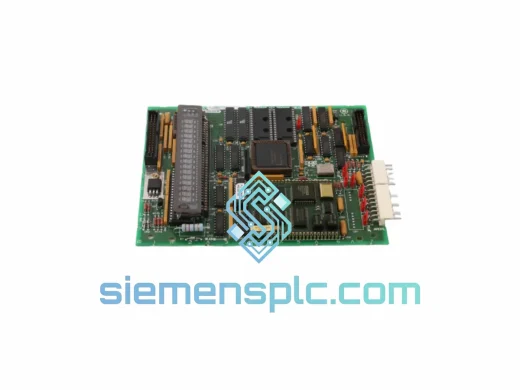
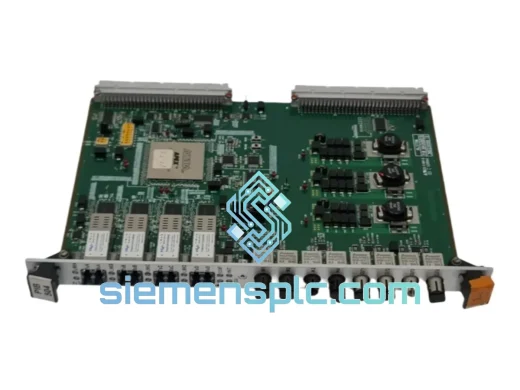
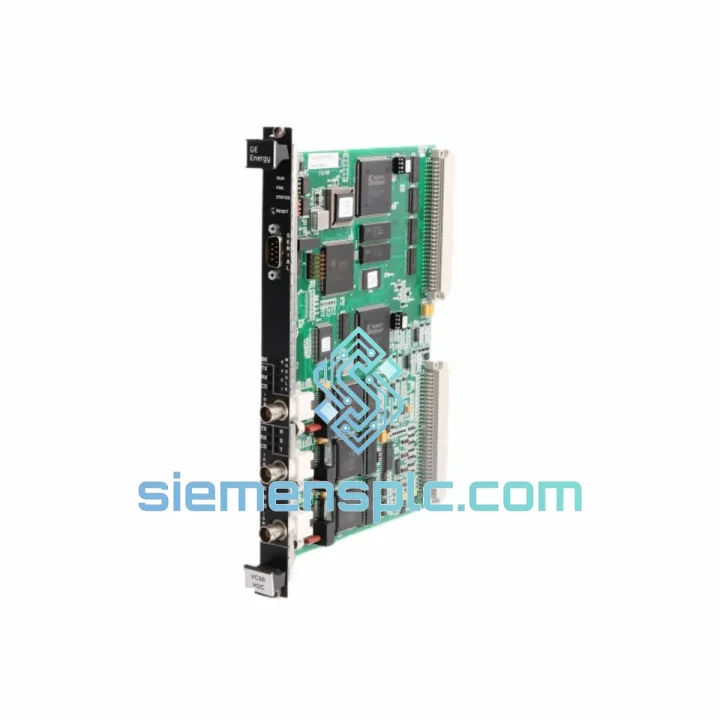
GE IS215VCMIH2CA Communications Interface Card – Mark VI
Request verified availability, condition, replacement risk review, packing options and courier lead time for IS215VCMIH2CA.
BrandGE
Part NumberIS215VCMIH2CA
ConditionAvailability Check
Lead TimeRFQ Confirmation
DocumentsDatasheet / photos by RFQ
ShippingExport packing available
Auto-filled RFQ
IS215VCMIH2CA
Click Request Quote and the part number is inserted into the inquiry form automatically.
- Reply by email: [email protected]
- WhatsApp / Tel: +86 18359268345
- Mon-Sat 9:00-18:00 GMT+8
Procurement Data
Key Product Information
Core fields for model confirmation and RFQ routing. Detailed product narrative remains below.
- Brand
- GE
- Primary Part Number
- IS215VCMIH2CA
- Product Type
- Communications Interface Card
- Series / Family
- Mark VI
- Manufacturer
- General Electric (GE Power Controls)
- Country of Origin
- US
- Catalog Category
- Communication
- Warranty
- 12 months against manufacturing defects and functional failure
Model confirmed for inquiry
IS215VCMIH2CA
Send quantity, destination and urgency. The RFQ form keeps this part number attached.
Request Quote
Product Overview
IS215VCMIH2CA — IONet Segment Controller and VME Communications Bridge in GE Mark VI Turbine Control Architecture
Within the GE Mark VI distributed turbine control platform, the IS215VCMIH2CA serves as the dedicated IONet communications interface card (VCMI series), occupying the VME backplane slot assigned to inter-chassis data exchange. Its functional mandate is precise: to maintain a deterministic, fault-tolerant Ethernet segment between the Mark VI controller chassis and the distributed I/O packs deployed across the turbine skid. Every process variable — exhaust gas temperature, compressor discharge pressure, rotor speed, valve position feedback — traverses this card before reaching the controller’s execution engine. A degraded or failed VCMI card does not merely reduce redundancy; it severs the data path that the control algorithm depends on for closed-loop operation. For gas turbine, steam turbine, and combined-cycle power generation facilities, the IS215VCMIH2CA is a Tier-1 critical spare with no functional substitute within the Mark VI architecture.
The card implements GE’s proprietary IONet protocol over a 100BASE-TX physical layer. IONet is not a standard Ethernet application — it is a deterministic, time-division multiplexed communication scheme engineered specifically for the latency and reliability requirements of turbine control. Each I/O pack on the IONet segment is assigned a fixed time slot within the configured scan cycle (10 ms or 20 ms, application-dependent). The IS215VCMIH2CA’s onboard FPGA enforces slot discipline: frames arriving outside their assigned window are rejected, and the affected pack’s communication status is flagged in the controller’s diagnostic register within one scan cycle. This behavior transforms what would otherwise be a silent data-staleness condition into an explicit, timestamped fault event — a design choice that reflects the safety philosophy embedded throughout the Mark VI platform.
In Triple Modular Redundancy (TMR) configurations — the standard deployment for gas turbine units above 50 MW — three IS215VCMIH2CA cards operate in parallel, one per controller module (R, S, T channels). Each card maintains an independent IONet segment. The I/O packs receive data from all three segments simultaneously and apply a two-out-of-three voting algorithm at the pack level before forwarding the voted result to the actuator output stage. A single VCMI card failure therefore does not propagate to the control output; the two remaining segments continue to deliver consistent voted data, and the system transitions to a degraded-but-operational TMR state. The failed card’s identity and fault type are reported to the ToolboxST diagnostic interface within the same scan cycle in which the failure is detected.
Units available through siemensplc.com are sourced from verified industrial supply channels, inspected at our Xiamen facility, serialized, and functionally tested against GE IONet communication parameters prior to dispatch. Stock is maintained for immediate shipment. For real-time availability and volume pricing, contact [email protected] or WhatsApp +86 18359268345.
Real-time Stock & RFQ: [email protected] | WhatsApp: +86 18359268345
Technical Parameters
| Part Number | IS215VCMIH2CA |
| Manufacturer | General Electric (GE Power Controls) |
| Control Platform | Mark VI Turbine Control System |
| Card Series | VCMI — VME Communications Interface |
| Hardware Revision | H2 (encoded in part number suffix) |
| Form Factor | 6U VME-compatible PCB module |
| Communication Protocol | GE IONet (proprietary deterministic Ethernet, 100 Mbps) |
| Physical Interface | Dual RJ-45 IONet ports (primary + secondary ring) |
| Scan Cycle Options | 10 ms / 20 ms (configurable via ToolboxST) |
| Backplane Supply Voltage | +5 VDC / ±15 VDC (Mark VI VME backplane) |
| Steady-State Power Draw | ≤ 8 W (all ports active, full IONet load) |
| Operating Temperature Range | 0 °C to +60 °C |
| Storage Temperature Range | −40 °C to +85 °C |
| Relative Humidity | 5% to 95% RH, non-condensing |
| Vibration Tolerance | IEC 60068-2-6: 2 g, 10–500 Hz sinusoidal |
| ESD Protection | IEC 61000-4-2 Level 3 (±6 kV contact, ±8 kV air) |
| EFT/Burst Immunity | IEC 61000-4-4: ±2 kV on signal ports |
| Surge Immunity | IEC 61000-4-5: ±1 kV line-to-line |
| Galvanic Isolation | 500 V (IONet physical layer to VME backplane logic) |
| Functional Safety Reference | IEC 61508 SIL 2 (system-level, per GE Mark VI platform certification) |
| Fault Detection Latency | ≤ 1 scan cycle (≤ 20 ms worst-case) |
| Onboard Fault Log Depth | 256 entries (circular buffer, SRAM-backed) |
| Unit Weight | 360 g (nominal) |
| Condition | Genuine OEM — inspected and functionally verified |
| Warranty | 12 months against manufacturing defects and functional failure |
Hardware Logical Analysis
The IS215VCMIH2CA is built around a dual-port 100BASE-TX Ethernet physical layer, with each port connected to an independent IONet ring. This architecture allows the card to participate in both the primary and secondary IONet segments simultaneously without port contention. The two ports do not operate in a failover relationship — they are active concurrently, each carrying traffic for their respective ring. In a TMR system, this means the card contributes to two of the six total IONet paths (three cards × two ports each) that collectively form the redundant communication fabric.
The FPGA at the core of the IS215VCMIH2CA performs three distinct functions: time-slot arbitration, frame integrity validation, and fault register management. Time-slot arbitration enforces the IONet TDM schedule by comparing each incoming frame’s source address and arrival timestamp against the expected slot table loaded from the ToolboxST configuration database at startup. Frames that arrive more than one slot-width early or late are discarded, and the associated I/O pack is marked as communication-faulted. This strict enforcement prevents a malfunctioning I/O pack from monopolizing bus bandwidth — a failure mode that would otherwise degrade communication quality for all packs on the segment.
Frame integrity validation applies a CRC-32 check to every received IONet frame. Frames failing the CRC check are counted in a per-port error register and discarded without forwarding to the VME backplane. When the error count for a given port exceeds a configurable threshold within a rolling 1-second window, the card asserts a communication quality alarm to the controller — providing an early warning of physical layer degradation (cable damage, connector oxidation, or EMI ingress) before the error rate reaches the point of data loss.
EMC hardening on the IS215VCMIH2CA addresses the specific interference environment of turbine control panels, where the card operates in proximity to variable-frequency drives, high-voltage switchgear, and ignition systems. The PCB uses a six-layer stackup with dedicated ground planes on layers 2 and 5, providing a continuous reference plane beneath all signal traces. IONet signal paths are routed as controlled-impedance differential pairs (100 Ω ± 10%) to minimize reflections at the RJ-45 connectors. Ferrite bead filters on the +5 VDC and ±15 VDC backplane supply rails attenuate high-frequency conducted noise from the VME power bus. Each RJ-45 port incorporates a transient voltage suppression (TVS) diode array rated for ±15 kV ESD (IEC 61000-4-2 Level 4), exceeding the standard panel-level requirement. The 500 V galvanic isolation barrier between the IONet physical layer and the VME backplane logic prevents ground loop currents — common in large turbine installations where the control panel and the I/O junction boxes are separated by tens of meters of cable tray — from coupling noise into the digital logic domain.
Firmware is stored in onboard NOR flash and is not field-programmable. Configuration parameters — IONet slot table, scan cycle period, fault threshold values — are pushed from the ToolboxST configuration database to the card via the VME backplane during system initialization. This eliminates the risk of firmware version mismatch during card replacement: the replacement card receives the same configuration as its predecessor automatically, without technician intervention.
System Integration Benefits
- Deterministic scan-cycle enforcement with sub-cycle fault detection: The FPGA-based TDM arbitration guarantees each I/O pack’s communication window within the configured 10 ms or 20 ms scan period. Fault detection latency is bounded at one scan cycle, ensuring that a communication failure is reflected in the controller’s diagnostic state before the next control output update — a requirement for SIL 2 functional safety compliance.
- Segment-level fault isolation with pack-address resolution: When a communication fault occurs, the IS215VCMIH2CA reports the specific IONet segment (primary or secondary ring) and the I/O pack address of the affected device. Maintenance personnel receive a directed fault code rather than a generic bus alarm, reducing mean time to diagnose from hours to minutes in a multi-pack IONet segment.
- TMR voting transparency via ToolboxST: In triple-redundant configurations, the card exposes per-segment vote status to the ToolboxST diagnostic display in real time. Engineers can observe which of the three IONet segments is deviating from the voted value before a second failure degrades the system to simplex operation — enabling predictive maintenance scheduling rather than reactive emergency replacement.
- Live insertion and extraction without controller shutdown: The VME backplane interface supports hot-swap operation within the Mark VI rack. A failed IS215VCMIH2CA can be replaced while the remaining two TMR channels maintain system integrity, eliminating the planned outage that would otherwise be required for a communications card replacement on a running turbine unit.
- Automatic configuration recovery on insertion: Upon hot-insertion, the replacement card negotiates its full configuration from the active controller database via the backplane within the first few scan cycles. No manual parameter entry, no ToolboxST download session, and no technician-initiated restart are required — a significant operational advantage during emergency replacement under time pressure.
- 256-entry fault log for post-event root-cause analysis: The onboard circular fault log records timestamp, fault type, affected port, and cumulative frame error count for each event. This log is accessible via ToolboxST after a communication disturbance and provides the data necessary to distinguish between a card failure, a cable fault, and an I/O pack malfunction — three failure modes that present with similar symptoms at the controller alarm level.
- Native compatibility with GE OPC-DA/UA data gateway: IONet data managed by the IS215VCMIH2CA is accessible to plant-level SCADA systems and process historians via GE’s OPC server layer without additional hardware or protocol conversion. Replacing a VCMI card does not require reconfiguration of the OPC data path, preserving the existing plant data integration architecture.
- Cross-revision backward compatibility within the Mark VI rack: The H2 hardware revision of the IS215VCMIH2CA maintains interoperability with earlier VCMI revisions installed in the same chassis. Mixed-revision operation is supported during phased spare-parts replacement programs, allowing facilities to consume existing inventory before standardizing on the H2 revision across all slots.
- Reduced commissioning risk through firmware-free replacement: Because the card’s operating parameters are configuration-database-driven rather than firmware-programmed, the probability of a post-replacement commissioning fault caused by parameter mismatch is eliminated. This is particularly relevant for facilities that maintain spare cards in long-term storage, where firmware version drift between the stored card and the installed base would otherwise require a firmware update step before the card could be placed in service.
Quality Assurance & Global Logistics
Each IS215VCMIH2CA unit offered through siemensplc.com passes a structured incoming inspection protocol at our Xiamen, China facility before it is added to available stock. The inspection sequence covers: visual examination of PCB surface condition and component integrity; backplane connector pin inspection for deformation, oxidation, and contact resistance; power-on functional test confirming IONet port initialization and frame exchange against a reference I/O pack; and serial number documentation for full unit traceability from source to end customer.
Packaging follows IEC 61340-5-1 electrostatic discharge protection requirements: each card is sealed in a conductive ESD bag, placed in a foam-lined rigid carton with a moisture-barrier desiccant pack, and labeled with the part number, serial number, and inspection date. Export documentation — commercial invoice, packing list, and functional test record — is prepared for every shipment. Xiamen Gaoqi International Airport provides direct cargo connections to major industrial hubs across Europe, Southeast Asia, the Middle East, and the Americas. Typical transit times are 3–7 business days for air freight and 25–35 days for sea freight consolidation, depending on destination port.
All units carry a 12-month warranty against manufacturing defects and functional failure under normal operating conditions. Warranty claims are processed under a replacement-first policy: a verified replacement unit is dispatched before the failed unit is returned, minimizing plant downtime. Volume orders of five or more units qualify for pre-shipment batch testing with a formal test report issued per lot, suitable for inclusion in plant maintenance records and regulatory audit files.
Contact Information
Email: [email protected]
WhatsApp: +86 18359268345
Web: siemensplc.com
Location: Xiamen, China
© 2026 siemensplc.com. All rights reserved.
Ready to quote
[email protected]
Send This Part Number to Sales
RFQ workflow
Quality workflow ->
Confirmation Process
01Model confirmation
We check the full part number, brand, series and visible nameplate information before quotation.
02Availability reply
Sales confirms stock path, condition option, quantity and realistic lead time for export dispatch.
03Packing & courier
DHL, FedEx, UPS or buyer courier arrangements can be reviewed with packing requirements.
Continue sourcing
Browse full catalog ->
Related Automation Parts
Similar brand or category products for fast comparison and multi-item RFQ lists.