GE
In Stock OK
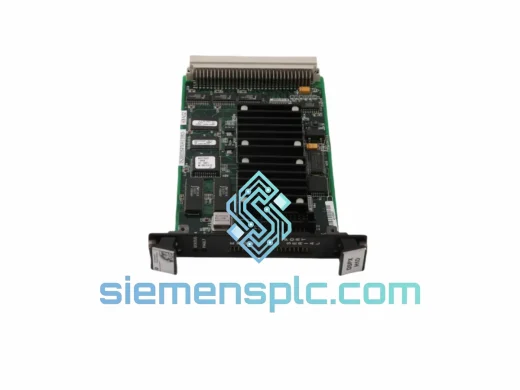
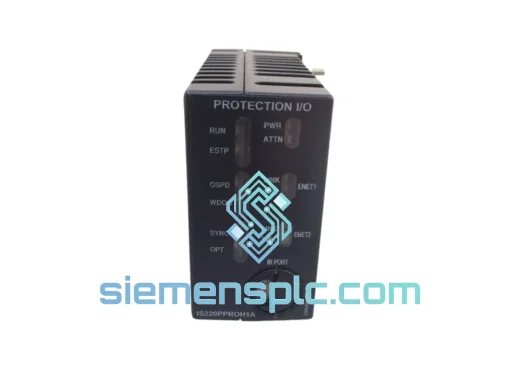
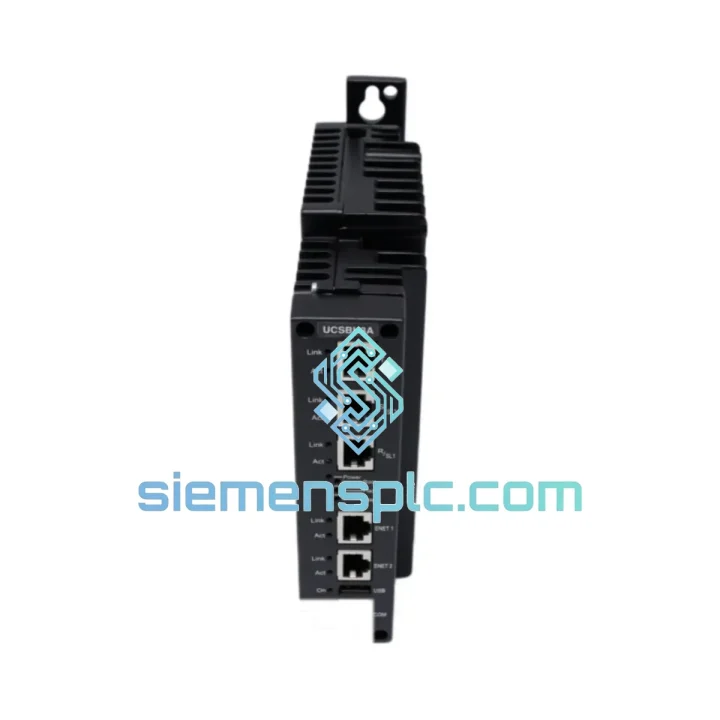
GE IS420UCSBH3A DCS Controller Module – Mark VIe
Request verified availability, condition, replacement risk review, packing options and courier lead time for IS420UCSBH3A.
BrandGE
Part NumberIS420UCSBH3A
ConditionAvailability Check
Lead TimeRFQ Confirmation
DocumentsDatasheet / photos by RFQ
ShippingExport packing available
Auto-filled RFQ
IS420UCSBH3A
Click Request Quote and the part number is inserted into the inquiry form automatically.
- Reply by email: [email protected]
- WhatsApp / Tel: +86 18359268345
- Mon-Sat 9:00-18:00 GMT+8
Procurement Data
Key Product Information
Core fields for model confirmation and RFQ routing. Detailed product narrative remains below.
- Brand
- GE
- Primary Part Number
- IS420UCSBH3A
- Product Type
- DCS Controller Module
- Series / Family
- Mark VI
- Manufacturer
- GE (General Electric) – Grid Solutions / Power Conversion
- Country of Origin
- US
- Catalog Category
- DCS & Safety Modules
- Operating Temp.
- 0°C to 60°C (32°F to 140°F)
- Warranty
- 12 months against manufacturing defects
Model confirmed for inquiry
IS420UCSBH3A
Send quantity, destination and urgency. The RFQ form keeps this part number attached.
Request Quote
Product Overview
GE IS420UCSBH3A – Universal Controller Signal Board in Mark VIe Distributed Control Architecture
The IS420UCSBH3A is the Universal Controller Signal Board (UCSB) within GE’s Mark VIe Distributed Control System platform. Its structural position in the controller rack places it at the intersection of field-side signal conditioning and backplane-side data arbitration — a role that directly determines the fidelity and latency of every control loop the Mark VIe executes. Unlike peripheral I/O terminal boards, the UCSB operates inside the controller enclosure itself, handling analog-to-digital conversion, signal normalization, and inter-board communication before data reaches the UCCC (Universal Controller Core Card) for PID execution.
In a standard Mark VIe simplex configuration, one IS420UCSBH3A board occupies the UCSB slot of the UCSC (Universal Controller Signal Conditioner) assembly. In Triple Modular Redundancy (TMR) deployments — the standard for gas turbine and steam turbine critical control — three IS420UCSBH3A boards operate in parallel across the R, S, and T controller frames. Each board independently conditions and digitizes incoming field signals; the three resulting data streams are then passed to their respective UCCC cores, where a hardware voting algorithm resolves any single-board discrepancy before the output command is issued. This architecture ensures that a single UCSB failure does not interrupt turbine operation — the remaining two boards maintain 2-of-3 voting integrity while the faulted board is hot-swapped.
The hardware revision H3A reflects a mature production iteration of the UCSB design, incorporating board-level refinements to the signal conditioning front-end and IONet interface circuitry. The IONet port on the IS420UCSBH3A carries the proprietary GE Ethernet-based protocol that interconnects the controller rack with I/O packs distributed across the turbine skid. IONet operates at 100 Mbps with deterministic frame scheduling, providing bounded latency for time-critical analog feedback loops such as fuel valve position, exhaust temperature arrays, and compressor inlet guide vane control.
Field signals entering the Mark VIe system through terminal boards are routed to the UCSB via the UCSC backplane. The IS420UCSBH3A performs galvanic isolation at the board boundary — a design requirement for turbine environments where ground potential differences between the control room and field junction boxes can reach tens of volts during fault conditions. Isolation barriers rated to withstand transient overvoltages protect the downstream UCCC from damage and prevent common-mode noise from corrupting analog measurement accuracy. The board’s ADC front-end achieves 16-bit resolution on analog input channels, supporting the ±10 V and 4–20 mA signal ranges standard in GE turbine I/O packs.
Thermal management on the IS420UCSBH3A follows the Mark VIe rack’s forced-air cooling design. The board’s power dissipation profile is matched to the rack’s airflow specification, and component placement prioritizes thermal gradient uniformity across the PCB to prevent localized hot spots that could accelerate electrolytic capacitor aging — a common failure mode in long-service industrial control boards. The H3A revision’s component selection reflects GE’s industrial-grade BOM policy: all active devices are specified for the full 0°C to 60°C operating range, with derating margins applied to power semiconductors.
Real-time Stock & RFQ: [email protected] | WhatsApp: +86 18359268345
Technical Parameters
| Part Number | IS420UCSBH3A |
| Manufacturer | GE (General Electric) – Grid Solutions / Power Conversion |
| Platform / Series | Mark VIe Distributed Control System (DCS) |
| Module Function | Universal Controller Signal Board (UCSB) |
| Hardware Revision | H3A |
| Form Factor | VME-style rack-mount, single-slot |
| Communication Interface | IONet Ethernet (100 Mbps, GE proprietary protocol) |
| Analog Input Resolution | 16-bit ADC |
| Supported Signal Ranges | ±10 V DC, 4–20 mA, RTD, Thermocouple (via I/O packs) |
| Isolation | Galvanic isolation at field/controller boundary |
| Power Supply | Supplied via Mark VIe controller backplane (28 V DC nominal) |
| Operating Temperature | 0°C to 60°C (32°F to 140°F) |
| Storage Temperature | -40°C to 85°C |
| Relative Humidity | 5% to 95% non-condensing |
| Redundancy Support | Simplex and TMR (Triple Modular Redundancy) |
| Weight | Approx. 1,080 g |
| Country of Origin | USA |
| HS Code | 8537.10 |
| Certifications | CE, UL (per Mark VIe system certification) |
| Warranty | 12 months against manufacturing defects |
Hardware Logical Analysis
The IS420UCSBH3A’s PCB architecture reflects the signal integrity requirements of a turbine control environment where measurement error directly translates to combustion instability or protective trip events. Several design decisions are worth examining at the hardware level:
Galvanic Isolation Architecture: The board implements transformer-coupled isolation on the IONet interface and optocoupler-based isolation on discrete I/O paths. This dual-barrier approach addresses two distinct noise sources: high-frequency switching transients from variable-frequency drives operating on the same plant bus, and low-frequency ground loops between the control enclosure and field junction boxes. The isolation barrier’s common-mode rejection ratio (CMRR) is specified to suppress transients up to several hundred volts, protecting the UCCC’s logic circuitry from field-side fault events.
IONet Interface Determinism: Unlike standard Ethernet implementations that rely on CSMA/CD collision avoidance, the IONet protocol on the IS420UCSBH3A uses a scheduled token-passing mechanism at the application layer. This ensures that each I/O pack’s data frame arrives at the UCSB within a bounded time window — a prerequisite for the Mark VIe’s 10 ms control loop execution cycle. Jitter in the IONet receive path is managed by a hardware FIFO buffer on the UCSB, which decouples network timing variability from the deterministic data handoff to the UCCC.
TMR Voting Interface: In TMR configurations, the IS420UCSBH3A participates in the inter-frame voting bus that connects the R, S, and T controller frames. The board’s voting interface logic implements a hardware comparator that flags discrepancies between its local ADC output and the voted consensus value. Discrepancies exceeding a configurable threshold generate a diagnostic alarm without interrupting control output — a design that enables predictive maintenance identification of a degrading UCSB before it causes a protective trip.
EMC Design: The board’s ground plane topology uses a split-plane design that separates analog signal ground from digital logic ground, with a single-point star connection at the ADC reference. This minimizes digital switching noise coupling into the analog measurement front-end. The PCB edge connectors include filter capacitors on all signal lines entering the board from the backplane, attenuating high-frequency noise injected by adjacent modules in the rack.
System Integration Benefits
- Zero-Reconfiguration Replacement: The IS420UCSBH3A is a direct OEM hardware replacement for the UCSB slot in any Mark VIe controller rack. No firmware re-flashing, no rack reconfiguration, and no ToolboxST application changes are required in standard swap-out scenarios — the replacement board inherits the rack’s existing IONet node address and application configuration automatically on power-up.
- Deterministic 10 ms Control Loop Execution: The board’s IONet interface and FIFO buffering architecture guarantee that field signal data is delivered to the UCCC within the Mark VIe’s 10 ms scan cycle, maintaining the real-time determinism required for turbine speed governing and fuel control loops.
- Fault-Transparent TMR Operation: In TMR configurations, a single IS420UCSBH3A failure does not interrupt turbine operation. The system continues on 2-of-3 voting while generating a maintenance alarm, allowing planned replacement during the next scheduled outage window rather than an emergency shutdown.
- 16-Bit Measurement Fidelity: The board’s ADC resolution of 16 bits provides 65,536 discrete measurement steps across the full input range, supporting the sub-0.1% accuracy requirements of exhaust temperature spreads and compressor pressure ratio calculations used in turbine performance monitoring.
- Diagnostic Transparency: The IS420UCSBH3A continuously reports board-level health data — power supply rail voltages, ADC reference stability, and IONet link status — to the Mark VIe’s diagnostic framework. This data is accessible in real time via GE ToolboxST, enabling maintenance engineers to trend board health metrics and identify degradation before it affects control performance.
- Broad Platform Compatibility: The IS420UCSBH3A is compatible with all Mark VIe controller rack variants, including the UCSC assembly used in both the standard Mark VIe and the Mark VIeS (simplex) configurations. This single part number covers a wide range of turbine frame sizes and control architectures, simplifying spare parts inventory management.
- Reduced Mean Time to Repair (MTTR): Stocking a spare IS420UCSBH3A reduces unplanned outage duration from the days required for OEM emergency procurement to the hours required for a trained technician to perform a board swap. For a 100 MW gas turbine generating at $50/MWh, each hour of avoided downtime represents $5,000 in recovered revenue.
- Long-Term Platform Support: The Mark VIe platform has a documented service life extending beyond 2030 per GE’s published support roadmap. The IS420UCSBH3A’s continued availability as a spare part ensures that existing Mark VIe installations can maintain full OEM hardware integrity without migrating to newer controller platforms ahead of schedule.
Quality Assurance & Global Logistics
Every IS420UCSBH3A unit supplied by siemensplc.com undergoes a structured inspection protocol before dispatch. Visual inspection confirms PCB integrity, connector pin condition, and the presence of all board-mounted components. Power-on verification confirms that the board initializes correctly and that all status LEDs respond as specified in the GE Mark VIe hardware manual. Units are serialized and traceable — the original GE serial number and hardware revision label are retained, and documentation is available on request for asset management and audit purposes.
Packaging follows ESD-safe handling standards: each board is sealed in a conductive anti-static bag, placed in a foam-padded inner carton, and shipped in a double-wall corrugated outer box rated for international air freight handling. For time-critical plant outages, express air freight from Xiamen, China reaches major industrial hubs in Southeast Asia within 24–48 hours, the Middle East and Europe within 48–72 hours, and North America within 72–96 hours. DHL Express, FedEx International Priority, and UPS Worldwide Express are standard carrier options. All shipments include full tracking and commercial invoice documentation for customs clearance. A 12-month replacement warranty covers manufacturing defects from the date of delivery.
Contact Information
Email: [email protected]
WhatsApp: +86 18359268345
Web: siemensplc.com
Location: Xiamen, China
© 2026 siemensplc.com. All rights reserved.
Ready to quote
[email protected]
Send This Part Number to Sales
RFQ workflow
Quality workflow ->
Confirmation Process
01Model confirmation
We check the full part number, brand, series and visible nameplate information before quotation.
02Availability reply
Sales confirms stock path, condition option, quantity and realistic lead time for export dispatch.
03Packing & courier
DHL, FedEx, UPS or buyer courier arrangements can be reviewed with packing requirements.
Continue sourcing
Browse full catalog ->
Related Automation Parts
Similar brand or category products for fast comparison and multi-item RFQ lists.
GE
RFQ Ready
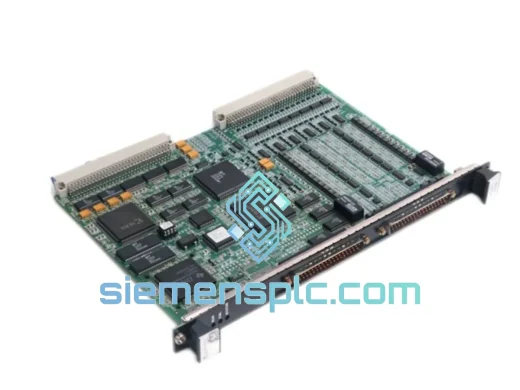
GE IS200VCRCH1BBC Voltage Regulator Control Board – Mark VI Speedtronic
Mark VI
Origin US
Voltage Regulator Control Board
GE
RFQ Ready
GE IS200SPROH1ADD Protective Terminal Board
Mark VI
Origin US
Protective Terminal Board