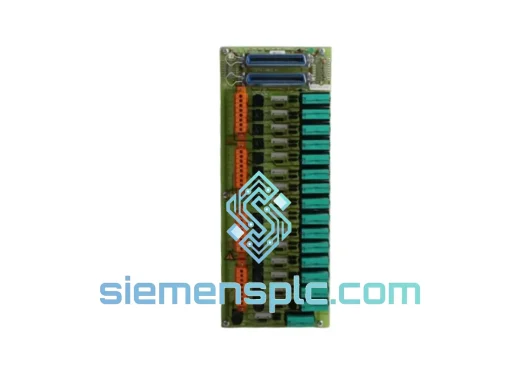
Product Overview
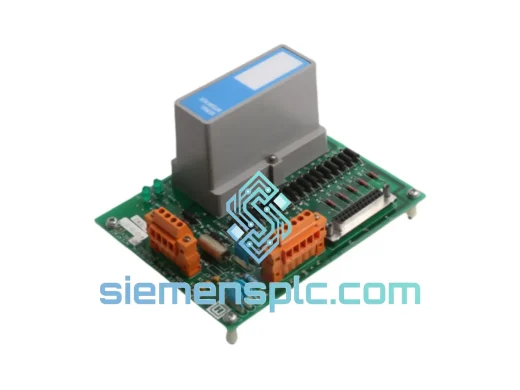
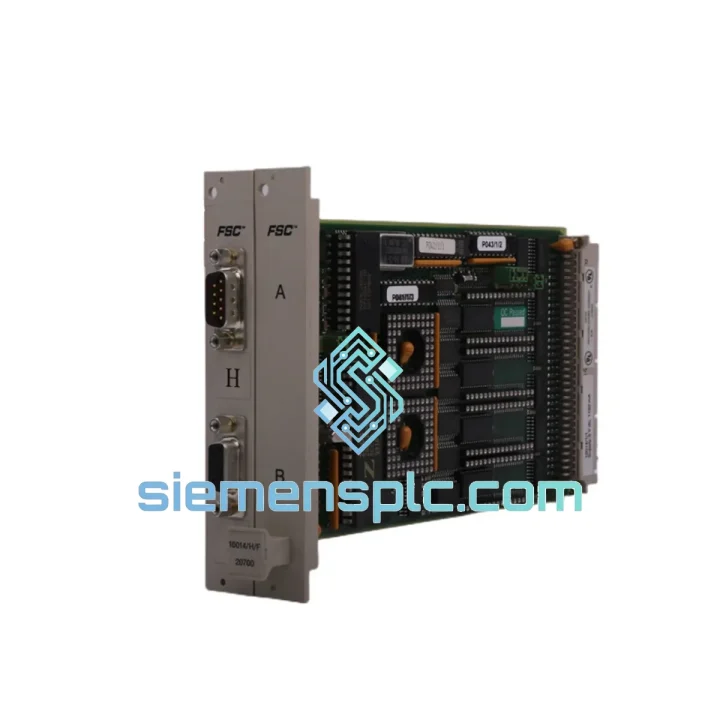
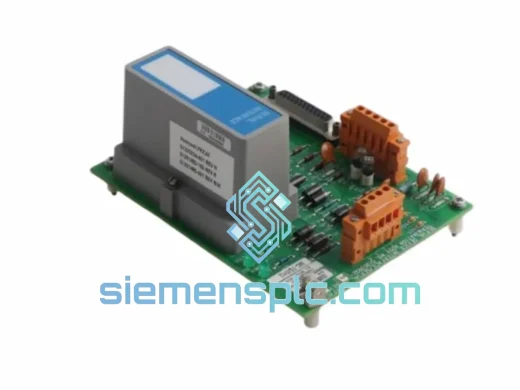
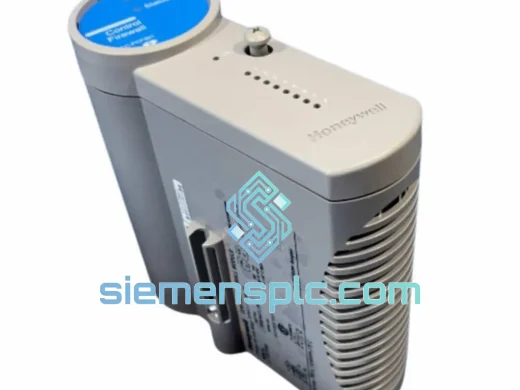
Honeywell 10014/F/F Dual Port Communication Module: Stop the Clock on Your Downtime
Your DCS just dropped a node. The UCN is showing a communication fault. Production is at zero. Every minute costs real money — and you already know the 10014/F/F is the culprit. You don’t need a sales pitch. You need the part, tested, boxed, and moving toward your plant today.
We stock the Honeywell 10014/F/F Dual Port Communication Module in Xiamen, China. When you call or message us, we pull it off the shelf, run a bench verification, and hand it to DHL or FedEx within hours — not days. That’s the only promise that matters when your line is down.
URGENT REQUIREMENT? Contact: [email protected] | WhatsApp: +86 18359268345
Quick Technical Datasheet
| Parameter |
Specification |
| Manufacturer |
Honeywell |
| Part Number |
10014/F/F |
| Module Type |
Dual Port Communication Module |
| Port Configuration |
F/F (Dual Fiber / Dual Channel) |
| Compatible Platforms |
Honeywell TDC 3000, TPS, Experion PKS (legacy rack) |
| Network Interface |
UCN (Universal Control Network) / LCN (Local Control Network) |
| Operating Temperature |
0°C to +60°C (32°F to 140°F) |
| Humidity Tolerance |
5% to 95% RH, non-condensing |
| Power Consumption |
Rack-supplied (5 VDC / 24 VDC via backplane) |
| Form Factor |
Single-slot card, TDC 3000 / TPS compatible card cage |
| Weight |
~360 g |
| Condition |
New / Tested-Refurbished (confirmed at quotation) |
| Stock Status |
✔ Ready to Ship – Xiamen Warehouse |
| Lead Time |
Same-day dispatch for orders confirmed before 15:00 CST |
Troubleshooting & Replacement Tips
After handling hundreds of TDC 3000 and TPS field calls, these are the failure patterns and swap gotchas that catch engineers off guard:
Common Fault Signatures Pointing to the 10014/F/F:
-
UCN Node Offline / “NODE FAIL” alarm – The most direct indicator. If the node drops and the HPM or APM is otherwise healthy, the communication card is the first suspect before you start pulling process managers.
-
Intermittent “COMM FAIL” on one port only – The F/F dual-port design means one channel can degrade while the other holds. You’ll see asymmetric communication errors in the system status display. Don’t ignore a single-port fault — it’s the card telling you it’s dying.
-
CRC errors spiking on the UCN segment – Elevated CRC counts without a cable fault usually indicate the transmitter circuitry on the card is degrading. Swap the card before the second port fails and you lose redundancy entirely.
-
Card fails to initialize after power cycle – If the module doesn’t come up within 90 seconds of rack power-on and the LED sequence stalls at the self-test phase, the onboard firmware or EEPROM has likely corrupted. Replacement is the only field fix.
Replacement Procedure — Field Checklist:
-
Confirm system redundancy state before pulling the card. If this is the primary communication path with no active backup, coordinate with the control room to switch to manual or backup control mode first.
-
Document the slot address. In TDC 3000 / TPS architectures, the physical slot position maps directly to the node address. Inserting the replacement into the wrong slot will bring up a different node address — causing a configuration mismatch that can take hours to diagnose.
-
Check DIP switch / jumper settings on the replacement card against the pulled card before insertion. Some 10014/F/F revisions carry hardware configuration switches for network speed or termination. Mismatched settings will prevent the node from joining the UCN.
-
Verify firmware revision compatibility. If your system is running a specific TPS or Experion PKS software release, confirm the replacement card’s firmware revision is within the supported range. Contact our technical team with your system software version — we can cross-reference before shipping.
-
Seat the card firmly and check the ejector latch. A partially seated card in a TDC 3000 rack will power up but fail to communicate — a notoriously difficult fault to spot visually.
-
Allow 90–120 seconds for node re-initialization after insertion. Monitor the UCN status display for the node to transition from OFFLINE → INITIALIZING → ONLINE. If it stalls at INITIALIZING, check the slot address and firmware revision first.
-
Run a communication diagnostic from the engineer’s console to confirm both ports are active and CRC error counts are at baseline before returning the loop to automatic control.
Note on Self-Addressing: Unlike some newer DCS platforms, the TDC 3000 / TPS architecture does not support automatic node self-addressing. The slot position is the address. There is no software configuration step to assign a node number — the physical rack position is authoritative. Get the slot right before you power up.
Reliability in Harsh Conditions
The 10014/F/F was engineered for the environments where DCS failures are most expensive — refineries, chemical plants, and power stations. The card’s construction reflects that reality:
-
Vibration Resistance: The PCB layout and component mounting are designed to withstand continuous low-frequency vibration from rotating machinery and structural resonance common in heavy industrial facilities. Conformal coating on the PCB protects solder joints from mechanical fatigue over years of service.
-
Thermal Cycling Tolerance: Rated for operation from 0°C to 60°C with tolerance for the thermal cycling that occurs during planned and unplanned shutdowns. The card’s power regulation circuitry is designed to handle the inrush conditions of a cold rack startup without component stress.
-
EMI / RFI Immunity: The shielded card cage environment of the TDC 3000 / TPS rack provides primary EMI protection, and the 10014/F/F’s internal design complements this with differential signal handling on the communication ports — critical in environments with large motor drives and high-voltage switchgear nearby.
-
Humidity and Contamination: Conformal coating provides a barrier against humidity, airborne particulates, and mild chemical exposure. For installations in particularly aggressive environments (coastal, chemical), we recommend inspecting the card cage sealing and positive-pressure purge systems as part of the replacement procedure.
-
Long-Term Component Availability: Honeywell’s TDC 3000 and TPS platforms have been in service for decades. We maintain stock of the 10014/F/F specifically because plants running these systems cannot afford to wait for a factory order with a 16-week lead time. Our inventory exists to bridge that gap.
Global Express Logistics
Our dispatch operation runs out of Xiamen, China — one of the country’s primary export hubs with direct access to DHL, FedEx, and UPS international gateways. Here’s how a typical urgent order moves:
-
Order Confirmed (Day 0): You send the PO or payment confirmation. We pull the unit from stock, run a final bench check, photograph the unit and serial number for your records, and pack it in ESD-safe anti-static bags inside a foam-lined, double-walled carton.
-
Same-Day Dispatch: Orders confirmed before 15:00 CST ship the same business day. DHL and FedEx collect from our facility daily. You receive the AWB tracking number within 2 hours of handover.
-
Transit Times (Typical):
- Southeast Asia (Singapore, Malaysia, Thailand): 2–3 business days
- Middle East (UAE, Saudi Arabia, Kuwait): 3–4 business days
- Europe (Germany, Netherlands, UK): 4–5 business days
- North America (USA, Canada): 4–6 business days
- Australia / New Zealand: 3–5 business days
-
Customs Documentation: We prepare a full commercial invoice, packing list, and country of origin certificate. For shipments to countries with specific import requirements for industrial electronics, we can provide additional documentation on request. We have experience clearing shipments into the EU, GCC, and ASEAN markets without delays.
-
Freight Insurance: All shipments are covered by cargo insurance. In the event of transit damage, we handle the claim and dispatch a replacement immediately — you don’t wait for the insurance process to resolve before getting your part.
If your plant is in a remote location or a country with complex import procedures, contact us before ordering. We’ve shipped to offshore platforms, remote mining sites, and landlocked countries — we know how to get the part to you.
Contact Information
Email: [email protected]
WhatsApp: +86 18359268345
Web: siemensplc.com
© 2026. All rights reserved.