Honeywell
RFQ Ready
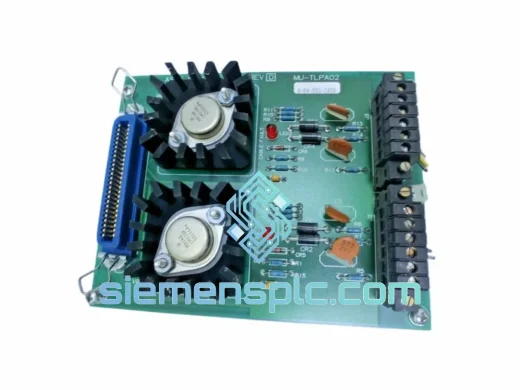
Honeywell MU-TLPA02 51304467-100 Power Adapter Board
Experion PKS
Origin US
Power Adapter Board
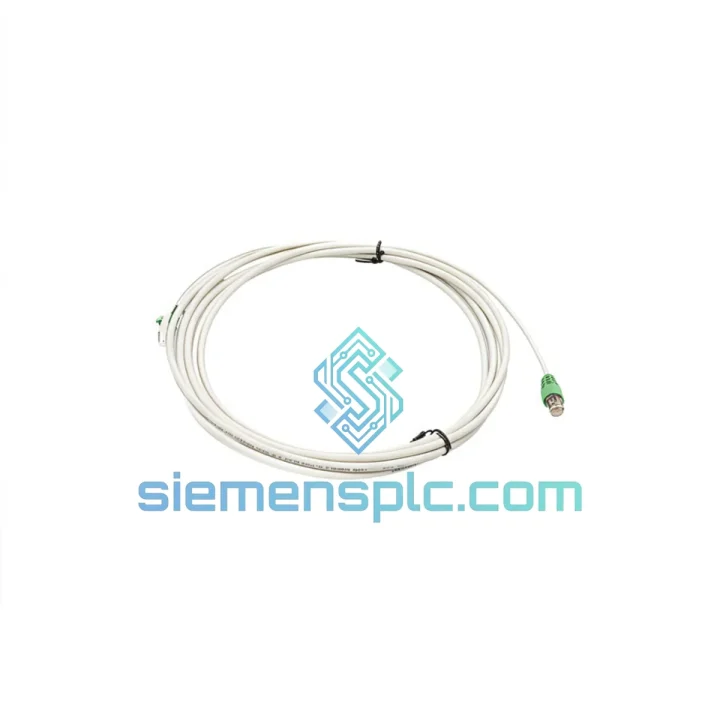
Request verified availability, condition, replacement risk review, packing options and courier lead time for 2MLC-E301.
Click Request Quote and the part number is inserted into the inquiry form automatically.
Core fields for model confirmation and RFQ routing. Detailed product narrative remains below.
Every hour your STT850 temperature loop is blind costs money. No display. No HART access. No configuration path. A failed or missing 2MLC-E301 extension cable is one of the most underestimated single points of failure in a SmartLine installation — and it’s exactly the kind of part that nobody stocks until the line is already down. We stock it. We ship it today from Xiamen. That’s the difference between a two-hour fix and a two-week procurement nightmare.
The Honeywell 2MLC-E301 is the factory-specified interconnect cable between the STT850 SmartLine Temperature Transmitter body and its Local Operator Interface (LOI) display module. Without it, remote-mounted LOI configurations are physically impossible. With a degraded or broken unit, you lose HART communication continuity, display signal integrity, and the ability to perform in-field configuration — all while your process runs blind. This is not a generic cable. It is a keyed, impedance-matched, factory-engineered assembly that cannot be substituted with field-fabricated alternatives without risking signal corruption or transmitter fault codes.
URGENT REQUIREMENT? Contact: [email protected] | WhatsApp: +86 18359268345
| Parameter | Specification |
|---|---|
| Part Number / SKU | 2MLC-E301 |
| Brand | Honeywell Process Solutions |
| Series | SmartLine (STT850 Temperature Transmitter) |
| Function | LOI Extension Cable — Transmitter Body to Remote Display Module |
| Compatible Transmitter | Honeywell STT850 SmartLine Temperature Transmitter |
| Signal Type | HART + Local Display (LOI) |
| Connector Type | Factory-keyed, polarized — no field modification required |
| Construction | Industrial-grade shielded cable, rated for process plant environments |
| Weight | Approx. 550 g |
| Condition | New OEM / Surplus New |
| Stock Status | ✅ Ready to Ship — Xiamen Warehouse |
| Origin | United States (Honeywell OEM) |
| Export Documentation | Full commercial invoice, packing list, COC available on request |
After ten years of field work on SmartLine installations, here are the failure patterns I see repeatedly with the 2MLC-E301 and the STT850 LOI interface:
Symptom: LOI display blank or flickering, transmitter output stable. This is almost always the cable, not the display module. Before condemning the LOI, swap the 2MLC-E301 first. The display module is significantly more expensive and rarely fails independently. Check the cable connectors for corrosion, bent pins, or moisture ingress at the transmitter housing entry point.
Symptom: HART communication drops intermittently during field configuration. A partially failed 2MLC-E301 can introduce impedance discontinuities that cause HART frame errors without triggering a hard fault on the transmitter. If your 375/475 communicator is throwing CRC errors or timing out mid-session, inspect the cable before suspecting the transmitter electronics.
Symptom: Transmitter shows fault code or diagnostic alert after LOI remounting. The STT850 performs a self-check on the LOI interface at power-up. A damaged cable that passes visual inspection can still fail the transmitter’s internal continuity check. If you see a LOI-related diagnostic in the HART DD or SFC software, the 2MLC-E301 is the first swap to make.
Replacement procedure (field-verified):
Configuration note: The 2MLC-E301 is a passive cable assembly — it carries no firmware and requires no configuration. There are no DIP switches, no addressing, and no firmware matching requirements. Replacement is purely mechanical and electrical. The STT850 will auto-detect the LOI on power-up.
The 2MLC-E301 is not a commercial-grade cable dressed up for industrial use. It is designed from the ground up for the environments where SmartLine transmitters are actually deployed — and those environments are not forgiving.
In refineries and chemical plants, the cable must survive continuous exposure to hydrocarbon vapors, cleaning solvents, and process fluid splatter. The outer sheath material is selected for chemical resistance, not just mechanical durability. In power generation applications — particularly around boilers and turbine halls — the cable must maintain signal integrity through sustained vibration profiles that would destroy standard instrumentation cable within months. The factory-specified construction uses vibration-damping strain relief at both connector ends, which is the first thing to inspect on a cable that has been in service for more than three years in a high-vibration environment.
Temperature cycling is the other primary failure mechanism. In outdoor installations or uninsulated pipe runs, the cable sees daily thermal excursions that fatigue the conductor insulation over time. The 2MLC-E301’s insulation system is rated for the full operating temperature range of the STT850 transmitter, ensuring that thermal cycling does not cause insulation cracking or conductor migration that would introduce noise into the HART signal path.
Humidity and condensation are particularly destructive to the connector interfaces. The keyed connector design on the 2MLC-E301 includes a positive-seal mating geometry that resists moisture ingress when properly seated. If you are operating in a high-humidity environment — coastal facilities, tropical climates, or steam-laden process areas — ensure the transmitter housing cover is properly torqued after cable installation to maintain the IP rating of the assembly.
Our Xiamen warehouse operates on a same-day dispatch model for in-stock items confirmed before 15:00 CST. Here is exactly what happens after you place an order:
Day 0 (Order Confirmation): Stock is physically pulled and verified against your order. Part number, condition, and quantity are confirmed by our warehouse team. Export documentation — commercial invoice, packing list, and certificate of conformance if requested — is prepared in parallel.
Day 0–1 (Dispatch): Shipment is handed to DHL Express or FedEx International Priority, depending on destination and your preference. Both carriers offer door-to-door tracking from our Xiamen facility. We provide the AWB number within 2 hours of handover.
Transit Times (typical, not guaranteed):
For plant shutdowns or emergency maintenance windows, we can arrange Saturday dispatch and expedited customs clearance documentation. Contact us directly on WhatsApp for time-critical requirements — response time is under 30 minutes during business hours CST.
All shipments include full export documentation compliant with Chinese customs regulations and destination country import requirements. HS code classification, country of origin certificates, and MSDS documentation are available on request. We have shipped to over 60 countries and handle the paperwork so your receiving team does not face customs delays.
Email: [email protected]
WhatsApp: +86 18359268345
Web: siemensplc.com
© 2026 siemensplc.com. All rights reserved.
We check the full part number, brand, series and visible nameplate information before quotation.
Sales confirms stock path, condition option, quantity and realistic lead time for export dispatch.
DHL, FedEx, UPS or buyer courier arrangements can be reviewed with packing requirements.
Similar brand or category products for fast comparison and multi-item RFQ lists.