Honeywell
RFQ Ready
Honeywell TK-ODD321 Discrete Output Module – Safety Manager
Safety Manager
Origin US
Discrete Output Module
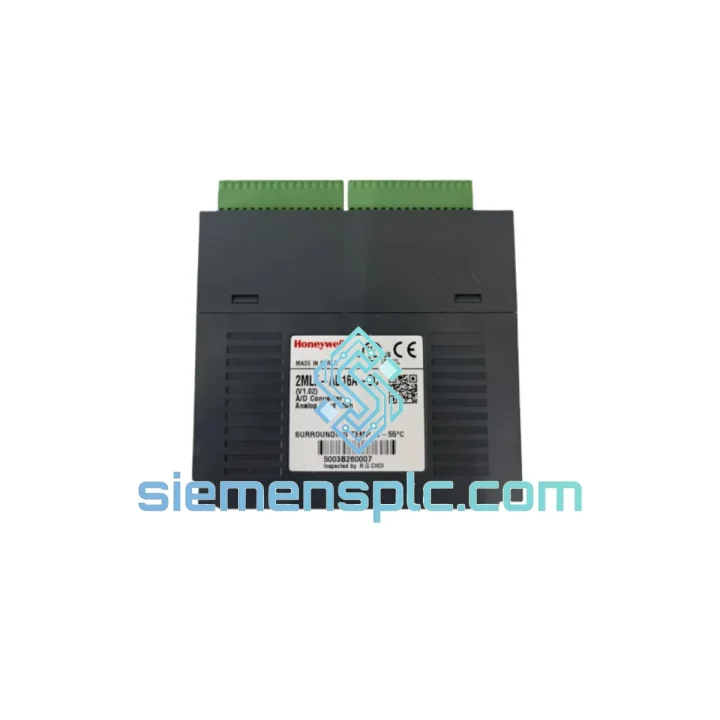
Request verified availability, condition, replacement risk review, packing options and courier lead time for 2MLF-AD16A-CC.
Click Request Quote and the part number is inserted into the inquiry form automatically.
Core fields for model confirmation and RFQ routing. Detailed product narrative remains below.
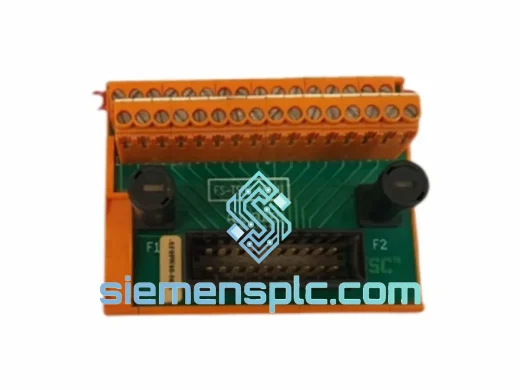
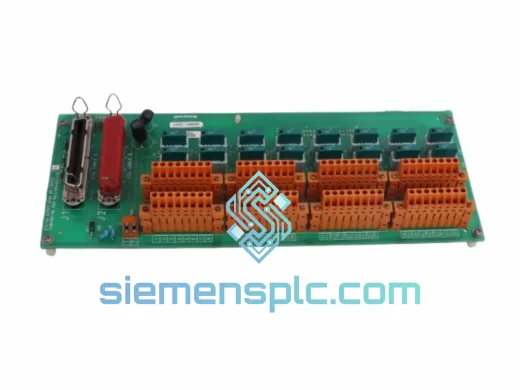
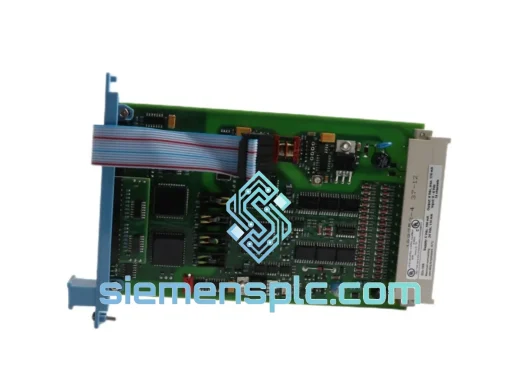
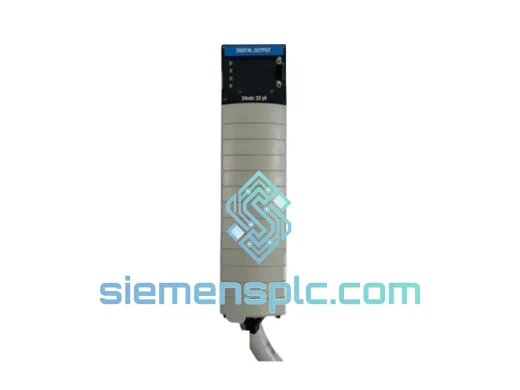
A failed Honeywell 2MLF-AD16A-CC in a live Safety Manager rack is not a maintenance ticket — it is a production crisis. SIL 2 loops go dark, process interlocks trip, and your operations team starts counting losses by the hour. We stock this module in Xiamen and can have it on a DHL Express flight within 24 hours of order confirmation. No broker delays, no grey-market risk — original Honeywell hardware, tested, documented, and ready to drop into your 2MLF chassis.
URGENT REQUIREMENT? Contact: [email protected] | WhatsApp: +86 18359268345
| Parameter | Specification |
|---|---|
| Part Number | 2MLF-AD16A-CC |
| Manufacturer | Honeywell Process Solutions |
| Series | 2MLF Safety Manager I/O |
| Module Type | Analog Input (AI) |
| Channel Count | 16 channels |
| Input Signal | 4–20 mA / 0–10 V (per-channel configurable) |
| ADC Resolution | 16-bit |
| Isolation | Channel-to-channel & channel-to-bus galvanic isolation |
| Safety Integrity Level | SIL 2 (IEC 61508 certified) |
| Backplane Bus | Honeywell proprietary 2MLF chassis bus |
| Operating Temperature | 0 °C to +60 °C |
| Relative Humidity | 5–95% RH, non-condensing |
| Mounting | 2MLF series rack chassis (direct slot) |
| Weight | ~1,060 g |
| Country of Origin | USA |
| Stock Status | ✅ Ready to Ship — Xiamen Warehouse |
After ten years of field work on Honeywell Safety Manager installations, these are the failure patterns and swap pitfalls that catch engineers off guard:
1. Confirm the fault is the module, not the field wiring. Before pulling the 2MLF-AD16A-CC, check the Safety Builder diagnostic screen for channel-level fault codes. A CHx OPEN CIRCUIT or CHx RANGE FAULT on a single channel almost always points to a field instrument or terminal block issue — not the module itself. A MODULE COMM FAULT or HARDWARE FAULT across all 16 channels is your signal to swap the card.
2. Power down the chassis slot before extraction. The 2MLF chassis supports hot-standby at the controller level, but individual I/O slots are not hot-swappable in standard configurations. Attempting a live pull risks backplane bus corruption. Use Safety Builder to inhibit the module, confirm the slot is de-energized, then extract.
3. Address configuration — no DIP switches, but firmware matters. Unlike older Honeywell TDC-3000 cards, the 2MLF-AD16A-CC uses software-based addressing through Safety Builder. The replacement module will auto-adopt the slot address from the chassis backplane on first power-up. However, verify that your Safety Builder project firmware revision matches the module’s embedded firmware version. A mismatch between Safety Manager firmware v6.x and v7.x can cause the module to report a FIRMWARE MISMATCH fault and refuse to go online. Check the label on the module’s PCB edge for the firmware stamp before installation.
4. Channel calibration after swap. The 2MLF-AD16A-CC stores per-channel calibration offsets in non-volatile memory on the module itself — not in the Safety Builder project. After installing a replacement unit, run the channel calibration routine from Safety Builder’s hardware configuration menu. Skip this step and you may see ±0.3% offset errors on 4–20 mA loops, which is acceptable for most process variables but will fail a SIL 2 proof test.
5. Common fault codes decoded:
The 2MLF-AD16A-CC was engineered for the environments where failures are least tolerable. Honeywell designed this module to operate continuously in offshore platforms, petrochemical complexes, and power generation facilities where ambient conditions push hardware to its limits.
The module’s conformal-coated PCB resists moisture ingress and corrosive atmospheres — a critical feature in coastal refineries and offshore installations where salt-laden air accelerates oxidation on unprotected boards. Internal components are rated for continuous operation at 60 °C ambient, with derating curves that account for chassis airflow restrictions common in retrofit panel installations.
Vibration tolerance meets IEC 60068-2-6 test profiles, covering the 5–150 Hz frequency range at 1g acceleration — sufficient for pump skid and compressor train installations where structural vibration is a constant. The module’s backplane connector uses gold-plated contacts with a 500-cycle insertion rating, meaning repeated maintenance swaps do not degrade signal integrity.
EMC immunity is certified to IEC 61000-4 series, including 4 kV surge immunity on signal inputs — protecting the ADC front-end from the transient spikes generated by large motor starts and switching operations common in heavy industrial environments. In short, this is a module built to stay online when everything around it is trying to take it down.
Our Xiamen warehouse operates on a same-business-day dispatch model for in-stock modules. Here is exactly what happens after you confirm your order:
For plant shutdowns and emergency turnarounds where every hour counts, we offer a dedicated courier option — a single shipment on the next available flight, hand-carried to your local airport if required. Contact us directly to arrange. We have done it before; we will do it again.
All shipments include full export compliance documentation. We handle customs classification, CITES/dual-use checks, and destination country import requirements. Your procurement team receives a complete document package — no customs delays on your end.
📧 Email: [email protected]
💬 WhatsApp: +86 18359268345
🌐 Web: siemensplc.com
© 2026 siemensplc.com. All rights reserved.
We check the full part number, brand, series and visible nameplate information before quotation.
Sales confirms stock path, condition option, quantity and realistic lead time for export dispatch.
DHL, FedEx, UPS or buyer courier arrangements can be reviewed with packing requirements.
Similar brand or category products for fast comparison and multi-item RFQ lists.