Honeywell
RFQ Ready
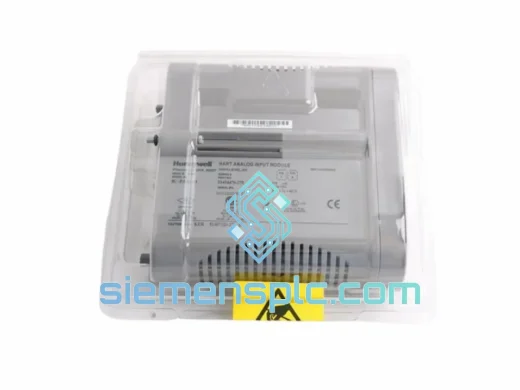
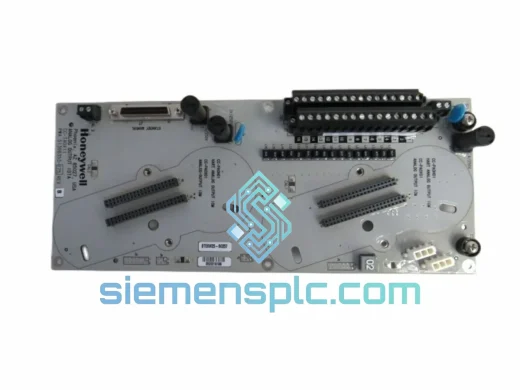
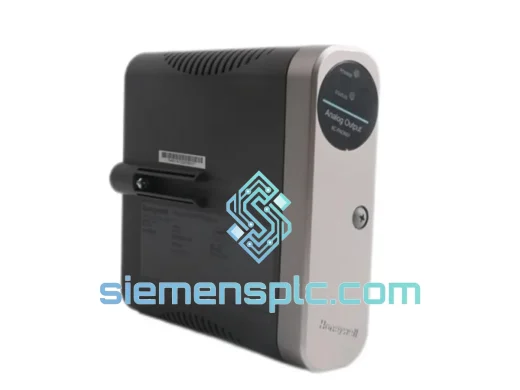
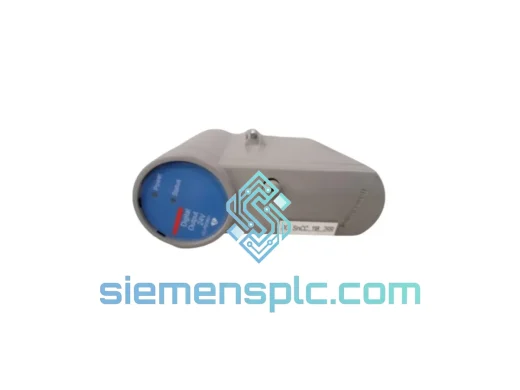
Honeywell CC-PDOB11 Digital Output Module – Experion PKS C300
Experion PKS
Origin US
Digital Output Module
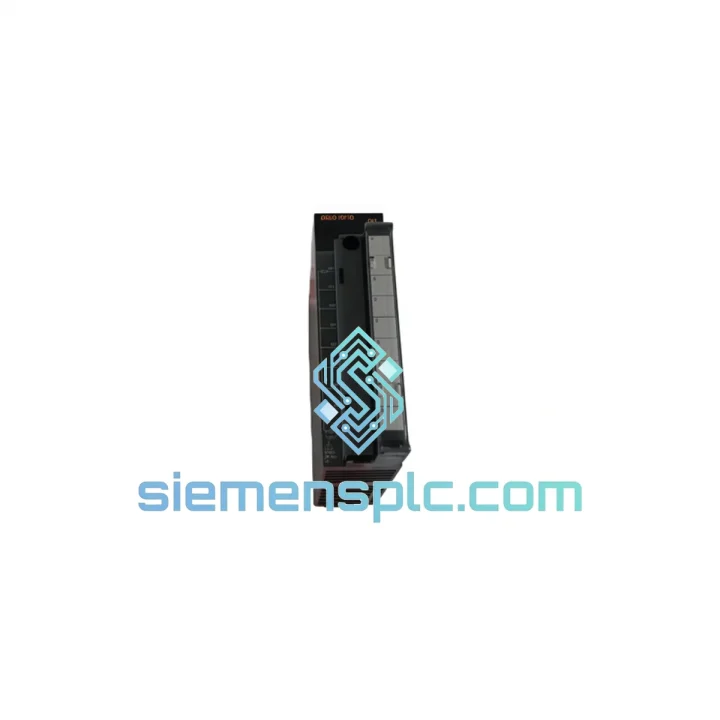
Request verified availability, condition, replacement risk review, packing options and courier lead time for 2MLQ-RY1D.
Click Request Quote and the part number is inserted into the inquiry form automatically.
Core fields for model confirmation and RFQ routing. Detailed product narrative remains below.
The HONEYWELL 2MLQ-RY1D is a relay-contact digital output module engineered for deployment within HONEYWELL’s 2MLQ-series I/O subsystem, which interfaces directly with Experion PKS, TDC 3000, and Safety Manager control platforms. Unlike solid-state output modules that rely on triac or transistor switching elements, the 2MLQ-RY1D employs electromechanical relay contacts to achieve galvanic isolation between the field-side load circuit and the controller backplane bus — a design choice that carries specific implications for load compatibility, fault-current handling, and EMC performance in high-noise industrial environments.
Each output channel on the 2MLQ-RY1D drives a dedicated relay coil. The normally-open (NO) contact configuration means that a de-energized coil presents an open circuit to the field device, providing inherent fail-safe behavior for actuators that must remain de-energized on loss of control power. The relay contact rating governs the maximum resistive and inductive load the module can switch without contact degradation — a parameter that must be matched against the inrush characteristics of solenoid valves, motor starters, and pilot relays in the field wiring schedule.
Within the 2MLQ backplane architecture, the module communicates with the controller via the I/O link bus. The controller’s I/O scan cycle writes output state data to the module’s local register, which the onboard logic then translates into relay coil drive signals. This decoupled architecture means that relay switching is not directly synchronous with the controller scan — a coil energization command issued at the end of one scan cycle may not reach the relay contact until the subsequent cycle, introducing a deterministic but non-zero output latency that must be accounted for in time-critical interlock sequences.
The module’s printed circuit board incorporates transient voltage suppression (TVS) diodes across each relay coil driver circuit to clamp inductive kickback generated when the coil is de-energized. Without this protection, the collapsing magnetic field of the relay coil would generate a reverse-polarity voltage spike capable of damaging the driver transistor and coupling noise onto the backplane power rail. The TVS clamping voltage is selected to be above the coil’s nominal drive voltage but below the breakdown threshold of the driver device, ensuring fast energy absorption without false triggering.
Field wiring termination on the 2MLQ-RY1D uses a removable screw-terminal block, allowing the field cable harness to be disconnected from the module without disturbing individual wire terminations — a practical advantage during module replacement in live panels where rewiring under time pressure introduces error risk. Terminal block contact material and plating specification determine long-term contact resistance stability in humid or mildly corrosive atmospheres; HONEYWELL’s terminal block design for this series uses tin-plated copper alloy contacts rated for the module’s full output current range.
From a system diagnostics perspective, the 2MLQ-RY1D reports module-level health status back to the Experion PKS server via the I/O link. Fault conditions — including loss of backplane communication, internal power supply deviation, and coil driver open-circuit detection — are surfaced as alarm states in the Experion operator station, enabling maintenance personnel to identify a failed output module without physical inspection of the I/O cabinet. This diagnostic transparency is a core requirement in process industries where unplanned downtime carries significant production cost.
The module’s mechanical form factor conforms to the 2MLQ series card dimensions, allowing direct insertion into any populated or spare slot within a compatible 2MLQ I/O carrier without tools. The card-edge connector on the module’s backplane interface uses gold-plated contacts to minimize contact resistance and resist oxidation over the module’s service life, which in continuous-process applications may extend to ten years or more between planned maintenance intervals.
Real-time Stock & RFQ: [email protected] | WhatsApp: +86 18359268345
| Parameter | Specification |
|---|---|
| Part Number / SKU | 2MLQ-RY1D |
| Manufacturer | HONEYWELL |
| Module Series | 2MLQ Digital Output Series |
| Output Type | Relay Contact (Electromechanical, NO Configuration) |
| Compatible Platforms | Experion PKS, TDC 3000, Safety Manager |
| Isolation Method | Galvanic (relay coil / contact separation) |
| Contact Rating | Per HONEYWELL 2MLQ-RY1D datasheet (resistive & inductive loads) |
| Termination | Removable screw-terminal block |
| Backplane Interface | 2MLQ I/O link bus, gold-plated card-edge connector |
| Coil Transient Protection | TVS diode per channel |
| Diagnostic Reporting | Module-level fault status via I/O link to Experion PKS |
| Operating Temperature | 0 °C to +60 °C (storage: −40 °C to +85 °C) |
| Humidity | 5% to 95% RH, non-condensing |
| Mounting | 2MLQ I/O carrier slot (tool-free insertion) |
| Weight | Approx. 150 g |
| Compliance | CE, RoHS (verify production batch) |
| Warranty | 12 months from dispatch date (siemensplc.com supplier warranty) |
The relay-contact output topology of the 2MLQ-RY1D provides a level of field-side isolation that solid-state alternatives cannot match without additional external isolation components. Because the relay contact is a purely passive switching element when open, there is zero leakage current from the controller logic supply into the field circuit — a property that matters in safety-instrumented system (SIS) applications where spurious current flow through a nominally open output could partially energize a solenoid valve and compromise the de-energize-to-trip (DTT) logic.
The module’s EMC design addresses two distinct interference pathways. Conducted interference from the field wiring — generated by inductive load switching, variable-frequency drives, or nearby power cables — is attenuated by the relay contact’s inherent galvanic barrier before it can reach the backplane bus. Radiated interference coupling onto the module’s PCB is managed through board-level layout discipline: the relay coil driver traces are routed away from the I/O link interface circuitry, and the PCB ground plane is segmented to prevent high-frequency return currents from the coil switching transients from flowing through the signal ground reference of the backplane interface.
The onboard coil driver circuit uses a low-side switch topology with the relay coil connected between the module’s internal supply rail and the collector of the driver transistor. This arrangement means that a short-circuit failure of the driver transistor results in a permanently energized coil — a fail-energized condition. System designers using the 2MLQ-RY1D in DTT applications must account for this failure mode in their safety integrity level (SIL) calculations and may need to implement redundant output voting logic at the controller level to achieve the required probability of failure on demand (PFD) target.
Contact bounce on relay closure generates a brief period of intermittent continuity lasting typically 1–10 ms depending on contact mass and spring preload. For field devices sensitive to contact bounce — such as pulse-counting inputs or high-speed interlock circuits — the system design must either accept this characteristic or interpose a solid-state relay (SSR) driven by the 2MLQ-RY1D contact to present a bounce-free switching edge to the field device.
Every HONEYWELL 2MLQ-RY1D unit dispatched from siemensplc.com is sourced through traceable industrial supply channels and subjected to a structured pre-shipment inspection protocol. Visual examination covers label integrity, housing condition, connector pin geometry, and firmware version markings. Where bench-test facilities permit, output channels are exercised against datasheet specifications to verify coil energization and contact switching function prior to packaging.
Units are packed in anti-static polyethylene bags with desiccant inserts, placed in rigid corrugated cartons with foam-profile inserts dimensioned to the module’s form factor. Tamper-evident sealing and serial number documentation accompany each shipment. Export documentation — including commercial invoice, packing list, and HS code declaration — is prepared for every international order to facilitate customs clearance without delay.
Dispatch is from Xiamen, Fujian Province, China. Express courier services (DHL, FedEx, UPS) deliver to major industrial hubs in Southeast Asia, the Middle East, Europe, and the Americas within 3–7 business days from dispatch. In-stock units ship within 1–2 business days of order confirmation. Bulk and project orders are coordinated through a dedicated logistics channel with consolidated freight options available for multi-line BOMs.
A 12-month supplier warranty covers defects in materials and workmanship from the dispatch date. Warranty claims are processed through direct communication with the siemensplc.com technical team; defective units are replaced or credited after return inspection. Certificate of conformance (CoC) documentation is available upon request for quality-management system compliance.
Email: [email protected]
WhatsApp: +86 18359268345
Web: siemensplc.com
Location: Xiamen, China
© 2026 siemensplc.com. All rights reserved.
We check the full part number, brand, series and visible nameplate information before quotation.
Sales confirms stock path, condition option, quantity and realistic lead time for export dispatch.
DHL, FedEx, UPS or buyer courier arrangements can be reviewed with packing requirements.
Similar brand or category products for fast comparison and multi-item RFQ lists.