
Honeywell
In Stock OK
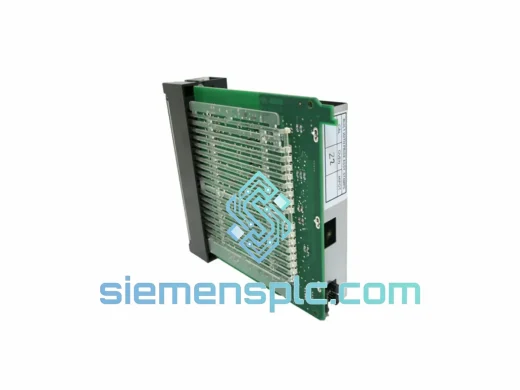
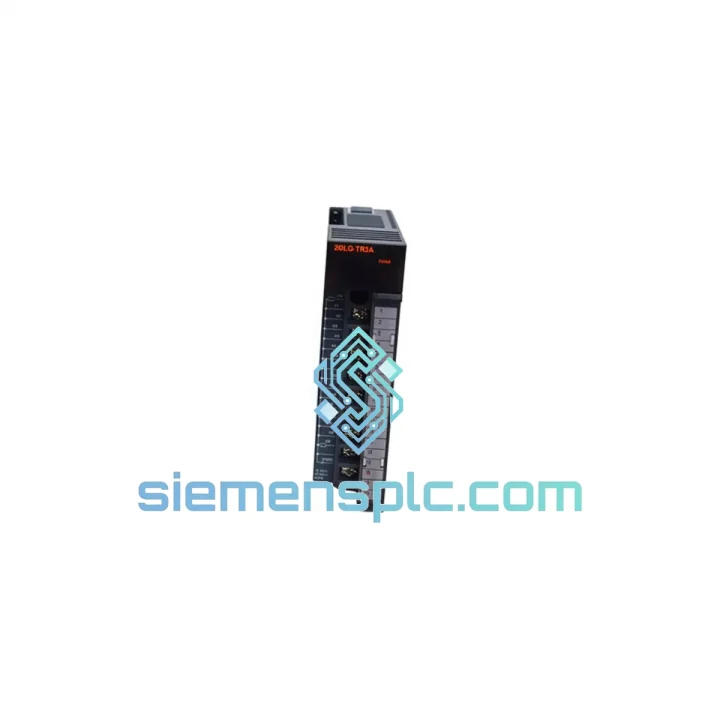
Honeywell 2MLQ-TR2A-CC Digital Output Module – 2MLQ Series
Request verified availability, condition, replacement risk review, packing options and courier lead time for 2MLQ-TR2A-CC.
BrandHoneywell
Part Number2MLQ-TR2A-CC
ConditionAvailability Check
Lead TimeRFQ Confirmation
DocumentsDatasheet / photos by RFQ
ShippingExport packing available
Auto-filled RFQ
2MLQ-TR2A-CC
Click Request Quote and the part number is inserted into the inquiry form automatically.
- Reply by email: [email protected]
- WhatsApp / Tel: +86 18359268345
- Mon-Sat 9:00-18:00 GMT+8
Procurement Data
Key Product Information
Core fields for model confirmation and RFQ routing. Detailed product narrative remains below.
- Brand
- Honeywell
- Primary Part Number
- 2MLQ-TR2A-CC
- Product Type
- Digital Output Module
- Product Family
- Other series
- Manufacturer
- Honeywell Process Solutions
- Country of Origin
- US
- Catalog Category
- I/O Modules
- Operating Temp.
- 0 °C to +60 °C (storage: −40 °C to +85 °C)
- Warranty
- 12 months against manufacturing defects
- Compliance
- CE, UL (confirm current certifications with Honeywell datasheet)
Model confirmed for inquiry
2MLQ-TR2A-CC
Send quantity, destination and urgency. The RFQ form keeps this part number attached.
Request Quote
Product Overview
Honeywell 2MLQ-TR2A-CC — Relay-Type Discrete Output Module in Distributed Control Architecture
The Honeywell 2MLQ-TR2A-CC is a relay-contact digital output module engineered for deployment within Honeywell’s distributed control system (DCS) I/O subsystems. Its primary function is to translate controller-side logic commands into dry-contact switching actions at the field level, providing galvanic isolation between the control backplane and field-side actuators, solenoids, motor starters, and alarm annunciators. In process industries where output signal integrity directly governs loop availability, the 2MLQ-TR2A-CC occupies a deterministic position in the discrete output chain — bridging the gap between the controller’s digital logic and the physical plant.
Unlike solid-state transistor output modules, relay-contact outputs inherently provide true galvanic isolation per channel. The 2MLQ-TR2A-CC’s relay mechanism allows it to switch both AC and DC field loads without requiring matched polarity or voltage class alignment between the control system and the field device. This characteristic makes it particularly suited for legacy plant retrofits where field wiring was originally designed for relay-panel logic, and for applications where field-side voltage levels exceed the tolerance of solid-state alternatives.
The module’s mechanical relay contacts are rated for repetitive switching under inductive load conditions — a critical parameter in applications involving solenoid valves and contactor coils, where back-EMF transients can degrade solid-state output stages over time. Honeywell’s relay selection and snubber circuit design within the 2MLQ-TR2A-CC address this degradation mechanism directly, extending mean time between failures (MTBF) in high-cycle-rate applications.
The CC suffix in the part number designates a specific connector configuration variant, ensuring physical and electrical compatibility with the corresponding Honeywell DCS rack and termination assembly. Substituting a non-CC variant without verifying connector pinout and backplane bus protocol compatibility risks both mechanical interference and signal mapping errors during commissioning.
From a system architecture perspective, the 2MLQ-TR2A-CC integrates into Honeywell’s I/O link bus, where it participates in the controller’s deterministic scan cycle. Output state updates are written to the module’s internal register on each controller scan, and the relay coil driver circuit actuates the corresponding contact within the module’s specified response time. This deterministic update mechanism is essential for applications requiring coordinated multi-output sequencing, such as burner management system (BMS) permissive logic or emergency shutdown (ESD) valve actuation sequences.
Real-time Stock & RFQ: [email protected] | WhatsApp: +86 18359268345
Technical Parameters
| Parameter | Specification |
|---|---|
| Part Number | 2MLQ-TR2A-CC |
| Manufacturer | Honeywell Process Solutions |
| Module Type | Digital Output Module — Relay Contact |
| Output Contact Type | Form A (SPST-NO) dry relay contact |
| Contact Voltage Rating (AC) | Up to 250 V AC (verify per Honeywell datasheet) |
| Contact Voltage Rating (DC) | Up to 30 V DC (verify per Honeywell datasheet) |
| Contact Current Rating | 2 A resistive; derate for inductive loads |
| Isolation | Galvanic isolation, field side to backplane |
| Operating Temperature | 0 °C to +60 °C (storage: −40 °C to +85 °C) |
| Relative Humidity | 5% to 95% non-condensing |
| Form Factor | Rack-mount I/O module, Honeywell DCS backplane |
| Connector Variant | CC — dedicated connector assembly for specified rack |
| Weight | Approx. 110 g |
| Compliance | CE, UL (confirm current certifications with Honeywell datasheet) |
| Warranty | 12 months against manufacturing defects |
Hardware Logical Analysis
The 2MLQ-TR2A-CC’s hardware design reflects Honeywell’s approach to field-side isolation and contact protection in process-critical DCS I/O. Several design elements merit engineering attention:
Galvanic Isolation Architecture: The relay coil driver circuit is powered from the backplane bus, while the relay contact circuit is entirely field-referenced. There is no shared ground path between the controller logic domain and the field wiring domain. This eliminates ground loop currents that can introduce common-mode noise into analog measurement circuits sharing the same field cabinet, and prevents field-side fault voltages from propagating into the controller backplane.
Inductive Load Transient Suppression: Relay contacts switching inductive field devices generate voltage transients (V = L × dI/dt) at contact opening. The 2MLQ-TR2A-CC incorporates suppression components across the relay contact output to limit peak transient voltage, protecting both the relay contact surface from arc erosion and adjacent field wiring from induced transients. This is particularly relevant in cabinets where DO and AI modules share a common field terminal rail.
EMC Design Compliance: The module’s PCB layout and shielding are designed to meet IEC 61000 series EMC requirements applicable to industrial control equipment. Relay coil switching transients — a known source of conducted and radiated emissions — are managed through coil flyback diode circuits on the driver side, preventing backplane bus noise injection during relay state transitions.
Backplane Bus Interface: The module communicates with the DCS controller via Honeywell’s proprietary I/O link protocol over the rack backplane. Output register writes from the controller are decoded by the module’s local logic, which drives the relay coil driver transistors. The module’s internal watchdog monitors backplane communication health; loss of valid communication within the configured timeout period drives outputs to a defined fail-safe state (de-energized contacts), consistent with process safety requirements for de-energize-to-trip (DTT) output logic.
Contact Life and Cycle Rating: Mechanical relay contacts have a finite electrical life rated in switching cycles at specified load conditions. The 2MLQ-TR2A-CC’s relay selection targets the cycle-rate profile typical of DCS discrete output applications — primarily low-frequency switching of process valves and motor starters — rather than high-frequency PLC-style pulse outputs. Engineers should verify contact life ratings against actual application cycle rates for high-frequency switching use cases.
System Integration Benefits
- True galvanic isolation per output channel eliminates ground loop interference between the DCS backplane and field wiring, maintaining signal integrity across the entire I/O network.
- AC and DC field load compatibility without polarity constraints allows a single module type to serve mixed field device inventories, reducing spare parts SKU count in the plant warehouse.
- Deterministic output update timing within the controller scan cycle supports coordinated multi-output sequencing for BMS permissive logic, ESD valve actuation, and interlock relay chains.
- Fail-safe de-energization on communication loss aligns with DTT safety logic conventions, ensuring outputs default to a known safe state without requiring external watchdog relays.
- Plug-and-play backplane compatibility within the specified Honeywell DCS rack eliminates firmware configuration changes and reduces commissioning time compared to third-party substitutes.
- Inductive load transient suppression extends relay contact service life and reduces arc erosion in solenoid valve and motor starter switching applications, lowering unplanned maintenance frequency.
- Diagnostic transparency via I/O link protocol allows the DCS controller to read module health status, enabling predictive maintenance workflows and reducing mean time to repair (MTTR) during fault events.
- EMC-compliant coil driver design prevents relay switching transients from injecting noise onto the backplane bus, preserving analog I/O measurement accuracy in adjacent modules within the same rack.
- Standardized form factor within the Honeywell 2MLQ series allows hot-swap replacement in systems designed for online module substitution, minimizing process downtime during corrective maintenance.
- 12-month warranty coverage with full traceability documentation supports plant asset management systems and simplifies warranty claim processing for procurement and maintenance teams.
Quality Assurance & Global Logistics
Every Honeywell 2MLQ-TR2A-CC unit supplied through siemensplc.com is sourced from verified, traceable supply channels. Pre-shipment inspection includes visual examination of PCB, relay body, connector pins, and module housing for physical damage, counterfeit indicators, and date code consistency. Functional verification confirms relay actuation response and backplane connector integrity prior to packaging.
Units are packaged in anti-static bags with foam cushioning inside double-wall corrugated cartons, meeting ISTA 2A transit test standards for international air and sea freight. Shipments originate from our Xiamen, China operations center, with access to major international freight forwarders and express courier networks including DHL, FedEx, and UPS. Standard export documentation — commercial invoice, packing list, and certificate of origin — is prepared for all international orders. Additional documentation including certificate of conformance and material traceability records is available upon request.
Transit times: Asia-Pacific destinations typically 3–5 business days via air express; Europe and North America 5–8 business days; Middle East and Africa 5–10 business days. Sea freight consolidation available for bulk orders exceeding 20 units. All shipments are fully insured and tracked from dispatch to delivery confirmation.
Contact Information
Email: [email protected]
WhatsApp: +86 18359268345
Web: siemensplc.com
Location: Xiamen, China
© 2026 siemensplc.com. All rights reserved.
Ready to quote
[email protected]
Send This Part Number to Sales
RFQ workflow
Quality workflow ->
Confirmation Process
01Model confirmation
We check the full part number, brand, series and visible nameplate information before quotation.
02Availability reply
Sales confirms stock path, condition option, quantity and realistic lead time for export dispatch.
03Packing & courier
DHL, FedEx, UPS or buyer courier arrangements can be reviewed with packing requirements.
Continue sourcing
Browse full catalog ->
Related Automation Parts
Similar brand or category products for fast comparison and multi-item RFQ lists.
Honeywell
RFQ Ready
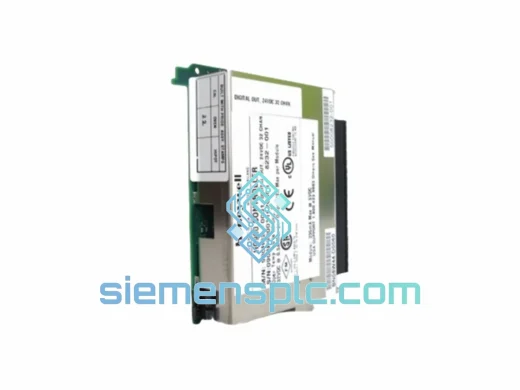
Honeywell 900H02-0202 Relay Digital Output Module
Origin US
Relay Digital Output Module
Honeywell
RFQ Ready
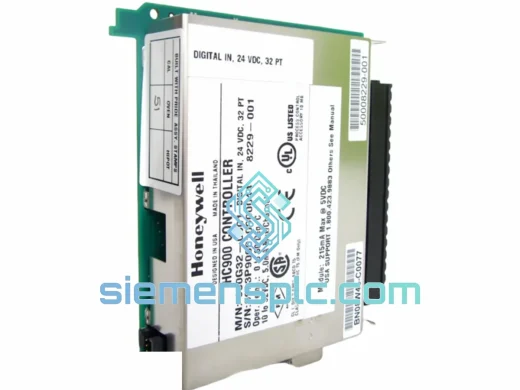
Honeywell 900B01-0301 Analog Output Module – HC900 Series
Origin US
Analog Output Module
Honeywell
RFQ Ready
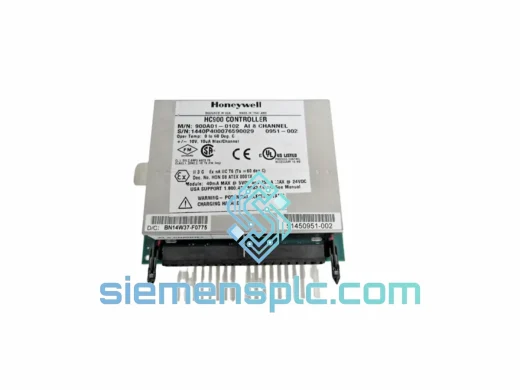
Honeywell 900A01-0001 Analog Input Module – HC900 Series
Origin US
Analog Input Module