Honeywell
RFQ Ready
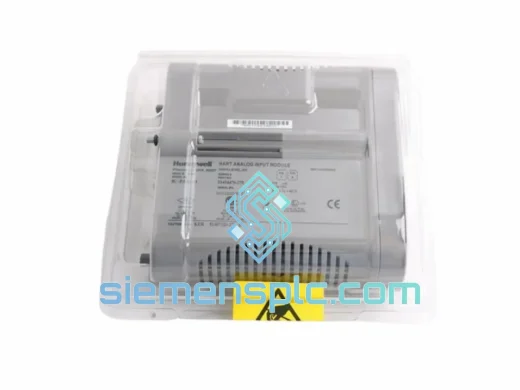
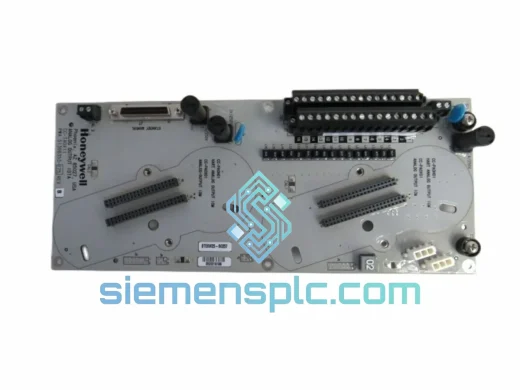
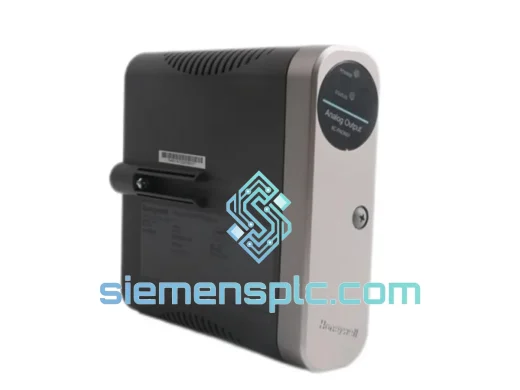
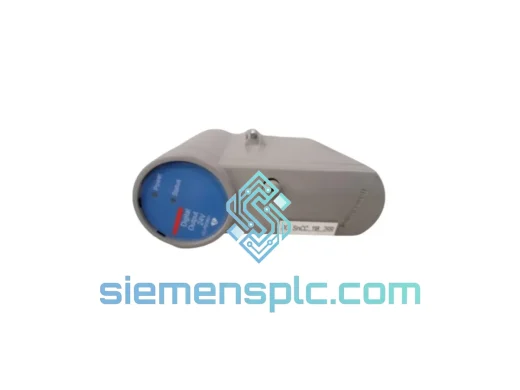
Honeywell CC-PDOB11 Digital Output Module – Experion PKS C300
Experion PKS
Origin US
Digital Output Module
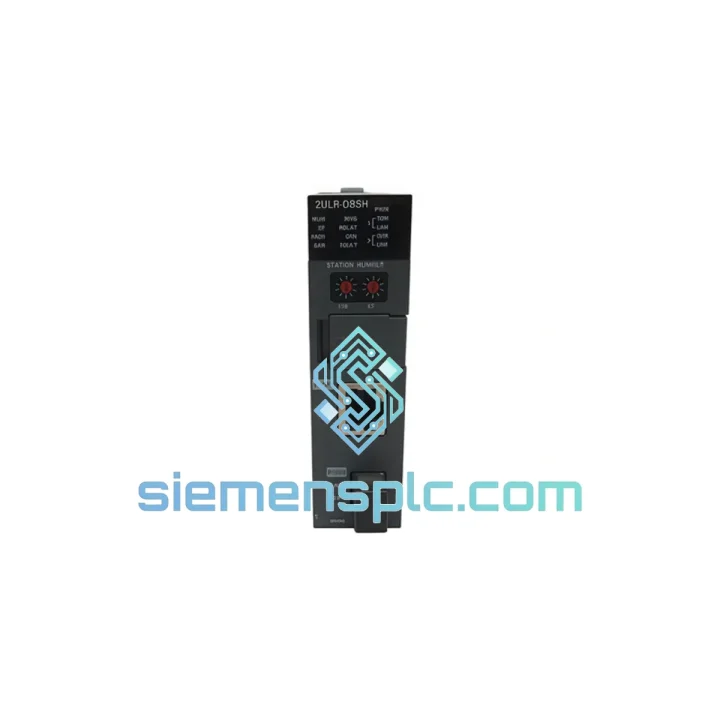
Request verified availability, condition, replacement risk review, packing options and courier lead time for 2MLR-DBSHS.
Click Request Quote and the part number is inserted into the inquiry form automatically.
Core fields for model confirmation and RFQ routing. Detailed product narrative remains below.
The HONEYWELL 2MLR-DBSHS is a rack-mounted Expansion Driver Module engineered for deployment within Honeywell’s Experion PKS (Process Knowledge System) distributed control architecture. Its primary function is to extend the I/O capacity of a controller node by bridging the high-speed backplane bus to downstream I/O termination assemblies, maintaining deterministic scan cycle integrity across all connected field channels. Unlike generic expansion interfaces, the 2MLR-DBSHS implements Honeywell’s proprietary multi-layer redundancy (MLR) arbitration protocol, which governs token-passing between the primary controller and expansion racks without introducing variable latency into the control loop.
In a typical Experion PKS node, the C300 or C200 controller communicates with I/O modules via the FTE (Fault Tolerant Ethernet) backplane or the Series C I/O link. The 2MLR-DBSHS sits at the physical boundary between the controller chassis and the expansion I/O rack, translating backplane bus signals into the DBSHS (Dual-Bus Synchronous High-Speed) differential serial protocol. This translation preserves signal integrity over distances up to 30 meters between chassis, a specification critical in large-footprint process plants where controller cabinets and marshalling panels are physically separated.
The module’s optical isolation stage decouples the controller-side ground reference from the field-side I/O bus, providing a minimum 500 VDC galvanic barrier. This isolation architecture prevents ground loop currents — a common failure mode in multi-cabinet DCS installations — from corrupting analog measurement accuracy or triggering spurious digital state changes. The isolation stage is implemented using high-speed optocouplers rated for signal propagation delays below 50 ns, ensuring that the isolation barrier does not degrade the timing precision of the DBSHS protocol frame.
Electromagnetic compatibility is addressed through a multi-stage EMC filter network on both the backplane connector and the expansion bus output. The filter topology combines common-mode chokes, transient voltage suppression (TVS) diodes rated at 600 W peak pulse power, and ceramic bypass capacitors placed within 2 mm of each signal pin. This layout meets IEC 61000-4-4 (electrical fast transient) Level 4 and IEC 61000-4-5 (surge) Level 3 requirements without external filtering, which simplifies cabinet wiring and reduces the risk of installation errors that could compromise EMC compliance.
Thermal management is handled passively through an aluminum heat-spreader plate bonded to the module’s power regulation section. The onboard DC-DC converter, which steps down the rack’s 24 VDC supply to the 3.3 V and 5 V logic rails, operates at a switching frequency of 400 kHz with synchronous rectification, achieving a conversion efficiency above 88% across the full load range. This efficiency figure directly limits self-heating, allowing the module to operate continuously at ambient temperatures up to 60 °C without derating — a specification relevant to installations in non-air-conditioned electrical rooms in tropical or desert climates.
Real-time Stock & RFQ: [email protected] | WhatsApp: +86 18359268345
| Parameter | Value |
|---|---|
| Part Number | 2MLR-DBSHS |
| Manufacturer | HONEYWELL Process Solutions |
| Module Category | DCS Expansion Driver Module |
| Compatible Platform | Experion PKS, TDC 3000, PlantScape |
| Bus Protocol | DBSHS (Dual-Bus Synchronous High-Speed) |
| Supply Voltage | 24 VDC ± 15% (rack-supplied) |
| Logic Rail Outputs | 3.3 V / 5 V (internal DC-DC) |
| DC-DC Switching Frequency | 400 kHz |
| Conversion Efficiency | > 88% (full load) |
| Galvanic Isolation Voltage | 500 VDC minimum |
| Optocoupler Propagation Delay | < 50 ns |
| Max Chassis-to-Chassis Distance | 30 m (DBSHS cable) |
| Operating Temperature | 0 °C to +60 °C (no derating) |
| Storage Temperature | -40 °C to +85 °C |
| Relative Humidity | 5% to 95% non-condensing |
| EMC — EFT Immunity | IEC 61000-4-4 Level 4 |
| EMC — Surge Immunity | IEC 61000-4-5 Level 3 |
| TVS Peak Pulse Power | 600 W |
| Form Factor | Rack-mount, Series C I/O chassis compatible |
| Module Weight | 920 g |
| Certifications | CE, UL, RoHS (per Honeywell OEM documentation) |
| Warranty | 12 months from dispatch date |
| Condition | Genuine OEM — New / Surplus New |
The 2MLR-DBSHS implements Honeywell’s Multi-Layer Redundancy (MLR) arbitration logic in hardware, not firmware. This distinction matters operationally: the arbitration state machine is implemented in a dedicated CPLD (Complex Programmable Logic Device) rather than a microcontroller executing interrupt-driven code. The CPLD executes arbitration decisions within a single clock cycle (typically 10 ns at a 100 MHz clock), eliminating the jitter that would be introduced by a software interrupt service routine. In a redundant controller configuration, this determinism ensures that the switchover from primary to secondary controller completes within one scan cycle, with no missed I/O updates visible to the process.
The DBSHS differential serial interface uses a balanced line driver topology (equivalent to RS-485 electrical characteristics but operating at a higher baud rate). Differential signaling rejects common-mode noise up to ±7 V, which covers the majority of conducted interference encountered in industrial cabinet environments. The line driver output impedance is matched to the characteristic impedance of the Honeywell-specified shielded twisted-pair cable (120 Ω), preventing reflections that would corrupt frame synchronization at the receiver end.
The module’s power sequencing logic enforces a defined startup order: the 5 V logic rail must reach regulation before the CPLD releases the bus driver enables, and the bus driver enables must be asserted before the backplane interface handshake begins. This three-stage sequencing prevents bus contention during power-up, a failure mode that can corrupt the configuration memory of downstream I/O modules if the expansion driver asserts bus signals before the I/O rack has completed its own initialization sequence.
The onboard diagnostic register set is accessible via the backplane management bus and exposes 16-bit status words covering: bus frame error count, CRC failure count, optocoupler degradation flag (triggered when propagation delay exceeds 80 ns), DC-DC output voltage deviation (flagged at ±5% of nominal), and thermal warning (asserted at 55 °C junction temperature). These registers are polled by the Experion PKS system manager at configurable intervals and surfaced in the Experion Station alarm display, providing maintenance personnel with early warning of hardware degradation before a fault condition occurs.
Every HONEYWELL 2MLR-DBSHS unit dispatched from our Xiamen, China facility is a genuine Honeywell OEM component procured through verified industrial supply channels. Each unit undergoes a four-point inspection protocol before shipment: label and serial number authentication against Honeywell’s part numbering convention, connector pin integrity check under 10× magnification, housing and PCB edge-connector condition assessment, and a bench power-on test confirming that the module’s status LEDs and backplane handshake sequence execute correctly.
Units are packed in anti-static ESD bags (surface resistivity < 1011 Ω/sq), placed in foam-lined rigid cartons rated for 1.2 m drop impact, and sealed with tamper-evident tape. Export documentation — commercial invoice, packing list, and certificate of origin — is prepared for every shipment. HS code classification guidance is available for your destination country upon request.
Shipping is handled via DHL Express, FedEx International Priority, and UPS Worldwide Expedited. In-stock units ship within 1–3 business days of order confirmation. Transit times to major industrial hubs: Europe 3–5 days, North America 4–6 days, Southeast Asia 2–3 days, Middle East 4–7 days. For bulk orders requiring sea freight, LCL and FCL consolidation services are available from Xiamen Port. All shipments are covered by a 12-month warranty against manufacturing defects, with DOA replacement processed within 5 business days of confirmed fault report.
Email: [email protected]
WhatsApp: +86 18359268345
Web: siemensplc.com
Location: Xiamen, China
© 2026 siemensplc.com. All rights reserved.
We check the full part number, brand, series and visible nameplate information before quotation.
Sales confirms stock path, condition option, quantity and realistic lead time for export dispatch.
DHL, FedEx, UPS or buyer courier arrangements can be reviewed with packing requirements.
Similar brand or category products for fast comparison and multi-item RFQ lists.