Honeywell
RFQ Ready
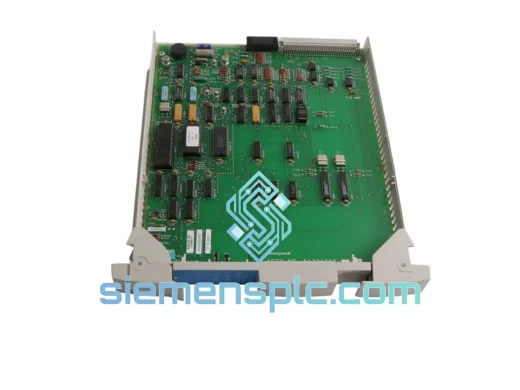
Honeywell SC-PCMX01 51307195-175 DCS Terminal Unit
Experion PKS
Origin US
DCS Terminal Unit
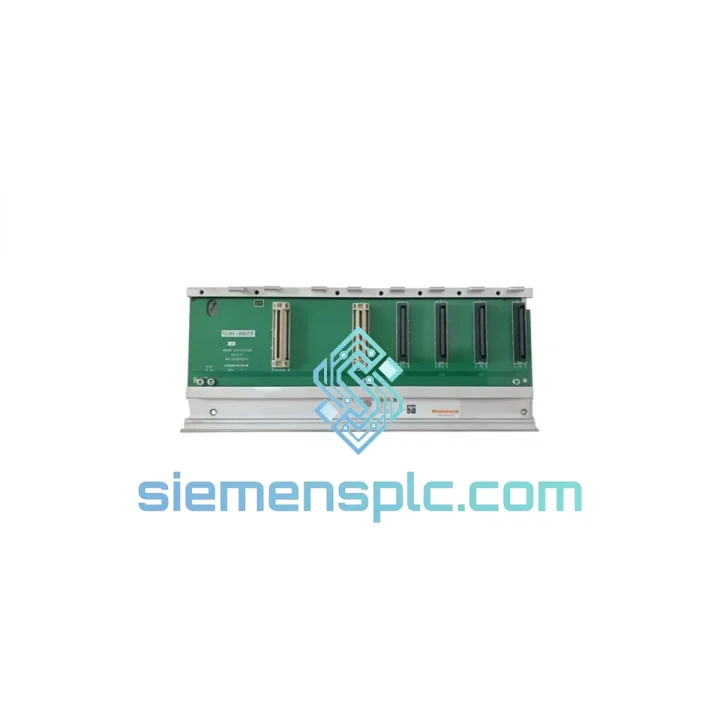
Request verified availability, condition, replacement risk review, packing options and courier lead time for 2MLR-M02P.
Click Request Quote and the part number is inserted into the inquiry form automatically.
Core fields for model confirmation and RFQ routing. Detailed product narrative remains below.
The Honeywell 2MLR-M02P is a 2-slot main base unit engineered specifically for redundant controller configurations within Honeywell’s process automation ecosystem. Its primary function is to provide the physical and electrical backplane infrastructure that allows a primary controller module and its standby counterpart to share a common I/O bus while maintaining independent execution paths. In a fault-tolerant control loop, the base arbitrates synchronization signals between the active and standby CPUs, ensuring that a switchover event — whether triggered by hardware fault detection, watchdog timeout, or manual operator command — completes without introducing a control discontinuity into the process variable.
Unlike a standard single-controller backplane, the 2MLR-M02P incorporates dedicated inter-module communication channels that carry state synchronization data at the scan-cycle level. This means the standby module is not merely powered and waiting; it is continuously updated with the current output image table, PID setpoints, and accumulated timer/counter values of the active controller. When a switchover occurs, the standby assumes control with a process state that is current to within one scan cycle — typically under 10 ms for standard process control loops — eliminating the transient disturbances that would otherwise propagate through final control elements.
The base is dimensioned for DIN rail or panel mounting and accepts the standard 2MLR-series controller modules without adapter hardware. Its compact 2-slot form factor is a deliberate design constraint: by limiting the base to two module positions, Honeywell enforces a clean separation between the redundancy pair and any downstream I/O expansion, which simplifies fault isolation during maintenance and reduces the blast radius of a single-point hardware failure.
Real-time Stock & RFQ: [email protected] | WhatsApp: +86 18359268345
| Part Number | 2MLR-M02P |
| Brand | Honeywell |
| Series | 2MLR — Main Base Redundancy Series |
| Module Type | Redundancy Main Base, 2-Slot |
| Slot Count | 2 (Primary + Standby controller positions) |
| Backplane Bus | Proprietary Honeywell redundancy synchronization bus |
| Mounting Method | 35 mm DIN Rail / Panel Mount |
| Operating Temperature | 0 °C to +60 °C (verify with project datasheet) |
| Storage Temperature | -40 °C to +85 °C |
| Relative Humidity | 5% to 95% non-condensing |
| Weight | 330 g |
| Enclosure Rating | IP20 (panel-mounted installation) |
| Power Supply Interface | Via 2MLR-series power module (sold separately) |
| Compatible Systems | Honeywell DCS / SIS redundancy platforms |
| Compliance | CE, RoHS; suitable for IEC 61511 / IEC 61508 SIS architectures |
| Warranty | 12 months from date of shipment |
| Country of Origin | United States |
The 2MLR-M02P’s internal architecture addresses three distinct engineering challenges that arise in redundant controller deployments: state coherence, arbitration determinism, and EMC integrity.
State Coherence Mechanism: The base provides a dedicated synchronization channel — physically separate from the I/O data bus — over which the active controller continuously mirrors its execution context to the standby. This channel operates at a fixed clock rate independent of the I/O scan cycle, which means synchronization latency is bounded and predictable regardless of I/O load. Engineers designing SIL-rated loops can therefore calculate worst-case switchover state age without relying on probabilistic estimates.
Arbitration Logic: The base contains onboard arbitration circuitry that monitors heartbeat signals from both installed modules. If the active controller fails to assert its heartbeat within the configured watchdog window, the arbitration logic asserts the switchover signal to the standby module without requiring intervention from a supervisory host. This hardware-level arbitration eliminates the latency and single-point-of-failure risk that would exist if switchover decisions were delegated to a software layer running on either controller.
EMC Design: The backplane PCB uses a multi-layer stackup with dedicated ground planes between signal layers, reducing crosstalk between the high-frequency synchronization bus and the lower-frequency I/O data lines. Connector housings are metallized to provide shielding continuity at the module interface. These measures allow the base to meet IEC 61000-4 series immunity requirements — including 4 kV contact discharge (ESD), 2 kV fast transient burst (EFT), and 10 V/m radiated immunity — without requiring additional external shielding in standard industrial panel environments.
Thermal Management: The base’s aluminum alloy chassis acts as a passive heat spreader for the backplane electronics. Slot spacing is sized to maintain adequate convective airflow between installed modules at the rated 60 °C ambient, without requiring forced-air cooling in standard vertical-mount panel configurations.
Every Honeywell 2MLR-M02P unit dispatched from our Xiamen, China facility undergoes a structured pre-shipment verification protocol before packaging:
Shipments originate from Xiamen, China and are dispatched via DHL Express, FedEx International Priority, or UPS Worldwide Expedited depending on destination and urgency. Standard transit times are 3–5 business days to most destinations in Asia, Europe, and North America. Export documentation is prepared in compliance with Chinese customs regulations and destination-country import requirements. For orders requiring CITES, dual-use, or end-user certificate documentation, please advise at time of inquiry.
All units carry a 12-month warranty from the date of shipment covering manufacturing defects and confirmed hardware failures under normal operating conditions. Warranty claims are processed with a target response time of 2 business days.
Email: [email protected]
WhatsApp: +86 18359268345
Web: siemensplc.com
Location: Xiamen, China
© 2026 siemensplc.com. All rights reserved.
We check the full part number, brand, series and visible nameplate information before quotation.
Sales confirms stock path, condition option, quantity and realistic lead time for export dispatch.
DHL, FedEx, UPS or buyer courier arrangements can be reviewed with packing requirements.
Similar brand or category products for fast comparison and multi-item RFQ lists.