Honeywell
RFQ Ready
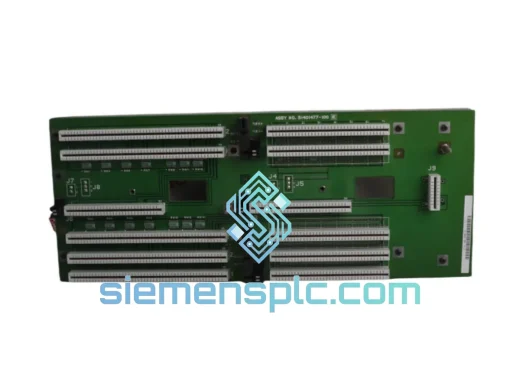
Honeywell 51401477-100 DCS Backpanel – TDC 3000 Classic Series
TDC 3000
Origin US
DCS Backpanel
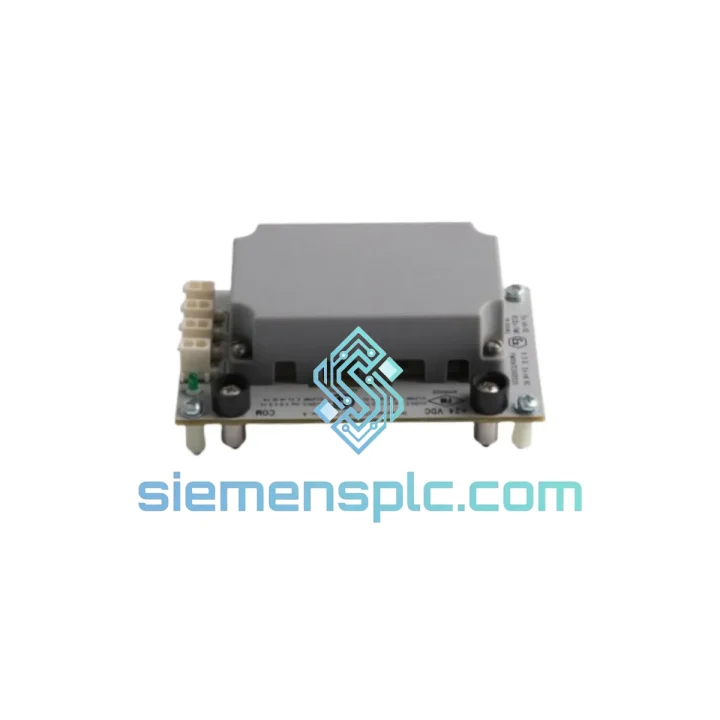
Request verified availability, condition, replacement risk review, packing options and courier lead time for 51199932-200.
Click Request Quote and the part number is inserted into the inquiry form automatically.
Core fields for model confirmation and RFQ routing. Detailed product narrative remains below.
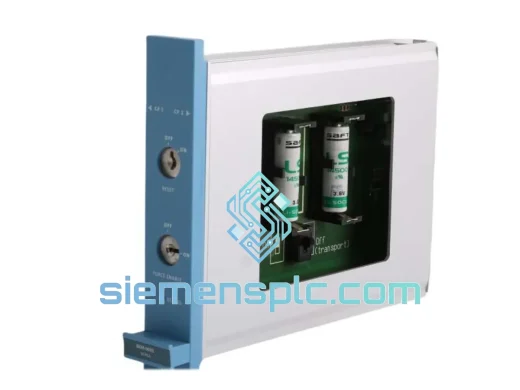
The Honeywell 51199932-200 (repair designation: 51199932-200-RP) is a single-slot, lithium-cell-backed SRAM retention module designed for installation in controller node card cages within the Honeywell TDC 3000 and TotalPlant Solution (TPS) distributed control system architectures. Its sole engineering mandate is to hold the volatile SRAM contents of the host controller node intact across any primary power interruption — whether a planned maintenance shutdown, a grid transient, or an unplanned outage — without requiring operator intervention or a configuration reload sequence.
Controller nodes in TDC 3000 and TPS architectures carry process-critical data in volatile SRAM: PID tuning constants, cascade and feedforward configuration tables, real-time setpoint arrays, and operator-entered override values accumulated over months or years of process optimization. Without a retention mechanism, a power interruption of even a few milliseconds forces a cold-restart sequence that wipes this data and substitutes factory defaults — triggering process upsets, off-specification product runs, and stabilization delays that in refinery or petrochemical contexts translate directly to measurable production losses. The 51199932-200 eliminates this failure mode at the hardware level, independent of software, network availability, or operator response time.
The module interfaces with the controller node backplane through a dedicated card-edge connector. No external wiring, jumper configuration, or software commissioning is required. Physical insertion and a battery health check via the node’s built-in diagnostic channel constitute the complete installation procedure. The lithium primary cell is field-replaceable without removing the controller node from service, provided the swap is completed within the SRAM data-hold time window documented in Honeywell’s TDC 3000 maintenance reference.
Compatibility spans multiple hardware revisions of TDC 3000 and TPS controller node card cages, making the 51199932-200 a single line item that covers mixed-vintage controller populations — a practical advantage for sites managing spare parts inventories across equipment installed over a decade or more.
Real-time Stock & RFQ: [email protected] | WhatsApp: +86 18359268345
| Parameter | Specification |
|---|---|
| Part Number | 51199932-200 |
| Repair / Alternate Part Number | 51199932-200-RP |
| Compatible Platforms | Honeywell TDC 3000, TotalPlant Solution (TPS) |
| Module Function | Lithium-cell-backed volatile SRAM data retention |
| Memory Technology | CMOS Static RAM (SRAM) |
| Backup Cell Chemistry | Lithium primary cell (non-rechargeable), field-replaceable |
| SRAM Retention Voltage Range | 2.0 V – 3.6 V (cell output during backup interval) |
| Primary Logic Supply Input | 5 VDC ± 5% via controller node backplane |
| Undervoltage Switchover Threshold | ≤ 4.5 VDC on primary supply rail |
| Vcc Switchover Transition Time | < 1 µs (Schottky diode-OR arbitration) |
| Low-Battery Warning Threshold | Cell Vout ≤ 2.8 V → status bit asserted to node diagnostic register |
| Operating Temperature Range | 0 °C to +60 °C |
| Recommended Ambient for Max Cell Life | ≤ +45 °C continuous |
| Storage Temperature Range | −20 °C to +70 °C |
| Relative Humidity | 5% – 95% RH, non-condensing |
| Form Factor | Single-slot plug-in card, TDC 3000 / TPS card cage |
| Electromagnetic Compatibility | Designed to IEC 61000-4 series immunity levels; CE-compatible |
| Country of Origin | United States |
| Weight (approx.) | 350 g |
| Warranty | 12 months from date of shipment |
Schottky Diode-OR Power Arbitration: The 51199932-200 places the 5 VDC backplane supply and the lithium cell output in a wired-OR configuration via Schottky junction diodes feeding the SRAM Vcc rail. Schottky devices are selected specifically for their low forward-voltage drop — typically 0.25–0.35 V at the operating current levels of CMOS SRAM standby — ensuring that SRAM Vcc remains within the device’s data-retention specification even when the cell approaches end-of-life voltage. The Schottky topology simultaneously provides inherent reverse-blocking, preventing the 5 VDC primary supply from back-biasing the lithium cell — a condition that would constitute a thermal and chemical hazard with non-rechargeable lithium chemistry. The switchover from primary supply to cell backup occurs within sub-microsecond timescales, well inside the SRAM data-hold time specification, so no write cycle is interrupted and no data corruption window exists at the transition boundary.
Bandgap-Referenced Supervisory Voltage Monitor: An onboard comparator continuously samples the lithium cell terminal voltage against a precision bandgap reference — a reference topology chosen for its low temperature coefficient, ensuring that the 2.8 V warning threshold remains accurate across the full 0–60 °C operating range without calibration drift. When cell voltage crosses this threshold, the comparator output drives a dedicated status bit in the controller node’s diagnostic register. The TDC 3000 / TPS node firmware polls this register on each scan cycle and propagates the low-battery condition to the operator console via the Universal Control Network (UCN). Because the warning threshold is set at approximately 10–20% remaining cell capacity, maintenance personnel typically have a window of several weeks to schedule a planned cell replacement — converting what would otherwise be an unplanned data-loss event into a routine maintenance task.
PCB Layout and EMC Discipline: The module’s PCB layout follows Honeywell’s internal EMC design rules for industrial control hardware deployed in electrically noisy process plant environments. Bypass capacitors are placed within 2 mm of each SRAM Vcc pin to suppress high-frequency transients on the backup rail. Lithium cell circuit traces are routed away from high-dV/dt switching nodes present on the backplane to prevent capacitive coupling of noise onto the SRAM data-retention supply. Card-edge connector pins assigned to the backup circuit are flanked by ground pins on both sides, reducing susceptibility to common-mode noise injected through the card cage backplane during adjacent card insertion or extraction events — a scenario that generates transient currents on shared backplane ground planes and represents a realistic EMC stress condition in active process plant card cages.
Thermal Derating and Cell Service Life: Lithium primary cell capacity degrades with temperature following Arrhenius kinetics — a well-characterized relationship that allows service life to be estimated from installation ambient temperature logs. At +25 °C ambient with typical CMOS SRAM quiescent current loads, the cell provides a backup duration measured in years, making annual inspection rather than annual replacement the standard maintenance practice in most TDC 3000 installations. At the rated maximum of +60 °C continuous, service life is reduced per the Arrhenius model, and Honeywell’s application guidelines recommend a more frequent inspection interval. The module’s supervisory circuit provides the definitive end-of-life indicator regardless of elapsed time, so condition-based replacement is always more accurate than calendar-based scheduling.
Each Honeywell 51199932-200 unit dispatched from our Xiamen, China facility is a genuine Honeywell-manufactured component sourced through verified supply channels with full traceability to authorized distribution. Incoming inspection covers visual examination for physical damage, part number and date code marking verification against Honeywell’s published part number structure, and functional continuity checks on the backup circuit prior to storage. Units are held in ESD-controlled storage environments and packaged in anti-static bags with moisture barrier outer packaging for international shipment, consistent with IPC/JEDEC J-STD-033 handling guidelines for moisture-sensitive electronic assemblies.
Our Xiamen warehouse maintains bonded stock of high-demand Honeywell TDC 3000 and TPS spare parts. Orders confirmed before 14:00 CST on business days are eligible for same-day dispatch. International shipments are routed via DHL Express, FedEx International Priority, or UPS Worldwide Express based on destination and customer preference, with typical transit times of 3–7 business days to major industrial centers in Southeast Asia, the Middle East, Europe, and the Americas. Air freight tracking numbers are provided at the time of dispatch, and proactive shipment status updates are issued for orders with declared urgency.
Export documentation — commercial invoice, packing list, and certificate of origin — is prepared in compliance with Chinese customs export regulations and destination country import requirements. Third-party inspection certificates, material test reports, or specific country-of-origin documentation can be arranged upon request at order placement. All units carry a 12-month warranty from the date of shipment, covering manufacturing defects and premature component failure under normal operating conditions as defined in Honeywell’s published environmental specifications. Warranty claims are acknowledged within 48 hours, and replacement units are dispatched from Xiamen stock upon claim approval without requiring return of the defective unit for initial assessment.
Email: [email protected]
WhatsApp: +86 18359268345
Web: siemensplc.com
Location: Xiamen, China
© 2026 siemensplc.com. All rights reserved.
We check the full part number, brand, series and visible nameplate information before quotation.
Sales confirms stock path, condition option, quantity and realistic lead time for export dispatch.
DHL, FedEx, UPS or buyer courier arrangements can be reviewed with packing requirements.
Similar brand or category products for fast comparison and multi-item RFQ lists.