Honeywell
RFQ Ready
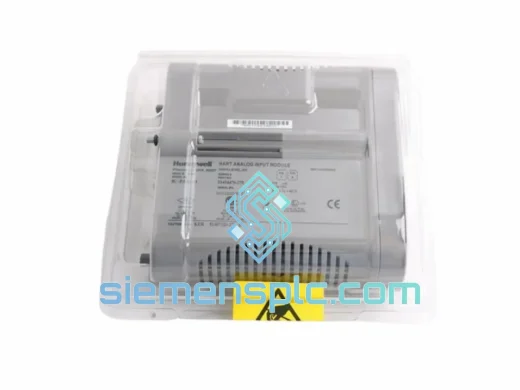
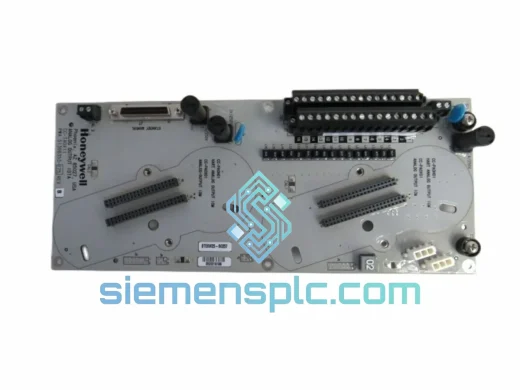
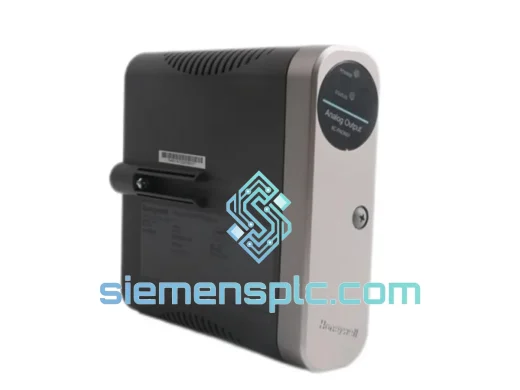
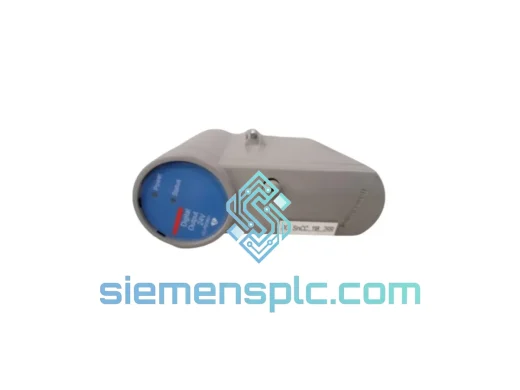
Honeywell CC-PDOB11 Digital Output Module – Experion PKS C300
Experion PKS
Origin US
Digital Output Module
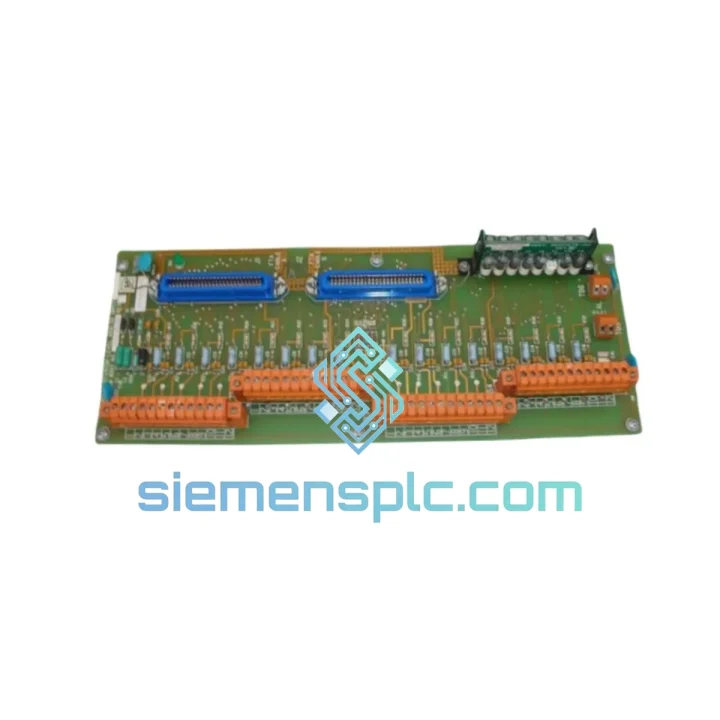
Request verified availability, condition, replacement risk review, packing options and courier lead time for DC-TAIX61 DC-TAIX51 DC-TAOX51 DC-TAOX61.
Click Request Quote and the part number is inserted into the inquiry form automatically.
Core fields for model confirmation and RFQ routing. Detailed product narrative remains below.
The DC-TAIX61, DC-TAIX51, DC-TAOX51, and DC-TAOX61 occupy the signal-conditioning and field-interface tier within Honeywell’s Experion PKS (C200/C300 controller families) and legacy TDC 3000 (HPM/AM) distributed control architectures. Their function is precise and non-negotiable: translate physical process variables — pressure differential across an orifice plate, thermocouple millivolt output, positioner feedback — into 16-bit digital representations that the controller’s execution engine can act upon within a deterministic scan window, and convert controller output words back into calibrated 4–20 mA drive signals for final control elements. The suffix numeral encodes channel density: the “51” variants carry 8 channels per module; the “61” variants carry 16 channels. The “IX” designation identifies analog input function; “OX” identifies analog output.
In a process plant, the analog I/O module is the boundary where measurement uncertainty is either controlled or allowed to propagate. A 0.1% full-scale error at the ADC stage of a flow measurement loop translates directly into a proportional error in the mass balance calculation used by the advanced process control layer. The DC-TAIX series addresses this with a 16-bit successive-approximation ADC architecture, per-channel instrumentation amplifier gain stages, and hardware-enforced signal range validation that flags out-of-range conditions before they reach the controller’s PID block. The DC-TAOX series closes the loop with a 16-bit DAC and an active current-loop driver that maintains output accuracy independent of field-side load resistance variation.
Real-time Stock & RFQ: [email protected] | WhatsApp: +86 18359268345
| Parameter | DC-TAIX51 / DC-TAIX61 (Analog Input) | DC-TAOX51 / DC-TAOX61 (Analog Output) |
|---|---|---|
| Module Function | Analog Input — field signal acquisition & digitization | Analog Output — calibrated field drive signal generation |
| Compatible Platform | Honeywell Experion PKS (C200 / C300) / TDC 3000 (HPM / AM) | |
| Channel Density | 8 ch (DC-TAIX51) / 16 ch (DC-TAIX61) | 8 ch (DC-TAOX51) / 16 ch (DC-TAOX61) |
| Signal Standard | 4–20 mA / 1–5 V DC, software-configurable per channel | 4–20 mA / 1–5 V DC, software-configurable per channel |
| Conversion Resolution | 16-bit ADC; linearity ±0.015% of full scale | 16-bit DAC; linearity ±0.015% of full scale |
| Channel Isolation | Channel-to-channel galvanic isolation, 500 V DC continuous | Channel-to-channel galvanic isolation, 500 V DC continuous |
| Input Impedance | ≥ 250 Ω (current mode); ≥ 1 MΩ (voltage mode) | N/A |
| Output Compliance | N/A | Active regulation; load range 0–750 Ω at 24 V DC supply |
| Backplane Interface | Honeywell UCN (Universal Control Network) / FTE (Fault-Tolerant Ethernet) | |
| Scan / Update Rate | Configurable 100 ms – 1 s per channel group | Synchronous with controller execution cycle |
| Loop Power Sourcing | Software-selectable per channel (2-wire transmitter support) | N/A |
| Fail-Safe Output Mode | N/A | Hold-last-value / go-to-preset / ramp-to-preset (NV stored) |
| Operating Temperature | 0 °C to +60 °C; storage −40 °C to +85 °C | |
| Relative Humidity | 5% – 95% RH, non-condensing | |
| Supply Voltage | 24 V DC via backplane; typical module draw ≤ 3.5 W | |
| Module Weight | Approx. 1,060 g (including IOTA termination assembly) | |
| Certifications | CE Mark; UL 508; FM Class I Division 2 (Groups A–D); IEC 61000-4 series EMC | |
| Warranty | 12 months from confirmed shipment date | |
The DC-TAIX input modules implement a three-stage analog front end before the ADC. Stage one is a programmable-gain instrumentation amplifier (PGIA) that applies a gain factor matched to the selected input range, maximizing the ADC’s effective number of bits (ENOB) across the full 4–20 mA or 1–5 V span. Stage two is a second-order active anti-aliasing low-pass filter with a −3 dB corner frequency set at approximately one-fifth of the ADC sampling clock rate. This filter attenuates high-frequency interference from variable-frequency drives, arc furnaces, and switching power supplies that share cable trays with signal wiring — a common source of measurement noise in heavy-process environments. Stage three is the 16-bit successive-approximation ADC itself, clocked by a dedicated crystal oscillator that is isolated from the backplane clock domain to prevent digital switching noise from modulating the ADC reference voltage.
The galvanic isolation barrier between the field-side analog front end and the digital processing core uses optocoupler arrays rated at 500 V DC continuous isolation. This architecture eliminates ground loops that arise when the field instrument’s local ground reference differs from the DCS cabinet ground — a condition that is structurally unavoidable in large plants where cable runs between the marshalling cabinet and field junction boxes exceed 200–400 meters across multiple structural steel sections. Without this isolation, the common-mode voltage difference appears as a DC offset on the measurement, shifting the apparent process variable by an amount proportional to the ground potential difference divided by the common-mode rejection ratio of the input stage.
On the DC-TAOX output side, the current-loop driver uses an active compliance voltage regulation topology. A feedback loop continuously monitors the actual output current and adjusts the driver’s compliance voltage to maintain the programmed milliamp value regardless of load resistance changes within the specified range. This means that a partially corroded field terminal, a marginal cable splice, or a positioner with a non-linear input impedance characteristic does not introduce a proportional error into the valve position command. The output stage also incorporates a watchdog-driven fail-safe circuit: if the module loses UCN/FTE communication with the controller for a configurable timeout (typically spanning 1–4 scan cycles), the output is autonomously driven to the pre-configured safe state stored in non-volatile module memory — preventing uncontrolled actuator movement during a controller restart, network reconfiguration, or FTE path switchover.
PCB-level EMC design separates the analog and digital ground planes, joining them at a single star point to minimize the return current path for high-frequency digital switching transients through the analog measurement circuitry. Bulk and high-frequency decoupling capacitors are placed at each power rail entry point on both the field-side and backplane-side power domains. The module housing provides shielding continuity to the backplane chassis ground, contributing to the system’s compliance with IEC 61000-4-3 radiated immunity at 10 V/m field strength and IEC 61000-4-4 electrical fast transient immunity at 2 kV.
Every unit supplied through siemensplc.com is sourced as genuine Honeywell OEM hardware. Prior to dispatch, each module undergoes a structured inspection sequence: part number and date code verification against Honeywell manufacturing records, physical examination of PCB condition, housing integrity, and connector pin alignment, and where test infrastructure permits, a powered functional verification of channel I/O response against factory-specified tolerance bands. Units are repackaged in anti-static ESD shielding bags with a siemensplc.com inspection record enclosed in the carton.
Logistics operations are based in Xiamen, Fujian Province — a primary export hub with direct access to DHL Express, FedEx International Priority, and UPS Worldwide Expedited services. In-stock units are dispatched within 1–3 business days of order confirmation. For emergency maintenance windows or unplanned plant shutdowns, same-day dispatch is available for orders confirmed before 14:00 CST. Complete export documentation — commercial invoice, packing list, Certificate of Origin, and EAR99 classification letter — is prepared for every international shipment. Bulk orders can be consolidated for sea freight (LCL or FCL) with bonded-warehouse staging available for customers managing scheduled maintenance spare-parts inventories across multiple sites.
A 12-month warranty covers all verified units against functional failure under normal operating conditions as defined by Honeywell’s published environmental specifications. Dead-on-arrival units are replaced or credited within 30 days of delivery confirmation. Extended warranty terms and annual supply agreements are available for customers operating multi-site DCS spare-parts programs.
Email: [email protected]
WhatsApp: +86 18359268345
Web: siemensplc.com
Location: Xiamen, China
© 2026 siemensplc.com. All rights reserved.
We check the full part number, brand, series and visible nameplate information before quotation.
Sales confirms stock path, condition option, quantity and realistic lead time for export dispatch.
DHL, FedEx, UPS or buyer courier arrangements can be reviewed with packing requirements.
Similar brand or category products for fast comparison and multi-item RFQ lists.