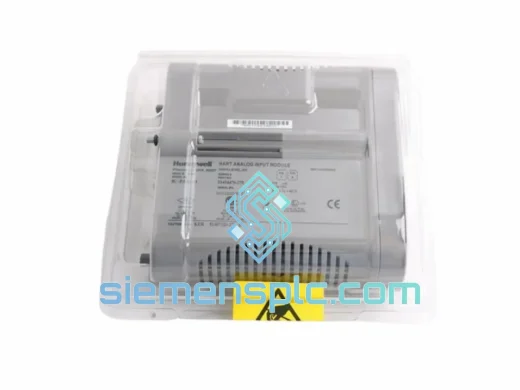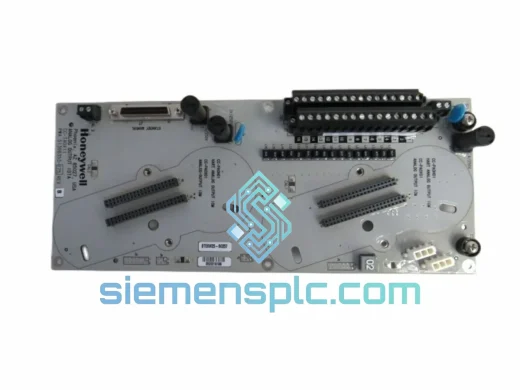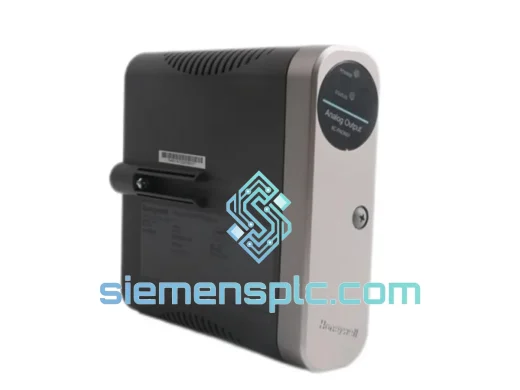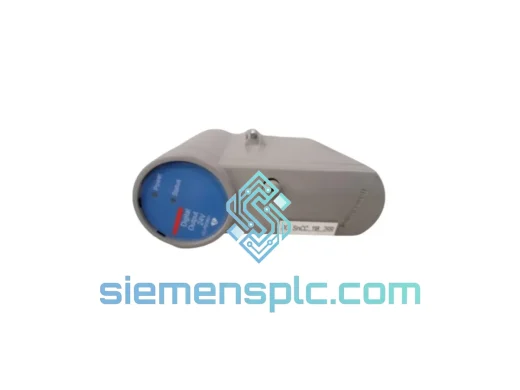
Honeywell
RFQ Ready
Honeywell CC-PDOB11 Digital Output Module – Experion PKS C300
Experion PKS
Origin US
Digital Output Module
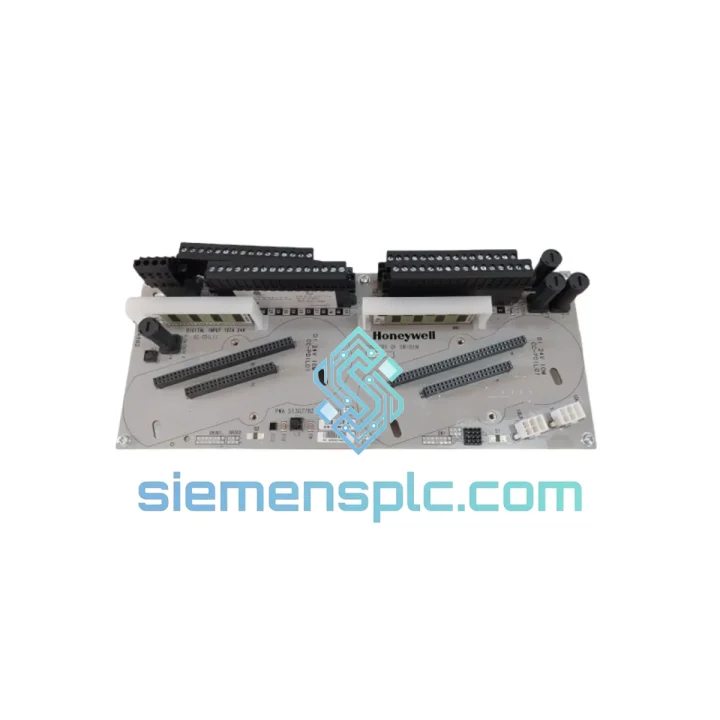
Request verified availability, condition, replacement risk review, packing options and courier lead time for DC-TDIL11.
Click Request Quote and the part number is inserted into the inquiry form automatically.
Core fields for model confirmation and RFQ routing. Detailed product narrative remains below.
The DC-TDIL11 functions as the field-side termination layer within Honeywell’s Experion PKS distributed control system, positioned at the physical boundary where discrete field signals enter the I/O subsystem. It is classified as an IOTA — Input/Output Termination Assembly — and its role is structurally distinct from the signal-processing modules it supports. The DC-TDIL11 does not execute any logic; it provides the galvanically isolated, mechanically robust interface between field-wired discrete devices and the C300 Field Interface Module (FIM) that performs all digital input scanning and state reporting to the Experion controller tier.
In the Experion PKS I/O architecture, the IOTA layer absorbs all field-side electrical stress: contact bounce transients from limit switches, inductive kickback from solenoid feedback circuits, and ground potential differences between geographically separated field devices and the control room cabinet. The DC-TDIL11 is rated for 24 VDC nominal input circuits, accommodating both wet-contact configurations — where the IOTA supplies the wetting voltage — and dry-contact configurations where the field device closes a loop against an externally supplied 24 VDC source. This dual-mode compatibility covers the full range of discrete field devices encountered in refinery, petrochemical, and power generation applications without requiring separate IOTA variants per wiring scheme.
The module mounts on a standard DIN rail within the Experion I/O cabinet enclosure. Field conductors terminate at a removable screw-type terminal block accepting wire cross-sections up to 2.5 mm², which accommodates both 18 AWG and 14 AWG field cables commonly used in process plant I/O marshalling. The terminal block assembly is mechanically keyed to prevent incorrect reinsertion and detaches as a single unit, leaving all field wiring intact during module replacement. In a 24-channel IOTA, this design eliminates the need to disconnect and reconnect individual conductors during a swap, reducing the physical maintenance window to the time required for module extraction and reinsertion rather than a full terminal-by-terminal rewire.
The DC-TDIL11 connects to the FIM via a direct-mate backplane connector or keyed ribbon cable, depending on the Experion cabinet generation. The FIM polls the IOTA’s input channels at the configured I/O scan rate and forwards state data to the C300 controller over the I/O Link bus. Because all signal conditioning, debounce filtering, and state-change detection logic resides in the FIM and C300 — not in the IOTA — the DC-TDIL11 carries no embedded firmware. This architecture means the termination assembly is immune to firmware obsolescence, can be stocked as a long-term spare without version tracking, and does not require software tools for configuration or commissioning.
Redundant IOTA deployment pairs two DC-TDIL11 units on a shared field wiring harness. Both units receive identical field signals simultaneously. The Experion PKS redundancy manager, executing within the FIM, monitors both IOTAs continuously and executes a bumpless switchover to the secondary unit upon detection of a primary-side hardware fault or I/O Link communication timeout. The C300 controller’s scan cycle is uninterrupted during switchover — no false state transitions are generated in interlocked process loops, and no gap appears in the process historian’s discrete input record. This behavior satisfies the availability requirements of SIL-rated safety instrumented loops where termination-layer faults must not propagate to the control output.
Software release compatibility spans Experion PKS R400 through R520, covering over a decade of platform releases. In brownfield expansion projects where existing cabinets run earlier software revisions alongside newer controller tiers, the DC-TDIL11 integrates without hardware variant selection — the same physical module operates across the validated release range. For R530 and later environments, FIM firmware revision alignment should be confirmed prior to installation, as later platform releases may introduce I/O Link protocol extensions that require FIM-side updates.
📩 Real-time Stock & RFQ: [email protected] | WhatsApp: +86 18359268345
| Parameter | Specification |
|---|---|
| Part Number | DC-TDIL11 |
| Manufacturer | Honeywell Process Solutions |
| Platform | Experion PKS — Series C I/O |
| Module Classification | Digital Input IOTA (Input/Output Termination Assembly) |
| Nominal Input Voltage | 24 VDC |
| Input Voltage Range | 18–30 VDC field supply tolerance |
| Input Signal Modes | Wet-contact (IOTA-sourced wetting voltage) and dry-contact (external 24 VDC) |
| Field Isolation | Galvanic isolation via optocoupler array; field terminals isolated from I/O Link bus |
| Redundancy Architecture | Dual IOTA pair (primary + secondary); bumpless FIM-managed switchover |
| Backplane Interface | Direct-mate connector or keyed ribbon cable to FIM (cabinet-generation dependent) |
| Terminal Block Type | Removable screw-type; mechanically keyed; max conductor 2.5 mm² |
| Compatible Controller | Honeywell C300 via C300 FIM (Field Interface Module) |
| I/O Bus | Experion I/O Link (FIM-to-IOTA) |
| Embedded Firmware | None — all logic in FIM and C300 |
| Software Compatibility | Experion PKS R400 through R520 (R530+ requires FIM firmware verification) |
| Operating Temperature | 0 °C to +60 °C |
| Storage Temperature | −40 °C to +70 °C |
| Relative Humidity | 5% to 95% RH, non-condensing |
| Mounting | DIN rail, Experion PKS I/O cabinet |
| EMC Immunity | IEC 61000-4-2 ESD; IEC 61000-4-3 radiated; IEC 61000-4-4 EFT/burst |
| Weight | Approx. 1,600 g |
| Country of Origin | United States |
| Warranty | 12 months from shipment date |
Optocoupler-Based Galvanic Isolation: Each input channel on the DC-TDIL11 passes through a dedicated optocoupler stage that provides galvanic separation between the field terminal and the I/O Link bus side of the circuit. The LED side of the optocoupler is driven by the field-side 24 VDC signal through a current-limiting resistor network sized to maintain forward current within the optocoupler’s linear operating region across the full 18–30 VDC input tolerance. The phototransistor output drives the FIM-side logic directly. This per-channel isolation architecture means a field-side fault — including a sustained overvoltage or a ground fault — affects only the faulted channel’s optocoupler; adjacent channels and the backplane bus remain electrically unaffected. The isolation barrier is rated to withstand IEC 61000-4-5 surge transients at the field terminal without logic-side upset.
Removable Terminal Block Mechanical Architecture: The terminal block assembly is a separate mechanical subassembly that mates to the IOTA PCB via a multi-pin edge connector. The keying geometry prevents reinsertion in an incorrect orientation, which is critical in dense marshalling cabinets where multiple identical IOTAs are installed in adjacent slots. The screw-type terminals use captive screws that cannot be fully removed, preventing loss during field maintenance. Wire entry angles are optimized for top-entry cable routing, consistent with standard process plant cabinet wiring practice. The terminal block’s rated current capacity per terminal exceeds the maximum field-side current draw of a 24 VDC discrete input circuit by a margin sufficient to accommodate wiring resistance variations across the validated cable length range.
Redundancy Arbitration Logic in the FIM: The DC-TDIL11 itself contains no arbitration logic — redundancy management is entirely FIM-resident. The FIM maintains two independent I/O Link communication paths to the primary and secondary DC-TDIL11 units. It continuously compares the digital input state vectors from both IOTAs on each scan cycle. A discrepancy between primary and secondary state vectors triggers a diagnostic flag rather than an immediate switchover, allowing the FIM to distinguish between a genuine field-side state change (both IOTAs should agree within one scan cycle) and a hardware fault on one IOTA (persistent discrepancy). Switchover is executed only when the primary IOTA’s hardware fault flag is asserted or when the primary I/O Link path times out. This two-condition switchover logic prevents nuisance switchovers from transient communication events.
EMC Design for Cabinet Environments: The DC-TDIL11’s PCB layout routes field-side traces and bus-side traces in physically separated regions, with the optocoupler array forming the isolation boundary. Decoupling capacitors on the bus-side power supply rails suppress high-frequency noise conducted from the cabinet’s 24 VDC distribution bus. The module’s metal housing provides shielding against radiated emissions from adjacent relay coils and contactor assemblies within the same cabinet. Ground connections between the module housing and the DIN rail are made through low-impedance spring contacts, maintaining a continuous shield ground path without relying on screw connections that may loosen under vibration.
Each DC-TDIL11 unit shipped from our Xiamen, China facility is a genuine Honeywell-manufactured component. Pre-shipment inspection at our bonded warehouse covers OEM label integrity, part number and revision marking verification against the order specification, terminal block seating confirmation, and a visual PCB examination for mechanical damage or contamination. Units sourced as surplus new are retained in original factory packaging where available. Refurbished units undergo functional bench testing against Honeywell’s published I/O verification procedures, with test records retained for traceability.
Export documentation — commercial invoice, packing list, certificate of origin, and HS code declaration (HS 8537.10) — is prepared same-day for in-stock orders. Packaging uses anti-static ESD shielding bags with moisture barrier film, placed in foam-lined double-wall cartons rated for air freight handling per ISTA 2A. International shipments are dispatched via DHL Express, FedEx International Priority, or UPS Worldwide Expedited, with typical transit times of 3–5 business days to Europe, North America, Southeast Asia, and the Middle East. Same-day dispatch is available for orders confirmed before 14:00 CST.
A 12-month warranty from the shipment date covers manufacturing defects and functional failures under normal operating conditions. DOA units are replaced within 7 days of confirmed receipt. Advance replacement is available where stock permits, minimizing plant downtime during warranty claim processing. All warranty and technical inquiries receive a documented response within one business day from our engineering team.
📧 Email: [email protected]
💬 WhatsApp: +86 18359268345
🌐 Web: siemensplc.com
📍 Location: Xiamen, China
© 2026 siemensplc.com. All rights reserved.
We check the full part number, brand, series and visible nameplate information before quotation.
Sales confirms stock path, condition option, quantity and realistic lead time for export dispatch.
DHL, FedEx, UPS or buyer courier arrangements can be reviewed with packing requirements.
Similar brand or category products for fast comparison and multi-item RFQ lists.