Honeywell
RFQ Ready
Honeywell TK-ODD321 Discrete Output Module – Safety Manager
Safety Manager
Origin US
Discrete Output Module
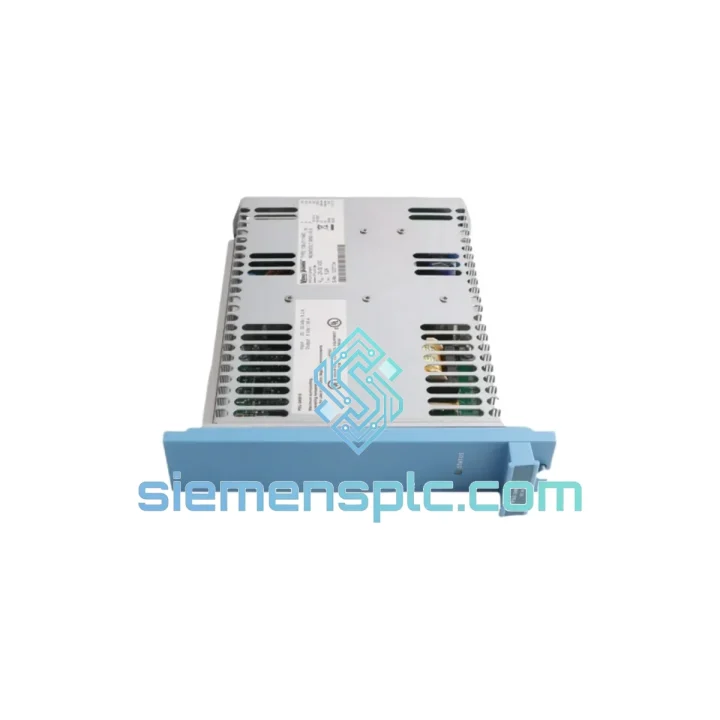
Request verified availability, condition, replacement risk review, packing options and courier lead time for FS-IOBUS-CPIO4.
Click Request Quote and the part number is inserted into the inquiry form automatically.
Core fields for model confirmation and RFQ routing. Detailed product narrative remains below.
The Honeywell FS-IOBUS-CPIO4 is a four-port I/O bus communication module engineered for the Honeywell Safety Manager (FSC) platform. Its primary function is to establish and maintain the high-integrity data path between the FSC central processing unit and distributed field I/O modules. In safety instrumented systems (SIS) operating under IEC 61508 and IEC 61511, the bus layer is not a passive conduit — it is an active participant in the safety function. The FS-IOBUS-CPIO4 fulfills this role through a proprietary, time-deterministic bus protocol that guarantees bounded cycle latency, enabling the CPU to execute safety logic with predictable scan times regardless of I/O load variation.
Each of the four bus ports on the FS-IOBUS-CPIO4 supports a dedicated I/O module segment, allowing up to four field I/O modules to be addressed per bus coupler instance. The module mounts directly within the FSC chassis backplane, drawing power from the backplane supply rail and communicating with the CPU via the internal FSC system bus. This architecture eliminates external cabling between the bus coupler and the processor, reducing potential failure points and simplifying the overall system bill of materials.
The FS-IOBUS-CPIO4 is validated for SIL 3 operation, meaning it has been assessed under IEC 61508 Part 2 for both hardware fault tolerance and systematic capability. The module’s diagnostic coverage — the fraction of dangerous hardware failures detected by internal self-test routines — meets the threshold required for use in SIL 3 safety instrumented functions (SIF). This makes it suitable for emergency shutdown (ESD), fire and gas (F&G), and burner management system (BMS) applications where the consequences of undetected failure are severe.
Physically, the module is constructed to withstand the thermal and electromagnetic environment typical of process industry control rooms and marshalling cabinets. The operating temperature range of 0°C to +60°C covers the majority of indoor industrial installations, and the module’s EMC design complies with the immunity requirements of IEC 61000-4 series standards, including conducted and radiated immunity levels appropriate for industrial environments. The housing is designed for tool-free insertion and extraction from the FSC chassis, supporting maintenance operations without requiring system shutdown in redundant configurations.
For procurement engineers and system integrators, the FS-IOBUS-CPIO4 is a long-lifecycle component within the Honeywell Safety Manager product family. Honeywell maintains backward compatibility across FSC chassis generations, and the module is supported under Honeywell’s standard lifecycle policy, which includes continued spare parts availability and firmware support for a defined period post-production. This is a critical consideration for brownfield SIS upgrade projects where minimizing system-wide hardware changes is a project constraint.
Real-time Stock & RFQ: [email protected] | WhatsApp: +86 18359268345
| Parameter | Specification |
|---|---|
| Part Number | FS-IOBUS-CPIO4 |
| Manufacturer | Honeywell Process Solutions |
| Series | Safety Manager / FSC (Fail-Safe Controller) |
| Module Function | I/O Bus Communication Coupler, 4-Port |
| Bus Protocol | Proprietary FSC I/O Bus (time-deterministic) |
| Number of I/O Ports | 4 (each port addresses one I/O module segment) |
| Safety Integrity Level | SIL 3 capable per IEC 61508 / IEC 61511 |
| Hardware Fault Tolerance | HFT = 1 in redundant bus configuration |
| Operating Temperature | 0°C to +60°C |
| Storage Temperature | -40°C to +85°C |
| Relative Humidity | 5% to 95% non-condensing |
| Power Supply | Via FSC backplane rail (no external supply required) |
| Mounting | FSC chassis backplane slot, tool-free insertion |
| Weight | Approx. 1,100 g |
| EMC Immunity | IEC 61000-4 series (industrial environment) |
| Certifications | TÜV, CE, IEC 61508, IEC 61511 |
| Country of Origin | United States |
| Warranty | 12 months against manufacturing defects |
The FS-IOBUS-CPIO4 implements a master-slave bus arbitration model in which the FSC CPU acts as the sole bus master and each connected I/O module operates as a slave node. Bus transactions are initiated exclusively by the CPU on a fixed polling cycle, which eliminates the possibility of bus contention and ensures that every I/O module is addressed within a bounded time window. This deterministic polling architecture is a deliberate design choice for safety applications: it allows the CPU’s watchdog timer to detect a missed bus cycle as a diagnostic event, triggering a safe-state transition before a dangerous undetected failure can propagate to the field.
Optical isolation is implemented at each of the four port interfaces. The isolation barrier separates the bus coupler’s internal logic domain from the field-side I/O module circuitry, providing a galvanic break that prevents ground loops and limits the propagation of transient overvoltages from field wiring into the safety CPU domain. The isolation voltage rating is consistent with the requirements of IEC 61010-1 for measurement category II environments, which is the standard reference for process industry field instrumentation.
The module’s internal signal path uses differential signaling on the bus lines, which provides common-mode noise rejection. In process plant environments where variable-frequency drives, large motor contactors, and high-current switching loads generate significant conducted and radiated interference, differential bus signaling maintains signal integrity at the logic level without requiring additional shielding beyond standard cabinet practices. The bus termination resistors are integrated within the module, eliminating the need for external termination components and the associated installation variability.
For redundant bus configurations, two FS-IOBUS-CPIO4 units are deployed in parallel on the same I/O segment. The FSC CPU continuously monitors both bus paths and switches to the secondary path within one bus cycle if the primary path fails a frame integrity check. The switchover is transparent to the safety logic execution — the CPU’s I/O image table is updated from whichever bus path delivers a valid frame first, and the failed path is flagged in the system diagnostic log for maintenance action. This architecture achieves HFT = 1 at the bus layer without requiring any external switching hardware.
Every FS-IOBUS-CPIO4 unit supplied through siemensplc.com is sourced as genuine Honeywell OEM hardware. Units are procured through verified supply channels and undergo incoming inspection covering visual examination, label and date code verification, and functional continuity checks prior to dispatch. A Certificate of Conformance (CoC) is available upon request for safety-critical procurement documentation requirements.
Logistics operations are based in Xiamen, China, a major export hub with direct access to international air freight and sea freight services. Standard in-stock orders are dispatched within 2–3 business days via DHL Express, FedEx International Priority, or UPS Worldwide Expedited, with typical transit times of 3–7 business days to most destinations in Europe, North America, Southeast Asia, and the Middle East. For time-critical procurement, same-day dispatch is available on confirmed in-stock units when orders are placed before 14:00 CST. Export documentation including commercial invoice, packing list, and certificate of origin is prepared for all international shipments. HS code classification and customs value declaration are handled in accordance with the destination country’s import regulations.
Email: [email protected]
WhatsApp: +86 18359268345
Web: siemensplc.com
Location: Xiamen, China
© 2026 siemensplc.com. All rights reserved.
We check the full part number, brand, series and visible nameplate information before quotation.
Sales confirms stock path, condition option, quantity and realistic lead time for export dispatch.
DHL, FedEx, UPS or buyer courier arrangements can be reviewed with packing requirements.
Similar brand or category products for fast comparison and multi-item RFQ lists.