Honeywell
RFQ Ready
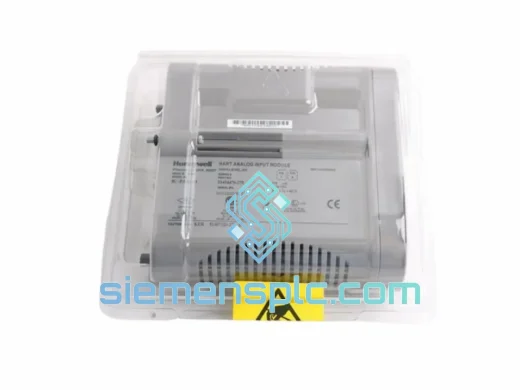
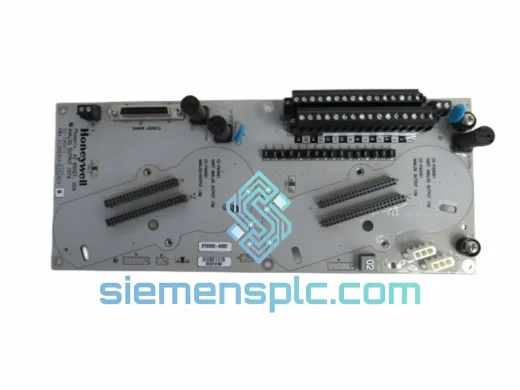
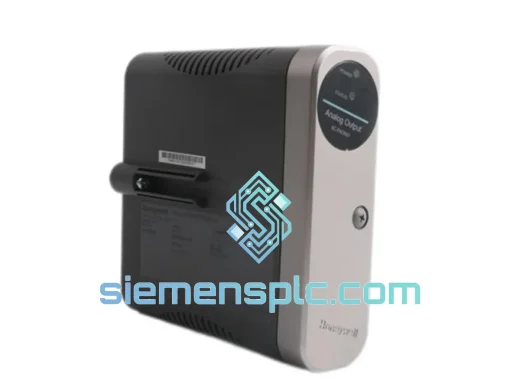
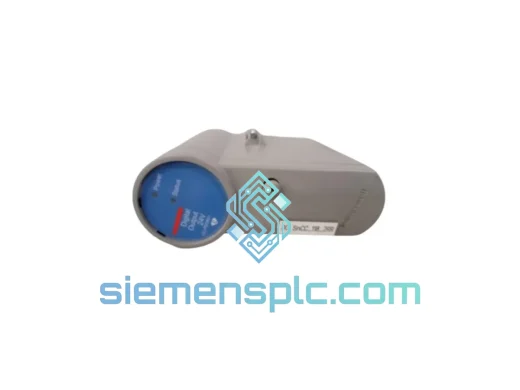
Honeywell CC-PDOB11 Digital Output Module – Experion PKS C300
Experion PKS
Origin US
Digital Output Module
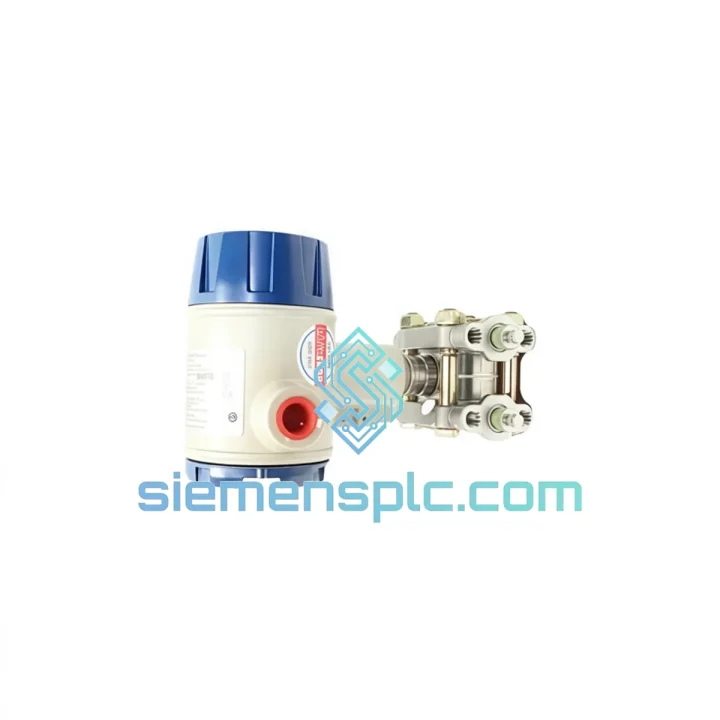
Request verified availability, condition, replacement risk review, packing options and courier lead time for HC-PBUTV3.
Click Request Quote and the part number is inserted into the inquiry form automatically.
Core fields for model confirmation and RFQ routing. Detailed product narrative remains below.
In a distributed control system, the integrity of operator-initiated discrete commands depends entirely on the reliability of the input acquisition layer. The HC-PBUTV3 is Honeywell’s dedicated push button input module engineered for the TDC 3000 and Experion PKS platforms. Unlike software-polled HMI inputs, this module establishes a hardwired signal path from field-mounted push button stations directly into the DCS backplane — eliminating software latency from the command chain and ensuring that emergency stop, permissive, and interlock signals are registered with deterministic timing.
The module occupies a standard HC-series card slot and interfaces with the Universal Control Network (UCN) or Local Control Network (LCN) depending on the subsystem configuration. Its discrete contact closure detection circuit is designed to debounce mechanical switch bounce within hardware, preventing false triggering events that could propagate spurious interlock activations into the process controller. For brownfield TDC 3000 installations where full migration to Experion PKS is deferred, the HC-PBUTV3 remains the only OEM-validated replacement that preserves backplane signal integrity without requiring firmware reconfiguration or I/O mapping changes.
Real-time Stock & RFQ: [email protected] | WhatsApp: +86 18359268345
| Parameter | Specification |
|---|---|
| Part Number | HC-PBUTV3 |
| Manufacturer | Honeywell Process Solutions |
| Module Classification | Push Button Input Module (Discrete Input) |
| Platform Compatibility | Honeywell TDC 3000, Experion PKS (HC-series subsystems) |
| Input Signal Type | Dry contact closure (push button station) |
| Input Logic | Normally Open (NO) / Normally Closed (NC) configurable |
| Debounce Filtering | Hardware-level contact bounce suppression |
| Backplane Interface | HC-series card cage, UCN/LCN compatible |
| Mounting Form Factor | Single-slot card module (rack-mount) |
| Operating Temperature | 0°C to +60°C |
| Storage Temperature | -40°C to +85°C |
| Relative Humidity | 5% to 95% non-condensing |
| Power Consumption | Supplied via backplane (low-power CMOS logic) |
| Country of Origin | United States |
| Weight | Approx. 100 g |
| Warranty | 12 months — covers manufacturing defects and functional failure under normal operating conditions |
| Stock Status | Ready to Ship — contact for real-time availability |
The HC-PBUTV3 is built around a contact-sensing front-end that applies a low-level wetting current across the push button terminals. This wetting current — typically in the milliamp range — is sufficient to break through surface oxidation on aged contacts, a common failure mode in field push button stations exposed to humidity and industrial atmospheres. The result is reliable contact detection even on mechanically worn or environmentally degraded push button assemblies.
At the signal conditioning stage, the module employs optical isolation between the field-side contact circuit and the backplane logic bus. This galvanic barrier is critical in industrial environments where ground potential differences between field devices and the control room can reach several volts, introducing common-mode noise that would corrupt digital input readings in non-isolated designs. The optocoupler stage provides a minimum isolation voltage consistent with IEC 61131-2 requirements for discrete input modules in industrial control systems.
The debounce circuit operates in hardware rather than firmware. Mechanical push buttons exhibit contact bounce — a rapid series of make-and-break events lasting 1–20 ms after actuation. A firmware-based debounce filter introduces variable latency depending on scan cycle load. The HC-PBUTV3’s hardware RC filter and Schmitt trigger circuit resolves bounce within a fixed time window, ensuring that the DCS controller receives a single, clean edge transition regardless of button quality or wear state. This is particularly important for emergency shutdown (ESD) inputs where a single spurious edge must not trigger a plant trip.
EMC performance is addressed through board-level filtering on all field-side signal lines. Transient voltage suppressors (TVS) clamp electrostatic discharge events and fast transients (per IEC 61000-4-4) before they reach the optocoupler stage. The PCB layout follows Honeywell’s internal EMC design rules, with field-side and logic-side ground planes separated and connected only at a single star point to prevent ground loop currents from coupling noise into the digital logic.
Every HC-PBUTV3 unit supplied through siemensplc.com undergoes a structured pre-shipment verification process. Visual inspection confirms label integrity, PCB revision markings, and the absence of physical damage or rework indicators. Functional verification checks contact detection response and backplane interface signal levels against OEM reference parameters. Units supplied as new-in-box retain original Honeywell packaging with date codes and traceability markings intact.
For refurbished units, each module is cleaned, re-inspected at component level, and tested under simulated backplane load conditions before dispatch. A test report is available upon request. All units carry a 12-month warranty covering manufacturing defects and functional failure under specified operating conditions.
Logistics operations are managed from Xiamen, China, with direct access to DHL Express, FedEx International Priority, and UPS Worldwide Express services. Standard export documentation — commercial invoice, packing list, certificate of origin — is prepared for every shipment. For time-critical plant shutdowns, same-day dispatch is available for in-stock units when orders are confirmed before 14:00 CST. Typical transit times: 2–4 business days to Southeast Asia, 3–5 days to Europe and the Middle East, 4–6 days to North and South America. Sea freight consolidation is available for bulk procurement orders.
Email: [email protected]
WhatsApp: +86 18359268345
Web: siemensplc.com
Location: Xiamen, China
© 2026 siemensplc.com. All rights reserved.
We check the full part number, brand, series and visible nameplate information before quotation.
Sales confirms stock path, condition option, quantity and realistic lead time for export dispatch.
DHL, FedEx, UPS or buyer courier arrangements can be reviewed with packing requirements.
Similar brand or category products for fast comparison and multi-item RFQ lists.