Product Overview
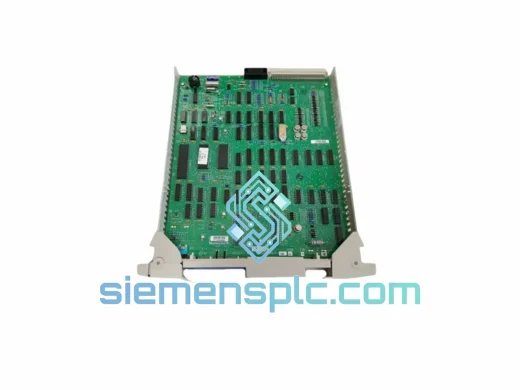
MC-TAIH22 51204170-250 In Stock — Ship Today, Restart Tomorrow
It’s 02:00. Your HPM console is throwing a BAD I/O alarm on a 16-channel HLAI card. The board operator has already called the shift supervisor. You’ve isolated the fault to slot 4 — the MC-TAIH22. Now the only question that matters is: where do you get a replacement before the next shift handover turns into a full production loss event?
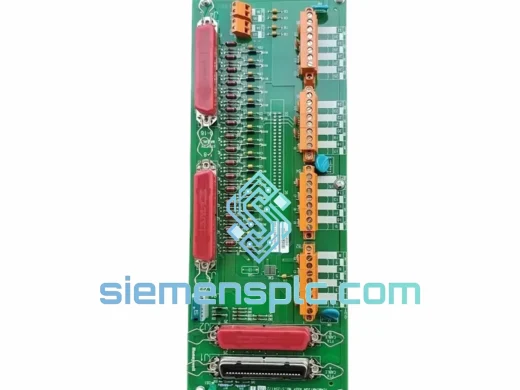
We stock the Honeywell MC-TAIH22 (P/N 51204170-250) in Xiamen. Not “available to order” — physically on the shelf, inspected, and ready to pack the moment your PO hits our inbox. While your OEM quotes you 10–14 weeks and your regional distributor checks three warehouses, we’re already printing the DHL airway bill. That’s the difference between a 4-hour outage and a 4-week shutdown.
Every unit we ship is label-verified against the Honeywell part number, visually inspected for PCB damage, and function-checked before it leaves our facility. We don’t move grey-market boards with sanded labels. What you receive is what the datasheet describes — no surprises on installation day.
URGENT REQUIREMENT? Contact: [email protected] | WhatsApp: +86 18359268345
Quick Technical Datasheet
| Manufacturer |
Honeywell Process Solutions |
| Part Number |
MC-TAIH22 / 51204170-250 ✔ Ready to Ship
|
| Module Function |
High Level Analog Input (HLAI) — 16 differential channels |
| Compatible Platforms |
TotalPlant Solution (TPS), TDC 3000, HPM, APM, LCN |
| Input Signal |
1–5 V DC native; 4–20 mA with 250 Ω shunt at terminal assembly |
| Input Impedance |
>1 MΩ (voltage mode) |
| A/D Resolution |
12-bit successive approximation |
| Accuracy |
±0.1% of full scale at 25°C |
| Channel Isolation |
Optical isolation, channel-to-IOP bus |
| Backplane Power |
5 VDC and 24 VDC via IOP card cage |
| Operating Temperature |
0°C to +60°C |
| Humidity Rating |
5%–95% RH, non-condensing |
| Mounting |
IOP card cage backplane slot (hot-swappable) |
| Certifications |
CE, UL (per TPS platform certification) |
| Country of Origin |
USA |
| Stock Status |
In Stock — Ships within 24 hrs of PO confirmation |
Troubleshooting & Replacement Tips
Ten years of field calls on TPS systems teach you patterns. Here’s what actually happens with a failing MC-TAIH22 — and how to replace it without creating a second problem.
Fault signatures to recognize:
-
“BAD I/O” on HPM console, single slot: Classic HLAI card failure. Before pulling the module, check the IOP backplane connector for bent pins or oxidation — a dirty backplane destroys more cards than actual component failures. Clean the connector with contact cleaner and reseat once before condemning the card.
-
1–4 channels reading BAD while others are normal: Degraded A/D multiplexer or cracked solder joint on the input conditioning stage. Rotate the card to a spare slot — if the same channels fail in the new slot, the module is the culprit. If different channels fail, suspect the terminal assembly wiring.
-
All 16 channels simultaneously go BAD: Don’t immediately blame the card. Measure the IOP backplane 5 VDC and 24 VDC rails at the card edge first. A sagging power rail will kill every module in the cage, not just one. If rails are healthy, the module’s bus interface IC has failed.
-
“IOP COMM FAIL” alarm: Communication dropout between the module and the HPM processor. Reseat the card firmly — the IOP edge connector is a common intermittent fault point after years of thermal cycling. If reseating doesn’t clear it within 30 seconds, the module’s LCN transceiver has failed and the card needs replacement.
-
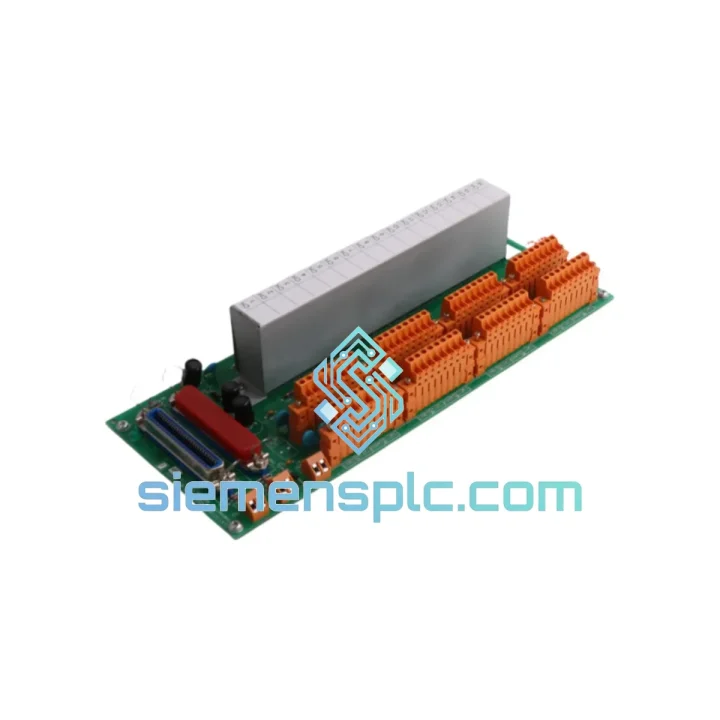
All channels pegged at 0% or 100% PV: Check the terminal assembly first. If your field devices are 4–20 mA transmitters, the 250 Ω shunt resistors must be installed at the TA, not at the module. A missing shunt means the module sees 0 V on every channel — it will look like a dead card when the wiring is actually the issue.
Hot-swap replacement procedure — step by step:
- Verify the replacement MC-TAIH22 carries the same revision suffix as the failed unit (printed on the card edge label). Revision mismatches are uncommon but can cause tag database misalignment on older TPS builds running pre-R500 software.
- In the TPS Engineering Console, place all control loops associated with the affected IOP slot into Manual mode before pulling the card. This prevents downstream PID controllers from acting on stale or zero-value inputs during the swap window.
- Ground yourself to the card cage frame before touching the module. The HLAI input conditioning circuitry is ESD-sensitive. Use a wrist strap if your site safety protocol requires it.
- Extract the failed card and insert the replacement into the same slot. TPS IOP backplanes are hot-swappable — no HPM restart, no LCN disruption.
- Watch the module status LED. Within 10–30 seconds, the HPM auto-downloads the existing I/O configuration from the database. Solid green = communication established and configuration loaded.
- Verify all 16 channel PVs are reading within expected engineering unit ranges on the TPS display. Return loops to Auto one at a time, confirming each PV is stable before closing the loop.
- If the module does not auto-configure after 60 seconds, initiate a manual IOP download from the Engineering Console: select the slot, choose “Download Configuration,” and confirm. This is typically required only if the TPS database was modified while the slot was vacant.
Reliability in Harsh Conditions
The MC-TAIH22 was not designed for a climate-controlled server room. It was built for the environments where process control actually happens — compressor stations, refinery control rooms with inadequate HVAC, offshore platform cabinets, and chemical plant marshalling panels where ambient conditions are rarely ideal.
-
Vibration tolerance: PCB layout and component mounting comply with IEC 68-2-6 vibration standards. Conformal coating on the board surface prevents micro-fractures from sustained mechanical stress — a real concern in facilities with large rotating equipment nearby.
-
Thermal range: Rated 0°C to +60°C operating, with storage down to -40°C. The module handles the temperature swings common in outdoor equipment rooms — from winter cold-starts in northern climates to summer heat-soak in Middle Eastern facilities where cabinet temperatures routinely exceed 45°C ambient.
-
Moisture resistance: 95% RH non-condensing rating, with conformal coating providing a barrier against moisture ingress in coastal refineries and tropical environments. The optical isolation architecture eliminates ground loops caused by moisture-induced leakage between field wiring and the control bus — a failure mode that’s notoriously difficult to diagnose.
-
EMI/RFI immunity: Channel-to-bus optical isolation and the shielded IOP backplane architecture suppress common-mode noise from VFDs, large motor starters, and high-voltage switchgear sharing the same facility. In petrochemical and power generation plants, this isn’t a theoretical concern — it’s a daily operating condition.
-
Long-term component stability: Industrial-grade components selected for 10+ year MTBF in continuous operation. Properly stored units sourced from decommissioned plants with documented service histories routinely have decades of remaining service life.
Global Express Logistics
Our warehouse is in Xiamen — one of China’s most efficient export hubs, with direct DHL Express and FedEx International Priority connections to every major industrial region. Here’s exactly how your emergency order moves from our shelf to your site:
-
Order confirmed before 14:00 CST: Module pulled, inspected, and packed in anti-static foam with full export documentation prepared same day.
-
Day 1 — Export clearance: Commercial invoice, packing list, and HS code 8537.10 documentation submitted. Shipment handed to DHL/FedEx for same-day pickup. Tracking number issued to you within 2 hours of carrier handover.
-
Transit times: Southeast Asia 2–3 days | Middle East 3–4 days | Europe 3–5 days | North America 4–5 days. FedEx International Priority available as an alternative for time-critical shipments.
-
Customs documentation: We prepare complete export paperwork including country of origin certificate and EAR99 export classification confirmation. Properly documented shipments clear customs faster — we’ve seen poorly documented industrial parts sit in customs for a week while a plant stays down.
-
Delivery confirmation: Proof of delivery sent to your procurement contact. For critical shutdowns, we coordinate directly with your site logistics team on receiving arrangements.
We’ve shipped to refineries in Saudi Arabia, power stations in Germany, chemical facilities in India, and pulp mills in Scandinavia. The process is identical every time: documented, traceable, and fast.
Contact Information
Email: [email protected]
WhatsApp: +86 18359268345
Web: siemensplc.com
© 2026. All rights reserved.