Honeywell
RFQ Ready
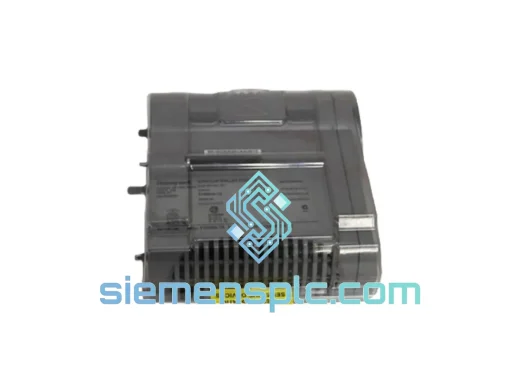
Honeywell SPCL000000003593 Safety Controller Module
Safety Manager
Origin US
Safety Controller Module
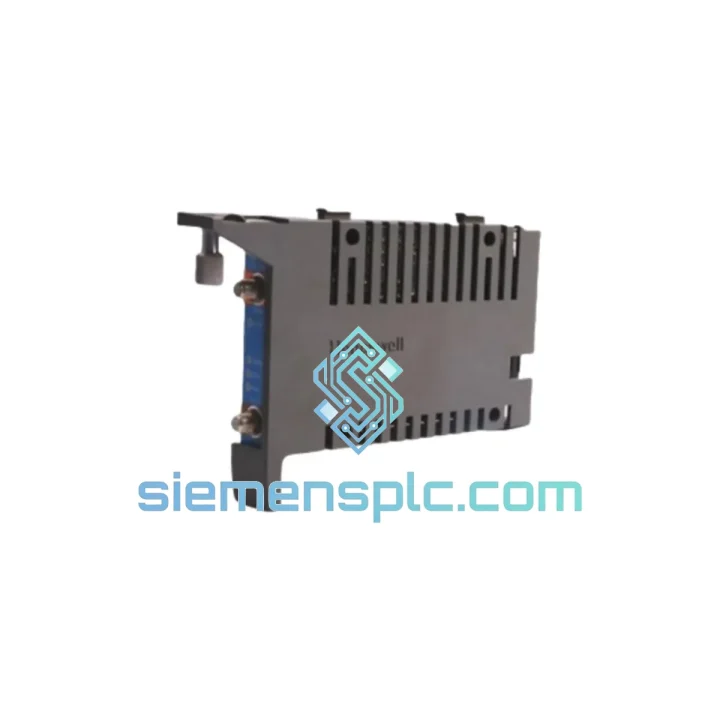
Request verified availability, condition, replacement risk review, packing options and courier lead time for SPCL000000003260.
Click Request Quote and the part number is inserted into the inquiry form automatically.
Core fields for model confirmation and RFQ routing. Detailed product narrative remains below.
The Honeywell SPCL000000003260 is a certified logic controller module within the Honeywell Safety Manager platform, purpose-engineered for Safety Instrumented Systems (SIS) operating under IEC 61508 SIL 3 and IEC 61511 requirements. Unlike general-purpose PLC hardware, this module is architected around a deterministic, fault-tolerant execution model where every scan cycle is bounded, every diagnostic is hardware-enforced, and every failure mode is pre-classified against a defined safe state.
In a typical process safety loop — from field transmitter through logic solver to final element — the SPCL000000003260 occupies the logic solver position. Its role is not merely to execute ladder or function block programs; it is to maintain a provable, auditable safety function under all foreseeable fault conditions, including single-point hardware failures, common-cause failures, and systematic software faults. This distinction defines the engineering philosophy embedded in every layer of the module’s design.
Real-time Stock & RFQ: [email protected] | WhatsApp: +86 18359268345
| Part Number | SPCL000000003260 |
| Brand | Honeywell |
| Series | Safety Manager (SM / SM SC) |
| Module Category | Safety Logic Controller / CPU Module |
| Safety Integrity Level | SIL 3 (IEC 61508), SIL 2 capable per IEC 61511 |
| Architecture | Triple Modular Redundancy (TMR) with 2oo3 voting logic |
| Backplane Bus Protocol | Proprietary high-speed deterministic safety bus |
| Scan Cycle Time | Configurable; typical safety application <100 ms bounded |
| Processor | Dual-core safety-rated processor with cross-checking |
| Memory | Non-volatile flash for program retention; battery-backed SRAM for runtime state |
| Communication Ports | Ethernet (Modbus TCP, OPC-DA), RS-485 serial, proprietary SM bus |
| Operating Voltage | 24 V DC (nominal), 18–32 V DC operating range |
| Power Consumption | ≤ 15 W (module only, excluding I/O load) |
| Operating Temperature | 0 °C to +60 °C |
| Storage Temperature | -40 °C to +85 °C |
| Relative Humidity | 5% to 95% non-condensing |
| EMC Compliance | IEC 61000-4-2 (ESD), IEC 61000-4-4 (EFT), IEC 61000-4-5 (Surge) |
| Vibration Resistance | IEC 60068-2-6, 10–150 Hz, 1 g |
| Shock Resistance | IEC 60068-2-27, 15 g / 11 ms half-sine |
| Protection Rating | IP20 (panel-mounted installation) |
| Certifications | TÜV Rheinland, IEC 61508 Ed.2, ATEX Zone 2 (with approved enclosure) |
| Weight | 1,600 g (approx.) |
| Country of Origin | United States |
| Warranty | 12 months from date of shipment |
| Condition | Genuine OEM — New / Surplus New |
The SPCL000000003260 implements a Triple Modular Redundancy (TMR) architecture at the processor level. Three independent processing channels execute identical safety programs in parallel. A hardware-implemented 2-out-of-3 (2oo3) voter continuously compares channel outputs on every scan boundary. If one channel deviates — whether due to a transient bit-flip from cosmic radiation, a stuck register, or a clock drift — the voter isolates the faulted channel and maintains the safety output from the two agreeing channels without interrupting the process. This architecture achieves a Probability of Failure on Demand (PFD) figure consistent with SIL 3 classification without requiring a process shutdown for single-channel faults.
Backplane Bus Determinism: The module communicates with I/O chassis over a time-division multiplexed safety bus. Each I/O slot is allocated a fixed time window per scan cycle, eliminating bus contention and guaranteeing bounded latency from field signal acquisition to logic execution. This is architecturally distinct from standard Ethernet-based I/O buses where latency is probabilistic. The deterministic bus design is a prerequisite for meeting the response time requirements of emergency shutdown (ESD) and fire-and-gas (F&G) applications where actuation delay must be provably bounded.
EMC Hardening: The module’s PCB layout employs multi-layer ground plane separation between analog reference circuits and digital switching domains. Transient suppression diodes (TVS) are placed at all external interface connectors. The backplane connector uses differential signaling with common-mode rejection, providing immunity to conducted interference up to the levels specified in IEC 61000-4-4 (±2 kV EFT) and IEC 61000-4-5 (±1 kV surge, line-to-line). In high-noise environments — such as substations with large motor drives or arc furnace installations — this hardware-level EMC design prevents spurious trips that would otherwise be caused by software-only filtering approaches.
Watchdog and Self-Test Architecture: An independent hardware watchdog timer, clocked from a separate oscillator circuit, monitors the main processor’s execution cadence. If the safety program fails to complete a scan within the configured watchdog timeout — due to an infinite loop, stack overflow, or processor hang — the watchdog asserts a hardware reset and drives all outputs to their defined safe state. Additionally, the module executes a continuous background self-test (BIST) covering RAM cell integrity, ROM checksum verification, and CPU register file validation. Detected faults are logged to a non-volatile fault journal accessible via the engineering workstation without requiring a module restart.
Every Honeywell SPCL000000003260 unit dispatched from our Xiamen, China facility is a genuine Honeywell OEM component. We do not supply remanufactured, relabeled, or third-party substitute hardware. Each unit undergoes a structured pre-shipment verification protocol: visual inspection of housing, label, and connector integrity; serial number cross-reference against Honeywell’s OEM traceability records; and a power-on functional check where test fixtures are available.
Units are packaged in anti-static bags, placed in foam-lined rigid cartons, and sealed with tamper-evident tape. For air freight shipments, we provide full commercial invoice, packing list, HS code declaration (8537.10), and certificate of origin. Typical dispatch from Xiamen to major industrial hubs — Rotterdam, Houston, Singapore, Dubai — is 3–5 business days via DHL Express or FedEx International Priority. Sea freight consolidation is available for multi-unit orders requiring cost optimization. All export documentation complies with applicable Chinese customs regulations and destination-country import requirements.
A 12-month warranty covers manufacturing defects and verified OEM component failures from the date of shipment. Warranty claims are processed with a replacement-first policy to minimize your downtime exposure. Technical support — including configuration guidance, compatibility verification, and integration troubleshooting — is provided by our engineering team at no additional charge.
Email: [email protected]
WhatsApp: +86 18359268345
Web: siemensplc.com
Location: Xiamen, China
© 2026 siemensplc.com. All rights reserved.
We check the full part number, brand, series and visible nameplate information before quotation.
Sales confirms stock path, condition option, quantity and realistic lead time for export dispatch.
DHL, FedEx, UPS or buyer courier arrangements can be reviewed with packing requirements.
Similar brand or category products for fast comparison and multi-item RFQ lists.