Honeywell
RFQ Ready
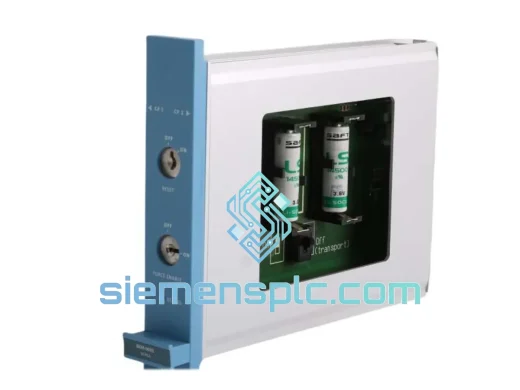
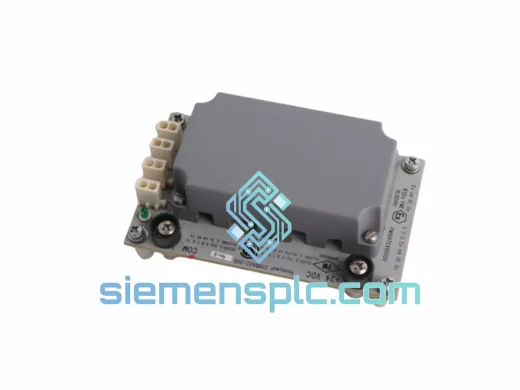
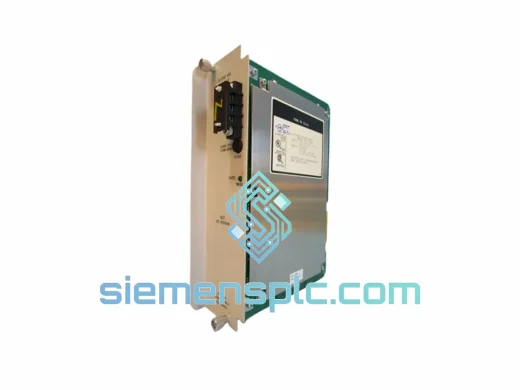
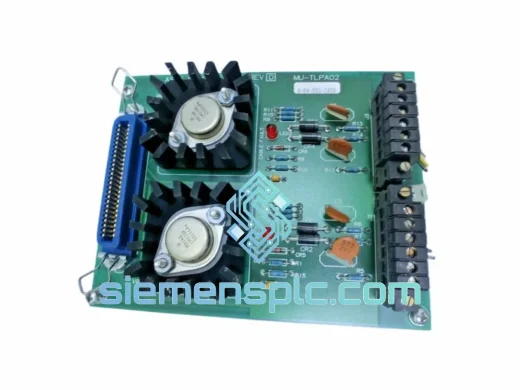
Honeywell MU-TLPA02 51304467-100 Power Adapter Board
Experion PKS
Origin US
Power Adapter Board
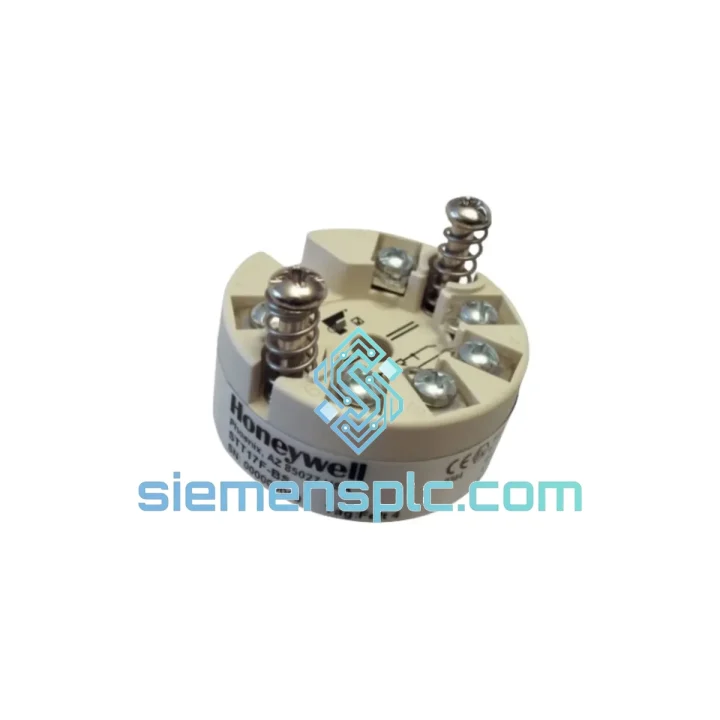
Request verified availability, condition, replacement risk review, packing options and courier lead time for STT173-BS.
Click Request Quote and the part number is inserted into the inquiry form automatically.
Core fields for model confirmation and RFQ routing. Detailed product narrative remains below.
In a continuous process plant, the temperature measurement loop is not a passive data channel — it is an active control element whose signal integrity directly determines the stability of PID output, the accuracy of cascade setpoints, and the reliability of safety interlock logic. The Honeywell STT173-BS is a loop-powered, HART-protocol smart temperature transmitter from the STT 3000 series, engineered to deliver sub-0.1°C measurement accuracy with deterministic signal conditioning across a broad range of thermocouple and RTD sensor inputs. Its architecture is built around a 16-bit sigma-delta analog-to-digital converter with on-chip cold junction compensation, enabling the transmitter to resolve fine thermal gradients that conventional 12-bit instruments cannot distinguish.
The STT173-BS occupies a specific functional role in the STT 3000 platform: it is the field-mount variant optimized for DIN rail installation in marshalling cabinets or head-mount configurations directly on thermowell assemblies. Unlike its Foundation Fieldbus counterpart (STT850), the STT173-BS operates on the 4–20 mA analog backbone with superimposed HART FSK communication at 1200 baud, making it backward-compatible with legacy DCS I/O infrastructure while simultaneously enabling digital asset management through HART multiplexers or wireless HART adapters. This dual-mode operation is the defining characteristic that makes the STT173-BS a practical upgrade path for plants transitioning from conventional analog instrumentation to digitally managed field device networks without requiring a full I/O card replacement cycle.
Real-time Stock & RFQ: [email protected] | WhatsApp: +86 18359268345
| Parameter | Specification |
|---|---|
| Model Number | STT173-BS |
| Series | STT 3000 Smart Temperature Transmitter |
| Manufacturer | Honeywell Process Solutions |
| Communication Protocol | HART Rev. 5/6/7 (FSK, 1200 baud) over 4–20 mA loop |
| Analog Output | 4–20 mA DC, loop-powered (2-wire) |
| Input Types — Thermocouple | Type B, E, J, K, N, R, S, T (per IEC 60584) |
| Input Types — RTD | Pt100, Pt200, Pt500, Pt1000 (2-, 3-, 4-wire, per IEC 60751); Ni100, Ni120 |
| Input Types — Direct | mV (–10 to +100 mV), Ohm (0–400 Ω, 0–2000 Ω) |
| Measurement Accuracy | ±0.1°C typical (RTD Pt100, 0–200°C range) |
| Long-Term Stability | <0.1°C per year drift (typical, Pt100 input) |
| Supply Voltage | 12–42.4 VDC (loop-powered, no separate auxiliary supply) |
| Minimum Loop Resistance | 250 Ω (required for HART communication) |
| Ambient Temperature Range | –40°C to +85°C (–40°F to +185°F) |
| Storage Temperature | –50°C to +100°C |
| Humidity | 0–99% RH, non-condensing |
| EMC Compliance | EN 61326-1 (Industrial), IEC 61000-4-2/3/4/5/6/8 |
| Enclosure Protection | IP20 (DIN rail mount); IP65/IP67 available in head-mount housing |
| Hazardous Area Approvals | ATEX II 1G Ex ia IIC T4 Ga; IECEx; FM (intrinsically safe variants) |
| Safety Certification | SIL 2 capable (per IEC 61508, with SIL assessment documentation) |
| Mounting | DIN EN 50022 (35 mm DIN rail) or direct sensor head mount |
| Wiring Terminals | Screw-type, 0.2–2.5 mm² conductor cross-section |
| Weight | Approx. 120 g (module only, without housing) |
| Warranty | 12 months from date of shipment (siemensplc.com quality guarantee) |
The STT173-BS signal chain begins at the sensor input terminals, where a precision current source excites RTD elements at a controlled 1 mA (4-wire) or 0.5 mA (3-wire) to minimize self-heating error — a parameter that becomes significant in Pt100 applications where a 1 mA excitation across a 100 Ω element dissipates 0.1 mW, producing a self-heating offset of approximately 0.01–0.05°C depending on sensor thermal mass. The transmitter’s input multiplexer sequentially samples the sensor signal, the reference resistor, and the cold junction thermistor (for thermocouple inputs) at a rate determined by the sigma-delta modulator’s oversampling ratio, typically 64× to 256×, which provides inherent 50/60 Hz noise rejection without requiring external line-frequency filters.
The 16-bit sigma-delta ADC converts the differential input voltage with a resolution of approximately 1.5 µV at full scale, corresponding to better than 0.01°C resolution on a Pt100 input across a 200°C span. The digital output of the ADC feeds a linearization algorithm stored in non-volatile EEPROM, which applies the IEC 60584 thermocouple polynomial or the IEC 60751 Callendar-Van Dusen equation for RTD inputs. This on-board linearization eliminates the need for the DCS to perform sensor-type-specific linearization in software, reducing scan cycle load on the controller and ensuring that the engineering unit value presented on the 4–20 mA output is already fully linearized and compensated.
EMC hardening in the STT173-BS is implemented at three levels. At the PCB level, the analog input stage uses a differential topology with common-mode rejection ratio (CMRR) exceeding 120 dB at DC and 80 dB at 50/60 Hz, suppressing ground loop interference that is endemic in large industrial installations where earth potential differences of several volts are common. At the module boundary, transient voltage suppressors (TVS) rated to IEC 61000-4-5 (2 kV surge, 1.2/50 µs waveform) protect the input terminals against lightning-induced surges conducted through field wiring. The HART modem section uses a bandpass filter centered at 1200 Hz with a 3 dB bandwidth of approximately ±500 Hz, providing adequate rejection of 50/60 Hz power frequency interference while maintaining HART signal integrity at the 0.5 mA peak-to-peak FSK modulation level specified by the HART Communication Foundation.
The sensor backup function — a distinguishing feature of the STT 3000 platform — operates through a hardware comparator that monitors the primary sensor input impedance. When the measured impedance exceeds a configurable threshold (indicating open-circuit sensor failure), the transmitter’s internal logic switches the ADC input multiplexer to the secondary sensor channel within one measurement cycle (typically <500 ms), without interrupting the 4–20 mA output beyond the transient caused by the actual temperature difference between the two sensor locations. This failover mechanism is implemented in hardware logic rather than firmware, ensuring that it operates independently of the microcontroller’s execution state and is therefore not subject to firmware bugs or watchdog reset delays.
Every Honeywell STT173-BS unit supplied through siemensplc.com is sourced from verified distribution channels with full manufacturer traceability. Each unit carries Honeywell’s original factory label, holographic authenticity marking, and is accompanied by the manufacturer’s certificate of conformance. Our procurement process excludes gray-market and refurbished units; all stock is new, factory-sealed, and stored in climate-controlled conditions at our Xiamen warehouse to prevent humidity-induced PCB degradation during storage.
Pre-shipment inspection includes visual verification of label authenticity, model code confirmation against the purchase order, and packaging integrity check. For orders requiring functional verification, HART communication testing is available upon request, with test records provided as part of the shipment documentation package.
Logistics from Xiamen, China covers all major international freight modes. Express courier (DHL, FedEx, UPS) delivers to most destinations within 3–7 business days. Air freight consolidation is available for larger orders requiring faster transit than sea freight but with lower per-unit cost than express courier. Full export documentation — commercial invoice, packing list, certificate of origin, and HS code classification — is prepared for each shipment to facilitate customs clearance in the destination country. For orders to the EU, REACH and RoHS compliance documentation is available upon request.
All units supplied by siemensplc.com carry a 12-month quality warranty from the date of shipment, covering manufacturing defects and premature failure under normal operating conditions. Warranty claims are processed within 5 business days of receipt of the returned unit, with replacement or credit issued upon confirmation of the defect.
Email: [email protected]
WhatsApp: +86 18359268345
Web: siemensplc.com
Location: Xiamen, China
© 2026 siemensplc.com. All rights reserved.
We check the full part number, brand, series and visible nameplate information before quotation.
Sales confirms stock path, condition option, quantity and realistic lead time for export dispatch.
DHL, FedEx, UPS or buyer courier arrangements can be reviewed with packing requirements.
Similar brand or category products for fast comparison and multi-item RFQ lists.