Honeywell
RFQ Ready
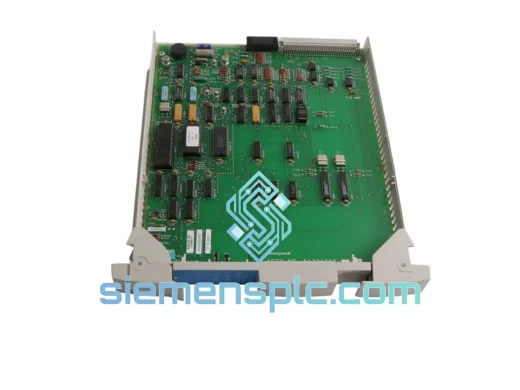
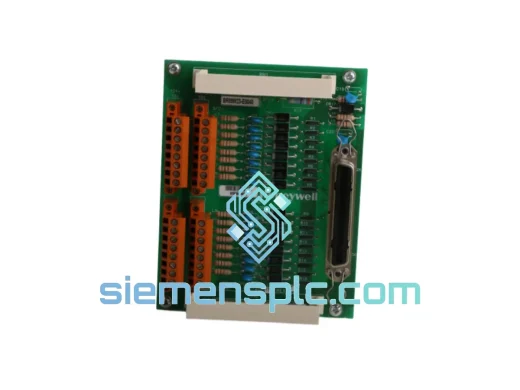
Honeywell SC-PCMX01 51307195-175 DCS Terminal Unit
Experion PKS
Origin US
DCS Terminal Unit
Request verified availability, condition, replacement risk review, packing options and courier lead time for TC-FXX102.
Click Request Quote and the part number is inserted into the inquiry form automatically.
Core fields for model confirmation and RFQ routing. Detailed product narrative remains below.
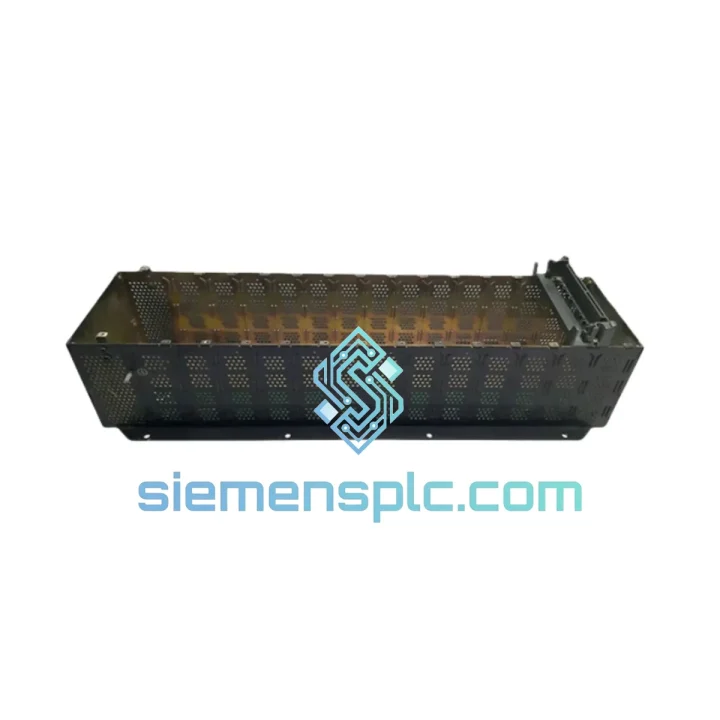
The Honeywell TC-FXX102 (TotalPlant Solution platform) and its functionally equivalent counterpart TK-FXX102 (TotalPlant Alcont platform) are 10-slot passive backplane racks that form the structural and electrical foundation of every TPS/TK distributed control node. In a DCS architecture, the rack is not a passive enclosure — it is the physical medium through which the backplane bus propagates controller scan cycles, I/O module addressing, and power distribution across all installed cards. Without a mechanically and electrically sound rack, deterministic communication between the node controller and its I/O modules cannot be guaranteed.
Deployed across refineries, chemical complexes, power generation facilities, and pharmaceutical batch plants, the TC-FXX102 / TK-FXX102 remains the standard 10-slot form factor for TPS/TK node expansion. Its continued availability is a maintenance-critical requirement for any plant operating Honeywell’s proven distributed control infrastructure — particularly as original equipment ages beyond its design service life and spare-part sourcing becomes the primary risk vector for unplanned downtime.
Real-time Stock & RFQ: [email protected] | WhatsApp: +86 18359268345
| Parameter | Specification |
|---|---|
| Part Numbers | TC-FXX102 (TPS) / TK-FXX102 (TK) |
| Slot Count | 10 module slots |
| Compatible Platform | Honeywell TotalPlant Solution (TPS) / TotalPlant Alcont (TK) |
| Backplane Bus Type | Proprietary high-speed TPS/TK parallel bus |
| Mounting Standard | 19-inch rack panel / DIN-rail compatible enclosure |
| Power Rail Architecture | Integrated backplane power distribution rails (+5 VDC, +24 VDC logic) |
| Backplane Connector Type | Multi-pin edge connector, gold-plated contact surface |
| Operating Temperature | 0 °C to +60 °C (32 °F to 140 °F) |
| Storage Temperature | -40 °C to +85 °C |
| Relative Humidity | 5% to 95% non-condensing |
| Mechanical Weight | Approx. 1,400 g (bare rack, no modules) |
| Enclosure Compatibility | Standard 19-inch industrial control cabinet |
| Warranty | 12 months from date of shipment |
The TC-FXX102 / TK-FXX102 rack functions as a passive backplane, but its electrical design carries significant engineering consequence. The backplane bus embedded within the rack PCB is a parallel, time-multiplexed communication medium. The node controller — typically a TC-CCR014 or TC-CCR016 — acts as the bus master, issuing addressed read/write cycles to each I/O module slot at a fixed scan rate. The rack’s backplane traces must maintain controlled impedance across all 10 slot positions to prevent signal reflection and timing skew that would corrupt module addressing.
Gold-plated edge connectors at each slot position are a deliberate design choice for industrial environments. Gold’s low contact resistance (typically below 10 mΩ per contact pair) and resistance to oxidation ensure that connector interface resistance remains stable over years of thermal cycling — a critical factor in environments where cabinet temperatures fluctuate between cold startups and full-load thermal steady state. Tin-plated alternatives degrade measurably within 3–5 years under the same conditions.
The integrated power distribution rails eliminate the need for individual module power wiring, reducing the number of discrete connection points in the node by a factor proportional to the module count. Each power rail is a low-impedance copper plane that distributes +5 VDC logic supply and +24 VDC field power with minimal voltage drop across the full 10-slot span. This architecture also provides a common ground reference plane, which is the primary mechanism for suppressing common-mode noise induced by nearby high-current field devices.
From an EMC perspective, the rack’s backplane ground plane acts as a Faraday shield for the bus traces routed above it. This shielding geometry attenuates capacitively coupled interference from external sources — particularly relevant in environments with variable-frequency drives, large motor starters, or high-voltage switchgear in adjacent panels. The rack’s mechanical steel chassis provides an additional layer of magnetic shielding against low-frequency inductive interference.
The passive nature of the backplane — no active components, no firmware — means the rack itself introduces zero failure modes related to software, firmware corruption, or configuration drift. Its failure modes are strictly mechanical (connector wear, PCB trace fracture from vibration) or environmental (corrosion, thermal fatigue). Both failure modes are detectable through periodic visual inspection and continuity testing, making the rack one of the most maintainable components in the TPS/TK node.
Every TC-FXX102 / TK-FXX102 unit dispatched from our Xiamen, China facility undergoes a structured pre-shipment verification protocol. Backplane connector integrity is assessed visually under magnification for pin deformation, oxidation, and PCB trace condition. Electrical continuity is verified across all bus traces and power rails using calibrated test equipment, with results logged against the unit serial number. Units designated for functional verification are powered and loaded with test modules for a minimum 48-hour burn-in period before release.
Shipping is executed from Xiamen, China — a major international logistics hub with direct access to DHL Express, FedEx International Priority, UPS Worldwide Express, and consolidated sea freight services for bulk orders. Standard export documentation is provided as a matter of course: commercial invoice, packing list, country of origin certificate, and test report. For orders requiring specific customs classification or end-user documentation, our logistics team coordinates directly with the consignee’s import agent.
Transit times to major industrial regions: Europe 3–5 business days (air), North America 3–5 business days (air), Southeast Asia 2–3 business days (air), Middle East 4–6 business days (air). Sea freight options are available for bulk procurement with lead times confirmed at order stage. All shipments are insured and tracked from dispatch to delivery confirmation.
Email: [email protected]
WhatsApp: +86 18359268345
Web: siemensplc.com
Location: Xiamen, China
© 2026 siemensplc.com. All rights reserved.
We check the full part number, brand, series and visible nameplate information before quotation.
Sales confirms stock path, condition option, quantity and realistic lead time for export dispatch.
DHL, FedEx, UPS or buyer courier arrangements can be reviewed with packing requirements.
Similar brand or category products for fast comparison and multi-item RFQ lists.