Honeywell
RFQ Ready
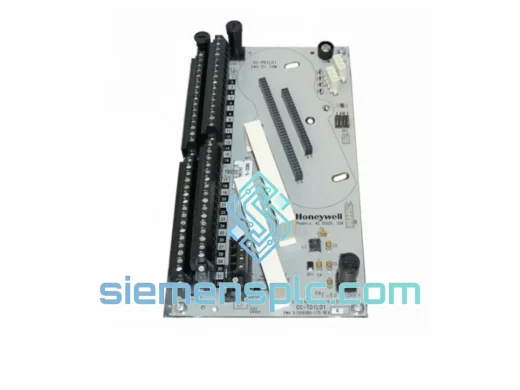
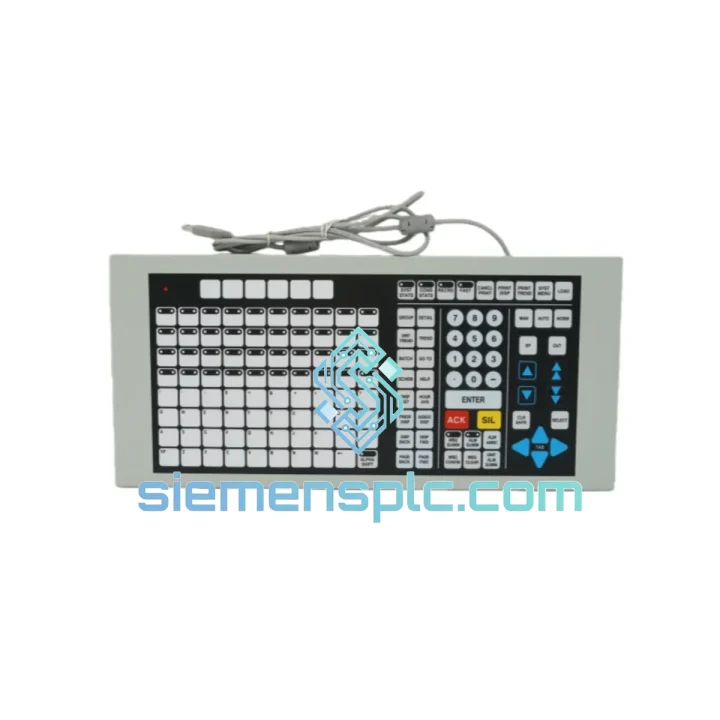
Honeywell 51196694-904 Keyboard Interface Module
TDC 3000
Origin US
DCS Keyboard Interface Module
Request verified availability, condition, replacement risk review, packing options and courier lead time for TP-DSOEP1-100.
Click Request Quote and the part number is inserted into the inquiry form automatically.
Core fields for model confirmation and RFQ routing. Detailed product narrative remains below.
The Honeywell TP-DSOEP1-100 is a dedicated desk-mount operator entry panel engineered for deployment within Honeywell’s TotalPlant™ Distributed Control System (DCS) platform. Its primary function is to serve as the physical command interface between the process operator and the DCS supervisory layer — handling alarm acknowledgment, setpoint entry, loop mode switching, and discrete command dispatch without routing through a general-purpose workstation keyboard. In high-consequence process environments such as refinery crude units, ethylene crackers, and combined-cycle power plants, this separation of operator input from engineering workstation functions is a deliberate architectural decision that reduces the probability of inadvertent configuration changes during live process operation.
The panel connects to the TotalPlant operator console via the Local Control Network (LCN) or Universal Control Network (UCN) bus, depending on the console generation. Its embedded firmware interprets keystrokes as structured DCS command objects rather than raw ASCII sequences, which means the host system receives validated, context-aware operator actions — not generic keyboard events. This distinction is significant for audit trail integrity and for systems operating under IEC 61511 functional safety requirements, where operator action logging must be unambiguous and traceable to a specific physical device.
Real-time Stock & RFQ: [email protected] | WhatsApp: +86 18359268345
| Parameter | Specification |
|---|---|
| Part Number / SKU | TP-DSOEP1-100 |
| Manufacturer | Honeywell Process Solutions |
| Product Series | TotalPlant™ (TP Series) |
| Form Factor | Desk-mount operator console panel |
| Primary Function | Operator entry, alarm acknowledgment, loop command dispatch |
| Network Interface | LCN / UCN bus (TotalPlant console-dependent) |
| Operating Voltage | Supplied via console backplane (no external PSU required) |
| Operating Temperature | 0°C to +50°C (32°F to 122°F) |
| Storage Temperature | -20°C to +70°C |
| Relative Humidity | 5% to 95% non-condensing |
| EMC Compliance | Designed to IEC 61000-4 series (ESD, EFT, surge, conducted RF) |
| Weight | Approx. 800 g |
| Suffix Designation | -100: Standard configuration, North American market |
| Warranty | 12 months from date of shipment (genuine OEM units) |
The TP-DSOEP1-100 is not a passive input device. Its internal microcontroller pre-processes operator keystrokes and encodes them into structured command frames before transmission onto the LCN bus. This architecture offloads input validation from the operator station host processor, reducing the latency between physical key actuation and DCS acknowledgment — a measurable advantage in alarm-dense scenarios where an operator may need to acknowledge multiple alarms within a 2–3 second window.
EMC Design: The panel’s PCB layout incorporates ground plane segmentation between the keyswitch matrix and the bus interface circuitry. This prevents high-frequency transients generated by key actuation (typically 1–10 MHz range due to contact bounce) from coupling into the LCN bus driver. Ferrite bead filtering is applied at the bus connector pins, attenuating common-mode noise above 25 MHz. In control room environments where variable-frequency drives (VFDs) and SCR-based power controllers are operating in adjacent cabinets, this filtering is not cosmetic — it is the difference between reliable bus communication and intermittent frame errors.
Keyswitch Matrix Architecture: The panel uses a scanned matrix topology with hardware debounce logic implemented in discrete RC networks rather than firmware polling. This means debounce timing is deterministic and not subject to firmware interrupt latency — a relevant consideration for safety-instrumented system (SIS) adjacent applications where input timing must be auditable.
Backplane Power Isolation: Power draw from the console backplane is regulated through an onboard DC-DC converter with input filtering rated to reject ±20% supply voltage variation. This protects the panel’s logic circuitry from backplane noise generated by other console modules sharing the same power rail.
Connector Durability: The bus connector is rated for a minimum of 500 mating cycles, consistent with Honeywell’s maintenance philosophy of periodic panel replacement rather than in-situ repair. Gold-plated contacts on the bus interface pins maintain contact resistance below 10 mΩ across the rated cycle life.
Every Honeywell TP-DSOEP1-100 unit dispatched from our Xiamen, China facility is a genuine OEM component sourced through verified industrial supply channels. Each unit undergoes incoming inspection against Honeywell’s published dimensional and electrical acceptance criteria before entering our bonded inventory. Anti-static packaging with humidity indicator cards is applied prior to storage, and units are re-inspected at the point of order fulfillment.
Shipment from Xiamen reaches major industrial hubs with the following typical transit times: Southeast Asia 2–4 business days, Middle East 4–6 business days, Europe 5–8 business days, North America 5–9 business days. All shipments include full tracking, commercial invoice, packing list, and — on request — a certificate of conformance. Export classification is completed for each order, and we maintain compliance records for customer audit purposes. For project orders requiring multiple units, consolidated shipment with single customs entry is available.
The 12-month warranty covers manufacturing defects and confirmed functional failures under normal operating conditions. Warranty claims are processed with a target replacement dispatch of 3 business days from confirmed fault diagnosis.
Email: [email protected]
WhatsApp: +86 18359268345
Web: siemensplc.com
Location: Xiamen, China
© 2026 siemensplc.com. All rights reserved.
We check the full part number, brand, series and visible nameplate information before quotation.
Sales confirms stock path, condition option, quantity and realistic lead time for export dispatch.
DHL, FedEx, UPS or buyer courier arrangements can be reviewed with packing requirements.
Similar brand or category products for fast comparison and multi-item RFQ lists.