Honeywell
RFQ Ready
Honeywell SC-PCMX01 51307195-175 DCS Terminal Unit
Experion PKS
Origin US
DCS Terminal Unit
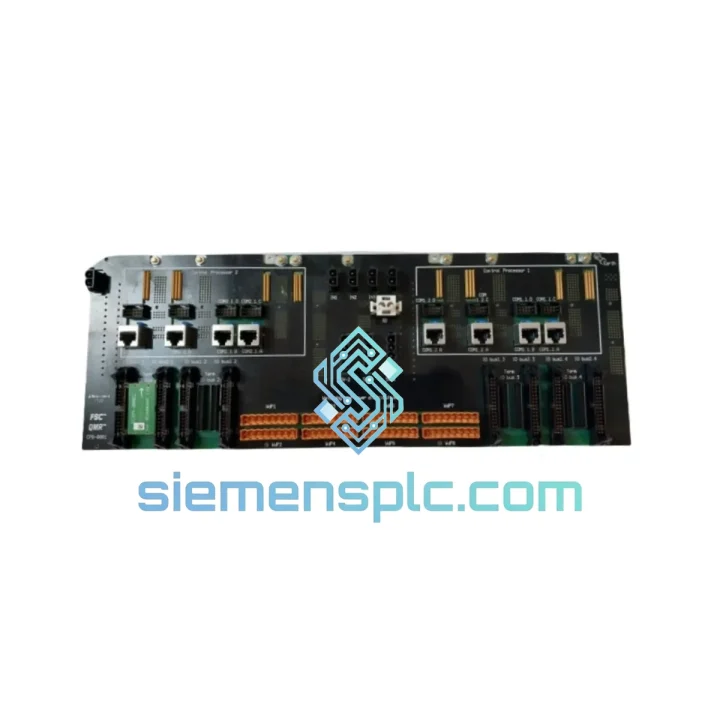
Request verified availability, condition, replacement risk review, packing options and courier lead time for TP-LCNP01-100.
Click Request Quote and the part number is inserted into the inquiry form automatically.
Core fields for model confirmation and RFQ routing. Detailed product narrative remains below.
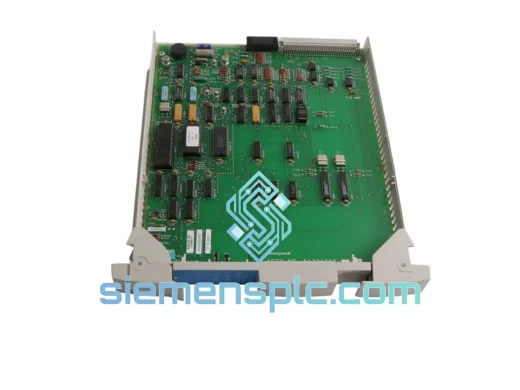
The Honeywell TP-LCNP01-100 is a Local Control Network (LCN) Interface Card engineered for deployment within Honeywell’s TDC 3000 and Experion PKS distributed control system (DCS) architectures. Its primary function is to serve as the physical and logical gateway between process controllers — including the High-Performance Process Manager (HPPM) and Application Module (AM) — and the LCN coaxial backbone that carries deterministic, token-passing communications across the entire plant control network.
In a TDC 3000 environment, the LCN operates as a 5 Mbit/s token-bus network (IEEE 802.4 derivative) with a maximum node count of 64 per segment. The TP-LCNP01-100 card occupies a dedicated slot within the node enclosure and manages all physical-layer framing, token acquisition, and error-detection functions. Its onboard microprocessor offloads LCN protocol handling from the host controller CPU, preserving deterministic scan cycle performance even under high-traffic conditions. This architectural separation is critical in process plants where a single missed scan in a regulatory control loop can trigger a process upset or safety interlock.
The card interfaces to the LCN via a dual-port coaxial tap, providing passive redundancy at the physical layer. In the event of a primary port signal degradation — caused by cable impedance mismatch, connector oxidation, or transient EMI — the card’s port-switching logic transfers communication to the secondary port within one token-rotation period, typically under 10 ms at full network load. This switchover is transparent to the host controller and does not interrupt the control loop execution cycle.
Real-time Stock & RFQ: [email protected] | WhatsApp: +86 18359268345
| Parameter | Specification |
|---|---|
| Part Number | TP-LCNP01-100 |
| Manufacturer | Honeywell Process Solutions |
| Series | TDC 3000 / Experion PKS |
| Module Function | Local Control Network (LCN) Interface Card |
| Network Protocol | Honeywell LCN Token-Bus (IEEE 802.4 derivative), 5 Mbit/s |
| Max Nodes per Segment | 64 |
| Physical Interface | Dual-port coaxial tap (primary + secondary) |
| Port Switchover Time | < 10 ms (one token-rotation period at full load) |
| Form Factor | Single-slot PCB card module |
| Operating Temperature | 0 °C to +60 °C |
| Storage Temperature | -40 °C to +85 °C |
| Relative Humidity | 5% to 95% non-condensing |
| Power Consumption | Supplied via node backplane (5 VDC / 3.3 VDC rails) |
| EMC Compliance | IEC 61000-4-2 (ESD), IEC 61000-4-4 (EFT), IEC 61000-4-5 (Surge) |
| Country of Origin | United States |
| Weight | Approx. 650 g |
| Warranty | 12 months from date of shipment |
The TP-LCNP01-100 is built around a dedicated LCN protocol controller ASIC paired with a local SRAM buffer. This architecture decouples network I/O latency from the host controller’s real-time task scheduler. The ASIC handles token-bus arbitration, frame CRC-32 verification, and address filtering entirely in hardware, with no software interrupt overhead imposed on the host CPU. This is a deliberate design choice: in a 64-node LCN segment operating at 5 Mbit/s, the aggregate interrupt load from software-managed network I/O would consume a measurable fraction of the host processor’s available cycle budget, degrading regulatory loop scan times.
EMC and Signal Integrity: The card’s coaxial interface circuitry incorporates transient voltage suppression (TVS) diodes rated at ±1.5 kV on both the primary and secondary coax ports. The PCB layout routes the coax signal traces as controlled-impedance 75 Ω differential pairs with guard traces tied to chassis ground, minimizing capacitive coupling from adjacent backplane signals. Ferrite bead filters are placed at the card-edge connector to attenuate high-frequency common-mode noise injected from the backplane power rails — a common EMI ingress path in densely populated DCS cabinets operating near variable-frequency drives (VFDs) or large motor starters.
Redundancy Arbitration Logic: The dual-port switchover is governed by a hardware comparator that continuously monitors the received signal amplitude on both coax ports. The switchover threshold is factory-calibrated to 60% of nominal signal amplitude. When the active port drops below this threshold for two consecutive token frames, the comparator asserts a port-select signal to the ASIC, which completes the switchover atomically at the next token-release boundary. This prevents mid-frame corruption during the transition. The switchover event is logged to the card’s onboard status register, which the host controller reads during its diagnostic polling cycle and forwards to the Honeywell Universal Station (US) operator console as a maintenance alarm — without interrupting the control loop.
Thermal Management: The card operates within a 0–60 °C ambient range, consistent with the thermal envelope of a standard TDC 3000 node enclosure with forced-air cooling. The ASIC’s junction temperature is managed by a copper heat spreader bonded to the component’s exposed pad, conducting heat to the card’s ground plane. In high-ambient installations (e.g., tropical process plants without air-conditioned control rooms), verifying cabinet airflow rates against Honeywell’s thermal derating curves is recommended before deployment.
Every Honeywell TP-LCNP01-100 unit supplied by siemensplc.com is sourced directly from authorized Honeywell distribution channels or verified OEM-surplus inventories with full part traceability. Prior to shipment, each card undergoes a multi-stage inspection protocol: visual inspection for PCB damage, connector pin integrity check, and functional verification on a live TDC 3000 test bench confirming LCN token acquisition, dual-port switchover, and diagnostic register readback.
Units are packaged in anti-static shielding bags, placed in foam-lined rigid cartons rated for international air freight handling (ISTA 2A drop and vibration profile). Climate-controlled storage at our Xiamen, China warehouse maintains component integrity between receipt and dispatch. Export documentation — including commercial invoice, packing list, and certificate of conformance — is prepared to DDP (Delivered Duty Paid) terms for major destination markets, simplifying customs clearance for procurement teams.
Standard dispatch from Xiamen is within 1–3 business days for in-stock units, with DHL Express and FedEx International Priority as primary carriers, achieving 3–5 business day delivery to most industrial hubs in Europe, Southeast Asia, the Middle East, and the Americas. For time-critical plant shutdowns or unplanned outages, same-day dispatch is available for orders confirmed before 14:00 CST. All shipments include real-time tracking and are covered by a 12-month warranty against manufacturing defects and functional failure under normal operating conditions.
Email: [email protected]
WhatsApp: +86 18359268345
Web: siemensplc.com
Location: Xiamen, China
© 2026 siemensplc.com. All rights reserved.
We check the full part number, brand, series and visible nameplate information before quotation.
Sales confirms stock path, condition option, quantity and realistic lead time for export dispatch.
DHL, FedEx, UPS or buyer courier arrangements can be reviewed with packing requirements.
Similar brand or category products for fast comparison and multi-item RFQ lists.