Horner APG
RFQ Ready
Horner HE-XE105 PLC Digital Input Module
Horner HE-XE105 XE Series
Origin US
PLC I/O Module
Request verified availability, condition, replacement risk review, packing options and courier lead time for HE670RLY168C.
Click Request Quote and the part number is inserted into the inquiry form automatically.
Core fields for model confirmation and RFQ routing. Detailed product narrative remains below.
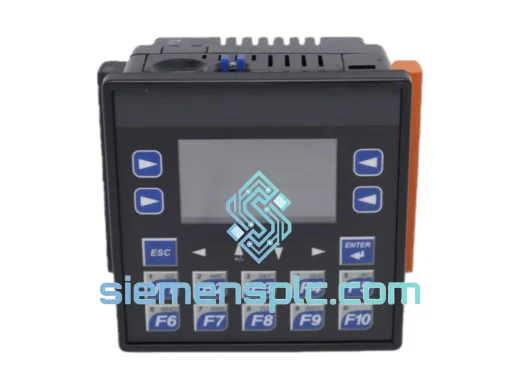
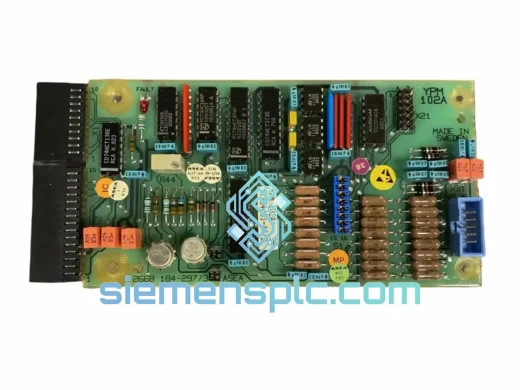
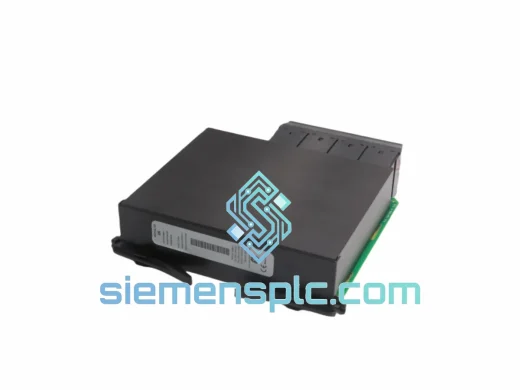
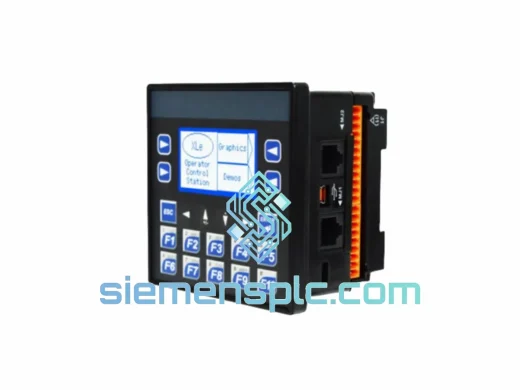
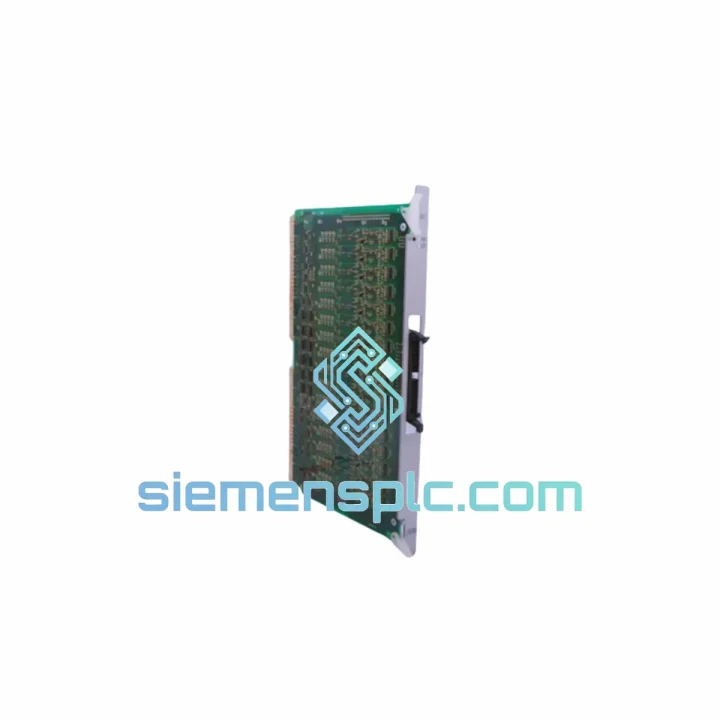
The Horner HE670RLY168C is the relay output PC board designed for the HE670 Operator Control Station (OCS) platform. Within a unified OCS architecture — where PLC logic execution, HMI display management, and field I/O processing share a single backplane — the relay output board occupies the final stage of the control loop: translating digital logic states into switched dry contacts capable of driving real-world loads. This board provides 16 independent relay output channels, each operating as an isolated dry contact, enabling the HE670 controller to actuate motor starters, solenoid valves, pilot lights, alarm relays, and other discrete field devices without exposing the controller’s internal logic circuitry to field-side voltage transients.
In the HE670 OCS architecture, the relay output board interfaces directly with the controller’s internal I/O bus. The HE670 platform uses a tightly coupled internal bus structure rather than a distributed rack-and-slot backplane, which means the relay board communicates with the CPU module at deterministic scan-cycle timing — output state updates are synchronized to the PLC scan, not subject to external bus arbitration delays. This design characteristic is significant for applications where output switching must occur within a defined window of the control cycle, such as coordinated multi-axis sequencing or time-critical valve actuation in batch processes.
Each relay channel on the HE670RLY168C uses a mechanical relay element with a dry contact output. The dry contact architecture provides inherent galvanic isolation between the controller’s 3.3V/5V logic domain and the field-side load circuit, which may operate at voltages up to 250VAC or 30VDC depending on the relay contact rating. This isolation eliminates the need for external signal conditioning or optocoupler interface boards when switching standard industrial AC or DC loads. The relay contacts are rated for resistive loads; inductive loads such as motor starters and solenoids require appropriate surge suppression (RC snubbers or flyback diodes) at the load terminals to protect contact life.
The board is constructed on an FR4 glass-epoxy substrate with conformal coating applied to the component side, providing resistance to condensation, dust ingress, and mild chemical vapors encountered in food processing and light chemical environments. The relay elements are mounted in through-hole configuration for mechanical robustness under vibration, a deliberate design choice for a board that will be installed inside a panel-mounted OCS unit subject to machine-induced vibration. PCB trace routing follows IPC-2221 clearance and creepage guidelines for the rated working voltage, ensuring long-term dielectric integrity between adjacent relay circuits.
From a maintenance perspective, the HE670RLY168C is a direct board-level replacement for the HE670 platform. No firmware reconfiguration, I/O mapping changes, or CSCAPE project modifications are required when replacing a failed board with a genuine OEM unit — the controller recognizes the board at power-up and resumes normal operation with the existing application program. This characteristic is operationally important for maintenance teams working under production pressure, where the objective is to restore the machine to its last known good state with minimum intervention.
Real-time Stock & RFQ: [email protected] | WhatsApp: +86 18359268345
| Parameter | Specification |
|---|---|
| Part Number | HE670RLY168C |
| Manufacturer | Horner APG (Horner Electric) |
| Series | OCS HE670 |
| Module Type | Relay Output PC Board |
| Output Channels | 16 discrete relay outputs |
| Output Contact Type | Dry contact (Form A, SPST-NO) |
| Contact Rating — Resistive AC | 0.5A @ 125VAC |
| Contact Rating — Resistive DC | 2A @ 30VDC |
| Isolation | Galvanic (relay coil to contact) |
| PCB Substrate | FR4 glass-epoxy, conformal coated |
| Operating Temperature | 0°C to +55°C |
| Storage Temperature | -25°C to +70°C |
| Relative Humidity | 5% to 95% non-condensing |
| Mounting | Internal board, HE670 OCS enclosure |
| Compatibility | Horner HE670 OCS platform |
| Programming Environment | Horner CSCAPE (no board-level config required) |
| Weight (shipped) | Approx. 980 g |
| Warranty | 12 months from date of shipment |
| Origin | USA (Horner APG OEM) |
The HE670RLY168C’s hardware design reflects several deliberate engineering decisions that distinguish it from generic relay output boards:
Internal Bus Synchronization: Unlike modular rack-based PLCs where I/O modules communicate over a shared backplane bus with arbitration overhead, the HE670 OCS uses a tightly integrated internal bus. The relay output board receives output state data directly from the CPU’s I/O update cycle, with no intermediate bus controller or token-passing protocol. This eliminates variable bus latency from the output switching path, resulting in deterministic output timing relative to the PLC scan cycle — a measurable advantage in applications with tight output timing requirements.
EMC Design Discipline: The relay coil drive circuits incorporate transient suppression diodes across each coil to clamp the inductive kickback voltage generated when the relay de-energizes. Without this suppression, each relay de-energization event would inject a high-voltage spike (potentially 10–100× the coil supply voltage) onto the board’s internal power rail, creating conducted EMI that could corrupt logic signals on adjacent circuits. The on-board suppression keeps this transient within the logic supply’s absolute maximum ratings, maintaining signal integrity across all 16 channels during simultaneous switching events.
Galvanic Isolation Architecture: The relay element itself provides the isolation barrier between the controller’s logic domain and the field circuit. The coil side operates at the OCS internal supply voltage; the contact side is fully floating relative to the controller ground, allowing the field circuit to reference any ground potential within the contact voltage rating. This architecture supports mixed-voltage field wiring — some channels switching 24VDC loads, others switching 120VAC loads — without requiring separate isolated power supplies for each voltage domain.
Through-Hole Relay Mounting: The relay elements are soldered in through-hole configuration rather than surface-mount. Through-hole solder joints have significantly higher mechanical shear strength than SMT joints, making them more resistant to the vibration and thermal cycling encountered in industrial panel installations. This is a deliberate reliability trade-off: through-hole assembly costs more than SMT, but the resulting joint integrity is appropriate for a component that may remain in service for 10–15 years in a production environment.
Conformal Coating: The applied conformal coating (typically acrylic or urethane-based on Horner boards) provides a dielectric barrier over the PCB surface, preventing conductive contamination from condensation, metallic dust, or cleaning agent residue from bridging between adjacent PCB traces. This is particularly relevant for boards installed in food processing or pharmaceutical environments where periodic washdown procedures may introduce moisture into the panel enclosure.
Every HE670RLY168C unit supplied by siemensplc.com is sourced through verified industrial supply channels handling genuine Horner APG OEM components. The board undergoes visual inspection for physical integrity, correct part number labeling, and absence of rework or repair indicators prior to dispatch. Units are packaged in ESD-protective anti-static bags with foam cushioning inside a rigid outer carton, meeting ISTA 2A transit testing standards for electronic components.
Shipments originate from our warehouse in Xiamen, China, with access to DHL Express, FedEx International Priority, and UPS Worldwide Express services. Standard transit times to major industrial hubs: Europe 3–5 business days, North America 4–6 business days, Southeast Asia 2–3 business days. Emergency same-day dispatch is available for orders confirmed before 14:00 CST. All shipments include full tracking, commercial invoice, and packing list documentation suitable for customs clearance in regulated markets. A 12-month warranty covers manufacturing defects; DOA (dead-on-arrival) units are replaced or credited within 5 business days of confirmed fault report.
Email: [email protected]
WhatsApp: +86 18359268345
Web: siemensplc.com
Location: Xiamen, China
© 2026 siemensplc.com. All rights reserved.
We check the full part number, brand, series and visible nameplate information before quotation.
Sales confirms stock path, condition option, quantity and realistic lead time for export dispatch.
DHL, FedEx, UPS or buyer courier arrangements can be reviewed with packing requirements.
Similar brand or category products for fast comparison and multi-item RFQ lists.