ICS TRIPLEX
RFQ Ready
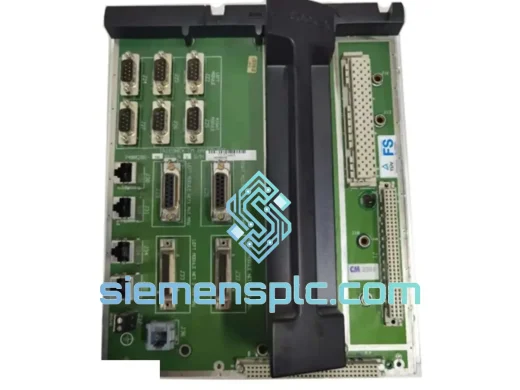
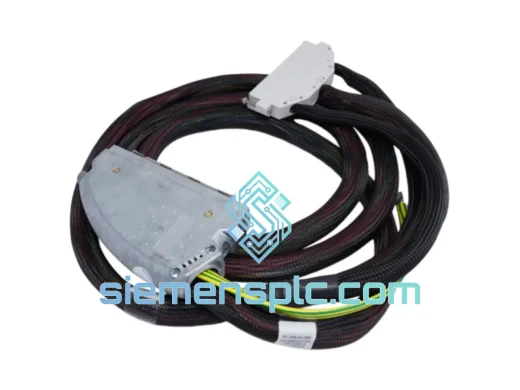
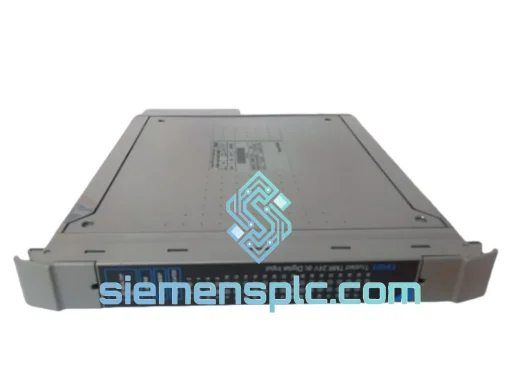
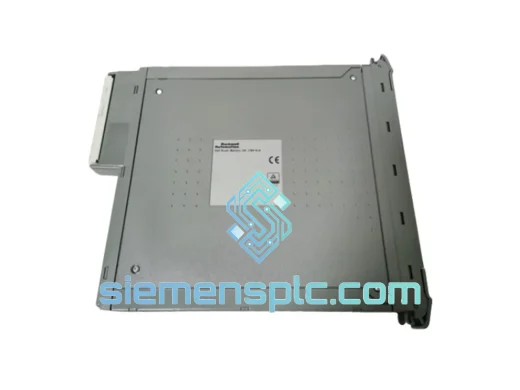
ICS TRIPLEX T8270 Safety Controller Power Supply
T8270
Origin GB
Safety Controller Power Supply
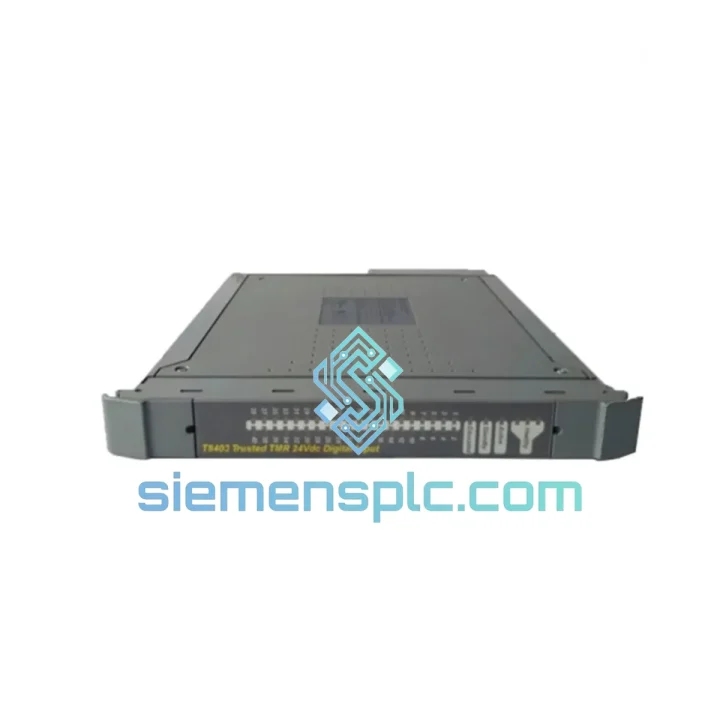
Request verified availability, condition, replacement risk review, packing options and courier lead time for T8232.
Click Request Quote and the part number is inserted into the inquiry form automatically.
Core fields for model confirmation and RFQ routing. Detailed product narrative remains below.
In a Triple Modular Redundancy (TMR) architecture, the power subsystem is not a peripheral concern — it is a structural element of the safety case. The ICS TRIPLEX T8232 is the dedicated power conditioning module for the ICS TRIPLEX TMR chassis, and its design reflects a fundamental engineering principle: every channel that can fail must be independently detectable, independently replaceable, and incapable of propagating its failure to the remaining channels. The T8232 delivers on all three requirements through a concurrent three-path power topology, hardware-level voter arbitration, and a diagnostic interface that surfaces per-channel fault data to the system controller in real time.
Unlike N+1 standby architectures — where a secondary supply sits idle until the primary fails, introducing a latent fault exposure window — the T8232 operates all three power channels simultaneously. Each channel independently converts the facility supply voltage, regulates its output, and feeds the TMR backplane bus. The backplane’s embedded 2oo3 voter logic monitors all three channel outputs continuously. When one channel deviates outside its regulation window, the voter isolates that channel’s contribution to the bus, latches the fault condition, and reports it to the diagnostic bus — all within the hardware response time, without software intervention, and without any interruption to backplane power delivery. The remaining two channels carry the full bus load. The safety function continues uninterrupted.
This architecture satisfies Hardware Fault Tolerance HFT ≥ 1 at the power subsystem level as defined in IEC 61508-2, which is a necessary condition for SIL 3 certification of the overall safety instrumented system. The T8232’s diagnostic coverage for dangerous detected failures exceeds 90%, directly reducing the power subsystem’s contribution to the Probability of Failure on Demand (PFD) budget of the safety instrumented function. For process safety engineers performing SIL verification calculations, the T8232’s architecture eliminates the need for compensating measures elsewhere in the system to offset a high-PFD power supply.
The T8232 is deployed in ESD systems on offshore hydrocarbon platforms, burner management systems in petrochemical complexes, high-integrity pressure protection systems (HIPPS) in pipeline infrastructure, and reactor protection systems in nuclear auxiliary control applications. In each of these contexts, the module’s hot-swap mechanical design is operationally significant: a degraded T8232 can be extracted and replaced during live TMR operation, with the two remaining healthy channels sustaining full backplane power throughout the procedure. No process shutdown. No safety function bypass. No permit-to-work for a controlled outage.
Real-time Stock & RFQ: [email protected] | WhatsApp: +86 18359268345
| Parameter | Value |
|---|---|
| Part Number | T8232 |
| Manufacturer | ICS TRIPLEX (Rockwell Automation) |
| Module Function | Concurrent three-channel power conditioning for TMR backplane bus |
| Platform | ICS TRIPLEX TMR Chassis |
| Redundancy Scheme | 3-channel concurrent; 2oo3 hardware voter on backplane |
| Safety Integrity Level | SIL 2 / SIL 3 (IEC 61508, platform-level TÜV assessment) |
| AC Input Range | 85–264 V AC, 47–63 Hz universal |
| DC Input Range | 100–370 V DC |
| Output Rail | Regulated DC to TMR backplane (nominal 24 V DC internal bus) |
| Output Voltage Regulation | ±1% across full rated load |
| Isolation | Galvanic input-to-output; reinforced insulation per IEC 60664-1 |
| Diagnostic Coverage (DC) | >90% dangerous detected failures |
| Monitored Fault Conditions | Input UV, Input OV, Output OC, Internal OT — per channel |
| Hot-Swap | Yes — live replacement without process shutdown |
| Operating Temperature | 0 °C to +60 °C |
| Storage Temperature | −40 °C to +85 °C |
| Humidity | 5–95% RH, non-condensing |
| EMC Standard | EN 61000-4 series; IEC 61326-3-1 (safety-related equipment) |
| MTBF | >200,000 hours (Telcordia SR-332) |
| Weight | approx. 1,180 g |
| Certifications | IEC 61508, TÜV Rheinland, CE |
| Warranty | 12 months from dispatch date |
| Stock Status | Available — Xiamen warehouse |
Each of the three power stages within the T8232 is electrically independent from input rectification through to the backplane output connector. The isolation barrier in each stage is implemented with a high-frequency flyback or forward converter topology operating in the 100–200 kHz switching range. The elevated switching frequency reduces the required transformer core cross-section and primary winding turns, which in turn reduces the inter-winding parasitic capacitance. Lower inter-winding capacitance limits the common-mode displacement current that can couple from the high-voltage primary side through the isolation barrier into the low-voltage secondary rail — a direct EMC benefit that reduces conducted emissions on the backplane bus and improves the module’s immunity to common-mode transients injected from the facility supply.
Input inrush current management is handled by a negative temperature coefficient (NTC) thermistor network in series with each channel’s input rectifier bridge. During simultaneous cold-start of all three channels, the NTC elements present high resistance at ambient temperature, limiting the peak inrush current drawn from the facility supply to a value that does not trip upstream overcurrent protection devices. As each thermistor self-heats to its steady-state operating temperature, its resistance drops to a value where conduction loss is negligible relative to the module’s rated output power. The NTC approach is passive and requires no control logic, which eliminates a potential failure mode in the inrush limiting circuit itself.
The secondary-side output stage uses synchronous rectification with low equivalent series resistance (ESR) bulk capacitance. The low-ESR characteristic is the primary mechanism for limiting output voltage droop during load transients — specifically the step-load events that occur when TMR processor modules transition between scan-cycle phases or when multiple I/O output channels switch simultaneously. The ±1% regulation specification is maintained across these transient events, which preserves the supply voltage margin for all backplane-powered devices and prevents the supply voltage from entering the undervoltage lockout threshold of any backplane module during a transient.
The AC input EMC filter is a multi-stage design: a common-mode choke wound on a high-permeability ferrite toroid attenuates common-mode conducted emissions in the 150 kHz–30 MHz range, while X2-class capacitors across the line conductors and Y2-class capacitors from each line conductor to the protective earth conductor suppress differential-mode interference. Creepage and clearance distances on the primary-side PCB exceed IEC 60664-1 requirements for Pollution Degree 2 at the rated working voltage, providing margin against partial discharge in environments with elevated airborne contamination. The module frame is bonded to the TMR rack earth bus through a low-impedance chassis connection, providing a defined return path for ESD events and radiated field coupling from adjacent high-power switchgear or variable-frequency drives.
The per-channel diagnostic logic monitors four independent fault conditions: input undervoltage (UV), input overvoltage (OV), output overcurrent (OC), and internal thermal overtemperature (OT). Each condition is latched independently and encoded as a distinct fault code on the backplane diagnostic bus. The fault discrimination between UV/OV (facility supply quality events) and OC/OT (internal module failure modes) is operationally significant: it allows maintenance personnel to determine whether a detected fault requires module replacement or can be attributed to a transient disturbance in the facility power distribution system, avoiding unnecessary module removals during power quality events.
All T8232 units offered from our Xiamen, China facility undergo a structured incoming inspection before being made available for sale. Given the safety-critical application context of this module and the documented prevalence of counterfeit and remarked components in the industrial automation aftermarket, the inspection protocol is non-negotiable: label integrity, manufacturer markings, connector pin geometry, PCB surface condition, and the absence of solder rework evidence are all verified visually. Serial numbers are cross-referenced against available OEM traceability records. Any unit that cannot be positively identified as genuine OEM manufacture is quarantined and not offered for sale.
Functional verification covers output voltage regulation under load, inrush current limiting behavior during cold-start sequencing, and diagnostic bus communication response. Units that do not meet all acceptance criteria are removed from available stock. Units that pass are packaged in anti-static ESD shielding bags, placed in foam-lined inner cartons sized to prevent module movement during transit, and double-boxed for international freight. Desiccant sachets are included in each inner carton to protect against humidity ingress during air or ocean freight transit through tropical routing environments.
Export documentation — commercial invoice, packing list, certificate of conformance, and functional test report — is prepared for every shipment. DHL Express and FedEx International Priority services are available from Xiamen, with typical transit times of 3–5 business days to Europe and North America, 2–4 business days to Southeast Asia and the Middle East, and 4–7 business days to South America and Africa. In-stock units ship within 2–3 business days of order confirmation. A 12-month warranty from the date of dispatch covers all units against manufacturing defects and functional failure under normal operating conditions as defined in the OEM product specification.
Email: [email protected]
WhatsApp: +86 18359268345
Web: siemensplc.com
Location: Xiamen, China
© 2026 siemensplc.com. All rights reserved.
We check the full part number, brand, series and visible nameplate information before quotation.
Sales confirms stock path, condition option, quantity and realistic lead time for export dispatch.
DHL, FedEx, UPS or buyer courier arrangements can be reviewed with packing requirements.
Similar brand or category products for fast comparison and multi-item RFQ lists.