ICS TRIPLEX
RFQ Ready
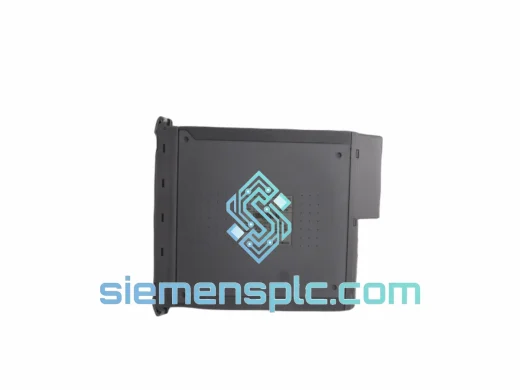
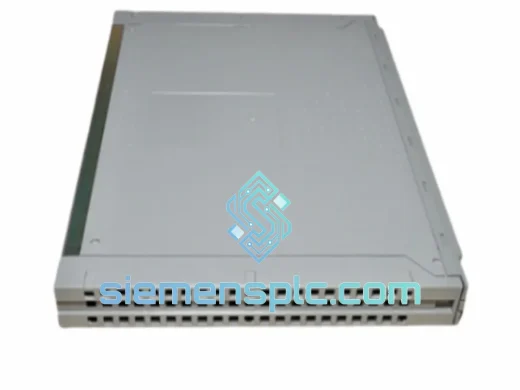
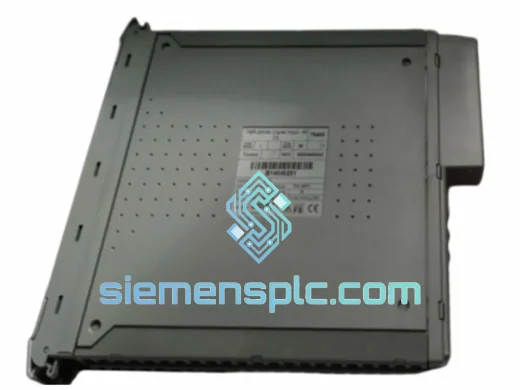
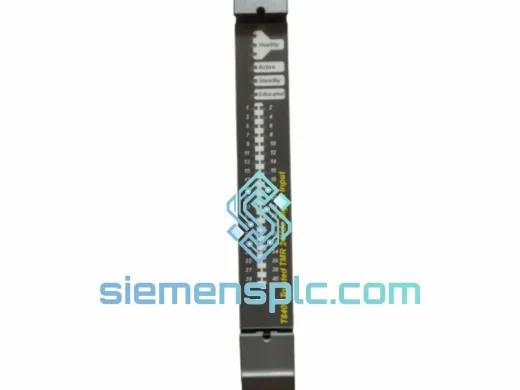
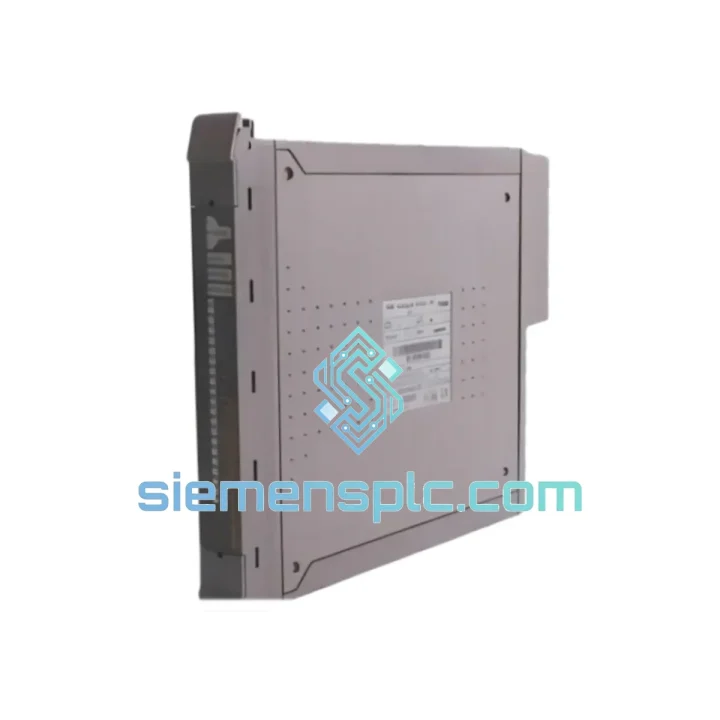
ICS Triplex T8461CX Digital Output Module
Trusted
Origin GB
Digital Output Module
Request verified availability, condition, replacement risk review, packing options and courier lead time for T8901.
Click Request Quote and the part number is inserted into the inquiry form automatically.
Core fields for model confirmation and RFQ routing. Detailed product narrative remains below.
The ICS Triplex T8901 is a field-proven Digital I/O Module designed exclusively for deployment within the ICS Triplex Trusted Series Triple Modular Redundant (TMR) safety platform. Its primary function within a control loop is to serve as the physical interface between field instrumentation and the TMR processor, executing voted digital signal acquisition and discrete output command distribution with deterministic latency. Unlike conventional I/O modules that rely on software-layer redundancy, the T8901 implements hardware-level 2-out-of-3 (2oo3) voting logic directly on the module substrate, ensuring that a single-channel failure — whether caused by component degradation, transient overvoltage, or EMI-induced bit corruption — does not propagate to the process output or trigger a spurious trip.
In a typical safety instrumented function (SIF), the T8901 occupies the sensor-to-logic-solver boundary. Field devices — limit switches, solenoid valve feedback contacts, or discrete transmitter outputs — wire directly to the module’s terminal blocks. The module then conditions, isolates, and distributes each signal across three independent internal channels (A, B, C), each processed by a separate microcontroller lane within the Trusted chassis. The voted result is forwarded to the T8100/T8110 processor module via the proprietary Trusted backplane bus at a deterministic scan cycle, maintaining the sub-10 ms response time required by IEC 61511 for SIL 3 safety loops.
Real-time Stock & RFQ: [email protected] | WhatsApp: +86 18359268345
| Part Number | T8901 |
| Manufacturer | ICS Triplex (Rockwell Automation) |
| Series | Trusted TMR Safety Platform |
| Module Classification | Digital Input / Output Module |
| Redundancy Architecture | Triple Modular Redundant (TMR) – 2oo3 hardware voting |
| Safety Integrity Level | SIL 3 per IEC 61508 / IEC 61511 |
| Input Channel Count | 24 digital input channels (8 per TMR lane) |
| Output Channel Count | 8 discrete output channels with voted drive |
| Input Voltage Range | 24 V DC nominal (18–32 V DC operating range) |
| Input Current per Channel | ≤ 8 mA at 24 V DC |
| Output Type | Solid-state relay (SSR), normally open, fail-safe de-energize |
| Output Load Capacity | 2 A continuous per channel at 24 V DC |
| Optical Isolation | 1,500 V AC channel-to-backplane; 500 V AC channel-to-channel |
| Backplane Interface | Trusted proprietary high-speed serial bus |
| Scan Cycle Contribution | < 2 ms per I/O scan pass |
| Operating Temperature | 0 °C to +60 °C (IEC 60068-2-1/2) |
| Storage Temperature | -40 °C to +85 °C |
| Relative Humidity | 5–95 % RH, non-condensing |
| EMC Immunity | IEC 61000-4-2 (ESD), IEC 61000-4-4 (EFT), IEC 61000-4-5 (Surge) |
| Vibration Resistance | IEC 60068-2-6: 2 g, 10–150 Hz |
| Shock Resistance | IEC 60068-2-27: 15 g, 11 ms half-sine |
| Power Consumption | ≤ 6 W (supplied via Trusted backplane) |
| Module Weight | Approx. 1,150 g |
| Form Factor | Single-slot Trusted chassis card |
| Certifications | TÜV Rheinland SIL 3, IEC 61508, CE, RoHS |
| Warranty | 12 months from date of shipment |
Opto-Isolation Architecture: Each of the 24 input channels on the T8901 passes through a dedicated optocoupler stage before entering the TMR lane logic. The isolation barrier is rated at 1,500 V AC (channel-to-backplane), which decouples field-side ground loops and common-mode transients from the logic-side circuitry. This is not a shared-bus isolation scheme — each channel has its own optocoupler device, eliminating cross-channel coupling that would otherwise compromise the independence requirement of IEC 61508 Annex D for SIL 3 hardware fault tolerance (HFT = 2).
2oo3 Voting Logic on Silicon: The voted output is not computed in software running on the processor module. Instead, the T8901 implements a dedicated combinatorial voting gate array on the module’s FPGA fabric. Each of the three TMR lanes (A, B, C) drives a separate input to the voting matrix. The output energizes only when at least two of three lanes agree on a logical HIGH state. This hardware-resident voting eliminates the latency and non-determinism associated with software polling loops and ensures the voted result is available to the output driver within a fixed propagation delay of under 500 µs from input assertion.
Fail-Safe Output Driver Design: The discrete output channels use solid-state relay technology configured in a normally-de-energized (NDE) fail-safe topology. Loss of backplane power, loss of voted logic drive, or detection of an internal output driver fault all result in the output channel dropping to the de-energized state — the safe state for ESD valve solenoids and interlock relays. The output driver circuit includes an independent watchdog timer that forces de-energization if the backplane communication heartbeat is absent for more than 100 ms, providing a hardware-enforced safe-state fallback independent of processor module health.
EMC Design Measures: The T8901 PCB layout employs a four-layer stackup with dedicated ground planes separating the field-side and logic-side copper pours. Ferrite bead filters are placed at each I/O terminal entry point to attenuate high-frequency conducted interference (IEC 61000-4-4 EFT immunity level 3). Transient voltage suppression (TVS) diodes rated at 33 V clamping voltage protect each input channel against inductive load switching transients from field solenoids and relay coils. The module housing provides continuous EMI shielding continuity through the Trusted chassis backplane connector, maintaining radiated immunity per IEC 61000-4-3 at 10 V/m field strength.
Diagnostic Coverage: The T8901 achieves a diagnostic coverage (DC) of ≥ 99% on its input channels through continuous self-test routines executed by each TMR lane independently. The self-test injects a known test pattern onto the input conditioning circuit and verifies the expected response at the lane’s microcontroller ADC input. Any deviation beyond a ±2% tolerance threshold flags a channel fault in the module’s diagnostic register, which is surfaced to the Trusted system’s fault management layer within one scan cycle. This diagnostic architecture supports the safe failure fraction (SFF) calculation required to demonstrate SIL 3 compliance under IEC 61508 Part 2.
Every ICS Triplex T8901 unit supplied by siemensplc.com is sourced through authenticated industrial supply channels with full part traceability. Prior to dispatch from our Xiamen, China facility, each module undergoes a structured pre-shipment inspection protocol: visual examination of connector integrity, label authenticity verification against OEM reference markings, and functional power-on verification where test infrastructure permits. Units are shipped in anti-static packaging with desiccant inserts, enclosed in double-wall corrugated cartons rated for international air freight handling per ISTA 2A standards.
Logistics coverage from Xiamen spans all major industrial markets: Asia-Pacific destinations (Japan, South Korea, Singapore, Australia) receive shipments within 3–5 business days via express air freight. European destinations (Germany, Netherlands, UK, France, Italy) are served within 5–8 business days. North American destinations (USA, Canada, Mexico) receive shipments within 5–10 business days. Middle East destinations (UAE, Saudi Arabia, Qatar) are served within 4–7 business days. All shipments are accompanied by a commercial invoice, packing list, and Certificate of Conformance. DDP (Delivered Duty Paid) Incoterms are available on request for buyers requiring customs clearance to be managed by the shipper.
A 12-month warranty is provided on all units from the date of shipment. Warranty coverage includes replacement or credit for units confirmed defective under normal operating conditions. Warranty claims are processed within 5 business days of receipt of the returned unit at our Xiamen facility.
Email: [email protected]
WhatsApp: +86 18359268345
Web: siemensplc.com
Location: Xiamen, China
© 2026 siemensplc.com. All rights reserved.
We check the full part number, brand, series and visible nameplate information before quotation.
Sales confirms stock path, condition option, quantity and realistic lead time for export dispatch.
DHL, FedEx, UPS or buyer courier arrangements can be reviewed with packing requirements.
Similar brand or category products for fast comparison and multi-item RFQ lists.