ICS TRIPLEX
RFQ Ready
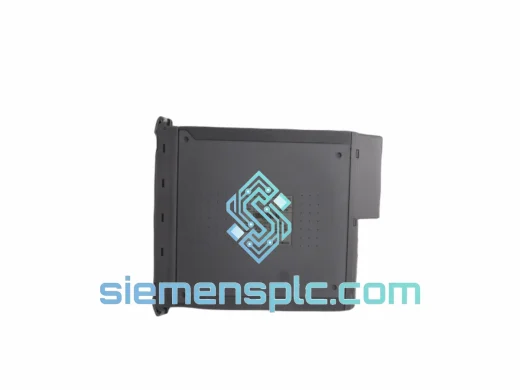
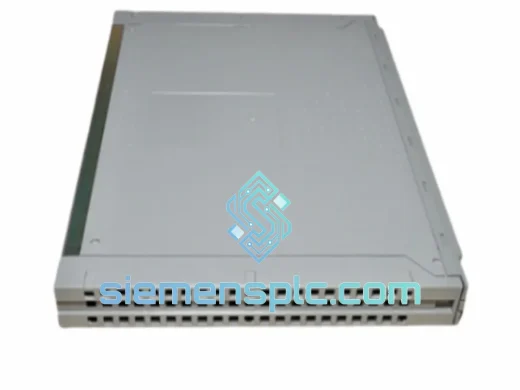
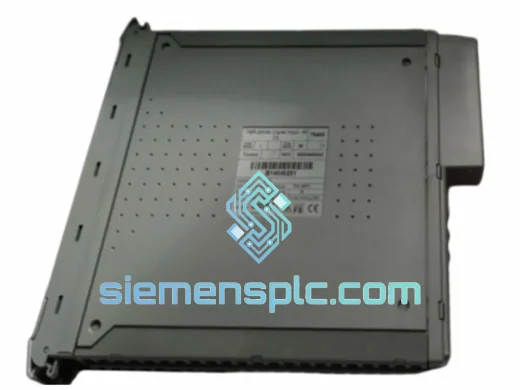
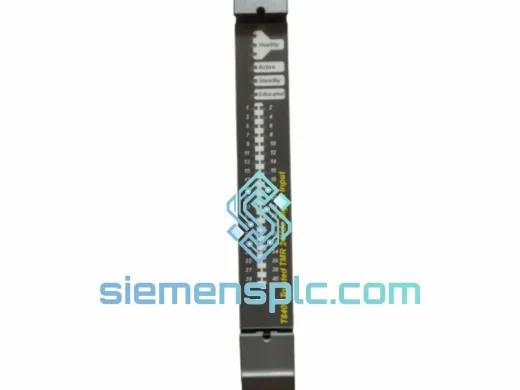
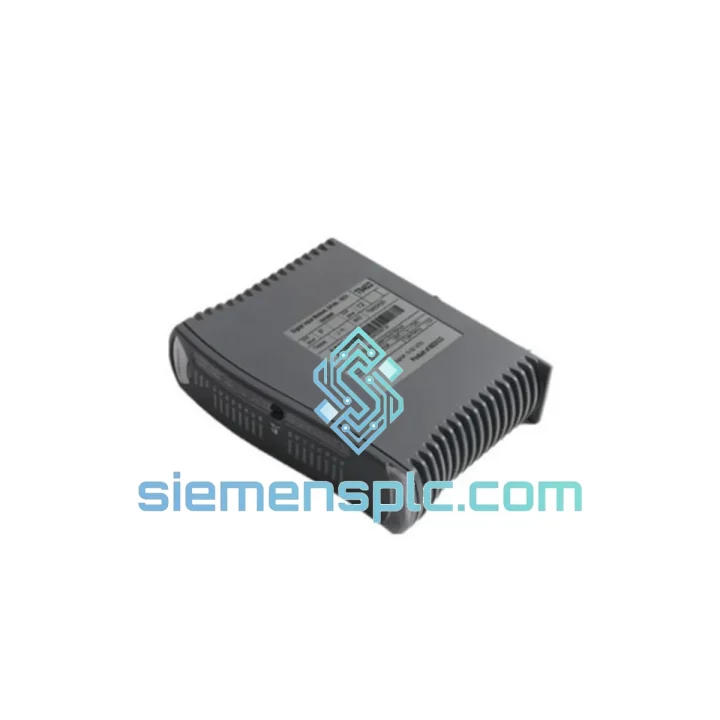
ICS Triplex T8461CX Digital Output Module
Trusted
Origin GB
Digital Output Module
Request verified availability, condition, replacement risk review, packing options and courier lead time for T9832.
Click Request Quote and the part number is inserted into the inquiry form automatically.
Core fields for model confirmation and RFQ routing. Detailed product narrative remains below.
The ICS TRIPLEX T9832 is a dedicated analogue input module engineered for the Trusted Series Triple Modular Redundancy (TMR) safety platform. Its primary function within a Safety Instrumented System (SIS) is the simultaneous acquisition of 4–20 mA field signals from process transmitters — pressure, temperature, differential pressure, and flow — and the delivery of validated, voted process values to the Trusted safety controller with deterministic timing and continuous fault visibility.
The module’s architecture is defined by physical separation of three independent acquisition lanes. Each lane processes the same field signal through its own analogue front-end, 16-bit A/D converter, and backplane interface. The Trusted controller applies 2-out-of-3 (2oo3) majority voting to the three raw digital values before any safety function calculation consumes the result. This means a single lane failure — whether caused by component drift, connector degradation, or induced transient — does not corrupt the process value entering the safety logic. The failed lane is identified, classified, and annunciated; the remaining two lanes continue to supply a valid voted output without process interruption or spurious trip generation.
This architecture directly addresses the two dominant failure modes that SIS designers must manage: dangerous undetected failures (which prevent a safety function from operating on demand) and spurious trips (which cause unnecessary process shutdowns with associated production loss and restart hazards). The T9832’s continuous self-diagnostic engine maintains high diagnostic coverage against dangerous failures, while the 2oo3 voting structure provides inherent spurious trip resistance that a single-channel or 1oo2 architecture cannot match without additional logic.
The T9832 is deployed in offshore emergency shutdown (ESD) systems, onshore high-integrity pressure protection systems (HIPPS), LNG terminal safety loops, and chemical plant fire-and-gas detection networks where IEC 61511 lifecycle compliance is a regulatory requirement and where the process safety time (PST) budget constrains the maximum permissible measurement loop latency. Its IEC 61508 SIL 2 and SIL 3 certification is based on the hardware architecture and diagnostic coverage of the module as designed — not on a software qualification overlay applied to a general-purpose card.
Procurement of the T9832 from our Xiamen facility provides access to genuine ICS TRIPLEX hardware with full pre-shipment inspection, ESD-compliant packaging, and international express freight to any industrial destination within 3–5 business days.
Real-time Stock & RFQ: [email protected] | WhatsApp: +86 18359268345
| Parameter | Specification |
|---|---|
| Part Number | T9832 |
| Manufacturer | ICS TRIPLEX |
| Platform Compatibility | Trusted Series TMR Safety Controller Chassis |
| Module Class | Analogue Input – Field Signal Acquisition & Conditioning |
| Redundancy Model | Triple Modular Redundancy (TMR); 2oo3 voting per input channel |
| Safety Integrity Level | SIL 2 / SIL 3 per IEC 61508; applicable to IEC 61511 SIS design |
| Input Signal Range | 4–20 mA current loop; HART signal pass-through subject to system configuration |
| A/D Converter Resolution | 16-bit per acquisition lane (three independent converters per channel) |
| Field-Side Isolation | Galvanic isolation, field terminals to module logic; optocoupler backplane interface |
| Wire-Break Detection | Open-circuit flagged at signal level below 3.6 mA; fault reported within current scan cycle |
| Scan Cycle Timing | Deterministic; fixed time-slot allocation on Trusted backplane bus |
| Operating Temperature Range | 0 °C to +60 °C |
| Relative Humidity | 5 % to 95 % RH, non-condensing |
| Module Mass | 360 g |
| Chassis Interface | ICS TRIPLEX Trusted Series backplane; hot-swap capable |
| Diagnostic Engine | Continuous background self-test; fault classification to controller fault management layer |
| Country of Origin | United Kingdom |
| Warranty | 12 months from confirmed dispatch date |
The T9832’s internal signal path enforces hard physical separation between the three acquisition lanes from the input terminal block through to the backplane connector. Each lane contains a discrete analogue front-end chain: transient overvoltage protection at the terminal, a passive RC low-pass filter with a cutoff frequency selected to attenuate conducted interference above the 4–20 mA signal bandwidth, a precision instrumentation amplifier with high common-mode rejection, and a 16-bit successive-approximation register (SAR) A/D converter clocked by an independent timing reference. The three digitized values are transmitted to the Trusted controller as separate data words — not as a pre-averaged composite. The 2oo3 voting algorithm in the controller operates on the three raw channel values, which means a drifting lane produces a detectable deviation from the other two rather than a masked error in a blended output.
The galvanic isolation barrier between field wiring and module logic is implemented at the input stage. In plant environments where variable-frequency drives, large motor starters, and high-current bus systems generate conducted emissions across the 2 kHz to 150 kHz range, and where cable runs of 200–500 m act as effective antennas for radiated RF fields, the isolation barrier prevents common-mode interference from coupling into the A/D conversion chain. The result is a maintained measurement accuracy specification across the full operating environment — not a laboratory-only figure that degrades in the presence of real industrial EMC conditions.
The backplane communication protocol between the T9832 and the Trusted controller uses time-division multiplexing with fixed slot assignments established at system configuration. Each module’s data transmission window is allocated at commissioning and does not vary with bus load, module count, or controller processing state. This eliminates the latency jitter inherent in contention-based bus architectures and allows the SIS lifecycle engineer to use a fixed, bounded module scan time in the process safety time budget calculation. For a SIL 3 loop where the PST may be as short as 2–5 seconds, a deterministic scan contribution of sub-100 ms is a hard engineering constraint, not a design preference.
The continuous self-diagnostic engine executes in parallel with normal signal acquisition without consuming any portion of the module’s scan time allocation. Diagnostic routines include: A/D converter stuck-at-zero and stuck-at-full-scale detection via internal reference injection, internal supply rail voltage monitoring, open-circuit detection on each 4–20 mA loop via the 3.6 mA threshold comparator, and backplane communication frame integrity checking via CRC verification. Detected faults are classified by severity — channel degraded, channel failed, module failed — and propagated to the Trusted controller’s fault management layer within the same backplane cycle in which the fault is detected. This sub-cycle fault propagation time ensures that the operator HMI reflects the actual hardware state with minimal delay, enabling maintenance response within the process safety time window before a single-lane fault can accumulate into a two-lane fault condition that would compromise 2oo3 voting integrity.
Each ICS TRIPLEX T9832 unit dispatched from our Xiamen, China facility undergoes a structured pre-shipment inspection protocol before packaging. Physical examination covers label integrity and part number verification against the purchase order, connector pin condition and seating, PCB assembly cleanliness and absence of flux residue or mechanical damage, and edge connector condition on the backplane interface. Where compatible test infrastructure is available, functional initialization is verified against a reference Trusted chassis configuration to confirm backplane recognition, self-diagnostic startup sequence completion, and channel status reporting prior to final packaging.
Units are individually sealed in anti-static ESD shielding bags and placed in moisture-barrier outer packaging with desiccant inserts, conforming to IPC/JEDEC J-STD-033 handling guidelines for moisture-sensitive electronic assemblies. Serialization data is recorded for each unit at dispatch. Available OEM documentation — factory test records, revision history, or calibration certificates where present — is included with the shipment package.
International freight is dispatched via DHL Express, FedEx International Priority, and UPS Worldwide Express, with typical door-to-door transit times of 3–5 business days to industrial destinations in Europe, the Middle East, Southeast Asia, North America, and Australia. Complete export documentation — commercial invoice, packing list, certificate of origin, and material safety data where applicable — is prepared for each shipment to support customs clearance in regulated import jurisdictions. All units carry a 12-month warranty against defects in materials and workmanship from the confirmed dispatch date.
Email: [email protected]
WhatsApp: +86 18359268345
Web: siemensplc.com
Location: Xiamen, China
© 2026 siemensplc.com. All rights reserved.
We check the full part number, brand, series and visible nameplate information before quotation.
Sales confirms stock path, condition option, quantity and realistic lead time for export dispatch.
DHL, FedEx, UPS or buyer courier arrangements can be reviewed with packing requirements.
Similar brand or category products for fast comparison and multi-item RFQ lists.