
KUKA
In Stock OK
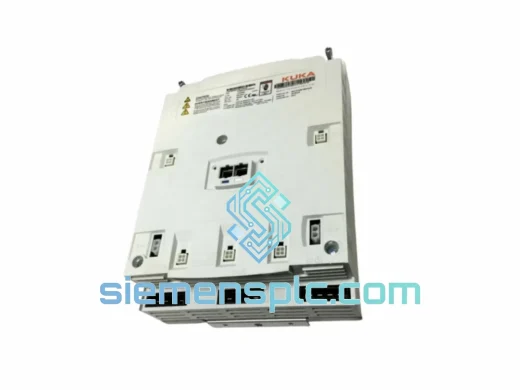
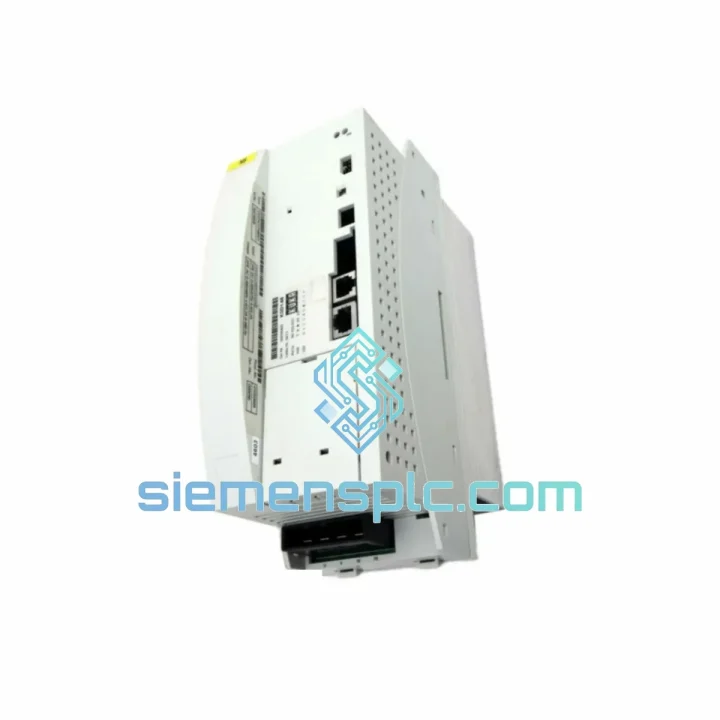
KUKA KSD1-16-00-122-285 AC Servo Amplifier – KSD1 Series
Request verified availability, condition, replacement risk review, packing options and courier lead time for KSD1-16-00-122-285.
BrandKUKA
Part NumberKSD1-16-00-122-285
ConditionAvailability Check
Lead TimeRFQ Confirmation
DocumentsDatasheet / photos by RFQ
ShippingExport packing available
Auto-filled RFQ
KSD1-16-00-122-285
Click Request Quote and the part number is inserted into the inquiry form automatically.
- Reply by email: [email protected]
- WhatsApp / Tel: +86 18359268345
- Mon-Sat 9:00-18:00 GMT+8
Procurement Data
Key Product Information
Core fields for model confirmation and RFQ routing. Detailed product narrative remains below.
- Brand
- KUKA
- Primary Part Number
- KSD1-16-00-122-285
- Product Type
- AC Servo Amplifier
- Series / Family
- KRC1 KRC2 Robot
- Manufacturer
- KUKA Roboter GmbH
- Country of Origin
- DE
- Catalog Category
- Motor Drives
- Warranty
- 12 months from date of shipment
Model confirmed for inquiry
KSD1-16-00-122-285
Send quantity, destination and urgency. The RFQ form keeps this part number attached.
Request Quote
Product Overview
KUKA KSD1-16 (00-122-285): Axis-Level Servo Power Conditioning in KRC Cabinet Architecture
The KSD1-16, carrying KUKA part number 00-122-285, is a slot-mounted AC servo amplifier engineered exclusively for the KRC1 and KRC2 robot controller cabinet platforms. Operating as the final power stage between the KRC real-time bus and the servo motor windings, this 16 A continuous-rated drive unit governs torque production, velocity regulation, and regenerative energy management for mid-range articulated robot axes. Its role in the control loop is not peripheral — it is the hardware boundary where digital motion commands become physical force.
Within a KRC2 cabinet, the KSD1-16 occupies a dedicated backplane slot alongside peer drive units assigned to other robot axes. The KRC computer module broadcasts synchronized torque setpoints across the proprietary KUKA real-time bus at a fixed cycle time; the KSD1-16 receives these setpoints and executes PWM modulation of the DC bus voltage to produce the commanded phase currents in the motor stator. Resolver or incremental encoder feedback — routed through the axis interface card — closes the velocity and position loops at the KRC level, while the KSD1-16 maintains its own inner current control loop at a significantly higher bandwidth. This two-tier loop architecture is what allows KUKA robots to achieve path repeatability in the ±0.05 mm range under dynamic load variation.
Real-time Stock & RFQ: [email protected] | WhatsApp: +86 18359268345
Technical Parameters
| Parameter | Value |
|---|---|
| Manufacturer | KUKA Roboter GmbH |
| Part Number | 00-122-285 |
| Model / SKU | KSD1-16 |
| Series | KSD1 (KUKA Servo Drive Generation 1) |
| Drive Type | AC Servo Amplifier, PWM-controlled |
| Continuous Output Current | 16 A (RMS) |
| DC Bus Input | Cabinet-integrated DC bus (rectified 3-phase mains) |
| Compatible Controllers | KUKA KRC1, KRC2 |
| Compatible Robot Families | KR 6, KR 15, KR 16, KR 30, KR 60, KR 100, KR 150, KR 200 (axis-dependent) |
| Feedback Interface | Resolver / Incremental Encoder (via axis card) |
| Backplane Bus | KUKA proprietary KRC cabinet slot bus |
| Cooling Method | Forced-air (cabinet-integrated fan system) |
| Thermal Protection | Integrated over-temperature shutdown with cabinet-level coordination |
| PCB Protection | Conformal coating (industrial environment grade) |
| Weight | approx. 560 g |
| Country of Origin | Germany |
| Condition | Genuine OEM (new or tested-refurbished — specify at inquiry) |
| Warranty | 12 months from date of shipment |
Hardware Logical Analysis
The KSD1-16 implements a three-phase IGBT inverter bridge driven by a dedicated gate-drive controller. The DC bus voltage — typically in the 540–600 V range within a KRC2 cabinet — is switched at a fixed PWM carrier frequency to synthesize sinusoidal phase currents. Current sensing is performed via low-inductance shunt resistors or Hall-effect transducers on two of the three output phases, with the third phase current reconstructed by Kirchhoff’s current law. This arrangement eliminates the need for a third sensor while maintaining full three-phase current regulation accuracy.
EMC Design: The KSD1-16 incorporates common-mode chokes on the motor output lines to suppress high-frequency conducted emissions generated by IGBT switching transitions. The cabinet backplane provides a low-impedance ground reference plane shared across all drive slots, reducing differential-mode noise coupling between adjacent axis drives. Shielded motor cables, terminated at the cabinet’s cable entry plate, complete the EMC enclosure. This design approach allows the KRC2 cabinet to meet EN 61800-3 Category C2 conducted and radiated emission limits without external line filters in most installation configurations.
Regenerative Energy Path: During deceleration, the servo motor operates as a generator, returning energy to the DC bus. The KSD1-16 does not contain an independent braking chopper; instead, regenerative energy is shared across the common DC bus and dissipated by the cabinet’s centralized braking resistor module when bus voltage exceeds the regulation threshold. This shared-bus architecture improves energy efficiency in multi-axis coordinated motion, where one axis decelerating can supply energy to another axis accelerating simultaneously.
Fault Detection Logic: The drive monitors DC bus voltage, phase output currents, IGBT junction temperature, and resolver signal integrity on a cycle-by-cycle basis. Fault conditions are encoded and transmitted to the KRC computer via the backplane bus, where they are logged with timestamp and axis identifier in the KRC error buffer. This deterministic fault reporting allows maintenance engineers to distinguish between drive-level faults (e.g., overcurrent, IGBT over-temperature) and system-level faults (e.g., resolver cable break, motor winding insulation degradation) without oscilloscope-level diagnostics.
System Integration Benefits
- Zero Re-parameterization on Replacement: The KSD1-16 stores no axis-specific parameters internally. All motion parameters reside in the KRC controller. A slot-for-slot replacement requires no firmware upload or axis re-mapping, reducing mean time to repair (MTTR) to under 30 minutes for a trained technician.
- Deterministic Real-Time Response: Synchronized to the KRC bus cycle, the KSD1-16 executes current control updates at a fixed, jitter-free interval. This determinism is a prerequisite for the KRC’s path interpolation algorithm to maintain Cartesian accuracy under dynamic load changes.
- Shared DC Bus Energy Efficiency: In multi-axis coordinated motion profiles, regenerative energy from decelerating axes is available to accelerating axes within the same cabinet cycle, reducing peak demand on the mains rectifier and lowering cabinet heat dissipation.
- Structured Fault Transparency: All drive-level fault codes are propagated to the KRC error log with axis identifier and timestamp, enabling root-cause analysis without additional diagnostic hardware. Maintenance teams can distinguish overcurrent events from thermal events from feedback signal faults at the software level.
- Conformal-Coated PCB Durability: The conformal coating applied to the KSD1-16 PCB assembly provides resistance to condensation, industrial particulate, and mild chemical vapors — extending service life in foundry, press-shop, and paint-shop environments where ambient conditions are aggressive.
- Axis Current Rating Scalability: The KSD1 series spans multiple current ratings (16 A, 32 A, 48 A). The 16 A variant covers the majority of KR series mid-range axes (A2, A3, A4, A5, A6 on most KR 60–KR 150 platforms), allowing a single spare unit to cover multiple axes in a maintenance inventory strategy.
- Cabinet Thermal Management Integration: The KSD1-16 interfaces with the KRC cabinet’s thermal management system, reporting junction temperature data that the cabinet controller uses to modulate fan speed. This prevents unnecessary fan noise and wear during low-load operation while ensuring adequate cooling under peak duty cycles.
- Long-Term OEM Spare Availability: As a discrete, slot-replaceable module, the KSD1-16 allows targeted component-level repair of KRC1/KRC2 cabinets rather than full controller replacement. This extends the operational life of installed robot fleets and defers capital expenditure on controller upgrades.
Quality Assurance & Global Logistics
Every KSD1-16-00-122-285 unit dispatched from our Xiamen, China facility is sourced from verified KUKA-authorized supply channels. Units undergo a structured incoming inspection protocol: visual examination for mechanical damage, power-on functional test confirming bus communication and output stage integrity, and output current verification against the 16 A nameplate rating. Refurbished units additionally receive electrolytic capacitor replacement and thermal interface material renewal where service life indicators warrant.
Traceability documentation — including serial number, inspection record, and test date — is available upon request for quality-critical procurement processes. All units ship with a 12-month warranty covering manufacturing defects and functional failure under normal operating conditions.
From Xiamen, we dispatch via DHL Express, FedEx International Priority, and UCP air freight, with typical transit times of 3–7 business days to Europe, North America, Southeast Asia, and the Middle East. Commercial invoices include HS code classification, declared country of origin (Germany), and itemized value for customs clearance. Expedited customs documentation packages are available for time-critical maintenance situations. We maintain stock depth sufficient to fulfill single-unit emergency orders and multi-unit scheduled maintenance contracts from the same inventory pool.
Contact Information
Email: [email protected]
WhatsApp: +86 18359268345
Web: siemensplc.com
Location: Xiamen, China
© 2026 siemensplc.com. All rights reserved.
Ready to quote
[email protected]
Send This Part Number to Sales
RFQ workflow
Quality workflow ->
Confirmation Process
01Model confirmation
We check the full part number, brand, series and visible nameplate information before quotation.
02Availability reply
Sales confirms stock path, condition option, quantity and realistic lead time for export dispatch.
03Packing & courier
DHL, FedEx, UPS or buyer courier arrangements can be reviewed with packing requirements.
Continue sourcing
Browse full catalog ->
Related Automation Parts
Similar brand or category products for fast comparison and multi-item RFQ lists.
KUKA
RFQ Ready
KUKA 71-050-783 RV320E-185 Robot Gearbox
KR30 KR60 Axis Drive
Origin DE
Industrial Robot Gearbox
KUKA
RFQ Ready
KUKA 00-176-037 / 00-262-652 / 00-178-888 Robot Joint Reducer
trial Gearbox for KR Series
Origin DE
Industrial Robot Gearbox