Lenze
RFQ Ready
Lenze SC2410-16KP3 Inverter Control Board – E82ZAFSC2410 Series
8200 Vector Series
Origin DE
Inverter Control Board
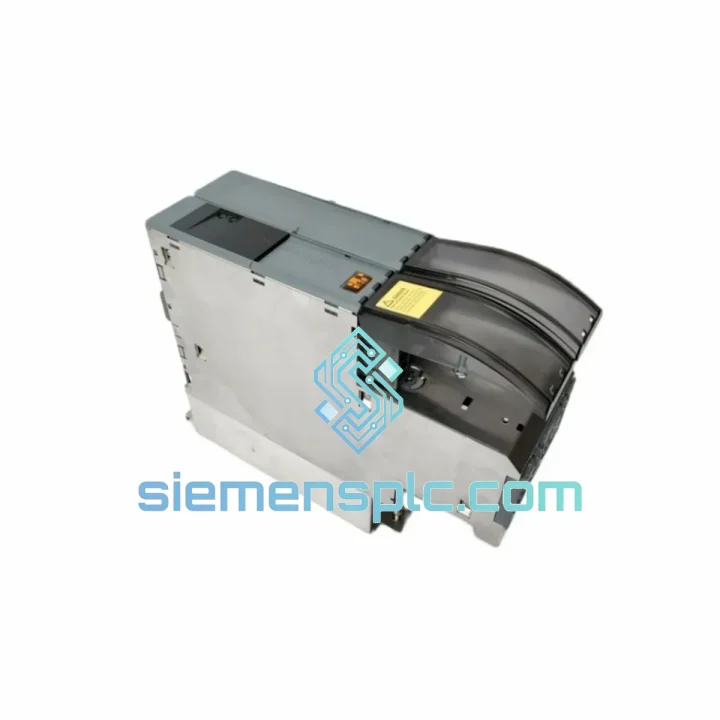
Request verified availability, condition, replacement risk review, packing options and courier lead time for TT140.
Click Request Quote and the part number is inserted into the inquiry form automatically.
Core fields for model confirmation and RFQ routing. Detailed product narrative remains below.
The Lenze TT140 is a slot-mounted technology module engineered for direct integration into the internal expansion bay of Lenze 8400 StateLine, HighLine, TopLine, and E94 series inverters. Its fundamental design premise is the co-location of the tension control algorithm with the drive’s own motor control kernel, executing the closed-loop regulation cycle within the drive’s real-time task scheduler rather than delegating it to an external PLC or standalone tension controller. This architectural decision has measurable consequences for loop latency, wiring topology, and cabinet footprint.
Web-handling processes — paper slitting, flexible film winding, textile rewinding, wire pay-off, and foil laminating — share a common control requirement: the tension applied to the web must remain within a defined tolerance band across the full range of roll diameters encountered during a production run. As a winding roll accumulates material, its moment of inertia increases and the surface speed relationship between the winding mandrel and the web changes. Without active compensation, the torque output of the drive would produce a tension profile that drifts monotonically as the roll builds. The TT140 addresses this through continuous diameter estimation and a configurable taper tension function that adjusts the torque reference in proportion to the current roll radius.
The module accepts two classes of tension feedback: load cell signals in the mV/V range, processed through an internal instrumentation amplifier and analog-to-digital converter, and dancer-roll position signals in the 0–10 V range from a potentiometer mounted on the dancer arm pivot. Both feedback paths include configurable low-pass filtering to attenuate mechanical vibration components that would otherwise inject noise into the tension error signal and destabilize the PI controller. The filter time constant is set via parameter in Lenze Engineer software and should be tuned to a value that attenuates the dominant mechanical resonance frequency of the specific winding mandrel assembly without introducing excessive phase lag into the control loop.
Diameter tracking within the TT140 operates in two modes. The first is a calculated ramp model: the operator enters the core diameter, material thickness, and winding direction, and the module integrates layer count to estimate current roll diameter. The second mode uses encoder-derived surface speed data to compute an actual diameter estimate from the ratio of web speed to mandrel angular velocity. The encoder-based mode is more accurate under conditions where material thickness varies or where slip between the web and mandrel is possible. Both modes feed the taper tension compensation function and the torque feed-forward path.
The torque feed-forward path pre-loads the drive’s torque reference based on the product of the tension setpoint and the current roll radius estimate, reducing the steady-state demand on the feedback PI controller. During acceleration and deceleration phases of the winding cycle, the feed-forward contribution maintains tension stability without requiring the PI integrator to wind up and recover, which is a common source of tension transients in systems that rely exclusively on feedback control.
Real-time Stock & RFQ: [email protected] | WhatsApp: +86 18359268345
| Parameter | Specification |
|---|---|
| Part Number / SKU | TT140 |
| Manufacturer | Lenze SE, Hameln, Germany |
| Compatible Host Drives | Lenze 8400 StateLine, HighLine, TopLine; E94 Series inverters |
| Module Form Factor | Drive-internal technology module, slot-mounted (no external enclosure) |
| Primary Control Function | Closed-loop web tension regulation — winding, unwinding, dancer position |
| Load Cell Input | Strain gauge / load cell, mV/V signal range; internal amplification and ADC |
| Dancer Input | Potentiometer, 0–10 V DC; configurable dead-band and mechanical scaling |
| Control Modes | Tension control (load cell), dancer position control, taper tension with diameter compensation |
| Diameter Calculation | Layer-count ramp model or encoder-based surface-speed ratio method |
| Taper Tension | Configurable taper ratio (% tension reduction per unit diameter increase) |
| Torque Feed-Forward | Integrated; pre-loads torque reference from tension setpoint × radius estimate |
| Fieldbus Visibility | Via host drive PDO / parameter channel (PROFIBUS-DP, CANopen, EtherCAT — drive-variant dependent) |
| Parameterization | Lenze Engineer software; function block library with pre-built tension templates |
| Module Power Supply | Sourced from host drive backplane; no external supply required |
| Operating Temperature | 0 °C to +55 °C ambient (consistent with host drive thermal rating) |
| Storage Temperature | −25 °C to +70 °C |
| Relative Humidity | 5 % to 95 % RH, non-condensing |
| Degree of Protection | IP20 (installed within drive enclosure) |
| Compliance | CE marked; RoHS compliant |
| Country of Origin | Germany |
| HS Code | 8537.10 |
| Warranty | 12 months from date of dispatch |
The TT140 occupies the dedicated technology module slot present on compatible Lenze 8400 and E94 inverters. This slot provides a direct path to the drive’s internal data bus, enabling the module’s firmware to exchange process variables — tension setpoint, measured tension, diameter estimate, torque correction factor — with the drive’s motor control kernel at the drive’s own task cycle rate. The consequence is that the tension control loop executes without any fieldbus round-trip in the signal path. In a conventional PLC-based tension control architecture, the feedback signal travels from the sensor to the PLC analog input, through the PLC scan cycle, across the fieldbus to the drive, and into the torque reference register. Each of these steps introduces latency and, in the case of the fieldbus, jitter. The TT140 eliminates all of these intermediate steps for the core control loop, while still making all process values available to the supervisory PLC via the host drive’s fieldbus interface.
Analog front-end signal conditioning: Load cell signals in the mV/V range are processed by an internal instrumentation amplifier with high common-mode rejection ratio (CMRR), which is essential in drive cabinet environments where switching noise from the inverter’s IGBT stage can couple into low-level analog signal wiring. The amplified signal passes through a configurable digital low-pass filter before entering the PI controller. The filter cutoff frequency should be set below the first mechanical resonance of the winding mandrel assembly — typically in the range of 5–20 Hz for industrial winding machines — to prevent the controller from attempting to respond to mechanical oscillations that it cannot physically damp.
EMC wiring discipline: Analog feedback cables from load cells and dancer potentiometers must be routed as shielded twisted pairs, with the shield terminated at the drive end only to avoid ground loop currents. The TT140’s analog inputs are referenced to the drive’s internal analog ground, which is isolated from the power ground. This isolation prevents conducted interference from the drive’s DC bus and braking resistor circuits from appearing as common-mode voltage on the feedback signal lines.
Taper tension compensation logic: The taper function applies a linear or configurable non-linear correction to the tension setpoint as a function of the current diameter estimate. The operator defines the taper ratio as a percentage: a 10 % taper setting reduces the tension setpoint by 10 % when the roll diameter doubles from its core value. This compensates for the tendency of wound rolls to develop internal stress gradients that can cause telescoping or starring defects if tension is maintained constant throughout the winding cycle. The taper ratio is set via parameter and can be adjusted during a production run without stopping the machine.
PI controller architecture: The tension PI controller within the TT140 operates on the error between the tension setpoint and the filtered feedback signal. The proportional gain and integral time constant are set independently. Anti-windup logic prevents integrator saturation during periods when the drive is at a torque or speed limit, which is a common condition during acceleration from standstill with a full roll on the mandrel. The controller output is a torque correction that is summed with the feed-forward torque reference before being applied to the drive’s torque control input.
Each Lenze TT140 unit dispatched from our Xiamen, China facility is sourced through verified industrial automation supply channels. Pre-shipment inspection covers physical integrity of the module housing and connector, label authenticity against Lenze’s published part number format, and connector pin condition. Original Lenze packaging is supplied where available. Serial number records are maintained for each unit, and traceability documentation is available on request.
Export documentation — commercial invoice, packing list, and certificate of origin — is prepared in compliance with Chinese customs export regulations and the import requirements of the destination country. HS code 8537.10 is applied consistently across all shipments. Dispatch is via DHL Express, FedEx International Priority, or UPS Worldwide Expedited depending on destination and customer preference. Indicative transit times from Xiamen: Europe 3–5 business days, North America 4–6 business days, Southeast Asia 2–3 business days, Middle East 4–6 business days. All units carry a 12-month warranty from the date of dispatch, covering manufacturing defects and verified functional failures under normal operating conditions as defined in Lenze’s product documentation.
Email: [email protected]
WhatsApp: +86 18359268345
Web: siemensplc.com
Location: Xiamen, China
© 2026 siemensplc.com. All rights reserved.
We check the full part number, brand, series and visible nameplate information before quotation.
Sales confirms stock path, condition option, quantity and realistic lead time for export dispatch.
DHL, FedEx, UPS or buyer courier arrangements can be reviewed with packing requirements.
Similar brand or category products for fast comparison and multi-item RFQ lists.