Mitsubishi Electric
RFQ Ready
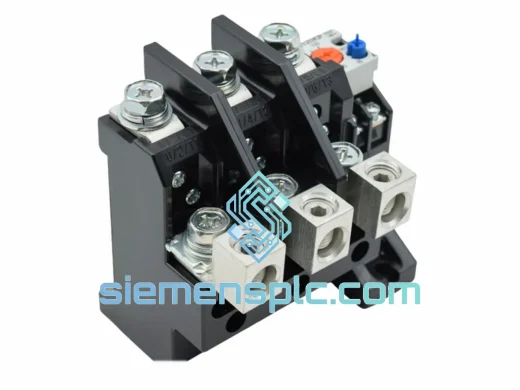
Mitsubishi TH-N12TP Thermal Overload Relay – TH-N Series
TH-N Series
Origin JP
Thermal Overload Relay
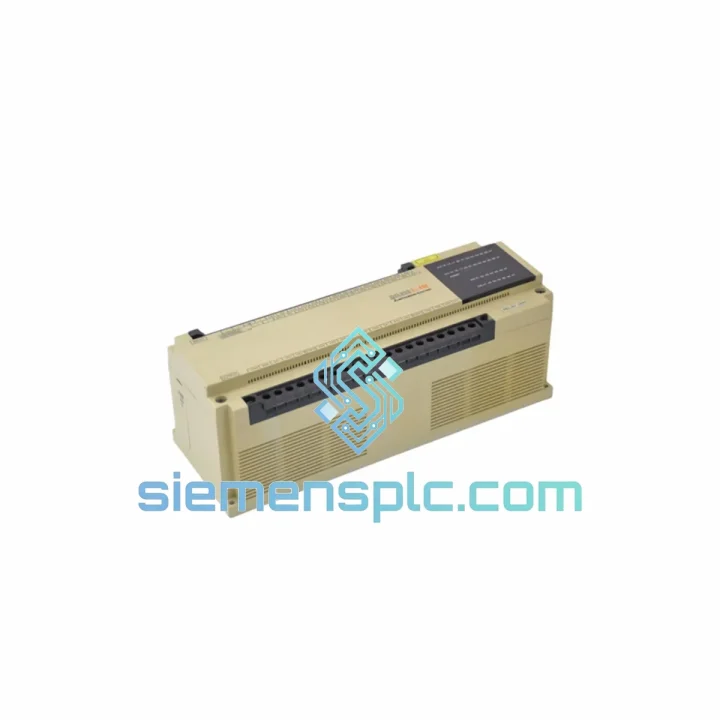
Request verified availability, condition, replacement risk review, packing options and courier lead time for F2-40ER.
Click Request Quote and the part number is inserted into the inquiry form automatically.
Core fields for model confirmation and RFQ routing. Detailed product narrative remains below.
Production lines running MELSEC F2 hardware don’t fail on a schedule. They fail at 2 AM on a Friday before a Monday delivery deadline. The F2-40ER is a 40-point relay-output PLC that has been anchoring factory automation for decades — and when it goes down, the clock starts immediately. Replacement lead times from authorized channels can stretch 4–8 weeks. We cut that to 3–5 business days, door to door, anywhere on the planet.
We hold verified original MITSUBISHI F2-40ER stock in our Xiamen warehouse. Each unit is inspected before dispatch: relay contact resistance checked, EEPROM write cycle verified, terminal blocks cleaned and torqued. You receive a unit that is ready to mount, wire, and download — not one that needs its own troubleshooting session before it goes into service.
URGENT REQUIREMENT? Contact: [email protected] | WhatsApp: +86 18359268345
| Parameter | Specification | Availability |
|---|---|---|
| Model / Part Number | F2-40ER | ✅ Ready to Ship |
| Manufacturer | Mitsubishi Electric | |
| Product Series | MELSEC F2 | |
| Form Factor | Standalone compact PLC | |
| Total I/O Count | 40 points — 24 DI / 16 DO | |
| Output Technology | Relay (dry contact, load-agnostic) | |
| Relay Contact Rating | 2 A / 250 VAC resistive; 80 VA inductive | |
| Input Voltage Range | AC 100–240 V, 50/60 Hz | |
| Program Capacity | 2,000 steps, EEPROM (battery-free retention) | |
| Scan Time | Approx. 0.5 ms per 1,000 steps | |
| Communication Port | RS-422 (requires F2-422CAB cable) | |
| Compatible Software | MELSEC Medoc, GX Developer (F2 adapter mode) | |
| Operating Temperature | 0 °C to +55 °C | |
| Storage Temperature | −20 °C to +70 °C | |
| Humidity | 35–85 % RH, non-condensing | |
| Vibration Resistance | IEC 61131-2: 10–57 Hz / 0.075 mm; 57–150 Hz / 1 G | |
| Protection Rating | IP20 | |
| Mounting | 35 mm DIN rail | |
| Unit Weight | 2,420 g | |
| Certifications | CE, UL, cUL | |
| Country of Origin | Japan |
Field experience with F2-series hardware reveals a consistent set of failure patterns. Knowing them before you pull the unit saves time and prevents a second callout.
Fault 1 — CPU Halts, RUN LED Extinguishes Mid-Shift
Nine times out of ten this is a power quality issue, not a dead CPU. The F2-40ER’s internal power supply is sensitive to sustained undervoltage below 85 VAC. Before condemning the unit, clamp-meter the incoming AC rail under load. If voltage sags below 90 VAC during motor starts on the same circuit, install a line conditioner upstream. If voltage is stable and the CPU still halts, pull error code D9008 via GX Developer diagnostics — codes 6000–6999 indicate CPU hardware faults requiring unit replacement.
Fault 2 — Relay Output Points Fail Selectively
Relay contacts on the F2-40ER are rated for 200,000 operations under resistive load. Inductive loads — solenoid valves, motor contactors, brake coils — accelerate contact erosion by a factor of 3–5x. Symptom: output Y0–Y7 or Y10–Y17 groups fail while the CPU scan is healthy. Diagnosis: force the suspect output ON in GX Developer STOP mode and measure contact resistance with a milliohm meter. Above 0.5 Ω indicates worn contacts; open circuit means welded or burned contacts. There are no field-replaceable relay modules — the entire CPU unit must be swapped.
Fault 3 — EEPROM Program Loss After Power Cycle
The F2-40ER stores its ladder in EEPROM without a backup battery — a design advantage that becomes a liability when the EEPROM write endurance is exhausted. Typical endurance is 100,000 write cycles; units that have been repeatedly re-programmed over 15+ years of service can hit this limit. Symptom: program uploads successfully but fails verification; CPU runs but outputs behave erratically. Action: attempt three consecutive write-verify cycles. If all three fail, the EEPROM is at end of life. Replace the unit.
Fault 4 — RS-422 Port Unresponsive
The programming port uses RS-422 differential signaling at 9,600 bps default. Common causes of communication failure: (a) USB-to-RS232 adapter used instead of a genuine RS-422 adapter — these are not interchangeable; (b) SDA/SDB/RDA/RDB polarity reversed on the cable connector; (c) baud rate mismatch if a previous engineer changed the port settings. If the port is physically damaged (bent pins, cracked connector housing), the unit requires replacement — there is no field repair for the RS-422 interface.
Replacement Procedure
Step 1 — Program Backup. Connect via RS-422 and upload the complete ladder program and parameter file using GX Developer before touching anything else. Save to a timestamped folder on a local drive, not a network share. If the CPU is already non-responsive, check the HMI or SCADA system for a cached program copy. No backup means a full re-commission — add 4–8 hours to your downtime estimate.
Step 2 — Photograph and Label. Photograph every terminal block from two angles before removing a single wire. Apply numbered adhesive labels to each wire at the terminal. The F2-40ER uses screw terminals; a single transposed wire on the output commons will take down an entire I/O group silently.
Step 3 — Isolate and Verify Zero Energy. Open the panel breaker feeding the F2-40ER. Verify zero voltage at the L and N terminals with a calibrated CAT III meter. Lock out the breaker. The unit has no accessible internal fuse — the panel breaker is the sole isolation point.
Step 4 — Remove and Mount Replacement. Release the DIN rail retention clip at the base of the unit, tilt the bottom forward, and lift clear. Mount the replacement unit on the 35 mm DIN rail, seat the top hook first, then press the bottom until the clip engages. In high-vibration environments, apply a DIN rail end stop on both sides of the unit to prevent lateral migration.
Step 5 — Reconnect Wiring. Reconnect terminals in reverse removal order using your photographs as reference. Torque screw terminals to 0.5–0.6 N·m — under-torqued terminals cause intermittent faults that are nearly impossible to diagnose under load. Pay particular attention to the input and output common terminals; incorrect commons cause entire I/O groups to fail without generating a CPU error code.
Step 6 — Download and Force-Test. Power up, connect via RS-422, and download the backed-up program. In STOP mode, force each input and output point individually. Verify each input with a field signal source and each output with a clamp meter on the load circuit. Do not skip this step — a wiring error found during force-testing takes 2 minutes to fix; the same error found during production restart takes 2 hours.
Step 7 — Monitor First 30 Minutes. Switch to RUN mode and observe the CPU LED: solid green is normal. Any ERROR LED activation requires immediate investigation. Check D9008 for the current error code. Log the first 30 minutes of operation in the maintenance record — early-life failures on a replacement unit are rare but not impossible, and a timestamped log protects you if a warranty claim is needed.
The F2-40ER was built for environments that would destroy consumer-grade electronics in an afternoon. Its PCB carries a conformal coating that resists humidity ingress at sustained 85 % RH — the kind of ambient you find in coastal chemical plants, food processing washdown areas, and tropical textile mills. The coating is not a marketing claim; it is a measurable barrier that prevents the dendritic growth between PCB traces that causes phantom input signals and random output activations.
Relay output contacts use bifurcated design — two contact points per relay, wired in parallel. This geometry maintains reliable switching at load currents as low as 5 mA, preventing the contact oxidation that plagues single-contact relays in low-current signal circuits. For high-current loads, the bifurcated design also distributes arc energy across two surfaces, extending contact life under inductive switching conditions.
Thermal headroom is genuine, not nominal. The F2-40ER operates continuously at 55 °C ambient without derating any I/O points. In practice, this means the unit survives summer panel temperatures in non-air-conditioned enclosures — a scenario that kills many modern compact PLCs that derate aggressively above 40 °C. Internal capacitors are rated for 105 °C; the published operating range represents a conservative margin, not the actual thermal limit.
Vibration performance meets IEC 61131-2: 10–57 Hz at 0.075 mm displacement, 57–150 Hz at 1 G acceleration. This covers conveyor frames, compressor skids, pump station panels, and most press-room environments without additional isolation. Units installed on equipment with resonant frequencies in the 50–100 Hz range should use anti-vibration DIN rail mounts as a precaution — a 30-minute investment that prevents a 30-hour downtime event.
Every unit we dispatch has been stored in a climate-controlled warehouse and undergoes a pre-shipment inspection covering capacitor ESR, terminal block torque, relay contact resistance, and EEPROM write verification. We do not ship units that have been sitting in uncontrolled storage for years and hope for the best. What arrives at your facility is a unit that has been confirmed functional before it left ours.
Our facility is in Xiamen, Fujian Province — one of China’s primary export hubs with direct access to DHL Express, FedEx International Priority, and UPS Worldwide Express gateways. Transit times from our warehouse to your dock:
Order Cutoff — 14:00 CST: Orders confirmed with payment before 14:00 CST ship same day. After 14:00, next business day dispatch. Weekend orders ship Monday morning.
Packing: Each F2-40ER is wrapped in 20 mm anti-static foam, placed in a double-wall corrugated carton with corner protectors, and sealed with tamper-evident tape. The outer label carries your reference number, the unit serial number, and the HS code (8537.10) for customs pre-clearance.
Export Documentation: Commercial invoice, packing list, and HS code declaration are filed electronically on Day 1. For EU shipments, EUR.1 movement certificate or origin declaration is included. For US shipments, EEI filing is completed before handover to the carrier. No manual customs delays.
Transit Times from Xiamen: USA (East/West Coast) 3–4 business days via FedEx IP; EU (Germany, Netherlands, France) 3–5 days via DHL Express; Southeast Asia 2–3 days; Middle East 3–5 days; Australia/New Zealand 3–4 days. Tracking number delivered to your email within 2 hours of carrier handover.
Special Arrangements: Saturday delivery available via DHL on request. Freight forwarder pickup from our Xiamen facility accommodated for customers with established logistics contracts. For orders requiring bonded warehouse documentation or specific carrier account billing, contact us before placing the order.
Import duties and applicable taxes are the buyer’s responsibility. We provide accurate declared values and correct HS codes on all shipments to prevent customs holds — a detail that matters when your line is waiting.
📧 Email: [email protected]
💬 WhatsApp: +86 18359268345
🌐 Web: siemensplc.com
© 2026 siemensplc.com. All rights reserved.
We check the full part number, brand, series and visible nameplate information before quotation.
Sales confirms stock path, condition option, quantity and realistic lead time for export dispatch.
DHL, FedEx, UPS or buyer courier arrangements can be reviewed with packing requirements.
Similar brand or category products for fast comparison and multi-item RFQ lists.