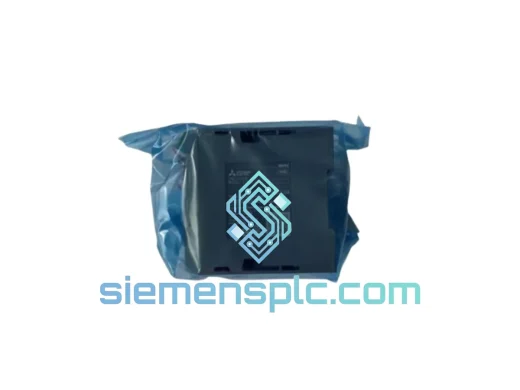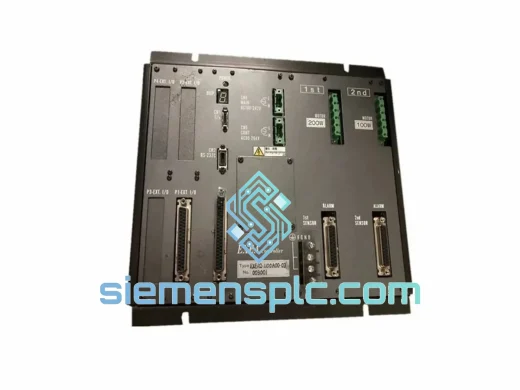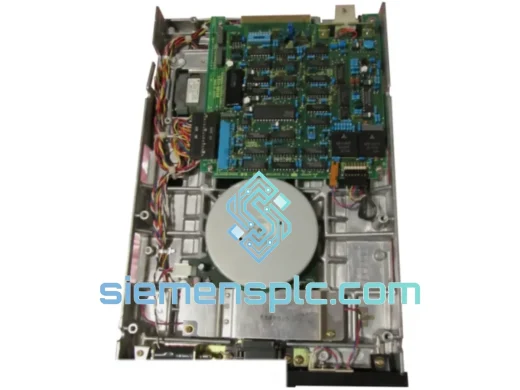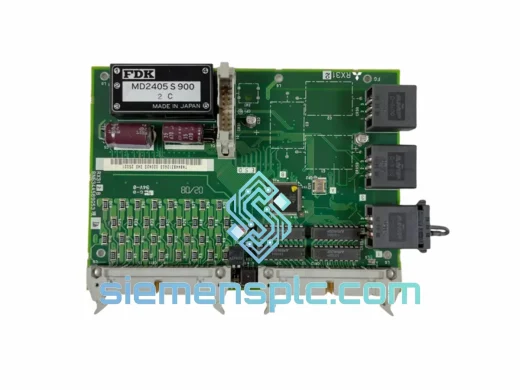
Mitsubishi Electric
RFQ Ready
Mitsubishi RX312B BN634A589G53 I/O Module – MELSEC RX312
MELSEC
Origin JP
PLC I/O Module
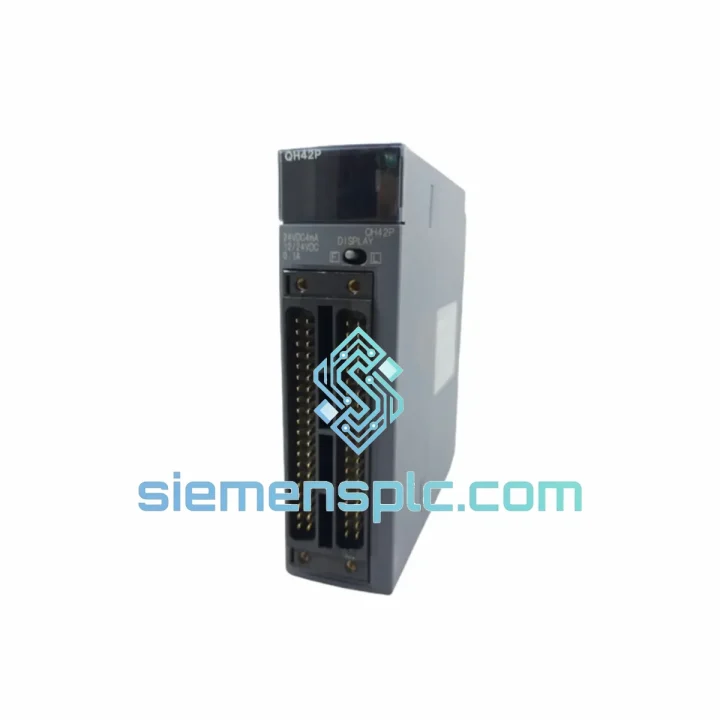
Request verified availability, condition, replacement risk review, packing options and courier lead time for QX48Y57 BD627B662G51.
Click Request Quote and the part number is inserted into the inquiry form automatically.
Core fields for model confirmation and RFQ routing. Detailed product narrative remains below.
The QX48Y57 BD627B662G51 is a combination input/output module manufactured by Mitsubishi Electric under the MELSEC programmable controller platform. Within a MELSEC rack-based control system, this module occupies a single slot and simultaneously handles discrete input acquisition and transistor output switching — consolidating two functional layers into one physical unit. This architecture reduces the total slot count required per I/O point, directly lowering BOM cost and rack real estate in panel-constrained installations.
The QX48 input section is a 48-point DC input block rated for 24 VDC sink/source operation. Each input channel is optically isolated from the internal logic bus, with a typical isolation voltage of 500 VAC between field-side and CPU-side circuits. The optical coupler response time is nominally 1 ms ON / 1 ms OFF, which is adequate for standard discrete sensing tasks including proximity switches, photoelectric sensors, and limit switches operating at scan rates up to 500 Hz. The Y57 output section provides transistor (NPN open-collector) switching with a rated load current of 0.1 A per point and a maximum aggregate current per common of 0.8 A. Output response time is ≤1 ms, making this section suitable for driving solenoid valves, indicator lamps, and relay coils within the 24 VDC field power domain.
The BD627B662G51 suffix designates the specific hardware revision and internal assembly code assigned by Mitsubishi Electric’s manufacturing traceability system. This code is critical when ordering replacement units for an existing installation, as internal component revisions can affect firmware compatibility with certain CPU module generations. Always cross-reference this full part number — including the BD suffix — when sourcing a direct replacement.
Real-time Stock & RFQ: [email protected] | WhatsApp: +86 18359268345
| Parameter | Specification |
|---|---|
| Full Part Number | QX48Y57 BD627B662G51 |
| Manufacturer | Mitsubishi Electric Corporation |
| Platform | MELSEC Series PLC |
| Module Classification | Combination Input/Output Module |
| Input Section | QX48 — 48-point DC Input |
| Input Rated Voltage | 24 VDC (sink/source compatible) |
| Input ON Voltage Range | 19.2 – 28.8 VDC |
| Input OFF Voltage | ≤6 VDC |
| Input Current per Point | Approx. 4 mA at 24 VDC |
| Input Response Time | 1 ms ON / 1 ms OFF (default filter) |
| Input Isolation | Photocoupler, 500 VAC field-to-logic |
| Output Section | Y57 — Transistor (NPN open-collector) |
| Output Rated Voltage | 12 – 24 VDC |
| Output Load Current | 0.1 A per point |
| Max Current per Common | 0.8 A |
| Output Response Time | ≤1 ms |
| Output Isolation | Photocoupler |
| Module Weight | 4,460 g (assembled unit with housing) |
| Operating Temperature | 0 – 55 °C |
| Storage Temperature | -25 – 75 °C |
| Relative Humidity | 5 – 95% RH (non-condensing) |
| Vibration Resistance | IEC 61131-2 compliant |
| Country of Origin | Japan |
| Warranty | 12 months from date of shipment |
The QX48Y57 BD627B662G51 implements a dual-bus internal architecture where the input acquisition path and the output drive path share a common backplane interface but maintain electrically independent field-side circuits. This separation is not merely a safety measure — it is a deliberate EMC design choice. In environments with variable-frequency drives (VFDs), arc welders, or high-current contactors operating in proximity, the common-mode noise injected onto field wiring can reach several hundred millivolts. The photocoupler isolation barrier on each input channel attenuates this noise before it reaches the CMOS logic layer, preventing false triggering that would otherwise corrupt the PLC’s input image table.
The transistor output section uses NPN open-collector topology, which means the load is connected between the output terminal and the positive supply rail, with the transistor switching the return path to common. This configuration is inherently compatible with sinking-type field devices and provides a well-defined low-impedance path to ground during the OFF state, reducing susceptibility to capacitive coupling from adjacent energized conductors in dense terminal blocks.
The BD627B662G51 hardware revision incorporates an internal surge suppression network on each output channel. Inductive loads — solenoid valves, relay coils — generate back-EMF transients when de-energized. Without suppression, these transients can exceed 100 V in a 24 VDC system and degrade the output transistor junction over time. The integrated suppression clamps this transient to within the transistor’s safe operating area, extending mean time between failures (MTBF) in applications with high-frequency solenoid cycling.
The module’s backplane connector interfaces with the MELSEC base unit via a high-density parallel bus. Data transfer between the module and the CPU occurs within the CPU’s scan cycle — typically 0.5 – 10 ms depending on program size and CPU model. The combination module does not introduce additional latency beyond the standard I/O refresh period, as it participates in the same synchronous bus arbitration as dedicated input or output modules.
Every QX48Y57 BD627B662G51 unit dispatched from our Xiamen, China facility is a genuine Mitsubishi Electric component. Mitsubishi Electric’s manufacturing process for MELSEC modules applies automated optical inspection (AOI) at the PCB assembly stage, followed by functional burn-in testing under rated electrical load. The BD627B662G51 hardware revision carries Mitsubishi Electric’s internal quality certification, and each unit is serialized for full traceability back to the production batch.
Upon receipt at our warehouse, units undergo a secondary inspection protocol: physical integrity check of the backplane connector pins, label and serial number verification against Mitsubishi Electric’s part numbering schema, and anti-static packaging assessment. Units that pass inspection are repackaged in ESD-safe bags with desiccant inserts and placed in rigid foam-lined cartons rated for international air freight handling.
Shipment from Xiamen is available via DHL Express, FedEx International Priority, and UPS Worldwide Expedited. Transit times to major industrial hubs are typically 3–5 business days to Europe, 2–4 business days to Southeast Asia, and 4–7 business days to North America. All shipments include a commercial invoice, packing list, and certificate of origin. Export classification is handled in accordance with Chinese customs regulations, and HS code documentation is provided for customs clearance at the destination port. A 12-month warranty against manufacturing defects is included with every unit.
Email: [email protected]
WhatsApp: +86 18359268345
Web: siemensplc.com
Location: Xiamen, China
© 2026 siemensplc.com. All rights reserved.
We check the full part number, brand, series and visible nameplate information before quotation.
Sales confirms stock path, condition option, quantity and realistic lead time for export dispatch.
DHL, FedEx, UPS or buyer courier arrangements can be reviewed with packing requirements.
Similar brand or category products for fast comparison and multi-item RFQ lists.