MKS Instruments
RFQ Ready
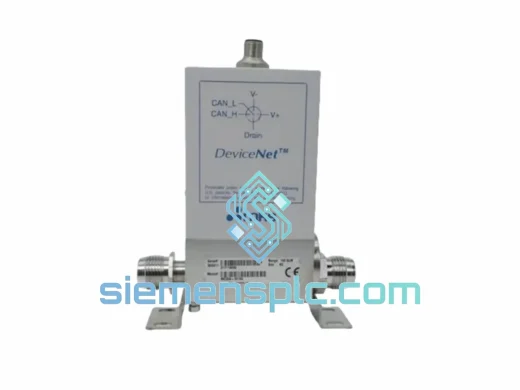
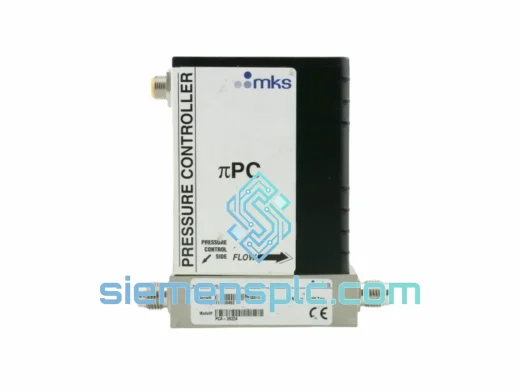
MKS PCA-28224-LF-K Pressure Controller – SEC-4400MC Series
SEC-4400MC Series
Origin United States (MKS Instruments OEM production)
Pressure Controller
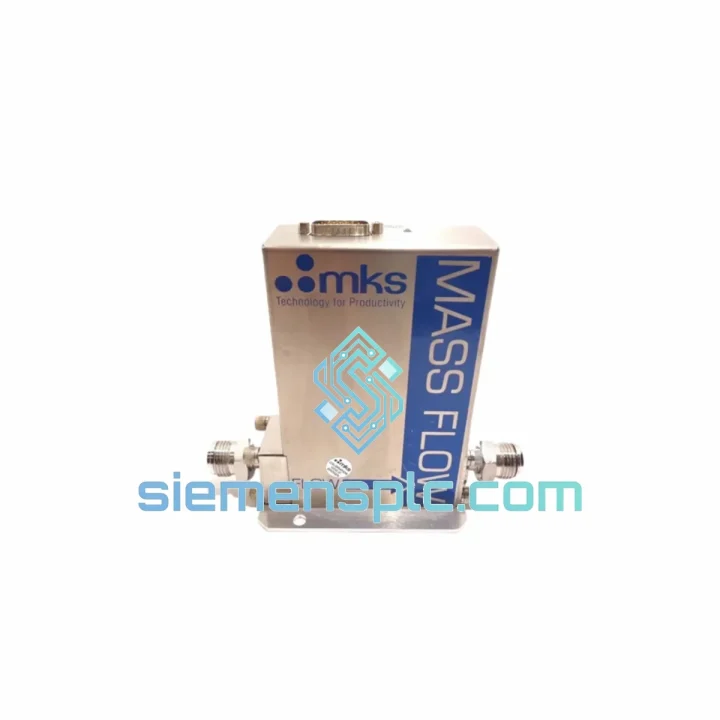
Request verified availability, condition, replacement risk review, packing options and courier lead time for 1579A00412LM1BV.
Click Request Quote and the part number is inserted into the inquiry form automatically.
Core fields for model confirmation and RFQ routing. Detailed product narrative remains below.
The MKS Instruments 1579A00412LM1BV is a thermally-based digital mass flow controller (MFC) designed for sustained, repeatable gas metering in semiconductor fabrication, specialty chemical processing, and advanced materials research. Unlike volumetric flow devices, the 1579A series measures true mass flow by detecting the heat transfer differential across a precision-wound sensor capillary — a method that remains independent of upstream pressure fluctuations and ambient temperature variation within rated operating bounds.
The model suffix 00412LM1BV encodes the factory calibration parameters: full-scale range, calibration gas species, valve configuration (normally closed), and connector/output type. This specificity means the unit arrives pre-characterized for its target process gas, eliminating field calibration overhead and reducing commissioning time on new tool installations or MFC swap-outs.
In a typical CVD or ALD process module, the MFC sits between the gas panel shut-off valve and the chamber inlet, receiving a 0–5 VDC set-point signal from the process controller or a digital command via RS-485. The internal PID loop drives the proportional solenoid valve to maintain the commanded flow rate, with the actual flow value transmitted back as a 0–5 VDC analog output or digital register. Closed-loop response time is rated below 2 seconds to set-point, which is sufficient for most multi-step recipe transitions without introducing transient overshoot that could contaminate chamber chemistry.
The wetted flow path — sensor capillary, valve seat, and manifold body — is constructed from 316L stainless steel with Viton elastomeric seals, providing adequate chemical resistance for a broad range of inert and mildly reactive process gases. The face-seal port geometry conforms to the MKS W-seal standard, maintaining mechanical interchangeability with earlier 1179 and 1259 series units installed in legacy tool platforms.
Real-time Stock & RFQ: [email protected] | WhatsApp: +86 18359268345
| Parameter | Specification |
|---|---|
| Manufacturer | MKS Instruments |
| Full Model Number | 1579A00412LM1BV |
| Series | MKS 1579A |
| Device Type | Thermal Mass Flow Controller (MFC) |
| Measurement Principle | Capillary thermal bypass sensor |
| Set-point Input Signal | 0–5 VDC analog / RS-485 digital |
| Output Signal | 0–5 VDC analog (actual flow) |
| Valve Configuration | Normally Closed (NC) proportional solenoid |
| Accuracy | ±1.0% of Full Scale (FS) |
| Repeatability | ±0.2% FS |
| Response Time to Set-point | <2 seconds |
| Inlet Pressure (max) | 100 psig (6.9 bar) |
| Differential Pressure (operating) | 10–30 psid typical |
| Wetted Materials | 316L SS body; Viton seals |
| Port Configuration | MKS W-seal face-seal (1.125″ OD) |
| Power Supply | ±15 VDC or +24 VDC |
| Power Consumption | ≤5 W (steady state) |
| Electrical Connector | 15-pin D-sub (DB-15) |
| Operating Temperature | 10–50 °C ambient |
| Storage Temperature | –20 to +70 °C |
| Unit Weight | 1,580 g |
| Certifications | CE (LVD + EMC), RoHS 2 |
| Warranty | 12 months from date of shipment |
The 1579A series employs a capillary bypass thermal sensor architecture. A small fraction of the total gas flow is diverted through a precision-wound resistance-wire capillary. Two matched thermistor elements — one upstream, one downstream — measure the temperature differential induced by the flowing gas. At zero flow, both elements equilibrate to the same temperature. As flow increases, the downstream element registers a proportional temperature rise. The onboard microprocessor linearizes this differential against a stored gas-specific calibration table, producing a mass flow reading that is inherently independent of inlet pressure within the rated operating range.
EMC and Electrical Isolation: The analog signal conditioning circuitry is galvanically separated from the valve drive stage. The solenoid driver operates from a dedicated power rail with transient suppression diodes across the coil, limiting inductive kickback to below 1 V above supply rail. This prevents valve switching transients from coupling into the sensor measurement path — a common failure mode in high-density gas panel installations where multiple MFCs share a common power bus.
PID Control Loop: The internal closed-loop controller uses a fixed-gain PID algorithm tuned at the factory for the specific gas and full-scale range encoded in the model suffix. The proportional gain is set conservatively to avoid overshoot on step changes, while the integral term eliminates steady-state offset under varying differential pressure conditions. Derivative action is minimal, reducing sensitivity to sensor noise at low flow rates near zero.
Valve Mechanics: The normally-closed proportional solenoid valve uses a spring-loaded plunger against a PCTFE or Viton seat. Proportional current control (not simple on/off) allows the valve to hold intermediate positions, enabling smooth flow ramps rather than step changes. This is particularly relevant in ALD processes where abrupt flow transitions can cause pressure spikes that disturb adjacent process modules sharing the same gas manifold.
Thermal Stability: The sensor capillary is thermally isolated from the main flow body by a low-conductivity mounting structure. This reduces the influence of body temperature changes — caused by gas compression heating or ambient variation — on the sensor differential measurement. The result is a device that maintains its calibrated accuracy across the full 10–50 °C ambient operating range without requiring external temperature compensation.
Every MKS 1579A00412LM1BV unit supplied through siemensplc.com is sourced as genuine MKS Instruments hardware through verified industrial supply channels. Pre-shipment inspection covers physical integrity of the W-seal port faces, DB-15 connector pin condition, label legibility, and original factory packaging integrity. Units are re-packaged in anti-static, moisture-barrier poly bags with silica gel desiccant packs before being placed in double-wall corrugated cartons rated for international air freight handling.
Shipments originate from our warehouse in Xiamen, China. Standard export documentation — commercial invoice, packing list, and certificate of origin — is prepared for each order. DHL Express and FedEx International Priority are the primary carriers, with typical transit times of 3–5 business days to North America and Europe, and 2–4 business days to Southeast Asia. For urgent fab downtime situations, same-day dispatch is available for orders confirmed before 14:00 CST. All shipments are fully insured and tracked from dispatch to delivery confirmation.
A 12-month warranty covers functional defects under normal operating conditions from the date of shipment. Warranty claims are processed with a target response time of 48 hours. Replacement units are dispatched before the defective unit is returned, minimizing tool downtime for qualified customers with established accounts.
Email: [email protected]
WhatsApp: +86 18359268345
Web: siemensplc.com
Location: Xiamen, China
© 2026 siemensplc.com. All rights reserved.
We check the full part number, brand, series and visible nameplate information before quotation.
Sales confirms stock path, condition option, quantity and realistic lead time for export dispatch.
DHL, FedEx, UPS or buyer courier arrangements can be reviewed with packing requirements.
Similar brand or category products for fast comparison and multi-item RFQ lists.