MOOG
In Stock OK
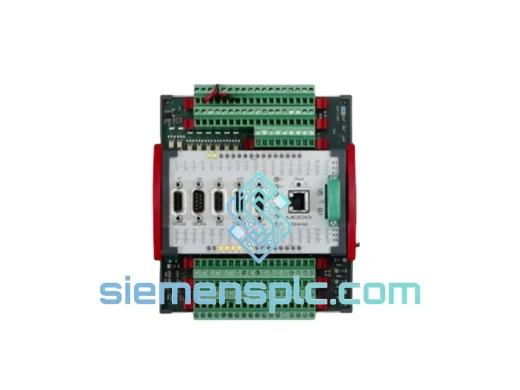
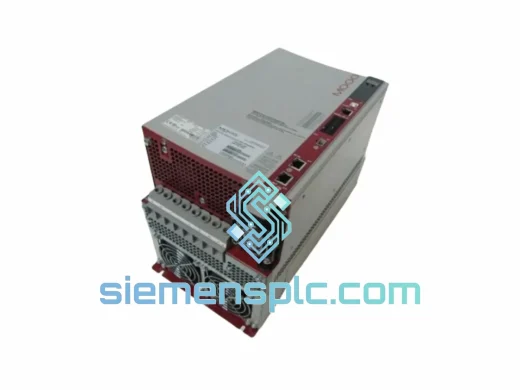
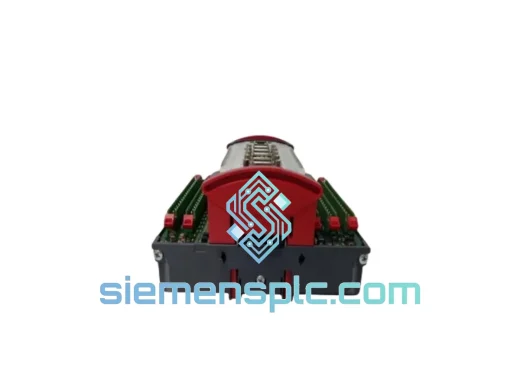
MOOG IMI220-411A001 Motion Controller – TMC400 Series
Request verified availability, condition, replacement risk review, packing options and courier lead time for IMI220-411A001.
BrandMOOG
Part NumberIMI220-411A001
ConditionAvailability Check
Lead TimeRFQ Confirmation
DocumentsDatasheet / photos by RFQ
ShippingExport packing available
Auto-filled RFQ
IMI220-411A001
Click Request Quote and the part number is inserted into the inquiry form automatically.
- Reply by email: [email protected]
- WhatsApp / Tel: +86 18359268345
- Mon-Sat 9:00-18:00 GMT+8
Procurement Data
Key Product Information
Core fields for model confirmation and RFQ routing. Detailed product narrative remains below.
- Brand
- MOOG
- Primary Part Number
- IMI220-411A001
- Product Type
- Motion Controller
- Series / Family
- TMC400 Series
- Manufacturer
- MOOG Inc. (USA)
- Country of Origin
- United States of America
- Catalog Category
- Robotics & Motion
- Operating Temp.
- 0 °C to +55 °C (ambient, panel-mounted)
- Humidity
- 5 % to 95 % RH, non-condensing
- Warranty
- 12 months from date of shipment
Model confirmed for inquiry
IMI220-411A001
Send quantity, destination and urgency. The RFQ form keeps this part number attached.
Request Quote
Product Overview
MOOG IMI220-411A001: Deterministic Multi-Axis Control Architecture in the TMC400 Platform
The MOOG IMI220-411A001 is the central processing and coordination unit within the TMC400 Total Machine Controller family. Its role in a control loop is not limited to sequencing logic — it functions as the real-time arbitration layer between motion trajectory generation, fieldbus synchronization, and machine-level safety interlocks. In multi-axis configurations, the IMI220-411A001 maintains phase coherence across all servo axes by executing a deterministic scan cycle, typically in the sub-millisecond range, ensuring that position commands, velocity references, and torque limits are dispatched to downstream drives within a fixed, bounded latency window. This determinism is the architectural foundation that separates a motion controller from a general-purpose PLC in high-dynamic applications such as injection molding, metal forming, and semiconductor handling.
The controller’s internal bus architecture separates the real-time motion kernel from the IEC 61131-3 application layer, preventing non-deterministic PLC scan jitter from propagating into the servo command pipeline. This dual-domain execution model allows machine builders to run complex HMI communication, data logging, and recipe management tasks concurrently with closed-loop motion without compromising axis synchronization integrity.
Real-time Stock & RFQ: [email protected] | WhatsApp: +86 18359268345
Technical Parameters
| Part Number | IMI220-411A001 |
| Manufacturer | MOOG Inc. (USA) |
| Series | TMC400 – Total Machine Controller |
| Controller Class | Multi-axis real-time motion controller |
| Supply Voltage | 24 VDC (±10%), SELV circuit |
| Power Consumption | ≤ 15 W (typical, controller card only) |
| Real-Time Cycle Time | Configurable; ≥ 250 µs (motion kernel) |
| Fieldbus Interfaces | EtherCAT (master), CANopen, Ethernet TCP/IP |
| Programming Standard | IEC 61131-3 (ST, LD, FBD, SFC, IL) |
| Axis Count | Up to 32 coordinated axes (EtherCAT topology) |
| Analog I/O | ±10 V command outputs; configurable resolution |
| Digital I/O | Expandable via EtherCAT I/O modules |
| Operating Temperature | 0 °C to +55 °C (ambient, panel-mounted) |
| Storage Temperature | -25 °C to +70 °C |
| Humidity | 5 % to 95 % RH, non-condensing |
| Enclosure Rating | IP20 (DIN-rail / panel mount) |
| Certifications | CE (EMC Directive 2014/30/EU), RoHS 2011/65/EU |
| Safety Compliance | IEC 61800-5-2, ISO 13849 (STO-ready architecture) |
| Country of Origin | United States of America |
| Warranty | 12 months from date of shipment |
Hardware Logical Analysis
The IMI220-411A001 is built on a dual-processor architecture: a dedicated real-time processor handles the motion kernel and fieldbus master stack, while a secondary application processor manages the IEC 61131-3 runtime, HMI gateway functions, and non-real-time I/O. The two domains communicate via a shared-memory interface with semaphore-controlled access, eliminating race conditions that would otherwise introduce latency spikes into the servo command output.
EtherCAT Master Implementation: The onboard EtherCAT master operates in Distributed Clock (DC) mode, synchronizing all slave devices — servo drives, I/O couplers, encoder interfaces — to a common system time reference with sub-microsecond jitter. This is not a software-polled implementation; the EtherCAT frame dispatch is hardware-triggered from the motion kernel timer, ensuring that network cycle initiation is decoupled from OS scheduling latency.
EMC Design: The PCB layout employs a multi-layer stackup with dedicated ground planes separating the analog command signal layer from the digital logic layer. Differential signal pairs for encoder feedback and fieldbus lines are routed with controlled impedance (100 Ω ±10 %). Onboard common-mode chokes and TVS diode arrays on all external interface connectors provide protection against conducted transients per IEC 61000-4-4 (EFT, 2 kV) and IEC 61000-4-5 (surge, 1 kV). The controller is rated for operation in environments with radiated field strengths up to 10 V/m per IEC 61000-4-3.
Non-Volatile Parameter Storage: Machine parameters, axis configurations, and application programs are stored in FLASH memory with wear-leveling firmware. A battery-backed RTC maintains timestamp integrity for fault logging across power cycles. The parameter storage architecture supports rapid controller swap — a replacement unit can be loaded with a full machine configuration backup via USB or Ethernet in under 5 minutes, minimizing unplanned downtime.
Thermal Management: The controller card uses a passive thermal dissipation design with a thermally conductive interface between the main processor package and the aluminum backplate. No active cooling fan is required, eliminating a common failure mode in industrial environments with particulate contamination. Onboard temperature sensors provide continuous thermal monitoring with configurable warning and shutdown thresholds accessible via the diagnostic interface.
System Integration Benefits
- Bounded Servo Loop Latency: The hardware-triggered EtherCAT frame dispatch guarantees that axis command updates reach all drives within a fixed window (≤ 1 µs jitter in DC mode), enabling coordinated multi-axis interpolation without positional drift accumulation over extended production runs.
- Unified Logic and Motion Namespace: Machine I/O variables, axis objects, and HMI data tags share a single IEC 61131-3 variable namespace, eliminating the data mapping overhead and synchronization errors common in architectures that separate PLC and motion controller into discrete hardware units.
- Electrohydraulic Axis Support: The ±10 V analog command outputs allow direct interfacing with proportional valve amplifiers and hydraulic servo valves, enabling hybrid electric-hydraulic machine architectures without additional signal conditioning hardware.
- Integrated Diagnostic Transparency: The TMC400 platform exposes axis-level diagnostics — following error, torque utilization, encoder status, drive fault codes — directly within the IEC 61131-3 application layer as structured data types. No separate diagnostic tool or fieldbus sniffer is required for first-level fault isolation.
- STO-Ready Safety Architecture: The controller’s safety output interface supports Safe Torque Off (STO) signal routing to connected drives, enabling SIL 2 / PLd safety circuit implementation without external safety relays on each axis, reducing panel wiring complexity and BOM cost.
- Scalable Axis Count Without Hardware Redesign: Adding axes to an existing TMC400 system requires only the addition of EtherCAT slave drives on the network ring — no additional controller hardware, no backplane slot allocation, and no firmware upgrade in standard configurations up to the 32-axis limit.
- Open Fieldbus Interoperability: EtherCAT and CANopen compliance allows integration of third-party I/O modules, safety controllers, and vision systems from any vendor supporting these protocols, preserving the machine builder’s freedom to select best-in-class components at the subsystem level.
- Rapid Commissioning via Parameter Backup/Restore: Full machine configuration — axis parameters, cam tables, application program, I/O mapping — can be exported to a single archive file and restored to a replacement controller in the field, reducing mean time to repair (MTTR) in production environments where spare controller inventory is maintained.
- Concurrent Multi-Task Execution: The application processor supports multiple IEC 61131-3 tasks with independent cycle times and priorities, allowing time-critical motion sequences to execute at 1 ms intervals while slower supervisory logic, data logging, and communication tasks run at 10–100 ms intervals without mutual interference.
Quality Assurance & Global Logistics
Every MOOG IMI220-411A001 unit supplied by siemensplc.com is sourced as a genuine OEM component through verified industrial distribution channels. Units are not rebranded, reconditioned without disclosure, or sourced from unverified secondary markets. The following quality process applies to all shipments:
- Incoming Inspection: Physical integrity check of PCB, connector pins, housing, and labeling against MOOG OEM specifications upon receipt at our Xiamen warehouse.
- Authenticity Verification: Part number, date code, and serial number cross-referenced against manufacturer documentation. Units with inconsistent markings are quarantined and not shipped.
- ESD-Safe Handling: All units are handled in ESD-controlled environments (EPA per IEC 61340-5-1) and shipped in anti-static bags with moisture barrier packaging where applicable.
- Documentation Package: Commercial invoice, packing list, certificate of conformity, and — for qualified orders — test reports are provided with each shipment.
- 12-Month Warranty: All units carry a 12-month warranty from the date of shipment, covering manufacturing defects and functional failures under normal operating conditions.
Logistics are managed from our Xiamen, China operations hub. Standard export shipments are dispatched via DHL Express, FedEx International Priority, or UPS Worldwide, with typical transit times of 3–5 business days to Europe, 4–6 days to North America, and 2–4 days to Southeast Asia. All shipments include full tracking, commercial export documentation, and HS code classification for customs clearance. Air freight consolidation and sea freight options are available for bulk orders. Emergency same-day dispatch is available for in-stock units when orders are confirmed before 14:00 CST.
Contact Information
Email: [email protected]
WhatsApp: +86 18359268345
Web: siemensplc.com
Location: Xiamen, China
© 2026 siemensplc.com. All rights reserved.
Ready to quote
[email protected]
Send This Part Number to Sales
RFQ workflow
Quality workflow ->
Confirmation Process
01Model confirmation
We check the full part number, brand, series and visible nameplate information before quotation.
02Availability reply
Sales confirms stock path, condition option, quantity and realistic lead time for export dispatch.
03Packing & courier
DHL, FedEx, UPS or buyer courier arrangements can be reviewed with packing requirements.
Continue sourcing
Browse full catalog ->
Related Automation Parts
Similar brand or category products for fast comparison and multi-item RFQ lists.
MOOG
RFQ Ready
MOOG G392-024-020-001 Servo Amplifier
G392 Series
Origin United States
Servo Amplifier
MOOG
RFQ Ready
MOOG D137-001-011 Servo Drive Motion Controller – D137 Series
D137 Series
Origin US
Servo Drive