Neles Automation
RFQ Ready
Neles Automation A413325 Valve Positioner – IPU Series
Positioner Unit IPU Series
Origin Not specified
Valve Positioner
Request verified availability, condition, replacement risk review, packing options and courier lead time for A413280 CPR1.
Click Request Quote and the part number is inserted into the inquiry form automatically.
Core fields for model confirmation and RFQ routing. Detailed product narrative remains below.
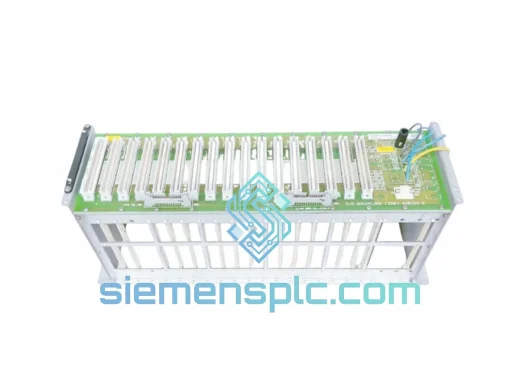
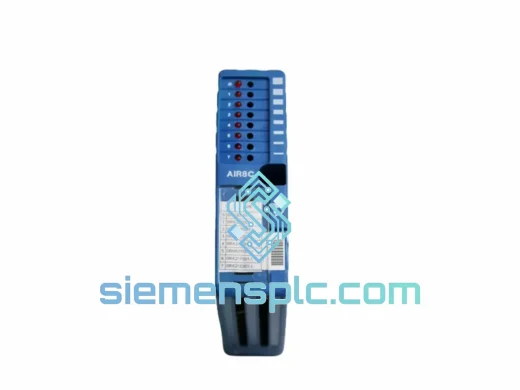
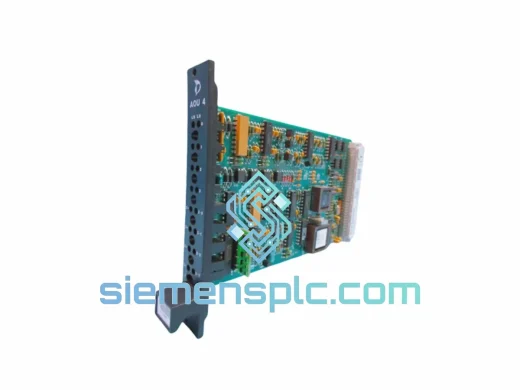
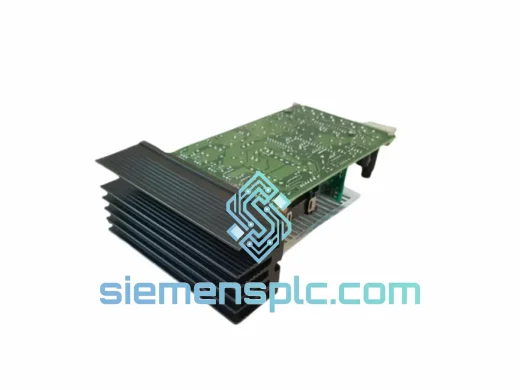
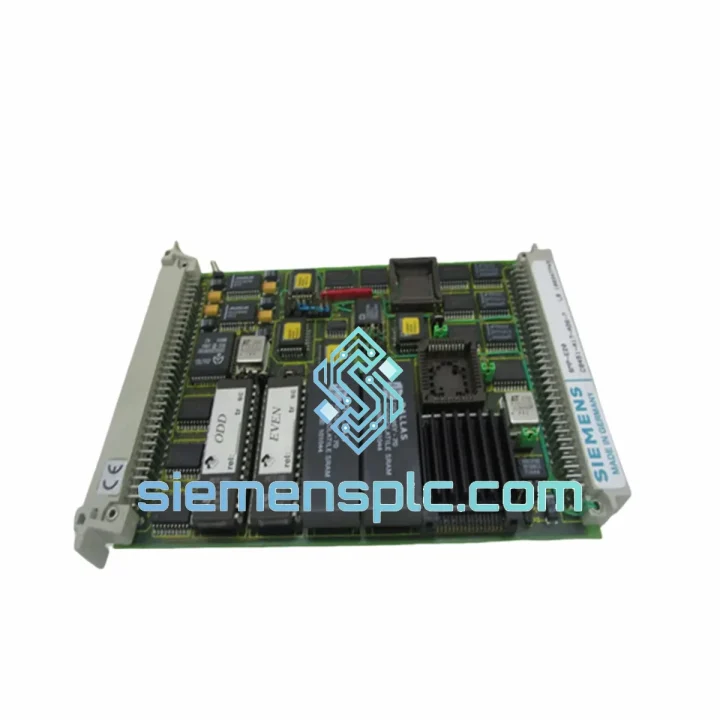
The A413280 CPR1 is the central processing unit of the Neles Automation (Valmet) Damatic distributed control system architecture. Positioned at the apex of the control hierarchy, this module executes all real-time scan cycles, manages inter-module communication across the proprietary Damatic backplane bus, and arbitrates I/O data acquisition from field-connected analog and digital subsystems. Its role is not peripheral — it is the deterministic engine that governs loop execution timing, alarm state management, and operator interface data refresh across the entire DCS node.
In process industries where a 50 ms deviation in control loop execution can translate to product quality loss or safety interlock activation, the CPR1’s fixed-cycle scan architecture provides the temporal consistency that PID regulators and cascade control strategies depend on. The module’s internal watchdog timer independently monitors task execution health; any scan overrun or memory fault triggers a controlled processor halt and activates the system’s fault relay output, preventing silent failure propagation to field actuators.
Real-time Stock & RFQ: [email protected] | WhatsApp: +86 18359268345
| Parameter | Specification |
|---|---|
| Part Number / SKU | A413280 CPR1 |
| Manufacturer | Neles Automation (Valmet Automation) |
| Module Classification | Central Processor / Controller Card |
| Platform Compatibility | Valmet Damatic XD / Damatic Classic DCS |
| Form Factor | Rack-mount PCB card, card-cage installation |
| Backplane Interface | Proprietary Damatic parallel backplane bus |
| Scan Cycle Architecture | Fixed deterministic scan, hardware watchdog supervised |
| Memory Architecture | Battery-backed SRAM for configuration retention on power loss |
| Communication Ports | Backplane bus + serial diagnostic port (front panel) |
| Operating Temperature | 0 °C to +55 °C (standard industrial cabinet) |
| Storage Temperature | −25 °C to +70 °C |
| Relative Humidity | 5 % to 95 % RH, non-condensing |
| Supply Voltage | 24 V DC via backplane (system PSU regulated) |
| Power Consumption | Approx. 8–12 W (module-level, backplane supplied) |
| Weight | 1,470 g |
| Condition Available | Tested Refurbished / New Old Stock (NOS) |
| Warranty | 12 months replacement warranty |
| Origin | Finland (OEM production) |
The A413280 CPR1 is built around a fixed-instruction-set processor core optimized for deterministic real-time execution rather than general-purpose throughput. This architectural choice is deliberate: in a DCS environment, predictable worst-case execution time (WCET) is more operationally valuable than peak MIPS performance. The processor’s internal task scheduler operates on a pre-emptive priority model, where time-critical control loops occupy the highest priority tier and operator display refresh tasks are assigned lower-priority slots — ensuring that a burst of HMI polling requests cannot starve the PID execution engine of CPU cycles.
Backplane Bus Architecture: The CPR1 communicates with I/O sub-modules via the Damatic proprietary parallel backplane bus. This bus uses a master-slave token-passing protocol where the CPR1 acts as bus master, polling each I/O slot in a deterministic sequence. The fixed polling interval eliminates the non-determinism inherent in Ethernet-based fieldbus alternatives, making the system suitable for tight cascade control loops where input-to-output latency must remain bounded below 100 ms under all load conditions.
EMC Design: The PCB layout employs ground plane segmentation to isolate the digital processor domain from the analog signal conditioning circuitry present on adjacent I/O cards. The card-cage backplane itself provides a Faraday-cage effect when properly grounded to the control cabinet chassis, attenuating conducted and radiated interference from variable-frequency drives, high-current motor starters, and welding equipment commonly co-located in industrial environments. The module meets IEC 61000-4-2 (ESD), IEC 61000-4-4 (EFT/Burst), and IEC 61000-4-5 (surge) immunity levels applicable to industrial process control equipment.
Memory Integrity: Configuration data — including loop tuning parameters, alarm setpoints, and I/O scaling factors — is stored in battery-backed SRAM. On power restoration after an unplanned outage, the CPR1 performs a memory checksum validation before resuming scan execution. If the checksum fails, the module enters a safe-state hold and asserts a diagnostic fault flag rather than resuming control with potentially corrupted parameters. This behavior is critical in processes where incorrect PID parameters could drive actuators to unsafe positions during restart.
Fault Relay Output: A dedicated hardware fault relay, independent of the processor’s software stack, de-energizes on any watchdog timeout or internal power rail deviation. This relay is typically wired into the plant’s safety interlock circuit, providing a hardware-level guarantee that field actuators receive a de-energize signal even if the processor firmware has entered an unrecoverable fault state.
Every A413280 CPR1 unit dispatched from our Xiamen, China facility passes through a structured multi-stage verification process before shipment. Visual inspection covers PCB surface condition, connector pin integrity, component seating, and absence of corrosion or thermal stress marks on solder joints. Functional bench testing applies rated backplane supply voltage and verifies processor initialization, watchdog circuit response, and bus communication handshake against known-good reference parameters. Units that do not pass all test gates are quarantined and not offered for sale.
Packaging uses anti-static ESD bags with desiccant packs sealed inside moisture-barrier poly bags, placed in foam-lined rigid cartons rated for international air freight handling. Each shipment includes a test report, serial number record, and packing list for receiving inspection and traceability documentation.
From Xiamen, we ship via DHL Express, FedEx International Priority, and UPS Worldwide Expedited. Standard transit times are 3–5 business days to Europe and North America, 2–4 business days to Southeast Asia and the Middle East. For urgent plant shutdowns, same-day dispatch is available on confirmed in-stock units when orders are placed before 14:00 CST. All shipments are fully insured and tracked door-to-door. Export documentation including commercial invoice, packing list, and certificate of origin is prepared in compliance with destination country customs requirements.
A 12-month replacement warranty covers all units against manufacturing defects and functional failure under normal operating conditions. Warranty claims are processed within 5 business days of receipt of the returned unit at our facility.
Email: [email protected]
WhatsApp: +86 18359268345
Web: siemensplc.com
Location: Xiamen, China
© 2026 siemensplc.com. All rights reserved.
We check the full part number, brand, series and visible nameplate information before quotation.
Sales confirms stock path, condition option, quantity and realistic lead time for export dispatch.
DHL, FedEx, UPS or buyer courier arrangements can be reviewed with packing requirements.
Similar brand or category products for fast comparison and multi-item RFQ lists.