Omron
In Stock OK
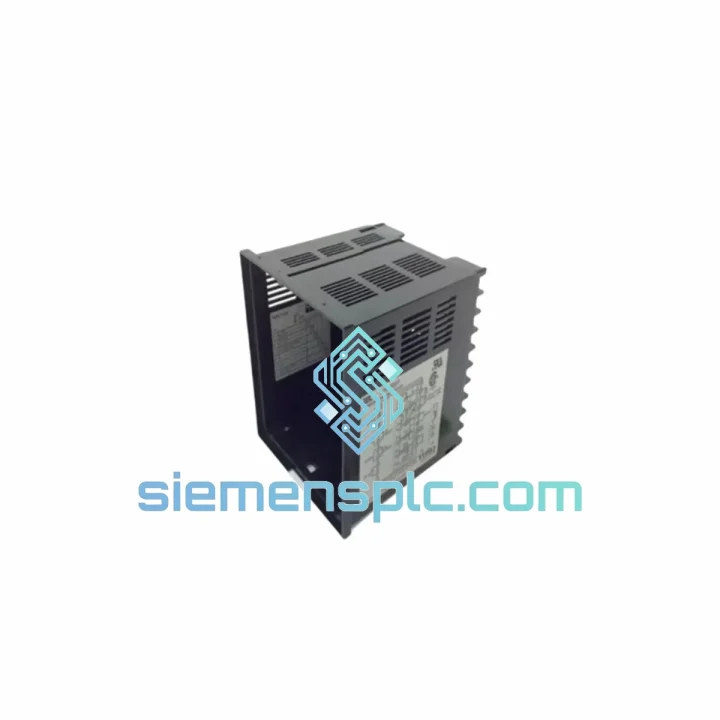
OMRON E5AX-S-AEC-320 AEC A0535007 PID Temperature Controller – E5AX Series
Request verified availability, condition, replacement risk review, packing options and courier lead time for E5AX-S-AEC-320.
BrandOmron
Part NumberE5AX-S-AEC-320
ConditionAvailability Check
Lead TimeRFQ Confirmation
DocumentsDatasheet / photos by RFQ
ShippingExport packing available
Auto-filled RFQ
E5AX-S-AEC-320
Click Request Quote and the part number is inserted into the inquiry form automatically.
- Reply by email: [email protected]
- WhatsApp / Tel: +86 18359268345
- Mon-Sat 9:00-18:00 GMT+8
Procurement Data
Key Product Information
Core fields for model confirmation and RFQ routing. Detailed product narrative remains below.
- Brand
- Omron
- Primary Part Number
- E5AX-S-AEC-320
- Product Type
- PID Temperature Controller
- Product Family
- Other series
- Manufacturer
- OMRON Corporation
- Country of Origin
- JP
- Catalog Category
- PLCs & Controllers
- Operating Temp.
- 0 to +50 °C
- Warranty
- 12 months from shipment date
Model confirmed for inquiry
E5AX-S-AEC-320
Send quantity, destination and urgency. The RFQ form keeps this part number attached.
Request Quote
Product Overview
OMRON E5AX-S-AEC-320 AEC A0535007 — Precision Thermal Regulation in Continuous Industrial Process Loops
The OMRON E5AX-S-AEC-320 AEC A0535007 is a 48 × 48 mm DIN-format panel-mount PID temperature controller designed for sustained closed-loop thermal regulation in demanding industrial environments. The “-S-AEC-320” suffix identifies an OEM-configured variant within the E5AX platform, with the AEC A0535007 factory code specifying a particular output matrix and communication option set assigned to AEC-designated system integrators. Within a control loop, this unit occupies the controller node: it receives the process variable (PV) from a field-mounted sensor, computes the error signal against the operator-defined setpoint (SV), and drives the manipulated variable (MV) output to the final control element — SSR, contactor, or proportional valve — at a fixed 500 ms cycle rate.
The E5AX platform was developed by OMRON to address the gap between low-cost ON/OFF thermostats and full-featured DCS-integrated loop controllers. It delivers PID accuracy and auto-tuning capability in a compact, self-contained package that requires no external signal conditioning hardware, no dedicated power supply rail, and no proprietary programming software for basic commissioning. The AEC A0535007 variant retains all core E5AX capabilities while incorporating output and interface options specified for the AEC equipment family.
Units are stocked at our Xiamen, China facility and dispatched after a structured pre-shipment inspection protocol. A 12-month warranty is included from the date of shipment.
Real-time Stock & RFQ: [email protected] | WhatsApp: +86 18359268345
Technical Parameters
| Manufacturer | OMRON Corporation |
| Full SKU | E5AX-S-AEC-320 AEC A0535007 |
| Platform Series | E5AX |
| Variant Code | AEC A0535007 (OEM output/comms matrix) |
| Product Category | PID Temperature Controller, Panel-Mount |
| Control Algorithm | PID (positional); ON/OFF selectable; AT (auto-tuning) supported |
| Sampling Period | 500 ms (fixed) |
| Control Output Period | 1–99 s (relay); 0.5 s minimum (voltage pulse / SSR drive) |
| A/D Conversion | 16-bit successive approximation |
| Thermocouple Inputs | K, J, T, E, L, U, N, R, S, B (IEC/JIS) |
| RTD Input | Pt100, 3-wire; lead resistance compensation ≤ 10 Ω/wire |
| Analog Input | 0–5 V, 1–5 V, 0–10 V DC; 4–20 mA (internal shunt) |
| Measurement Accuracy | ±0.3% FS ±1 digit (thermocouple); ±0.2% FS ±1 digit (Pt100) |
| Cold Junction Compensation | On-board thermistor; automatic, ±1.0 °C accuracy |
| Control Output | Relay (250 VAC / 3 A, resistive); voltage pulse (12 VDC / 40 mA for SSR); 4–20 mA analog (model-dependent) |
| Relay Mechanical Endurance | ≥ 100,000 operations |
| Alarm Outputs | 2 independent channels; deviation high/low, absolute high/low, configurable hysteresis |
| Display | Dual 4-digit red LED; upper row PV, lower row SV |
| Communication Interface | RS-485 (optional); OMRON CompoWay/F; Modbus RTU (firmware-dependent) |
| Network Nodes | Up to 31 units per RS-485 bus segment |
| Power Supply | 100–240 VAC, 50/60 Hz (universal) |
| Power Consumption | ≤ 8 VA |
| Operating Temperature | 0 to +50 °C |
| Storage Temperature | −25 to +65 °C |
| Relative Humidity | 35–85% RH, non-condensing |
| Front Panel Protection | IP66 (IEC 60529) |
| Panel Cutout | 45 × 45 mm (DIN 43700) |
| Body Dimensions | 48 × 48 × 100 mm (W × H × D) |
| Packaged Weight | Approx. 1,480 g |
| Certifications | CE (EMC + LVD), UL, cUL, KC |
| Country of Origin | Japan |
| Warranty | 12 months from shipment date |
Hardware Logical Analysis
Input Signal Conditioning Architecture: The E5AX-S-AEC-320 front end implements a multiplexed analog input stage that handles thermocouple EMF signals in the 0–80 mV range and RTD bridge voltages simultaneously through a single 16-bit ADC chain. A precision instrumentation amplifier with programmable gain precedes the ADC, scaling the input signal to the full converter range regardless of sensor type — this maximizes effective resolution across all supported input ranges without requiring separate hardware modules. The cold-junction compensation thermistor is mounted directly on the terminal block PCB, not on the main board, which minimizes the thermal gradient between the reference junction and the compensation sensor and improves CJC accuracy under varying ambient conditions.
PID Computation and Auto-Tuning Logic: The controller executes a positional PID algorithm — not an incremental (velocity) form — which means the output value at each cycle is computed from the absolute error, its integral accumulation, and the derivative of the error signal. This approach simplifies output initialization after power restoration and avoids integrator wind-up artifacts that can occur in velocity-form implementations during setpoint step changes. The auto-tuning routine uses a limit-cycle method: it applies a deliberate ON/OFF oscillation to the output and measures the resulting process oscillation period (Tu) and amplitude to derive Ziegler-Nichols-based PID parameters. The AT function is initiated via a single front-panel key press and completes autonomously, writing the computed P, I, D values to EEPROM without operator intervention.
EMC Immunity Design: The PCB layout separates the high-voltage relay output section from the low-level analog input section using a physical ground plane partition. The AC power input stage incorporates a common-mode choke (CMC) and a pi-filter network (X2 and Y2 capacitors) to attenuate conducted emissions and suppress line-borne transients per IEC 61000-4-4 (EFT/burst, 2 kV) and IEC 61000-4-5 (surge, 1 kV). Relay output coils are fitted with transient suppression diodes to prevent inductive kickback from coupling into the measurement circuit during relay switching events — a critical design detail in panels where the controller shares a DIN rail with motor starters or solenoid valve drivers.
Output Stage Flexibility: The voltage pulse output (12 VDC, 40 mA) is designed to source sufficient gate current to drive most commercially available SSRs with input thresholds of 3–32 VDC directly, without an intermediate buffer circuit. This eliminates the relay contact wear mechanism entirely in high-cycle applications — extrusion barrel zones, injection mold temperature control, and semiconductor process chambers — where relay output life would be the primary maintenance constraint. The 4–20 mA analog output variant provides a linear representation of the PID output percentage (0–100% MV = 4–20 mA), suitable for driving SCR power controllers or electro-pneumatic positioners in proportional thermal systems.
System Integration Benefits
- Universal Input Eliminates Hardware Variants: A single E5AX-S-AEC-320 part number supports 10+ thermocouple types, Pt100 RTD, and analog current/voltage inputs via parameter selection. Multi-zone systems with mixed sensor types can standardize on one SKU, reducing spare-part inventory from multiple line items to one.
- Fixed 500 ms Sampling Cycle Enables Predictable Loop Timing: The deterministic update rate allows system designers to calculate worst-case control latency precisely. In multi-controller RS-485 networks, polling schedules can be aligned to the 500 ms cycle to ensure SCADA data reflects the most recent PID computation without stale-data artifacts.
- IP66 Front Panel Extends Installation Envelope: Direct wash-down resistance allows panel installation in food processing, pharmaceutical, and chemical environments where periodic high-pressure cleaning is standard practice, without requiring sealed enclosure upgrades or protective covers over the controller face.
- Dual Independent Alarm Channels with Separate Output Relays: Each alarm channel drives its own output contact, independent of the main control output. This architecture allows one alarm to trigger a local audible/visual annunciator while the second triggers a PLC digital input for SCADA alarm logging — without any relay sharing or output multiplexing logic in the panel wiring.
- RS-485 Multi-Drop Reduces Field Wiring Cost: A single twisted-pair cable can address up to 31 E5AX units, replacing 31 individual 4–20 mA analog loops with a single serial bus. In large multi-zone ovens or tunnel furnaces, this reduces field cable runs, junction box count, and analog I/O card requirements at the PLC level.
- EEPROM Parameter Retention Supports Unattended Operation: All operating parameters — setpoints, PID values, alarm thresholds, input type selection — are stored in non-volatile EEPROM with a write endurance of ≥ 100,000 cycles. Following a power interruption, the controller resumes its pre-outage operating state within the first sampling cycle, with no operator intervention required to restore normal control.
- Compact 48 × 48 mm Format Maximizes Panel Density: The DIN 43700 footprint allows high-density controller arrays in standard enclosures. A 600 mm wide panel can accommodate up to 16 units in a single row, supporting multi-zone thermal systems — extrusion lines, multi-chamber test equipment, heat-treat furnaces — without requiring oversized or custom enclosures.
- Modbus RTU Protocol Enables Cross-Vendor SCADA Integration: Native Modbus RTU support over RS-485 allows direct register-level access from any Modbus master — Siemens S7 via CP module, Rockwell ControlLogix via serial module, or PC-based SCADA platforms — without custom protocol gateways or OPC server middleware for basic PV/SV read-write operations.
- Configurable Alarm Hysteresis Prevents Nuisance Trips: Independent hysteresis adjustment on each alarm channel allows the dead-band to be matched to the natural thermal noise floor of the process. In processes with ±2–3 °C steady-state oscillation, setting hysteresis above the noise floor eliminates alarm relay chatter without masking genuine fault conditions.
- Dual LED Display Reduces Operator Interaction Errors: Simultaneous display of PV and SV on separate rows allows process deviation to be read directly without entering any menu. During manual setpoint adjustments, operators can observe the SV change in real time while monitoring the live PV, reducing the risk of setpoint entry errors in high-temperature processes.
Quality Assurance & Global Logistics
Each OMRON E5AX-S-AEC-320 AEC A0535007 unit shipped from our Xiamen warehouse is sourced through verified distribution channels and subjected to a four-stage pre-shipment inspection before release. Stage one covers physical and label verification: the OMRON hologram, date code format, and factory marking are checked against OMRON’s published authentication specifications for the E5AX series. Stage two confirms the firmware version displayed at power-on matches the expected build for the AEC A0535007 variant. Stage three performs a functional power-on test using a calibrated thermocouple simulator to verify PV display accuracy within the rated ±0.3% FS tolerance. Stage four checks packaging integrity — original OMRON carton, foam insert, accessory bag, and documentation set must be present and undamaged before the unit is cleared for shipment.
Outbound logistics from Xiamen are handled via DHL Express, FedEx International Priority, and UPS Worldwide Expedited. Typical transit times are 3–5 business days to Western Europe and North America, 2–3 business days to Southeast Asia and Northeast Asia, and 4–6 business days to the Middle East and South Asia. Both EXW Xiamen and CIF destination port Incoterms are available. Export documentation — commercial invoice, packing list, certificate of origin, and pre-shipment inspection report — is prepared for all international shipments. In-stock units are dispatched within 1–3 business days of order confirmation. The 12-month warranty covers manufacturing defects and covers return-to-base repair or unit replacement at our discretion.
Contact Information
Email: [email protected]
WhatsApp: +86 18359268345
Web: siemensplc.com
Location: Xiamen, China
© 2026 siemensplc.com. All rights reserved.
Ready to quote
[email protected]
Send This Part Number to Sales
RFQ workflow
Quality workflow ->
Confirmation Process
01Model confirmation
We check the full part number, brand, series and visible nameplate information before quotation.
02Availability reply
Sales confirms stock path, condition option, quantity and realistic lead time for export dispatch.
03Packing & courier
DHL, FedEx, UPS or buyer courier arrangements can be reviewed with packing requirements.
Continue sourcing
Browse full catalog ->
Related Automation Parts
Similar brand or category products for fast comparison and multi-item RFQ lists.
Omron
RFQ Ready
OMRON CP1W-TS002 PLC Expansion Module
CP1 Series PLC Module
Origin JP
PLC Expansion Module
Omron
RFQ Ready
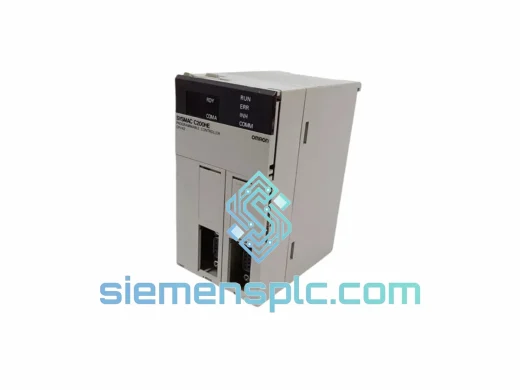
OMRON C200HE-CPU42 PLC CPU Module – C200HE Series
C200HE Series
Origin JP
PLC CPU Module