Allen-Bradley
RFQ Ready
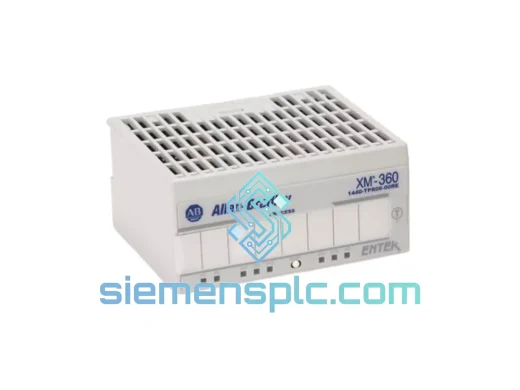
Allen-Bradley 1440-TPR06-00RE Absolute Position Transducer
Rockwell Automation
Origin US
Absolute Position Transducer
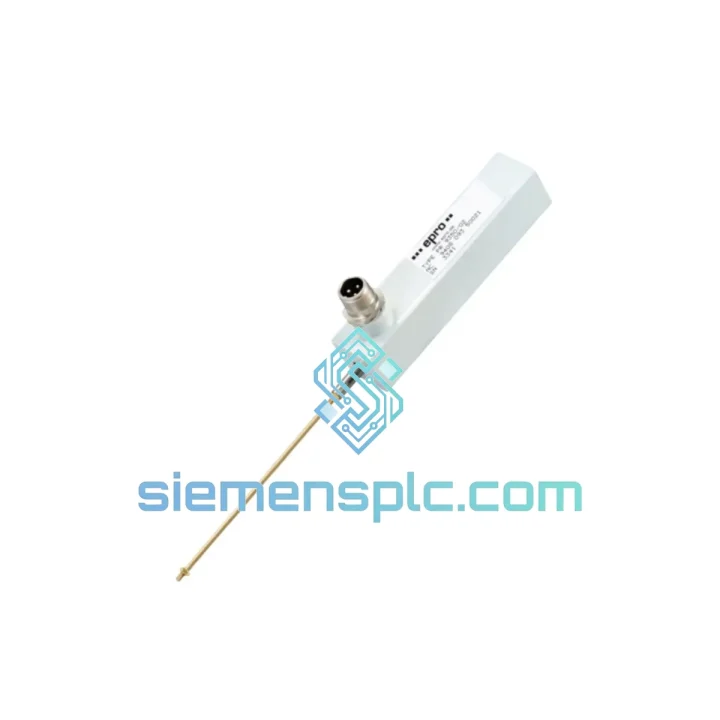
Request verified availability, condition, replacement risk review, packing options and courier lead time for PR9350/04.
Click Request Quote and the part number is inserted into the inquiry form automatically.
Core fields for model confirmation and RFQ routing. Detailed product narrative remains below.
The PR9350/04 is a non-contact inductive linear position sensor manufactured by Philips Industrial Electronics, designed for continuous displacement monitoring in environments where mechanical wear, electromagnetic interference, and thermal cycling would degrade conventional contact-based measurement systems. Within a closed-loop control architecture, this sensor functions as the primary feedback transducer: it converts the physical position of a target — typically a ferromagnetic rod or shaft — into a proportional analog electrical signal that the controller uses to compute corrective actuator commands. The accuracy and stability of that feedback signal directly determines the achievable positioning resolution and dynamic response of the entire control loop.
The PR9350 Series was developed to address the measurement demands of rotating machinery protection and precision linear actuation. The /04 variant occupies the mid-range of the series, calibrated for displacement spans commonly encountered in turbine shaft axial monitoring, hydraulic cylinder stroke measurement, and press ram position control. Its inductive operating principle — based on the variation of mutual inductance between a fixed coil assembly and a moving ferromagnetic target — eliminates the friction, hysteresis, and contact resistance that limit the service life of potentiometric or LVDT-contact alternatives. The result is a sensor capable of delivering stable, repeatable output across tens of millions of measurement cycles without mechanical degradation.
In power generation facilities, the PR9350/04 is frequently installed on steam turbine bearing housings to monitor axial shaft displacement in real time. A drift of even 0.2 mm beyond the alarm threshold in this application can indicate thrust bearing wear that, if undetected, leads to catastrophic rotor-stator contact. The sensor’s output feeds directly into vibration monitoring systems — such as Bently Nevada 3300/3500 Series racks or equivalent Siemens SIPROTEC protection relays — where the signal is compared against pre-configured alarm and trip setpoints. The deterministic, low-latency analog output of the PR9350/04 ensures that the protection system receives positional data without the conversion delays inherent in digital fieldbus-based sensors, which is a critical requirement in machinery protection applications where trip response times are measured in milliseconds.
In hydraulic press and injection molding machine applications, the PR9350/04 provides the position feedback that enables the PLC to execute precise multi-stage ram profiles. The controller reads the sensor output at each scan cycle — typically every 1–10 ms on a Siemens S7-300/400 or equivalent platform — and adjusts proportional valve commands to maintain the programmed velocity and force profile. The sensor’s linearity specification ensures that the PLC’s analog input module receives a signal that maps predictably to physical position across the full measurement range, avoiding the non-linearity compensation overhead that would otherwise consume controller processing cycles.
Real-time Stock & RFQ: [email protected] | WhatsApp: +86 18359268345
| Parameter | Specification |
|---|---|
| Manufacturer | PHILIPS (Philips Industrial Electronics) |
| Part Number / SKU | PR9350/04 |
| Series | PR9350 |
| Sensor Type | Inductive Linear Position Sensor |
| Measurement Principle | Variable mutual inductance, non-contact |
| Target Material | Ferromagnetic (steel rod / shaft) |
| Output Signal | Analog (series-dependent; typically 4–20 mA or 0–10 V — confirm with datasheet) |
| Linearity | ≤ ±0.5% of full-scale range (typical for PR9350 series) |
| Operating Temperature | -20°C to +85°C (ambient) |
| Protection Class | IP65 or higher (series standard) |
| EMC Compliance | Designed to EN 61000 series industrial EMC requirements |
| Housing Material | Stainless steel / anodized aluminum (series standard) |
| Connector | Multi-pin industrial connector (variant-specific — confirm with datasheet) |
| Weight | 2,130 g |
| Country of Origin | Germany |
| Warranty | 12 months from date of shipment |
The PR9350/04 operates on the principle of variable mutual inductance. The sensor body houses a precision-wound primary coil driven by a stable AC excitation source at a fixed frequency — typically in the range of 1–10 kHz. The ferromagnetic target, mechanically coupled to the moving element being measured, modulates the magnetic flux linkage between the primary coil and one or more secondary sensing coils as it traverses the measurement range. The differential output of the secondary coils is demodulated and linearized by the integrated signal conditioning circuit to produce the final analog output proportional to target displacement.
The non-contact architecture eliminates three primary failure modes present in contact-based sensors: (1) wiper track wear in potentiometers, which introduces resistance drift and noise over time; (2) contact bounce in mechanical limit switches, which generates spurious signals in high-cycle applications; and (3) seal degradation in contact LVDTs exposed to hydraulic fluid or process media. The PR9350/04’s sealed stainless steel housing provides a physical barrier between the sensing coil assembly and the process environment, allowing deployment in oil-mist, coolant-splash, and high-humidity conditions without compromising measurement integrity.
The integrated EMC shielding architecture addresses the electromagnetic environment typical of industrial machine rooms: variable-frequency drives (VFDs) operating in the 2–16 kHz switching frequency range, high-current motor contactors generating transient spikes of 1–4 kV, and ground loops introduced by multi-point earthing in large machine frames. The sensor’s coaxial cable shield, when terminated correctly at the signal conditioner end only, forms a Faraday cage around the signal conductor that attenuates capacitively coupled interference. The differential signal transmission scheme further rejects common-mode noise picked up along cable runs — a critical design consideration in installations where sensor cables run parallel to power conductors over distances exceeding 10 meters.
The analog output stage is designed with a low source impedance to drive standard PLC analog input modules — typically presenting input impedances of 250 Ω (for 4–20 mA current loop) or 10 kΩ (for voltage output) — without signal loading errors. The current loop output variant, in particular, provides inherent immunity to resistive voltage drops along the cable, making it the preferred configuration for installations where cable lengths exceed 50 meters or where cable resistance cannot be precisely controlled.
Every PR9350/04 unit supplied by siemensplc.com is sourced through verified industrial distribution channels and subjected to a structured incoming inspection protocol before dispatch. Visual inspection confirms housing integrity, connector pin condition, and manufacturer label authenticity against PHILIPS part number records. Electrical pre-check verifies coil continuity and insulation resistance to confirm the sensor has not sustained transit damage. Units are individually packaged in anti-static foam-lined cartons with moisture-barrier desiccant packs to protect the coil assembly and connector contacts during international air or sea freight.
Shipments originate from our warehouse in Xiamen, China — a major export hub with direct access to international air freight services via Xiamen Gaoqi International Airport and sea freight via Xiamen Port. Standard export documentation — commercial invoice, packing list, and certificate of origin — is prepared for each shipment to facilitate customs clearance in destination countries. For time-critical requirements, DHL Express, FedEx International Priority, and UPS Worldwide Express services are available, with typical transit times of 3–5 business days to Europe, North America, and Southeast Asia. For bulk orders, sea freight consolidation via Xiamen Port provides a cost-effective alternative with transit times of 18–35 days depending on destination port.
All units are covered by a 12-month warranty from the date of shipment. Warranty claims are processed through direct communication with our technical team, who coordinate replacement or repair logistics. Our technical staff can provide pre-sales consultation to confirm that the PR9350/04 meets the dimensional, output, and environmental requirements of your specific application before order commitment.
Email: [email protected]
WhatsApp: +86 18359268345
Web: siemensplc.com
Location: Xiamen, China
© 2026 siemensplc.com. All rights reserved.
We check the full part number, brand, series and visible nameplate information before quotation.
Sales confirms stock path, condition option, quantity and realistic lead time for export dispatch.
DHL, FedEx, UPS or buyer courier arrangements can be reviewed with packing requirements.
Similar brand or category products for fast comparison and multi-item RFQ lists.