Phoenix Contact
RFQ Ready
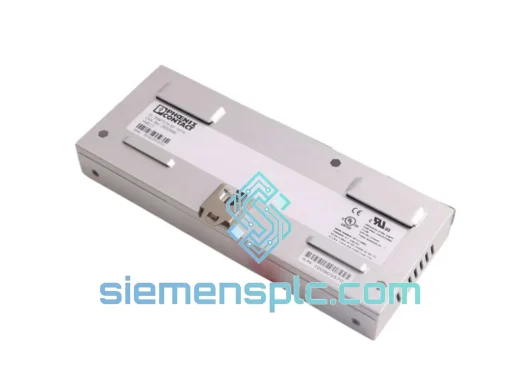
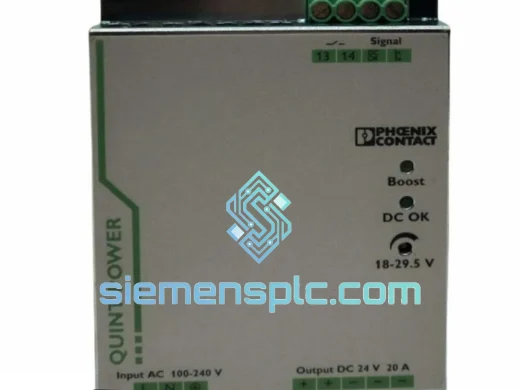
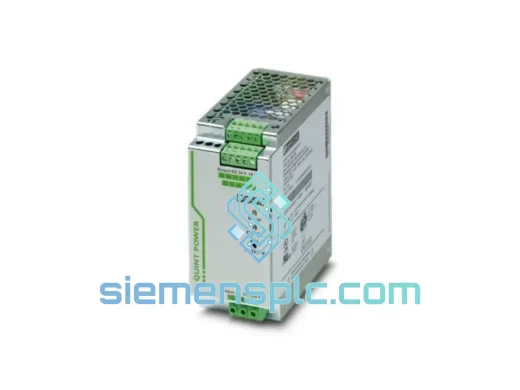
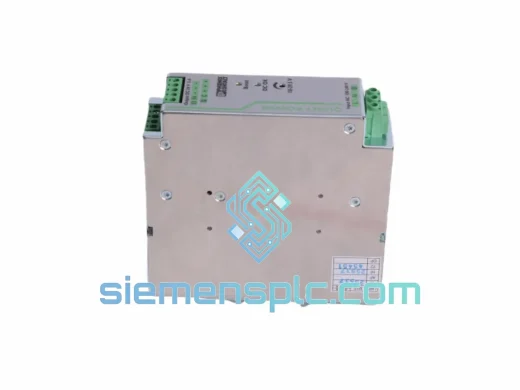
Phoenix Contact QUINT-PS/1AC/24DC/5 DIN Rail Power Supply
Origin DE
DIN Rail Power Supply
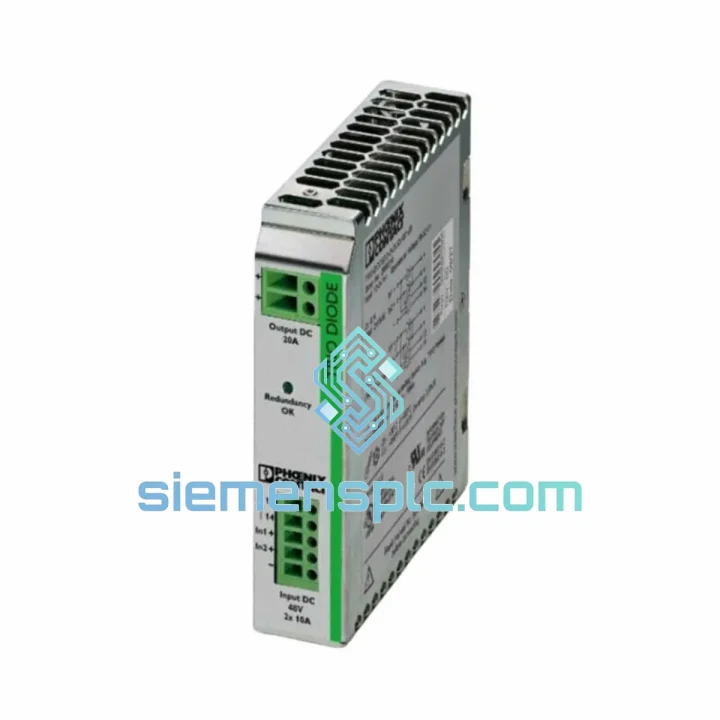
Request verified availability, condition, replacement risk review, packing options and courier lead time for TRIO-DIODE/48DC/2X10/1X20.
Click Request Quote and the part number is inserted into the inquiry form automatically.
Core fields for model confirmation and RFQ routing. Detailed product narrative remains below.
Your 48VDC bus just lost redundancy. One PSU down, the backup carrying full load, and every minute the clock is running. The TRIO-DIODE/48DC/2X10/1X20 (Order No. 2866527) is the exact decoupling module that stands between a controlled switchover and an unplanned plant shutdown. We stock it. We ship it today.
This is not a substitute. Not a compatible alternative. It is the original PHOENIX Contact TRIO-DIODE, pulled from verified stock in Xiamen, packed, labeled, and handed to DHL or FedEx within hours of your order confirmation. If your panel was running one before, it will run one again — same footprint, same terminals, same firmware handshake with your TRIO-PS units.
⚡ URGENT REQUIREMENT? Contact: [email protected] | WhatsApp: +86 18359268345
| Parameter | Value |
|---|---|
| Manufacturer | PHOENIX Contact |
| Order No. | 2866527 |
| Full SKU | TRIO-DIODE/48DC/2X10/1X20 |
| Series | TRIO Power |
| Function | Redundancy Decoupling Diode Module |
| Nominal Input Voltage | 48 VDC |
| Input Channels | 2 × 10 A |
| Output Channel | 1 × 20 A |
| Decoupling Technology | MOSFET (active, low Vdrop) |
| Mounting | DIN rail EN 60715 TH 35 |
| Protection Class | IP20 |
| Operating Temperature | −25 °C to +70 °C |
| Dimensions (W×H×D) | 45 × 130 × 124 mm |
| Weight | ~400 g |
| Certifications | CE, UL, cULus, RoHS, ATEX (zone-rated variants) |
| HS Code | 8504.40 |
| Stock Status | ✅ Ready to Ship — Xiamen Warehouse |
Ten years on the floor taught me one thing: most TRIO-DIODE failures are not the module itself — they are the conditions that killed it. Before you slot the new unit in, spend five minutes on these checks or you will be ordering a second one next week.
Common failure signatures:
Replacement procedure (hot-swap capable with care):
No firmware, no addressing, no bus configuration. This is the advantage of the TRIO-DIODE over software-managed redundancy controllers — swap time under 10 minutes for a trained technician.
The TRIO-DIODE/48DC/2X10/1X20 was not designed for a climate-controlled server room. It was built for the kind of environments where panels run at 60 °C ambient in summer, where vibration from compressors and conveyors never stops, and where humidity swings from 20% to 95% between seasons.
The MOSFET-based decoupling stage eliminates the thermal runaway risk inherent in passive diode bridges. Under full 20 A output load at 70 °C, the forward voltage drop stays below 0.1 V — compared to 0.6–0.8 V on a conventional silicon diode. That difference is not just efficiency; it is the difference between a module that runs cool and one that degrades its own solder joints over 18 months of continuous operation.
DIN rail mounting with the EN 60715 TH 35 clip provides mechanical retention that survives IEC 60068-2-6 vibration testing — 2g, 10–150 Hz sweep. In pump stations and compressor skids where the panel itself vibrates, this matters. Screw terminal connections (0.5–0.6 Nm torque) do not loosen under vibration the way push-in connectors can if not properly seated.
IP20 protection is adequate for enclosed control panels. If your installation is in a non-enclosed environment or subject to water ingress, the module must be housed in an IP54 or better enclosure — this is a panel-mount component, not a field-mount device.
Conformal coating on the PCB (standard on PHOENIX Contact TRIO series) provides resistance to condensation and airborne contaminants — sulfur compounds from industrial atmospheres, flux residues, and dust. Units stored in original sealed packaging retain full specification compliance for a minimum of 5 years from manufacture date.
Stock is held at our Xiamen facility, Fujian Province, China — one of the most connected export hubs in Asia for industrial components. When you confirm your order, here is exactly what happens:
Every shipment includes: commercial invoice (triplicate), packing list, certificate of origin (China), and HS code declaration. For projects requiring FORM E (ASEAN) or EUR.1 certificates, contact us before ordering — lead time for documentation is 1 business day.
We do not use consolidators or postal services for industrial components. Every parcel moves on an express courier with full tracking, signature on delivery, and insurance coverage up to declared value.
📧 Email: [email protected]
📱 WhatsApp: +86 18359268345
🌐 Web: siemensplc.com
© 2026 siemensplc.com. All rights reserved.
We check the full part number, brand, series and visible nameplate information before quotation.
Sales confirms stock path, condition option, quantity and realistic lead time for export dispatch.
DHL, FedEx, UPS or buyer courier arrangements can be reviewed with packing requirements.
Similar brand or category products for fast comparison and multi-item RFQ lists.